Why Honey for Sunburn? The Scientific Basis
Sunburn is essentially a radiation burn — ultraviolet B (UVB) rays damage skin cell DNA, triggering an inflammatory cascade that produces the redness, pain, swelling, and peeling we recognize as sunburn. Severe sunburns involve actual tissue destruction comparable to first-degree (and occasionally second-degree) thermal burns.
This is important because honey has extensive clinical evidence for burn wound healing — a 2015 Cochrane systematic review analyzing 3,011 participants across 26 trials found that honey-treated burns healed 4-5 days faster than conventional dressings. While most of this research involved thermal burns rather than UV burns specifically, the underlying tissue damage and healing requirements share significant overlap.
Honey's relevance to sunburn stems from the same properties that make it effective for other skin injuries: anti-inflammatory effects that reduce redness and pain, antibacterial protection for damaged skin, moisture retention that prevents further dehydration, and growth factor stimulation that accelerates tissue repair. The question is how effectively these properties translate to UV-specific damage.
How Sunburn Damages Skin (And Where Honey Fits In)
Understanding the sunburn process helps explain where honey can — and can't — help. UV radiation triggers a multi-phase response in the skin.
- Phase 1: DNA damage (0-4 hours) — UVB photons directly damage DNA in keratinocytes and melanocytes, creating cyclobutane pyrimidine dimers (CPDs). The p53 tumor suppressor gene activates apoptosis in severely damaged cells. Honey cannot reverse DNA damage — no topical treatment can.
- Phase 2: Inflammatory cascade (4-24 hours) — Damaged cells release prostaglandins (PGE2), pro-inflammatory cytokines (IL-1, IL-6, TNF-α), and histamine. Blood vessel dilation causes redness (erythema), and nerve sensitization produces pain. This is where honey's anti-inflammatory polyphenols are most relevant — they can modulate the same NF-κB and COX-2 pathways involved in sunburn inflammation.
- Phase 3: Immune response (24-72 hours) — Langerhans cells (skin immune cells) are suppressed by UV exposure, while neutrophils infiltrate damaged tissue. This phase increases infection susceptibility and produces the peak redness and tenderness. Honey's antibacterial properties provide protection during this vulnerable window.
- Phase 4: Repair and peeling (3-10 days) — Damaged epidermis peels as new skin cells replace destroyed ones. Collagen remodeling begins in the dermis. Honey promotes epithelial cell migration and collagen synthesis, potentially accelerating this repair phase.
Pro Tip
Honey is most beneficial during phases 2-4 (inflammation through repair). It cannot prevent or reverse the initial DNA damage — only sunscreen and sun avoidance can do that.
Get the Honey Buyer's Cheat Sheet (free PDF)
16 varieties on one page — color, flavor, best use and what a fair price looks like — from the 268 honeys we track.
Clinical Evidence: Honey for Burns
While no large randomized controlled trial has tested honey specifically for sunburn, the evidence for honey on burn injuries is substantial and directly relevant.
The 2015 Cochrane review (Jull et al.) of 26 trials with 3,011 participants found that honey-treated superficial and partial-thickness burns healed significantly faster than conventional treatments (silver sulfadiazine, gauze dressings, or polyurethane film). The weighted mean difference was 4.68 days faster healing with honey.
A 2010 study published in the International Journal of Lower Extremity Wounds examined honey dressings on 50 patients with first and second-degree burns. Honey-treated burns showed complete epithelialization in an average of 18.4 days versus 25.4 days for silver sulfadiazine — a 28% reduction in healing time. Honey-treated burns also had lower rates of contracture and scarring.
For sunburn specifically (a radiation burn rather than thermal), a 2012 study in the Annals of Burns and Fire Disasters tested honey on radiation burns from cancer radiotherapy — the closest clinical model to sunburn. Patients applying honey to irradiated skin experienced less severe radiation dermatitis, less pain, and faster healing compared to controls.
A smaller 2003 study in the European Journal of Medical Research tested a mixture of honey, beeswax, and olive oil on various skin conditions including sunburn-like redness. The combination reduced inflammation scores and improved skin healing, though the study design makes it difficult to attribute effects specifically to honey.
How Honey Helps Sunburned Skin: 6 Mechanisms
Honey addresses sunburn through multiple complementary pathways.
- Anti-inflammatory effects — Honey polyphenols (chrysin, quercetin, pinocembrin) inhibit NF-κB activation and suppress COX-2 expression, reducing the prostaglandin production that drives sunburn redness and pain. This mechanism is analogous to how NSAIDs like ibuprofen work — though honey's effect is milder and topical rather than systemic.
- Moisture retention — Sunburn dehydrates the epidermis, and dry, damaged skin heals more slowly. Honey is a natural humectant that draws moisture from the environment into the skin. Its high sugar content creates an osmotic gradient that maintains hydration at the wound surface, preventing the cracking and peeling that extends recovery.
- Antibacterial protection — Sunburned skin has a compromised barrier function and suppressed local immune cells (Langerhans cells), making it vulnerable to secondary infection. Honey's glucose oxidase produces hydrogen peroxide in low, sustained concentrations — sufficient to inhibit bacterial colonization without the cytotoxicity of full-strength antiseptics.
- Collagen and tissue repair — Honey stimulates fibroblast proliferation and collagen synthesis through its natural acidity (pH 3.2-4.5) and growth factor modulation. For sunburn, this translates to faster re-epithelialization as new skin cells replace damaged ones. Studies have shown honey promotes orderly collagen deposition, potentially reducing the scarring risk from severe sunburns.
- Antioxidant protection — UV radiation generates reactive oxygen species (ROS) in the skin that continue damaging cells even after sun exposure ends. This "oxidative afterglow" can persist for hours. Honey's polyphenols and catalase enzyme neutralize ROS, potentially limiting ongoing oxidative damage to surrounding healthy tissue.
- Pain modulation — While not as potent as topical anesthetics, honey's anti-inflammatory effects reduce nerve sensitization in sunburned skin. The physical coating that honey provides also shields exposed nerve endings from air and friction, providing some pain relief through barrier protection.
Honey and Sunburn Care: What People Commonly Do
People who use honey on sunburned skin generally cool the area first — a cool (not cold) shower or damp cloths — since initial cooling matters more for recovery than any topical treatment. Once the skin is gently patted dry (not rubbed), some apply a thin layer of raw honey at room temperature, let it sit for a while, then rinse it off with cool water and follow with a gentle moisturizer such as aloe vera gel.
Pro Tip
Severe sunburn — with significant blistering, pain, or coverage of a large area — is not a DIY project. See a healthcare provider rather than relying on an overnight home treatment.
Best Honey Types for Sunburn
The type of honey matters significantly for sunburn treatment. Key factors are anti-inflammatory potency, antibacterial strength, and processing status.
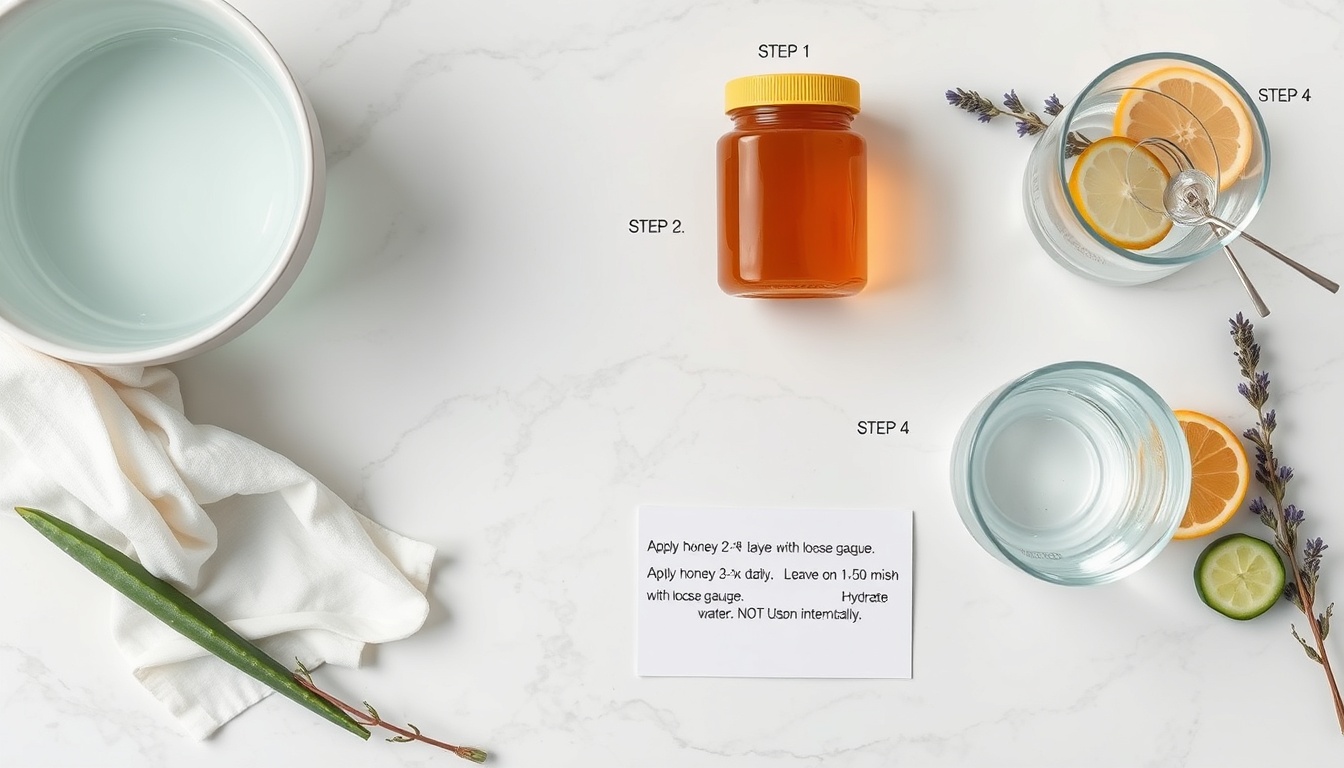
- Manuka honey (UMF 10+, $35–60+) — The most clinically studied honey for skin healing. Its unique methylglyoxal (MGO) provides non-peroxide antibacterial activity that persists even as peroxide-based activity dissipates. UMF 10–15 is sufficient for sunburn; higher grades are unnecessary and more expensive.
- Raw wildflower honey ($10–18) — Any raw, unprocessed honey retains the glucose oxidase enzyme, polyphenols, and other bioactive compounds that heated/filtered commercial honey loses. Local raw wildflower honey is the most affordable, effective option for sunburn care, with diverse polyphenols from multiple nectar sources.
- Buckwheat honey ($15–25, ORAC 16,000+) — Contains the highest antioxidant content of common honey varieties (3–9x more than light honeys). The additional antioxidant capacity is particularly relevant for sunburn, where oxidative stress continues damaging skin after UV exposure ends.
- Clover honey ($8–15) — The most widely available raw honey with mild flavor and reliable antimicrobial activity. A good budget option for mild sunburn care when manuka or buckwheat are not available.
- Medical-grade honey — Products like Medihoney and Activon are gamma-irradiated (sterilized without heat) manuka honey approved for wound care. These are the gold standard for severe sunburns with blistering but are unnecessary for typical mild-to-moderate sunburn.
- Avoid: processed supermarket honey — Pasteurized, ultra-filtered honey has degraded enzymes, reduced polyphenol content, and minimal glucose oxidase activity. It will provide some moisture but lacks the anti-inflammatory and healing properties of raw honey.
Honey vs Other Sunburn Remedies
How does honey compare to other popular sunburn treatments?
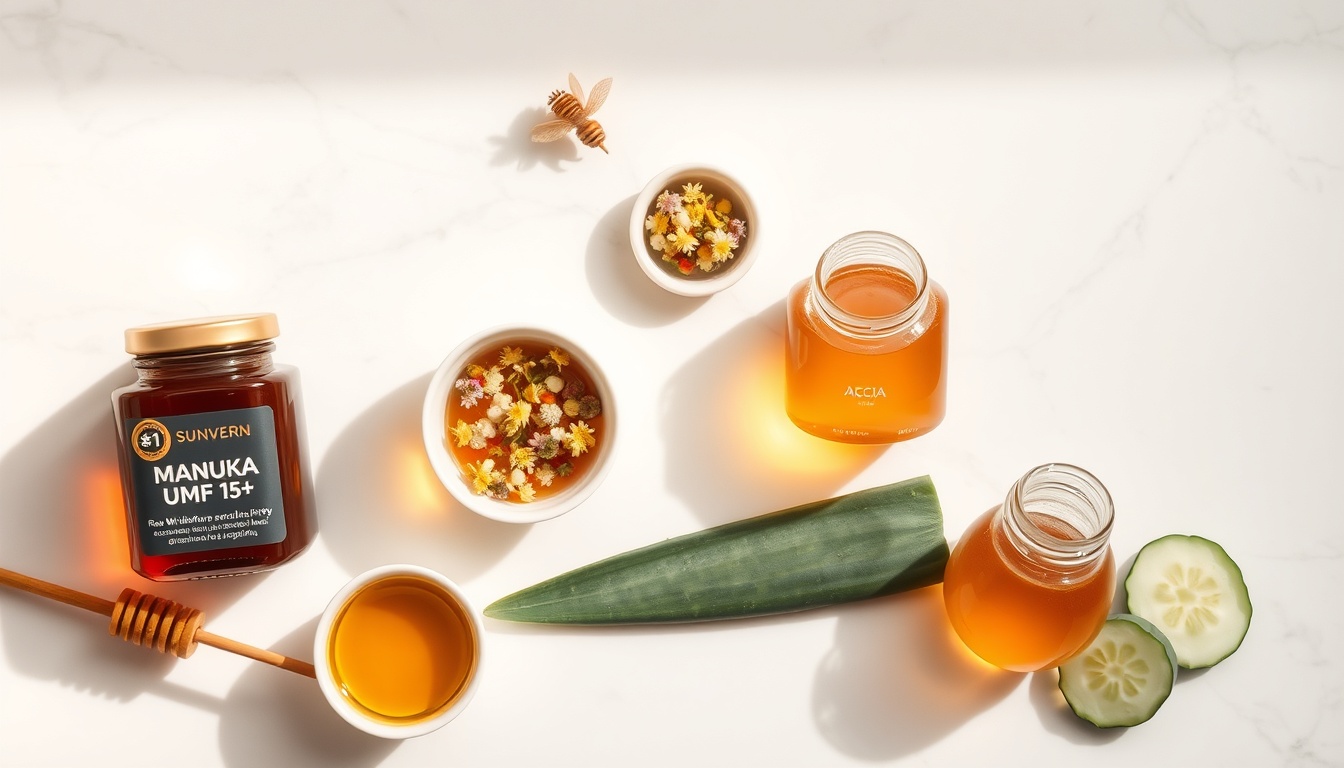
Aloe vera is the most widely used natural sunburn remedy, and for good reason — it contains aloin, acemannan, and other compounds with anti-inflammatory and wound-healing properties. A 2007 systematic review in Burns found moderate evidence supporting aloe for burns. Honey and aloe work through different mechanisms, and combining them (apply honey, rinse, then apply aloe) is a reasonable approach that covers more therapeutic pathways.
Over-the-counter hydrocortisone cream (0.5-1%) is effective for reducing sunburn inflammation by suppressing the immune response. It's faster-acting than honey for pain relief but provides no antibacterial protection, no moisture retention, and no tissue repair stimulation. For mild sunburn, honey may be sufficient; for moderate-to-severe sunburn, early hydrocortisone (first 24-48 hours) followed by honey during the repair phase is a practical combination.
Cool compresses and NSAIDs (ibuprofen, naproxen) remain the most evidence-based first-line sunburn treatments. Ibuprofen taken within 4-6 hours of sun exposure can significantly reduce the inflammatory response. Honey is complementary to — not a replacement for — these basic measures.
Coconut oil is popular but controversial for sunburn. While it provides moisture and contains some lauric acid (mildly antimicrobial), it can trap heat in recently burned skin and clog pores. It's better suited for the peeling/repair phase (day 3+) than for freshly burned skin. Honey is a better choice for the first 48 hours.
When Honey Is Not Enough
Not all sunburns are appropriate for home treatment with honey or any other topical remedy. Seek medical attention for severe sunburns.
Signs you need a doctor include: large blisters covering more than 5% of body surface, sunburn accompanied by fever above 101°F (38.3°C), chills, nausea, or confusion (signs of sun poisoning/heat stroke), sunburn on a large percentage of the body (entire back plus shoulders, for example), sunburn in infants under 12 months of age, and sunburn with signs of infection (increasing redness after day 2, pus, red streaks, worsening pain).
For blistering sunburns, do not apply honey directly to open blisters unless using medical-grade (sterilized) honey. Raw honey, while antimicrobial, is not sterile and could introduce contaminants to open wounds. If blisters break on their own, clean the area gently and consider medical-grade honey products designed for wound care.
Sun poisoning — characterized by extensive blistering, fever, dizziness, nausea, and dehydration — requires medical treatment including IV fluids, prescription anti-inflammatory medication, and potentially burn unit care for severe cases. Honey is entirely inappropriate as sole treatment for sun poisoning.
Oral safety: While topical honey application to sunburned skin is generally safe, honey should never be given orally to infants under 12 months of age. Honey naturally contains dormant Clostridium botulinum spores that are harmless to adults but can germinate in an infant's immature gut — the CDC identifies honey as the primary dietary source of infant botulism in the U.S. This applies to all honey regardless of type, processing, or quality.
Prevention Is Always Better Than Treatment
No treatment — honey or otherwise — can undo UV-induced DNA damage that increases skin cancer risk. Each blistering sunburn roughly doubles melanoma risk, according to the Skin Cancer Foundation. The best strategy is preventing sunburn entirely.
Effective sun protection includes: broad-spectrum SPF 30+ sunscreen applied 15 minutes before exposure and reapplied every 2 hours (or after swimming/sweating), protective clothing and wide-brimmed hats during peak UV hours (10am-4pm), seeking shade during midday when UV index is highest, and being aware that water, sand, snow, and concrete reflect UV rays, increasing exposure.
Honey's role in sun protection is limited to after-the-fact care. While some in vitro studies have shown that certain honey polyphenols absorb UV radiation, there is no evidence that topical honey provides meaningful sun protection — and applying honey before sun exposure would be messy, attract insects, and provide no SPF rating. Always use proper sunscreen.
That said, regular honey consumption may support skin resilience against UV damage from the inside out. The antioxidant polyphenols in honey (consumed orally) contribute to systemic antioxidant defenses that help neutralize UV-generated free radicals in the skin. This is a supplementary benefit, not a substitute for sunscreen — similar to how eating carotenoid-rich foods provides modest photoprotection alongside (never instead of) topical protection.