Kadulja Med: Dalmatia's Signature Monofloral Sage Honey
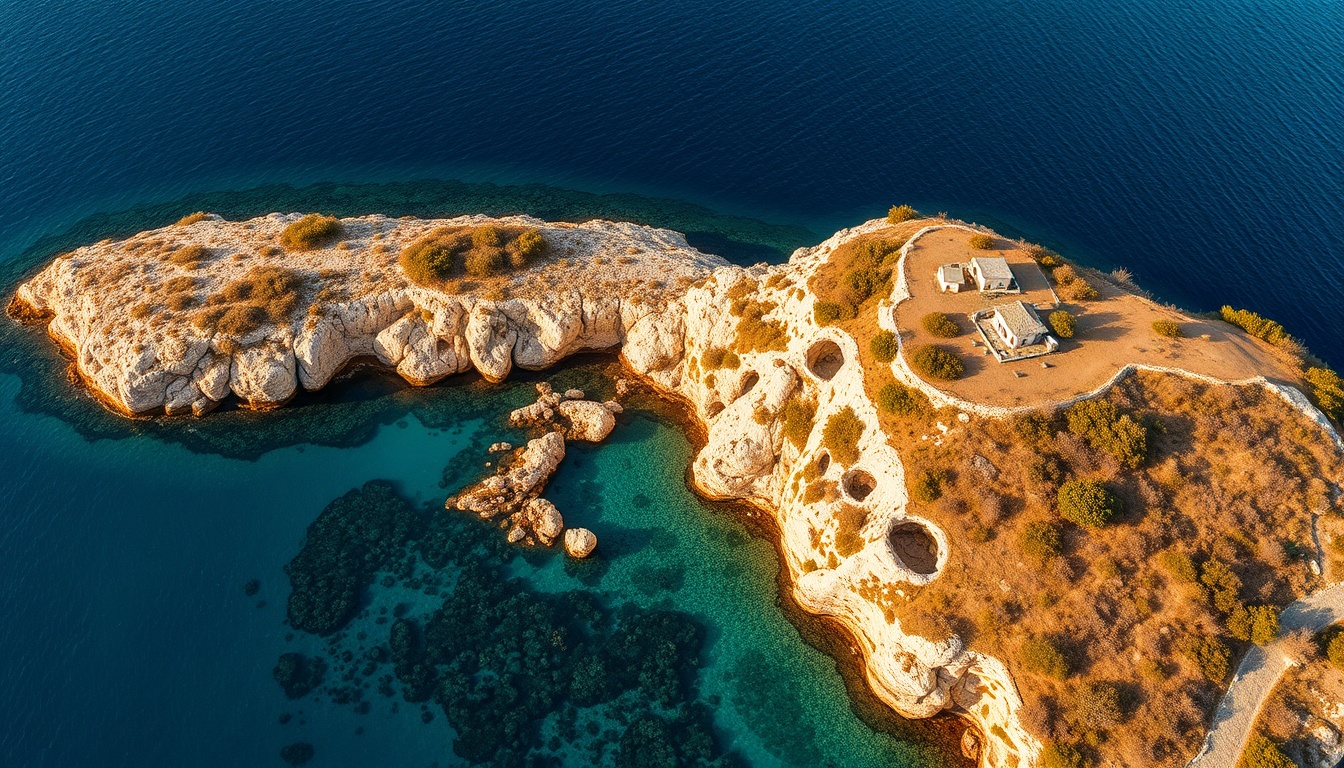
Croatia's most internationally distinctive honey has a name as direct as the landscape it comes from: kadulja med — sage honey, from kadulja, the Croatian word for Salvia officinalis. The Dalmatian coast's unique geography creates ideal conditions for sage honey production: the narrow coastal strip between the Dinaric limestone karst and the Adriatic Sea, with its microclimates shaped by the Bora wind and maritime influence, supports extensive natural populations of Salvia officinalis at 50–500m elevation. The sage blooms intensely for three to five weeks in May, and beekeepers along the coast and on the islands of Brač, Hvar, Vis, and Korčula harvest a honey that is pale to water-white in color, intensely aromatic, and defined by the camphoraceous-herbal character of pure sage nectar. Similar to Greek thyme honey from Mount Hymettus, kadulja med demonstrates how Mediterranean limestone karst terroir concentrates herbal aromatics, though Croatian Salvia officinalis produces more pronounced camphoraceous-medicinal character compared to the warm, resinous thymol-carvacrol complexity of Thymus capitatus varieties.
Authentic Dalmatian sage honey is among the most strictly monofloral of any Mediterranean blossom honey. Melissopalynological analysis of genuine kadulja med typically shows 45–75% Salvia officinalis pollen — monofloral classification usually requires only 45% for most varieties, but the Dalmatian sage bloom is so concentrated and temporally compressed that well-positioned hives regularly exceed 65%. The honey's fructose content is moderate (38–42%), meaning it crystallizes within three to six months, firming to a creamy white or very pale ivory consistency with a fine grain. Unlike high-fructose acacia honey (which can remain liquid for years), kadulja med benefits from crystallization — the texture becomes smooth and spreadable, the aromatic intensity concentrates, and the camphor-herb character sharpens.
Sage honey production is concentrated in Split-Dalmatia County and Šibenik-Knin County on the mainland coast, and on the four major southern islands: Brač, Hvar, Vis, and Korčula. Mainland coastal producers work cliff-face karst sites where sage grows with rosemary (Rosmarinus officinalis) and lavender cotton (Santolina chamaecyparissus) — a Mediterranean scrub community that produces a slightly broader honey than pure island sage. Island producers, particularly on Vis and Korčula, work more botanically isolated sites where Salvia dominates the hillside scrub with fewer competing species, producing the most intensely monofloral kadulja. Croatian sage honey commands at EU specialty retail — comparable to Italian or Spanish monofloral sage, and substantially more than commodity Croatian honey sold in bulk.
Pro Tip
Authentic kadulja med should be nearly water-white to very pale ivory, with an intense camphoraceous-aromatic nose that is distinctly more medicinal than Mediterranean wildflower. Crystallized sage honey (pale creamy-white, smooth-grained) is normal and often preferred by Croatian producers as a marker of quality — crystallization indicates genuine blossom honey, not a glucose syrup adulterate. If the honey is medium amber or has a primarily sweet-floral rather than aromatic-medicinal character, it is likely a wildflower blend with sage pollen rather than monofloral kadulja.
Brač, Hvar, and the Dalmatian Islands: Botanical Isolation as Honey Purity
The offshore islands of the Dalmatian archipelago — Brač, Hvar, Vis, Korčula, Mljet, and dozens of smaller inhabited islands — produce some of the most botanically pure Mediterranean honey in Europe. The mechanism is straightforward geography: a honeybee's foraging radius of 1–3 km covers the entire botanical community available on a small island. Continental mainland bees forage across fragmented agricultural landscapes, transitional zones, and roadsides that dilute botanical signatures; island bees forage an isolated ecosystem where the dominant nectar plant — Salvia officinalis in May, followed by Origanum vulgare and Thymus serpyllum in summer — has no competition from agricultural crops, nitrogen-fertilized grasslands, or ornamental garden flora. Island isolation is honey purity in practice.
Hvar, the longest island of the Dalmatian archipelago (68 km), has the highest density of sage cultivation in Croatia. But Hvar also has something unusual: extensive lavender cultivation. Lavandula angustifolia has been grown on Hvar for essential oil production since the early 20th century — the island's Stari Grad Plain (a UNESCO WH for its ancient Greek field system) is partly planted in lavender, and the Hvar lavender oil and eau de toilette industry is the island's best-known agricultural product after wine. Beekeepers who work Hvar sites during June (after the May sage peak and before the summer Origanum bloom) can harvest a genuine sage-lavender blended honey — pale golden rather than water-white, with a sage-dominated aromatic character softened by the floral lavender note. This is not a monofloral product, but it is an authentic island multifloral with a distinct and appealing sensory profile. A small number of producers label it specifically as 'kadulja i lavanda med' (sage and lavender honey).
Brač — the highest Dalmatian island (778m at Vidova Gora, the highest point of any Adriatic island) — has a more vertically complex honey landscape than Hvar. Coastal and low-elevation sites (Bol, Supetar, Milna) produce sage honey and Mediterranean wildflower during April–June; the island's elevated interior (above 400m) supports summer wildflower from Origanum, Thymus, Cistus, and Euphorbia wulfenii through July–August. Brač is also Croatia's most famous source of the white limestone used in Diocletian's Palace in Split and in the White House in Washington — the same geological substrate (Cretaceous limestone, Kalkstein) that underlies the sage-scrub habitat. The island's beekeeping tradition stretches back to the medieval Benedictine monasteries of Škrip and Nerežišća, whose records include honey tribute documentation from the 13th century.
Pro Tip
For Dalmatian island honey, 'monofloral kadulja' from Vis or Korčula represents the most botanically isolated and pure sage honey from Croatia. Vis is Croatia's most remote inhabited island — still partly a former Yugoslav military zone — and its traditional agricultural landscape has experienced the least mainland agricultural influence. Korčula's dense maquis and lower tourist-agricultural pressure relative to Hvar make it a consistently high-quality sage origin. Both islands produce in small quantities; availability outside Croatia is limited primarily to diaspora food networks in Germany and Austria and a handful of specialist EU importers.
Get the Honey Buyer's Cheat Sheet (free PDF)
16 varieties on one page — color, flavor, best use and what a fair price looks like — from the 304 honeys we track.
Slavonia and the Pannonian Plain: Acacia, Linden, and the Spačva Oak Forest
Eastern Croatia — the Slavonia and Baranja regions, stretching from Osijek and Vukovar to the Hungarian and Serbian borders — is geographically and botanically part of the Pannonian Plain: the same flat-to-gently-rolling lowland that produces Hungary's and Serbia's most commercially important honey varieties. Croatian Slavonians call their acacia honey bagremov med (the same term used across the Balkans for Robinia pseudoacacia honey) and their linden honey lipov med — and the products are botanically equivalent to Hungarian, Slovak, or Serbian equivalents from the same continuous lowland ecosystem. Like Italian acacia honey, Croatian bagremov med exhibits the characteristic water-white clarity and delicate vanilla undertones of high-quality Robinia pseudoacacia varieties, though Croatian terroir from Pannonian alluvial soils creates subtle mineral complexity distinguishing it from Mediterranean Alpine foothills acacia production.
What makes Slavonian honey landscape distinctive is the Spačva basin. The Spačva-Biđ forest complex — approximately 35,000 hectares of lowland pedunculate oak (Quercus robur) woodland east of Vinkovci and Vukovar, managed by Croatian Forests (HŠ) — is one of the largest remaining lowland oak forests in Europe. Slavonian oak is Croatia's single most valuable agricultural export by unit value: the Quercus robur wood from Spačva is prized globally for furniture, parquet, and wine barrel staves, commanding prices comparable to French Limousin oak. The forest understory and clearing edges support oak-pasture wildflower communities — Trifolium spp., Lotus corniculatus, Centaurea spp., Filipendula ulmaria — that produce a complex, slightly tannic-floral wildflower honey in years when apiary access is permitted within the managed forest zones.
EU membership since 2013 has had concrete structural effects on Slavonian honey production. Croatian bagremov med — harvested and processed to the same quality as Hungarian or Serbian acacia — can be marketed as single-origin 'Croatian acacia honey' with full EU origin traceability in the EU single market, without the blending-pool dynamics that absorb most Serbian and Bosnian acacia honey anonymously. Slavonian producers have responded: single-origin Croatian acacia honey from named Slavonian producers now appears in German, Austrian, and Swiss specialty retail, competing directly with Hungarian Kecskemét acacia honey on origin-quality positioning rather than commodity price.
Lika, Velebit, and Gorski Kotar: Mountain Wildflower and Fir Honeydew
Between the Dalmatian coast and the Pannonian plain lies the Croatian karst interior: Lika, the Velebit mountain range, and Gorski Kotar. Velebit is Croatia's longest and largest mountain range (145 km, up to 1,758m at Vaganski Vrh), designated a UNESCO Man and Biosphere Reserve in 1977 and protected as two national parks (Northern Velebit NP and Paklenica NP) plus a broader nature park. The Velebit plateau supports exceptional botanical diversity: Mediterranean plant communities on the Podvelebit coastal side (Bora wind-scoured limestone with Salvia, Cistus, and Pistacia lentiscus); sub-alpine and boreal communities at altitude (Sesleria albicans grasslands, Vaccinium myrtillus heaths, Rhododendron hirsutum); and a rich botanical transition zone in between that produces one of Croatia's most complex wildflower honeys. The Velebit transect is one of the most compressed botanical gradients in Europe — Mediterranean to alpine in less than 20 km horizontal distance. While Texas wildflower honey achieves comparable botanical complexity through vast continental scale across four climate zones, Croatian Velebit wildflower creates similar polyfloral depth through dramatic vertical elevation compression, with Mediterranean and alpine plant communities separated by mere kilometers rather than hundreds of miles.
Lika, the karst plateau region south and east of Velebit (the area around Gospić, Otočac, Perušić, and the Plitvice Lakes), is Croatia's least densely populated agricultural region — a factor that has preserved its meadow and karst-pasture botanical diversity. Plitvice Lakes National Park (UNESCO WH since 1979, the oldest national park in Croatia), while primarily known for its travertine lake terraces, sits within a landscape of wildflower meadows, beech forest, and karst pasture that produces distinctively complex summer wildflower honey. Local producers around Plitvice market 'plitvičko med' (Plitvice honey) as a premium tourist product — one of the few Croatian honey varieties with a recognized regional name that is not geographically tied to the Dalmatian coast.
Gorski Kotar, the heavily forested mountain region between Rijeka and Karlovac, contains Croatia's highest density of silver fir forest (Abies alba dominant above 800m). In years with significant aphid (Cinara pectinatae) population explosions — which occur irregularly, approximately every 4–8 years in Croatian fir forests — substantial quantities of fir honeydew accumulate in the tree canopy and become accessible to foraging bees. The resulting jelova medljikovica (fir honeydew honey) is dark amber to nearly black, with a characteristic balsamic-resinous flavor, very high mineral content (up to 0.7% ash versus 0.1–0.2% for blossom honeys), elevated electrical conductivity (above 0.8 mS/cm under EU standards), and a long, complex finish that Croatian connoisseurs prize. Similar to German forest honey from the Black Forest's Abies alba-Picea abies complex, Croatian fir honeydew demonstrates the distinctive terroir advantages of Central European montane forest ecosystems, though Croatian Dinaric karst geology creates more pronounced mineral complexity compared to Germanic volcanic and granitic mountain substrates.
Pro Tip
Fir honeydew honey (jelova medljikovica) from Gorski Kotar is almost never exported beyond specialty Croatian food stores and a few Austrian and German Balkan food importers. Its production is irregular — tied to aphid population cycles — which makes it difficult to build commercial supply chains around. When available (usually September–October following a heavy aphid year), it appears at local markets in Delnice, Fužine, and Čabar and through Croatian online honey retailers. Proline content in Croatian fir honeydew typically exceeds 800 mg/kg, compared to 300–500 mg/kg for blossom honeys — a practical authentication marker.
EU Membership Since 2013: Croatia as the Western Balkans' Outlier
Croatia joined the European Union on 1 July 2013, becoming the EU's 28th member state — and the only country in the immediate Western Balkans to have completed accession. Every country on Croatia's land borders (Slovenia excepted) is an EU candidate or potential candidate: Bosnia-Herzegovina (candidate since December 2022), Serbia (candidate since March 2012), Montenegro (candidate since 2010), and Kosovo (potential candidate, relationship agreement signed). The geographic continuity is striking: the same Dinaric mountain range that produces Dalmatian Croatian sage honey also produces Herzegovina Bosnian sage honey across the border. The same Pannonian lowland that produces Slavonian Croatian acacia honey produces Vojvodinian Serbian acacia honey across the border. The botanical and geological landscape is identical. The market access is not.
For the Croatian honey industry, EU accession had immediate structural consequences. Croatian honey gained automatic access to EU single-market retail channels and EU food safety enforcement mechanisms. Croatian producers became eligible to register products in the EU's GI system (PDO/PGI/TSG) — a system that gives geographic designations legal protection across all 27 member states. Croatian honey standards — already aligned with EU Directive 2001/110/EC — became directly enforceable by EU food safety authorities rather than the Croatian agency alone. Import barriers to German, Austrian, French, and UK retail evaporated. Croatian kadulja med now competes on equal legal and regulatory footing with Italian, Spanish, Greek, and Slovenian monofloral honeys in the EU single market.
The Croatian Beekeeping Association (Hrvatski savez pčelarskih udruga — HSPU) has been the industry body developing GI applications since accession. Dalmatian sage honey (kadulja med iz Dalmacije) is the strongest candidate for EU PDO or PGI designation: it has demonstrable geographic specificity (Salvia officinalis-dominated Dalmatian karst terroir), traditional production history (documented in medieval Venetian trade records), characteristic sensory profile (water-white color, camphoraceous-aromatic nose, crystallization to creamy ivory), and measurable physicochemical markers (pollen composition, conductivity, color spectrum). As of 2026, the PDO application process has been in development within the HSPU framework; submission and EU publication for opposition are the next procedural steps. A successful PDO would give Croatian sage honey the legal protection and premium market positioning of Greek Hymettus thyme honey or Slovenian Carniolan honey — and would make kadulja med unmistakably Croatian to any EU consumer reading a honey label. For context on neighboring countries' parallel journeys, see our Bosnia honey guide and Serbia honey guide.