Honey in the dough and on the warm bread
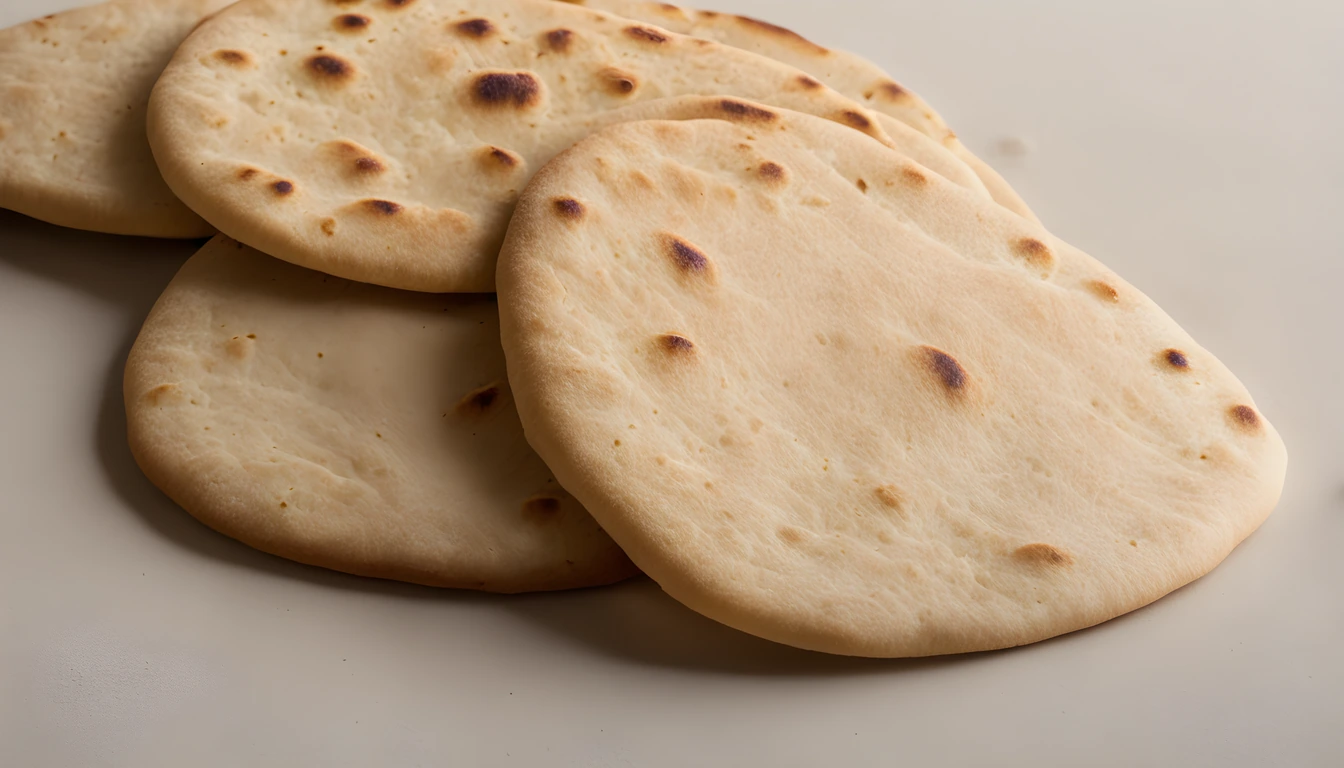
These soft yogurt flatbreads use honey twice: 21 g in the yeasted dough and 21 g in the butter brushed over the cooked breads. It is a measured part of the recipe, not a garnish left to guesswork.
This is a home skillet adaptation of naan, not a tandoor method. A dry hot pan gives browned patches and bubbles; it does not reproduce the heat or shape of a tandoor. The batch makes six oval flatbreads.
Recipe
Honey Naan
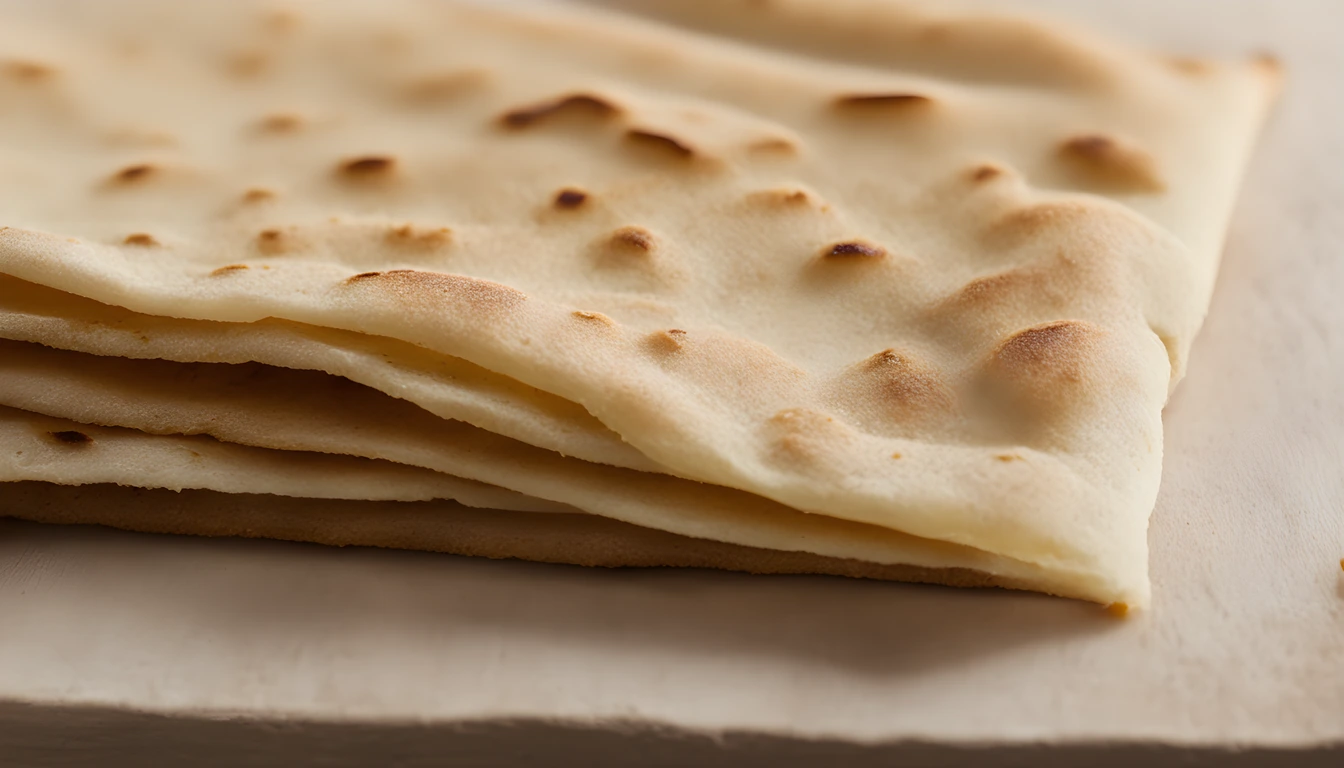
Six yeasted yogurt flatbreads cooked in a dry skillet, with measured honey in the dough and a warm honey-butter finish. Includes rising and resting time.
8Ingredients
Yield: 6 servings
- 300 g all-purpose flour, divided
- 100 g water, warmed to about 100°F (38°C)
- 2 tablespoons clover honey (42 g), divided
- 7 g active dry yeast
- 100 g plain whole-milk Greek yogurt
- 14 g canola oil
- 5 g table salt
- 28 g unsalted butter
Ingredient amounts scale; instructions show the original batch. Cooking times and pan sizes may need adjustment. Season to taste. Honey grams use US measures at 20°C and 17.5% moisture, a density estimate; weigh your honey for precision.
Instructions
- 1Start the yeast mixtureStir 21 g of the honey into the measured warm water. Sprinkle in the active dry yeast and leave for 5–10 minutes, following the yeast packet’s preparation temperature if it differs. The mixture should show activity; if it does not, check the yeast and water temperature before proceeding.
- 2Mix and knead the doughReserve 15 g of the flour for rolling. Whisk the remaining 285 g flour with the salt. Stir the yogurt and canola oil into the yeast mixture, then add to the flour. Mix until no dry patches remain. Knead for 6–8 minutes, until the dough is cohesive and elastic. It should feel soft and slightly tacky; use a little reserved flour if needed rather than adding extra unmeasured flour.
- 3Let the dough risePut the dough in a bowl, cover and leave in a comfortably warm place until puffy and roughly doubled, about 60–90 minutes. A cool kitchen can take longer. Follow the expansion of the dough rather than the clock alone.
- 4Divide, rest and rollDivide the dough into six equal pieces and round them into balls. Cover and rest for 15 minutes. During the rest, heat an uncoated heavy skillet suitable for dry cooking over medium-high heat, following the pan maker’s instructions. Use the remaining reserved flour to roll one ball at a time into an oval about 7–8 inches long and about 1/8 inch (3 mm) thick; keep the other pieces covered.
- 5Cook the flatbreads in batchesLay one rolled oval in the dry hot skillet. Cook for about 2–3 minutes, until bubbles rise and the underside has browned spots. Flip and cook for another 1–2 minutes, until both sides have browned patches and the center is set without raw dough. Adjust the heat down if the surface burns before the center cooks. Transfer to a clean towel and cover while cooking the remaining pieces. Allow about 25–30 minutes for the six breads, depending on the pan.
- 6Brush with honey butter and serveMelt the measured unsalted butter gently, remove from the heat and stir in the remaining 21 g honey. Brush the complete mixture over the six warm breads, scraping out the bowl and sharing it evenly. Serve warm. One serving is one naan with its share of honey butter. The planning total includes 30 minutes preparation, one hour rising, 15 minutes resting and 30 minutes cooking; a slower rise extends it.
Estimated nutrition per serving
277.32 calories · 7.53 g fat · 45.06 g carbohydrate · 7.18 g protein · 332.22 mg sodium
Serving: 1 of 6 equal portions
Calculated from ingredient weights and USDA FoodData Central: 168894, 173647, 169640, 175043, 171304, 172336, 173468, 173430. Estimates use ingredient input weights; actual portions, brands and cooking losses vary. Omitted nutrient values are unavailable, not zero.
Soft dough, a short rest and a hot pan
The plain whole-milk Greek yogurt is part of the dough’s liquid and fat balance. Sweetened yogurt or thin drinking yogurt changes that balance. Use the specified 100 g for this base.
Reserve 15 g from the stated flour for kneading and rolling. The dough should stay soft and slightly tacky. After dividing, the covered rest lets it relax; if an oval springs back, give that piece another few minutes rather than pulling until it tears.
Roll each bread close to the stated thickness so the center can cook before the surface burns. Pan heat and dough thickness affect timing. Brown spots alone are not the endpoint: check that the center has set and contains no raw dough.
Get the Honey Buyer's Cheat Sheet (free PDF)
16 varieties on one page — color, flavor, best use and what a fair price looks like — from the 304 honeys we track.
Choose the honey by flavor
Clover honey has a mild flavor, wildflower honey varies with its floral mix, and orange blossom honey brings citrus-floral aroma. Buckwheat honey has a stronger, malty flavor. The baking pairing guide offers more choices.
The chart uses an editorial 1–5 flavor-intensity scale for pairing. Individual jars vary with floral source and harvest.
1 = mild, 5 = bold. Editorial pairing guidance, not laboratory measurements; jars vary.
- Clover
- Mild honey-butter naan
- Wildflower
- Floral skillet flatbread
- Orange blossom
- Citrus-floral honey butter
- Buckwheat
- Bold malty honey finish
Keep the finish measured
Mix the remaining honey into gently melted butter after taking it off the heat. Brush the whole measured amount across the six warm breads and scrape the bowl. This recipe does not estimate an unknown amount of oil absorbed during frying; the pan is dry.
There is no garlic or herb garnish in this version. You can add one as a variation, but it changes the flavor and ingredient total. The breads already have a honey-butter finish, so an extra dip or drizzle is separate.
For a pan-free alternative, honey wheat bread is a risen loaf. Honey butter rolls offer smaller oven-baked portions, and honey butter is a separate spread recipe.
Serving, scaling and keeping leftovers
Serve the naan warm, with one bread as a portion. Stacking the cooked breads under a clean towel keeps them soft while the rest of the batch cooks. Their finished weight varies with moisture loss; six pieces, rather than an invented cooked gram yield, define this batch.
Doubling means twelve breads cooked in more batches. Keep the original size and thickness and allow more skillet time; the listed cooking total covers six.
Let leftovers cool, then refrigerate in a closed container and use within about two days for best texture, or freeze separated breads. Warm gently in a covered skillet so the crumb softens without drying the surface.
Nutrition and source ingredients
One portion has an estimated 277.32 calories, 7.53 g fat, 3.02 g saturated fat, 45.06 g carbohydrate, 6.55 g sugars, 1.68 g fiber, 7.18 g protein and 332.22 mg sodium.
The calculation divides the complete measured flour, water, honey, yeast, yogurt, oil, salt and butter input across six breads. Both honey portions and the full butter finish are included. There is no assumed absorbed frying oil, cooked-weight yield or fermentation adjustment.
These values sum the USDA reference ingredients and divide them by the stated portions. They are estimates, not laboratory measurements of the finished bread. Cooking changes water content; no guessed cooking-loss or recovery factor has been applied.
- USDA FoodData Central 168894: Wheat flour, white, all-purpose, enriched, bleached.
- USDA FoodData Central 173647: Beverages, water, tap, drinking.
- USDA FoodData Central 169640: Honey.
- USDA FoodData Central 175043: Leavening agents, yeast, baker's, active dry.
- USDA FoodData Central 171304: Yogurt, Greek, plain, whole milk.
- USDA FoodData Central 172336: Oil, canola.
- USDA FoodData Central 173468: Salt, table.
- USDA FoodData Central 173430: Butter, without salt.