About This Recipe
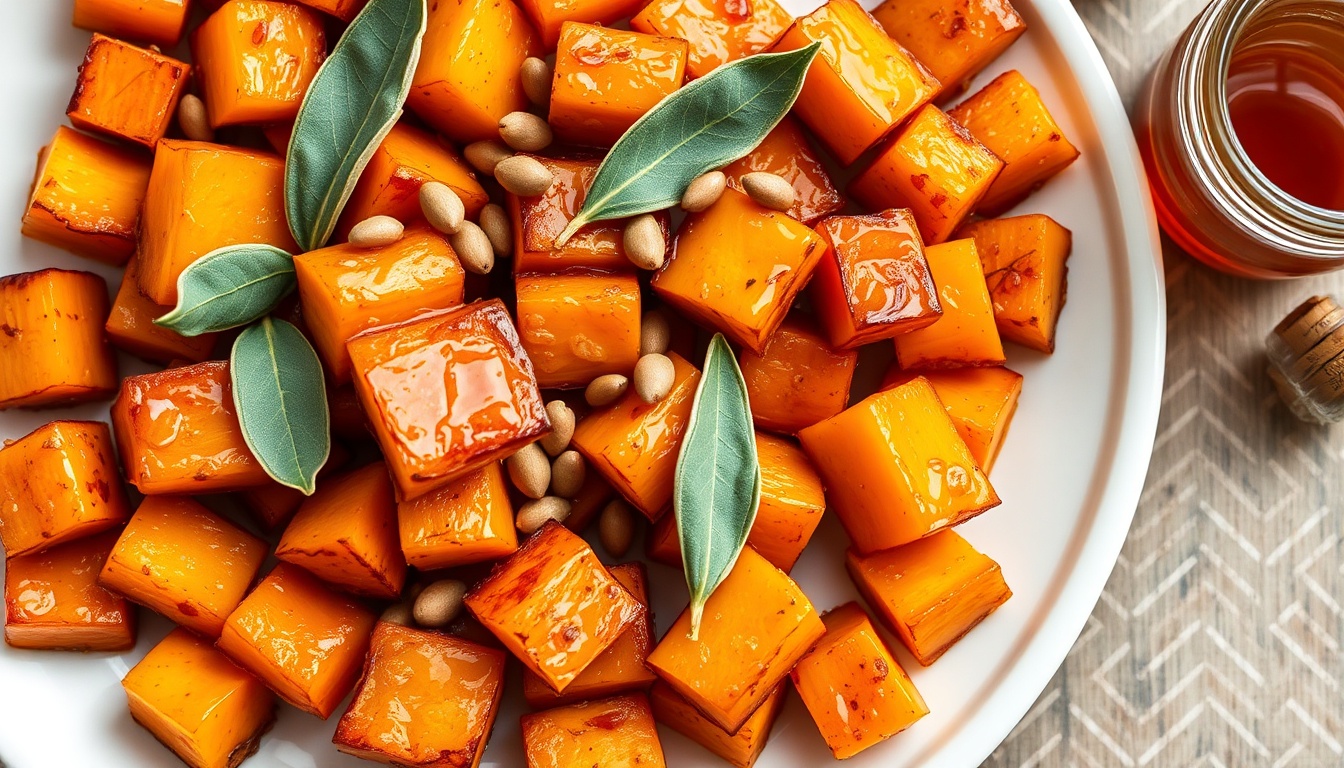
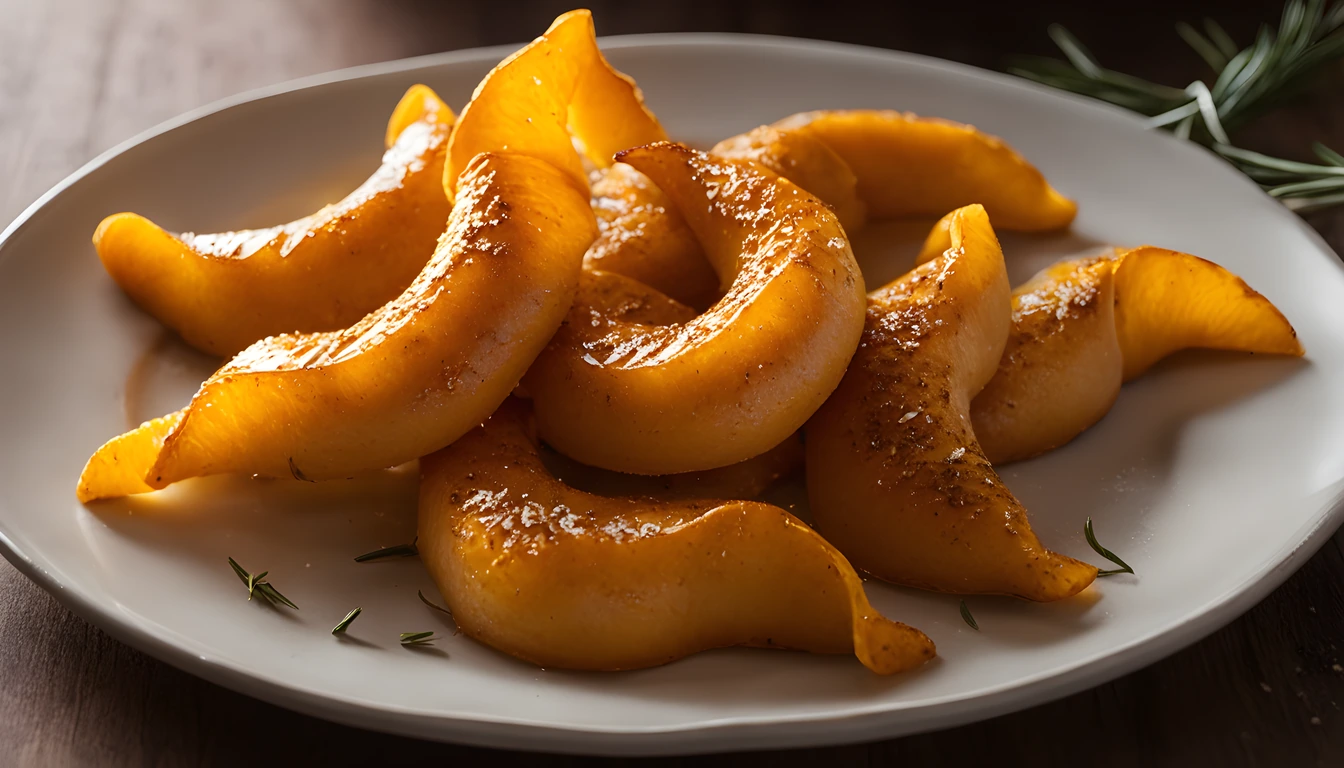
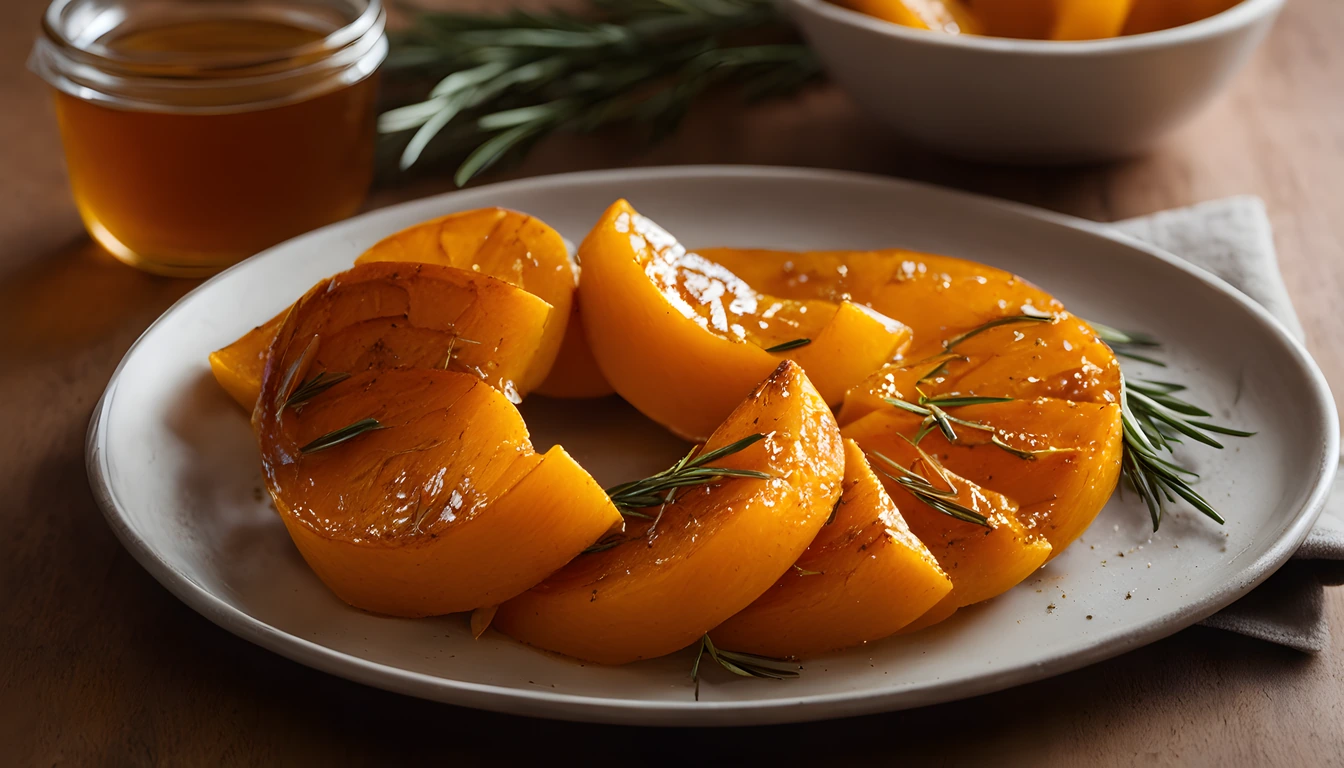
This version of honey roasted delicata starts with peeled, seeded squash flesh cut into half-moons. The pieces roast with olive oil and rosemary before honey goes on for the final few minutes. The result should be tender with lightly browned edges, rather than crisp like a chip.
Delicata skin is edible when cooked, and keeping it on is a familiar way to prepare the squash. The measured base here deliberately leaves it off: the ingredient-based nutrition uses a generic USDA raw winter-squash flesh record that excludes rind and seeds. A skin-on variation has a different input and is not quantified by that estimate.
Recipe
Honey Roasted Delicata Squash: Peeled Half-Moons
Roast peeled delicata squash half-moons with olive oil and rosemary, then add honey near the end. The estimate covers measured squash flesh, without rind or seeds.
5Ingredients
Yield: 4 servings
- 600 g delicata squash flesh, peeled and seeded
- 42 g honey
- 13.5 g olive oil
- 2 g table salt
- 1.4 g fresh rosemary, finely chopped
Ingredient amounts scale; instructions show the original batch. Cooking times and pan sizes may need adjustment. Season to taste. Honey grams use US measures at 20°C and 17.5% moisture, a density estimate; weigh your honey for precision.
Instructions
- 1Prepare the squashHeat the oven to 425 F (220 C). Scrub the squash under running water and dry it. Put it on a stable board, trim the ends, halve lengthwise and scoop out the seeds and stringy pulp. Remove the thin skin with a vegetable peeler while the halves sit securely cut-side down. Weigh 600 g of the prepared flesh; rind, seeds and stems are excluded.
- 2Slice and coatCut across the halves into crescents about 1/2 inch (1.3 cm) thick. Toss with all the measured olive oil, salt and rosemary. Arrange in one layer on a large rimmed baking sheet with space between pieces.
- 3Roast until nearly tenderRoast for 18 minutes, then turn the pieces and rotate the pan. Continue for about 8–10 minutes, until a fork slides into the thickest part and the flat faces have golden patches. If the pieces need longer, keep roasting before adding honey.
- 4Add the honeyDrizzle the measured honey over the hot squash and turn the pieces gently to coat. Return to the oven for 3–5 minutes, checking often, until the glaze bubbles lightly. Remove before the honey darkens to a burnt coating.
- 5Rest and serveLet stand for 5 minutes, then divide the whole batch into four portions. Spoon the pan glaze over the squash so the counted honey is served. The 65-minute schedule includes peeling and slicing, up to 35 minutes of cooking and the short rest. Refrigerate leftovers within 2 hours, or sooner in a hot room, following the linked chilling guidance.
Estimated nutrition per serving
113.21 calories · 3.59 g fat · 21.61 g carbohydrate · 1.47 g protein · 200.58 mg sodium
Serving: 1 of 4 servings
Calculated from ingredient weights and USDA FoodData Central: 170489, 169640, 171413, 173468, 173473. Estimates use ingredient input weights; actual portions, brands and cooking losses vary. Omitted nutrient values are unavailable, not zero.
The Peeled Base
Delicata is often cooked with its skin on. This base is visibly different: use the peeled flesh and keep the crescent shape. Scrub the squash first, then cut it on a stable board. If the squash rocks, trim a small flat surface before making a lengthwise cut.
The 600 g is measured after peeling and removing seeds. Whole squash size is too variable to promise that a particular number of fruits supplies that weight. Buy enough to trim, then weigh what will actually go onto the tray.
Flavor intensity uses an editorial culinary scale: 1 is mild and 5 is bold. These are tasting suggestions, not laboratory measurements.
Sources: University of Maine Cooperative Extension: Squashing Fears; USDA FoodData Central: generic raw squash flesh reference; FoodSafety.gov: 4 Steps to Food Safety.
1 = mild, 5 = bold. Editorial pairing guidance, not laboratory measurements; jars vary.
- Clover
- Mild rosemary glaze
- Wildflower
- Roasted squash and herbs
- Buckwheat
- A bolder malty glaze
Get the Honey Buyer's Cheat Sheet (free PDF)
16 varieties on one page — color, flavor, best use and what a fair price looks like — from the 304 honeys we track.
Why the Honey Goes on Late
Roast with the oil first. The squash needs time to become tender, while a thin coating of honey can darken quickly in a hot oven. Adding honey for the final few minutes makes it easier to watch the glaze.
If the honey is too stiff to drizzle, set its closed container in warm water until it loosens, then weigh the 42 g needed for the recipe. No extra water is added to the glaze.
Use Similar Slices and a Spacious Pan
Aim for even thickness rather than matching every crescent exactly. Thin ends can brown before a very thick center softens. Separate the pieces so their flat faces contact the pan.
A crowded tray holds moisture between the slices and makes browning less even. Use a second tray if necessary, allowing room around both in the oven. Check the larger pieces with a fork before adding the honey.
What the Nutrition Reference Covers
The USDA reference is Squash, winter, all varieties, raw. It covers edible raw flesh with rind and seeds removed; it is not a cultivar-specific analysis of delicata. The estimate uses that broad composition reference for the 600 g peeled flesh, plus all the oil, honey, salt and rosemary, divided by four.
The University of Maine Cooperative Extension lists cooked delicata skin as edible. If you prefer skin-on crescents, that is a separate preparation choice: the displayed estimate does not quantify the rind or establish the nutrient composition of a skin-on portion.
Serve While the Glaze Is Warm
These are tender squash slices with browned surfaces, not dry crisp chips. Serve as a side with honey roasted turkey, or compare other shapes and textures in honey roasted butternut squash and honey roasted carrots.
Keep the rest of the plate savory if you want the honey to stand out. Refrigerate leftovers promptly in a shallow container. Reheat a serving gently until hot; the glaze will soften as it warms.
Choosing the Honey
Use Clover honey or Wildflower honey or Buckwheat honey for the flavor described in this recipe. See our honey selection guide for other culinary choices.