About This Recipe
Honey tres leches cake is an egg-leavened sponge, sweetened mostly with honey, baked until it springs back and then flooded with a mixture of sweetened condensed milk, whole milk and cream. Four hours in the refrigerator turns the crumb dense, cold and custard-like.
The sponge has no butter in it. Whipped whole eggs supply the lift, and folding keeps that air in place, which leaves the crumb open enough to drink up the milk. Honey browns faster than sugar, so the oven runs at 325°F and the cake comes out while the top is still gold.
Bake and soak it a day ahead if you like; the cream goes on just before serving. One 9-by-13-inch cake cuts into 12 pieces.
Recipe
Honey Tres Leches Cake Recipe
A honey-sweetened sponge soaked with sweetened condensed milk, whole milk and cream, chilled until custardy, then finished with honey whipped cream. Makes 12 pieces.
15Ingredients
Yield: 12 servings
- 200 g eggs (4 large)
- 100 g granulated sugar (about 1/2 cup)
- 170 g honey (about 1/2 cup)
- 61 g whole milk (2 fl oz)
- 125 g all-purpose flour (about 1 cup)
- 4.6 g baking powder (1 tsp)
- 1.15 g baking soda (1/4 tsp)
- 1.5 g salt (1/4 tsp)
- 4.2 g vanilla extract (1 tsp)
- 306 g sweetened condensed milk (1 cup)
- 183 g whole milk (3/4 cup)
- 89 g heavy whipping cream (3 fl oz)
- 42 g honey (2 tbsp)
- 238 g heavy whipping cream (1 cup)
- 21 g honey (1 tbsp)
Ingredient amounts scale; instructions show the original batch. Cooking times and pan sizes may need adjustment. Season to taste. Honey grams use US measures at 20°C and 17.5% moisture, a density estimate; weigh your honey for precision.
Instructions
- 1Heat the oven and line the panHeat the oven to 325°F with a rack in the middle. Line the bottom of a 9-by-13-inch pan with parchment and grease the sides. Honey darkens quickly, so set a timer for the early end of the baking range.
- 2Whip the eggs, sugar and honeyBeat the eggs, granulated sugar and 170 g honey on medium-high until pale and thick, about 5 to 6 minutes. The mixture is ready when it falls from the beaters in a slow ribbon that sits on the surface for a moment. Beat in the vanilla.
- 3Fold in the dry ingredients and milkWhisk the flour, baking powder, baking soda and salt together. Fold in a third of it, then half the 2 fl oz milk, then another third of the flour, the rest of the milk and finally the last of the flour. Stop folding as soon as the streaks disappear.
- 4Bake and cool in the panScrape the batter into the pan and smooth the top. Bake 26 to 30 minutes, until the center springs back under a fingertip and the edges pull slightly from the sides. Cool in the pan on a rack for 45 minutes, until completely at room temperature.
- 5Mix the soaking milkWhisk the sweetened condensed milk, 183 g whole milk, 89 g cream and 42 g honey until smooth. Poke the cooled cake every inch with a skewer, pushing all the way to the bottom of the pan.
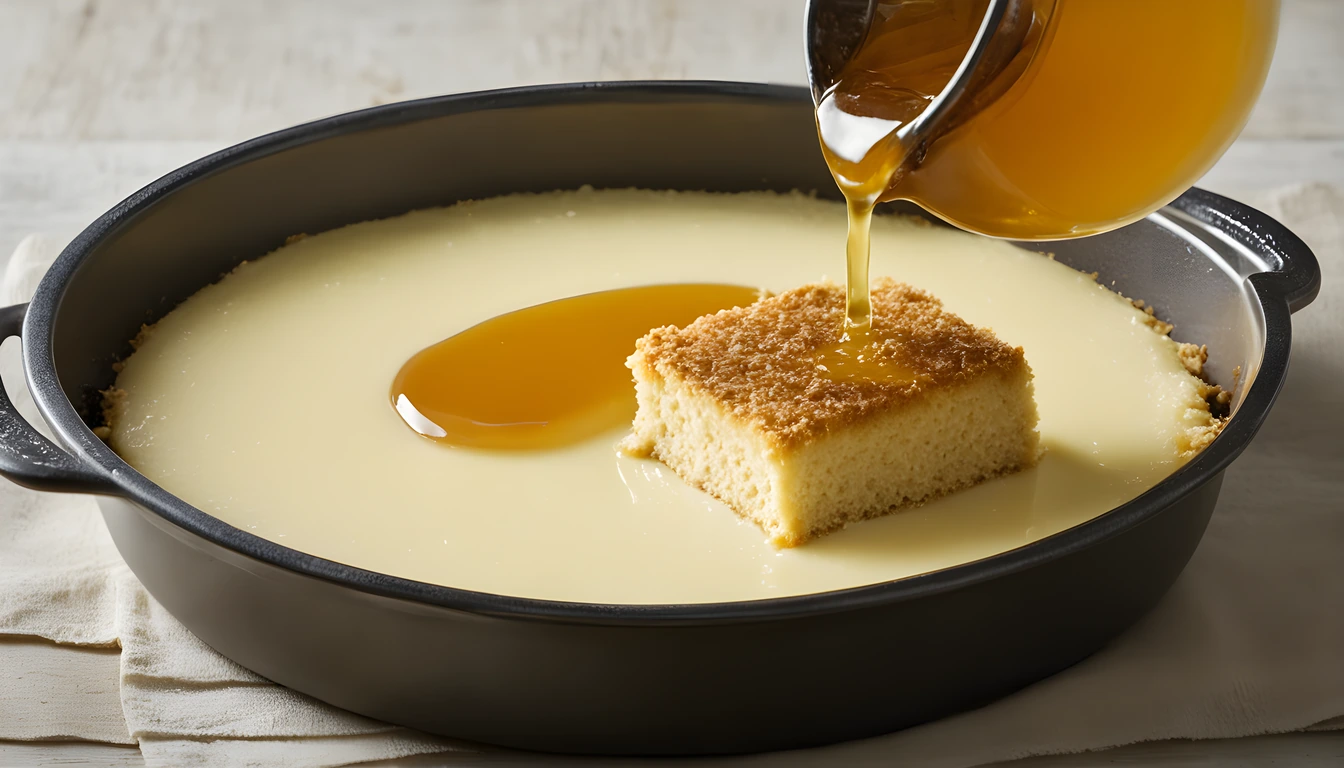
- 6Soak, then chillPour the milk mixture over the cake in three additions, waiting 5 minutes between each so it sinks in rather than running down the sides. Cover and refrigerate at least 4 hours, or overnight. After chilling, the top should look damp with no milk pooling.
- 7Whip the cream and serveWhip the 238 g cream with 21 g honey to soft peaks. Spread over the cold cake, cut into 12 pieces and serve cold. Add the cream within a few hours of serving, since it slumps after that.
Estimated nutrition per serving
341.15 calories · 14.4 g fat · 48.17 g carbohydrate · 6.66 g protein · 188.64 mg sodium
Serving: 1 piece (about 123 g), 1 of 12 servings
Calculated from ingredient weights and USDA FoodData Central: 171287, 169655, 169640, 171265, 168894, 172803, 175040, 173468, 173471, 171275, 170859. Estimates use ingredient input weights; actual portions, brands and cooking losses vary. Omitted nutrient values are unavailable, not zero.
What the cake should look and taste like
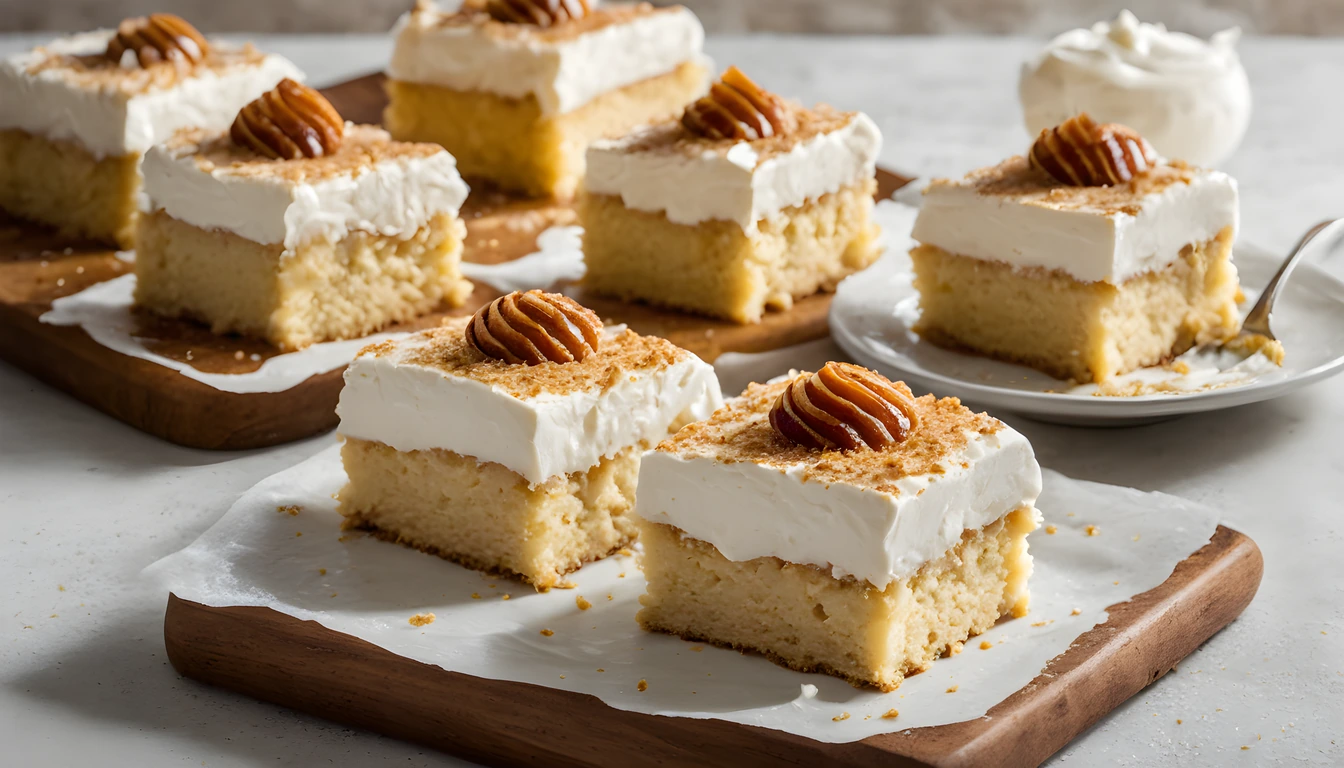
Out of the oven the sponge is deep gold with a level top, and a finger pressed into the middle leaves no dent. Once the milk goes on it settles slightly and the crumb turns custardy; after chilling, a cut piece holds its shape and the sliced edge looks damp from top to bottom.
If the base is soupy, the milk went onto a warm cake or was poured faster than the crumb could take it. If the middle tastes dry, the cake needed more chilling time, not more milk.
Flavor intensity is computed from the listed flavor notes of 85 honeys in our catalog: 1 means most are described as mild or light, 5 means most are described as bold or dark. It is a tasting guide, not a laboratory measurement.
Sources: Honey (UC Agriculture and Natural Resources, Cottage Foods); USDA FoodData Central: Egg, whole, raw, fresh; USDA FoodData Central: Sugars, granulated; USDA FoodData Central: Honey; USDA FoodData Central: Milk, whole, 3.25% milkfat, with added vitamin D; USDA FoodData Central: Wheat flour, white, all-purpose, enriched, bleached; USDA FoodData Central: Leavening agents, baking powder, double-acting, sodium aluminum sulfate; USDA FoodData Central: Leavening agents, baking soda; USDA FoodData Central: Salt, table; USDA FoodData Central: Vanilla extract; USDA FoodData Central: Milk, canned, condensed, sweetened; USDA FoodData Central: Cream, fluid, heavy whipping.
- Springs back when pressed, before any milk goes on
- Level, gold top with edges just pulling from the pan
- Damp crumb all the way through after soaking
- No standing milk on the surface after chilling
Pro Tip
Cut the cold cake with a knife dipped in hot water and wiped dry between slices; the soaked crumb releases cleanly.
1 = mild, 5 = bold. Editorial pairing guidance, not laboratory measurements; jars vary.
- Clover
- The plain choice for both sponge and soak; stays in the background
- Wildflower
- Floral honey that carries through the crumb and the milk
- Orange Blossom
- Citrus edge that suits the whipped cream on top
- Sourwood
- Spicier honey for a darker, more assertive cake
- Buckwheat
- Malty and strong; use half and expect a dark sponge
Matching a honey to another dish: the honey flavor map
Get the Honey Buyer's Cheat Sheet (free PDF)
16 varieties on one page — color, flavor, best use and what a fair price looks like — from the 304 honeys we track.
Why the sponge is built on eggs and honey
There is no butter or oil here. Whipped whole eggs hold the air that lifts the cake, and honey adds enough body to keep that foam steady while the flour goes in. A quarter teaspoon of baking soda offsets the honey's acidity so the crumb stays light.
Honey colours earlier than sugar does, which is why the oven stays at 325°F and the cake comes out while the top is still gold. A dark surface means it baked too hot or a few minutes too long.
- Beat the eggs until the ribbon holds
- Fold, do not stir, once the flour is in
- Bake at 325°F and check at 26 minutes
- Cool completely before the milk goes on
Pro Tip
Warm a stiff jar of honey in a bowl of hot water to loosen it for measuring, then let it cool to room temperature before it meets the eggs.
Storage and making ahead
The soaked cake improves overnight, so bake and soak it the day before you plan to serve it and keep it covered in the refrigerator. Whipped cream is best spread the same day; it holds for a few hours but slumps after that.
Leftovers keep covered in the refrigerator for up to 3 days and should be served cold. A milk-soaked cake does not freeze well, and the cream will not survive freezing at all.
- Soaked cake: covered in the refrigerator, up to 3 days
- Whipped cream: spread within a few hours of serving
- Serve cold, straight from the refrigerator
- Do not freeze the soaked cake
Pro Tip
Keep the unfrosted soaked cake cold and covered, then whip and spread the cream just before the cake goes to the table.
Choosing the Honey
Use Clover Honey or Wildflower Honey or Orange Blossom Honey for the flavor described in this recipe. See our honey selection guide for other culinary choices.