About This Recipe
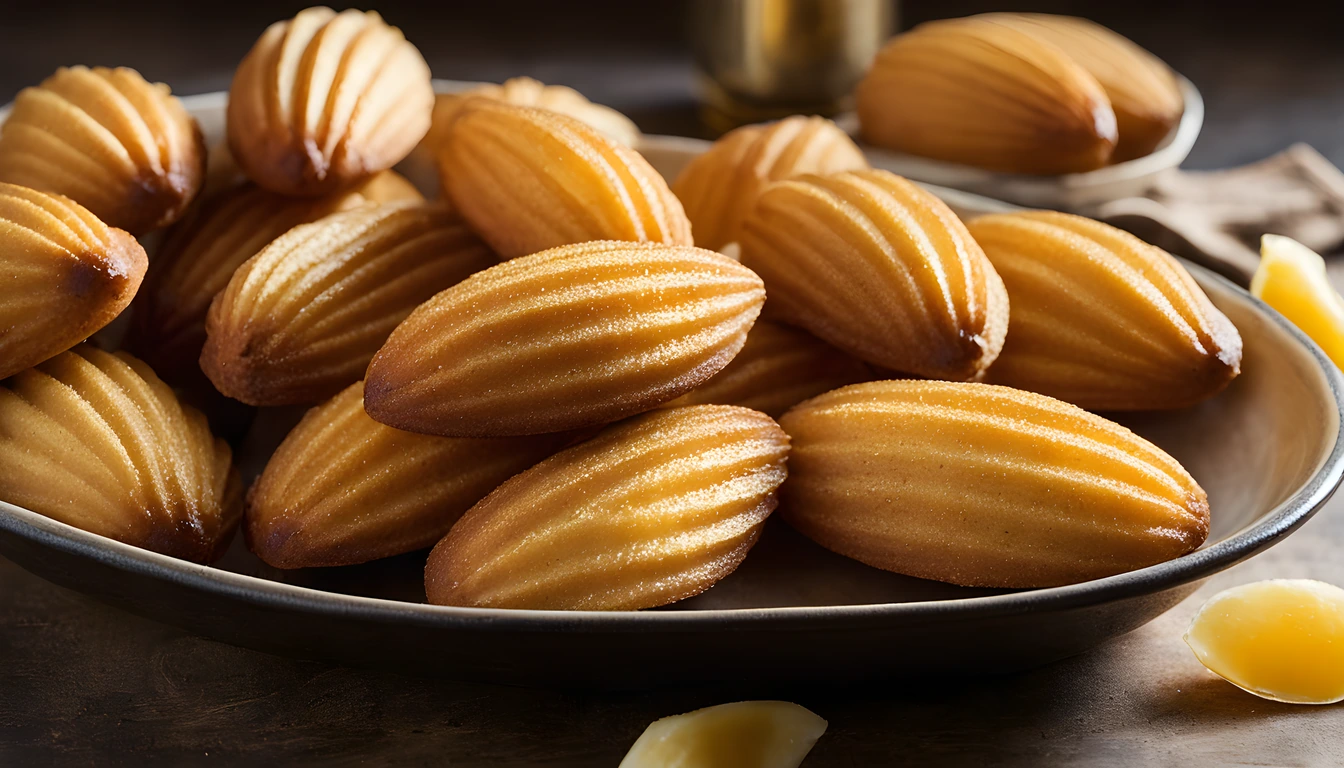
Honey madeleines are small shell-shaped butter cakes baked in a molded pan, so the ridged side sets into a thin crust while the middle stays soft. The batter is a plain sponge of egg, flour and melted butter, with honey replacing part of the sugar and bringing its own flavor to the crumb.
Two things decide whether they work. The batter has to be cold when it goes into the molds, thick enough to sit where you put it instead of sliding to the rims. And the oven starts hot, which sets the scalloped edges fast so the center keeps rising into the domed hump that makes a madeleine look like a madeleine.
One 12-mold pan makes the whole batch. They are at their best within a few hours of baking, warm or at room temperature, so plan to eat them the same day.
Recipe
Honey Madeleines Recipe
Honey madeleines baked in a shell pan: a butter sponge sweetened partly with honey, chilled batter and a hot start for the domed center. Makes 12 cakes.
11Ingredients
Yield: 12 servings
- 63 g honey (about 3 tbsp)
- 100 g all-purpose flour (about 3/4 cup plus 1 tbsp)
- 113 g unsalted butter (1 stick), melted and cooled
- 100 g eggs (2 large)
- 50 g granulated sugar (about 1/4 cup)
- 4.6 g baking powder (1 tsp)
- 1.5 g salt (1/4 tsp)
- 4.2 g vanilla extract (1 tsp)
- 2 g lemon zest (1 tsp)
- 14 g soft butter for the pan (about 1 tbsp)
- 8 g all-purpose flour for the pan (about 1 tbsp)
Ingredient amounts scale; instructions show the original batch. Cooking times and pan sizes may need adjustment. Season to taste. Honey grams use US measures at 20°C and 17.5% moisture, a density estimate; weigh your honey for precision.
Instructions
- 1Whisk the eggs, honey and sugarWhisk the eggs, honey, sugar, vanilla and lemon zest in a bowl for about 2 minutes, until the mixture turns pale cream and the honey has fully dissolved. A hand whisk is enough; you are looking for a light foam on the surface, not stiff volume.
- 2Fold in the dry ingredientsSift the flour, baking powder and salt over the egg mixture. Fold with a rubber spatula until just combined, stopping while a few streaks of flour still show. Mixing past that point develops the gluten and the cakes bake up tough.
- 3Fold in the butterPour in the melted butter once it is warm to the touch rather than hot, and fold gently until the batter is smooth and glossy, about 20 strokes. It should slide off the spatula in a thick ribbon rather than a thin stream. If the butter looks like it is separating, fold a few more strokes.
- 4Chill the batterCover the bowl and refrigerate for at least 1 hour, or up to 24 hours. Cold batter holds its shape in the molds and gives the domed center its rise. This chilling time is included in the total.
- 5Heat the oven and prepare the panHeat the oven to 425°F (220°C) and set a rack in the middle. Brush every groove of the 12-mold shell pan with the 14 g soft butter and dust with the 8 g flour, tapping out the excess over the sink. Keep these separate from the melted butter and sifted flour that go into the batter. Without this coating the shells stick at the ridges and tear on the way out.
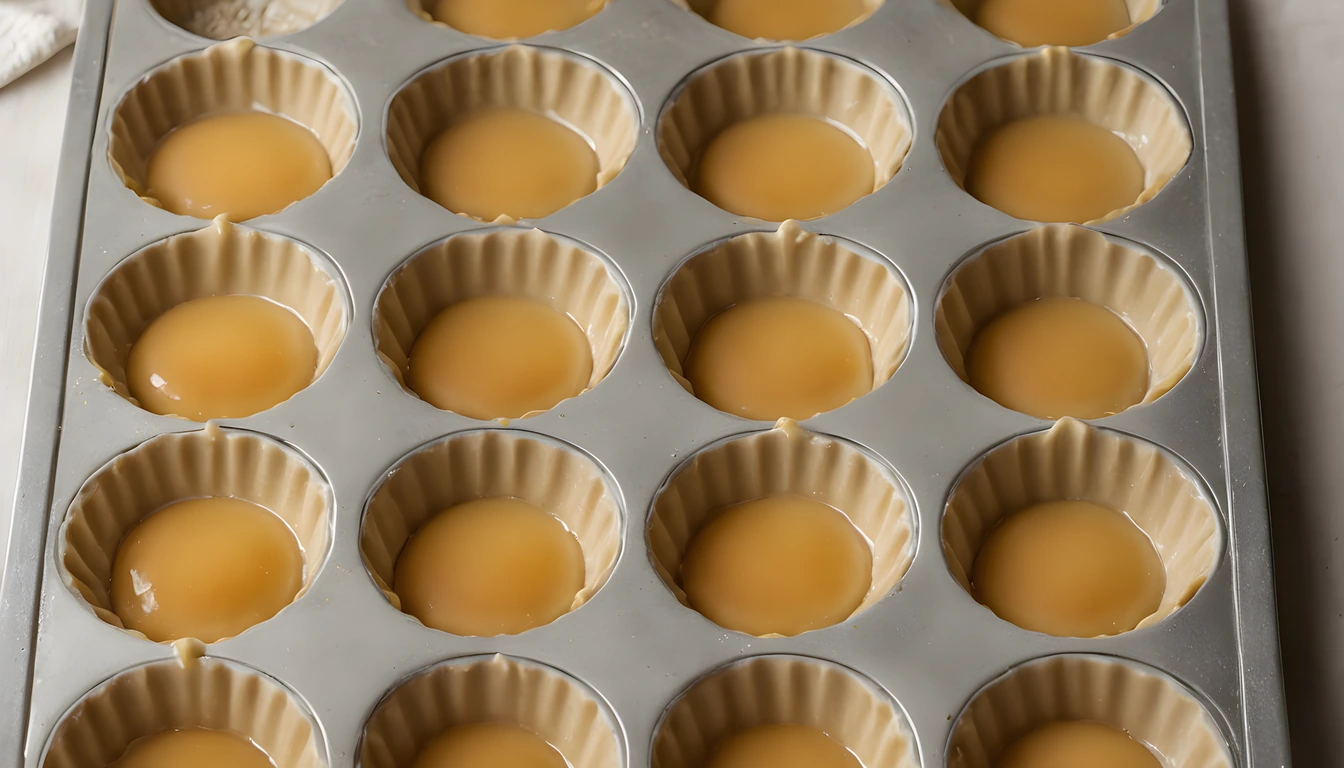
- 6Fill and bakeDivide the cold batter among the 12 molds, about 36 g each, filling them three-quarters full and leaving the rims bare. Bake at 425°F for 4 minutes, then lower the oven to 350°F (175°C) and bake until the edges are deep gold and the centers spring back when pressed, 6 to 8 minutes more.
- 7Unmold and cool brieflyRap the pan once on the counter and turn the madeleines out onto a rack. Let them cool 5 to 10 minutes before eating; they are at their best slightly warm, with the shell side still crisp. Cool completely before storing.
Estimated nutrition per serving
153.93 calories · 9.46 g fat · 15.6 g carbohydrate · 2.09 g protein · 102.6 mg sodium
Serving: 1 madeleine (about 33 g), 1 of 12 servings
Calculated from ingredient weights and USDA FoodData Central: 169640, 168894, 173430, 171287, 169655, 172803, 173468, 173471, 167749. Estimates use ingredient input weights; actual portions, brands and cooking losses vary. Omitted nutrient values are unavailable, not zero.
Why the batter has to chill
Cold batter is the difference between a madeleine with a raised center and one that bakes flat across the top. The rest also lets the flour hydrate and the gluten relax, so the crumb stays tender instead of rubbery.
An hour is the minimum. Overnight is easier to schedule and gives a slightly deeper flavor: the batter keeps up to 24 hours, covered, and cold batter portions into the shells without running over the rims.
Flavor intensity is computed from the listed flavor notes of 82 honeys in our catalog: 1 means most are described as mild or light, 5 means most are described as bold or dark. It is a tasting guide, not a laboratory measurement.
Sources: Honey (UC Agriculture and Natural Resources, Cottage Foods); USDA FoodData Central: Honey; USDA FoodData Central: Wheat flour, white, all-purpose, enriched, bleached; USDA FoodData Central: Butter, without salt; USDA FoodData Central: Egg, whole, raw, fresh; USDA FoodData Central: Sugars, granulated; USDA FoodData Central: Leavening agents, baking powder, double-acting, sodium aluminum sulfate; USDA FoodData Central: Salt, table; USDA FoodData Central: Vanilla extract; USDA FoodData Central: Lemon peel, raw.
- Chill at least 1 hour, up to 24 hours
- Cover the bowl so the surface does not dry
- Stir once gently if the batter has separated
- Keep it cold while the oven heats
Pro Tip
Short on time, 30 minutes in the freezer gets the batter close to cold and thick, but check it so the edges do not begin to freeze.
1 = mild, 5 = bold. Editorial pairing guidance, not laboratory measurements; jars vary.
- Clover
- Everyday batches where butter should lead
- Wildflower
- Fuller-flavored cakes with the lemon zest
- Orange Blossom
- Citrus-scented madeleines for tea
- Lavender
- A floral batch, kept plain and warm
- Buckwheat
- Dark, molasses-leaning cakes for bold honey fans
Matching a honey to another dish: the honey flavor map
Get the Honey Buyer's Cheat Sheet (free PDF)
16 varieties on one page — color, flavor, best use and what a fair price looks like — from the 304 honeys we track.
Doneness and texture cues
A finished madeleine has a deep gold scalloped edge, a paler domed center, and a ridged shell side that drops out cleanly. The middle should spring back when you press it; an indent that stays means another minute or two.
Eat them within a few hours of baking. The crisp edge softens as they sit, which some people prefer and others do not. A 3-minute refresh in a 300°F oven brings the crust back.
- Deep gold at the scalloped edges
- Dome springs back when pressed
- Shell ridges intact after unmolding
- No wet batter at the center when broken open
Pro Tip
Break one open before serving the batch. If the middle looks wet, put the pan back in the oven for 2 minutes.
Storage and making ahead
Madeleines are best the day they are baked. Keep them in a single layer in an airtight tin at room temperature for up to 2 days. Stacked while warm, they steam and lose the edge that makes them worth baking.
For longer keeping, freeze the cooled cakes in a bag for up to 1 month and rewarm at 325°F for 4 to 5 minutes. Honey holds moisture in the crumb a little longer than a plain sponge, but it does not make these shelf-stable.
The batter itself can be mixed the night before and baked in the morning, which splits the work without any loss of texture.
- Room temperature: 2 days, airtight, single layer
- Freezer: 1 month, then rewarm at 325°F
- Skip the refrigerator for baked cakes; they firm up and stale faster
- Discard any that smell sour or show mold
Pro Tip
Warm them briefly before serving. The butter and honey aromas come back with heat.
Choosing the Honey
Use Clover Honey or Wildflower Honey or Orange Blossom Honey for the flavor described in this recipe. See our honey selection guide for other culinary choices.