About This Recipe
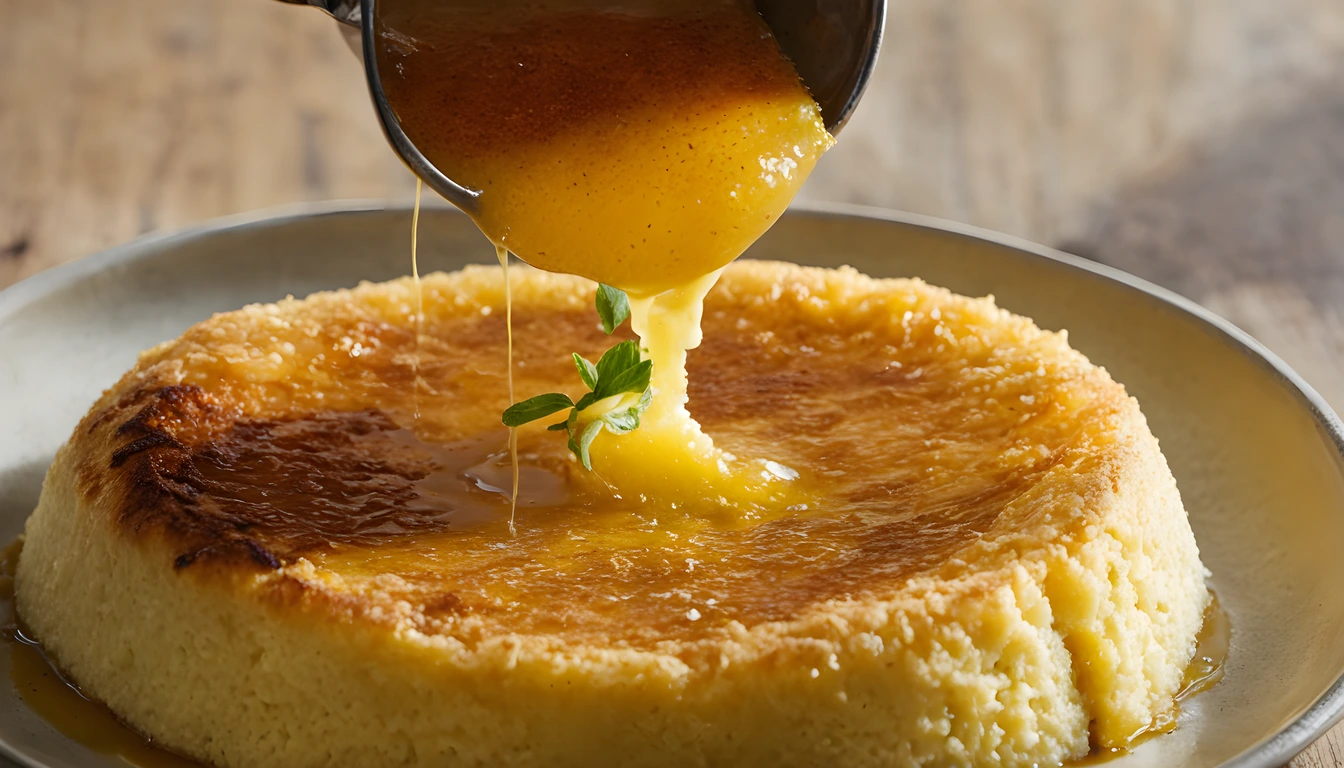
Basbousa is a semolina cake soaked with syrup until the grains soften and the top turns glossy. This version uses honey in both the batter and the soaking syrup, so the honey flavor runs through the cake instead of sitting only on the surface.
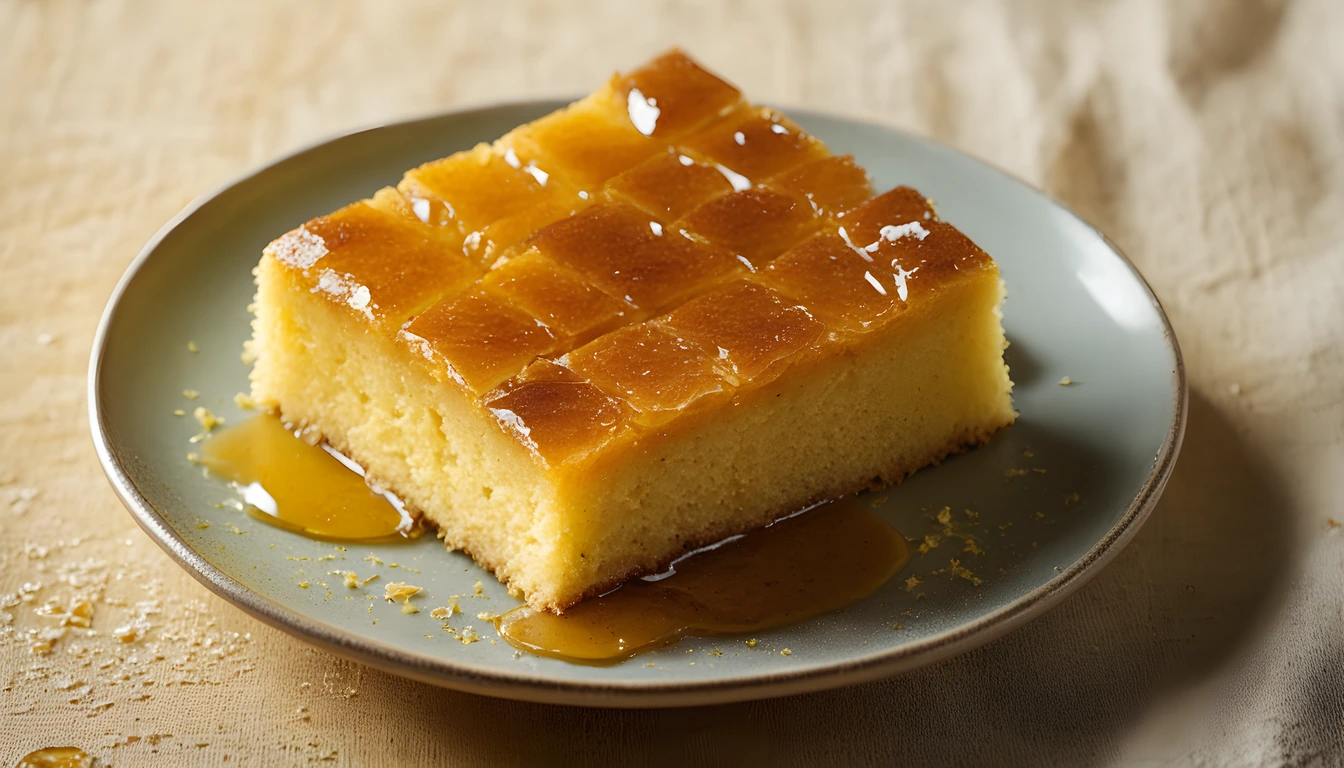
The method depends on temperature. Hot syrup goes onto the cake while the cake is still hot from the oven, and the semolina pulls it inward as everything cools. The lines scored before baking open slightly and give the syrup a path down through the pieces; yogurt and melted butter keep the crumb tender without making it wet.
Serve it at room temperature, cut into 24 small diamonds. A piece weighs about 42 g, and the whole cake about 1 kg.
Recipe
Honey Basbousa Recipe
A semolina sheet cake sweetened with honey, baked until golden, then soaked with hot honey-lemon syrup. Makes 24 pieces, about 1 kg.
11Ingredients
Yield: 24 servings
- 300 g fine semolina
- 200 g plain whole-milk Greek yogurt
- 150 g honey (about 7 tbsp)
- 100 g unsalted butter, melted (about 7 tbsp)
- 100 g eggs (2 large)
- 4.6 g baking powder (1 tsp)
- 4.2 g vanilla extract (1 tsp)
- 23 g sliced almonds (about 1/4 cup)
- 120 g honey (about 1/3 cup plus 1 tsp)
- 100 g water (about 3 1/3 fl oz)
- 15 g lemon juice (about 1/2 fl oz)
Ingredient amounts scale; instructions show the original batch. Cooking times and pan sizes may need adjustment. Season to taste. Honey grams use US measures at 20°C and 17.5% moisture, a density estimate; weigh your honey for precision.
Instructions
- 1Heat the oven and prepare the panHeat the oven to 350°F (175°C). Line an 8-inch square baking pan with parchment, leaving an overhang on two sides, and grease the parchment. The pan goes into the oven at room temperature.
- 2Mix the batterWhisk the semolina and baking powder in a large bowl. In a second bowl, whisk the yogurt, 150 g honey, melted butter, eggs and vanilla until smooth. Pour the wet mixture into the semolina and stir just until no dry patches remain. Let the batter stand 10 minutes so the semolina hydrates.
- 3Spread and scoreScrape the batter into the prepared pan and smooth the top. Score the surface into 24 diamond pieces with a thin knife. Scatter the sliced almonds over the top.
- 4BakeBake until the top is golden brown and the center springs back when pressed, 30 to 35 minutes. The edges will pull slightly away from the sides.
- 5Simmer the syrupWhile the cake bakes, combine the 120 g honey, water and lemon juice in a small saucepan. Bring to a bare simmer over medium heat and cook 5 minutes, until slightly thickened. Keep the syrup hot until the cake comes out.
- 6Soak and restPour the hot syrup slowly over the cake while both are still hot, spooning it around the edges first and then over the center. Let the cake stand at room temperature until the syrup is absorbed and the cake has cooled, about 40 minutes. Cut along the scored lines and serve.
Estimated nutrition per serving
129.91 calories · 4.79 g fat · 19.5 g carbohydrate · 2.84 g protein · 30.51 mg sodium
Serving: 1 piece (about 42 g), 1 of 24 servings
Calculated from ingredient weights and USDA FoodData Central: 168894, 171304, 169640, 173430, 171287, 172803, 173471, 170567, 173647, 167747. Estimates use ingredient input weights; actual portions, brands and cooking losses vary. Omitted nutrient values are unavailable, not zero.
What the finished cake should be like
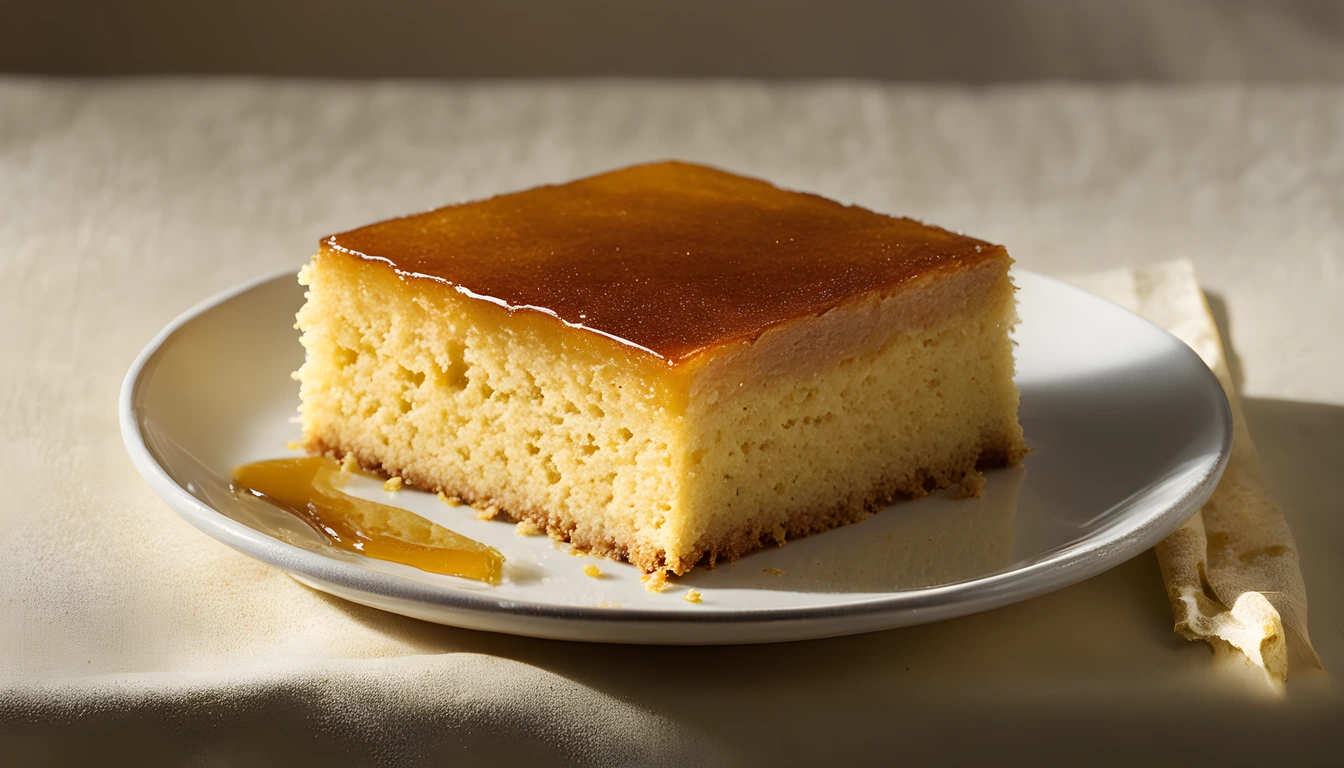
A good basbousa is moist but not soupy: the semolina grains stay distinct, the top is golden, and the syrup has soaked in evenly. The cake should feel springy in the center and pull barely away from the sides of the pan.
If the syrup pools at the bottom, the batter went into the oven too wet or the syrup was poured faster than the cake could take it. Let it stand another 10 minutes before cutting.
Flavor intensity is computed from the listed flavor notes of 79 honeys in our catalog: 1 means most are described as mild or light, 5 means most are described as bold or dark. It is a tasting guide, not a laboratory measurement.
Sources: Honey, UC Agriculture and Natural Resources Cottage Foods; USDA FoodData Central: Wheat flour, white, all-purpose, enriched, bleached; USDA FoodData Central: Yogurt, Greek, plain, whole milk; USDA FoodData Central: Honey; USDA FoodData Central: Butter, without salt; USDA FoodData Central: Egg, whole, raw, fresh; USDA FoodData Central: Leavening agents, baking powder, double-acting, sodium aluminum sulfate; USDA FoodData Central: Vanilla extract; USDA FoodData Central: Nuts, almonds; USDA FoodData Central: Beverages, water, tap, drinking; USDA FoodData Central: Lemon juice, raw.
- Golden top with visible almond slices
- Semolina grains distinct, not pasty
- Syrup absorbed to the center
- Pieces hold their shape when lifted
Pro Tip
Score the cake before baking; the cuts open slightly in the oven and guide the syrup down through the pieces.
1 = mild, 5 = bold. Editorial pairing guidance, not laboratory measurements; jars vary.
- Clover
- The syrup, for a clean, mild sweetness
- Orange Blossom
- The syrup, where lemon and orange blossom meet
- Wildflower
- The cake batter, for a rounder honey flavor
- Lavender
- The syrup, used lightly so it does not taste soapy
- Sage
- The syrup, for a dry, herbal edge against the semolina
Matching a honey to another dish: the honey flavor map
Get the Honey Buyer's Cheat Sheet (free PDF)
16 varieties on one page — color, flavor, best use and what a fair price looks like — from the 304 honeys we track.
Serving and storage
Serve at room temperature. Basbousa is rich, so pair it with plain yogurt or tea rather than more sweetness. Cut pieces with a sharp knife and wipe the blade between cuts for clean edges.
Store leftovers covered in the refrigerator for up to 3 days. Let a piece sit at room temperature for 20 minutes before eating; the semolina firms up when cold.
- Room temperature: the day it is made
- Refrigerator: up to 3 days, covered
- Bring pieces back to room temperature before serving
- Warm individual pieces in a low oven if you prefer them soft
Pro Tip
If the cake dries out after a day, warm a splash of honey with a spoonful of water and brush it over the cut surface before serving.
Why hot syrup goes on a hot cake
The cake and the syrup need to be hot at the same time. A hot cake pulls syrup inward as it cools, and hot syrup flows into the scored cuts instead of sitting on the surface. Cool syrup on a warm cake leaves a wet top and a dry center.
Keep the syrup barely simmering while the cake finishes. If it thickens too much before the cake is out, add a tablespoon of water and warm it again.
- Syrup hot, not boiling hard
- Cake straight from the oven
- Pour slowly around the edges first
- Rest before cutting
Pro Tip
Use a spoon to drizzle the syrup in stages; this gives the semolina time to absorb it.
Choosing the Honey
Use Clover Honey or Wildflower Honey or Orange Blossom Honey for the flavor described in this recipe. See our honey selection guide for other culinary choices.