Zimbabwe's Three Honey Zones: Highveld, Lowveld, and Eastern Highlands
Zimbabwe occupies 390,757 km² of landlocked southern-central Africa — a country whose geography is defined by altitude as much as latitude. Unlike the flat coastal nations of West Africa or the elongated river-basin countries of central Africa, Zimbabwe is essentially a plateau: the highveld at 1,200–1,500 metres above sea level covers the central spine of the country, running southwest to northeast and including Harare (1,490m), Bulawayo (1,343m), and the agricultural heartland. From this plateau, the terrain drops sharply on two sides: to the north and northeast into the Zambezi Valley (below 500m), and to the south into the Limpopo Lowveld (below 450m). On the eastern border, the Eastern Highlands rise abruptly from the Mozambican coastal plain to elevations above 2,000 metres, culminating at Mount Nyangani (2,592m), Zimbabwe's highest point. This altitudinal diversity — 450m to 2,592m within a single country — produces three fundamentally distinct honey ecologies that have more in common with their nearest foreign neighbours than with each other.
The highveld is miombo woodland country. Brachystegia spiciformis — msasa in Shona, the tree whose spectacular spring flush of bronze and red new leaves (August–October, before the November rains) is one of the defining visual experiences of the Zimbabwean highveld — is simultaneously Zimbabwe's national tree and its primary honey flora. The msasa woodland extends across the central plateau in a continuous canopy that merges with Julbernardia globiflora (the secondary miombo dominant) in the wetter eastern and northern zones, and transitions to Acacia-mixed savanna in the drier southwest. The msasa/miombo honey flow occurs primarily in October–November, coinciding with the new-leaf flush and the onset of the rains: miombo trees invest heavily in simultaneous mass flowering during this period, producing pollen and nectar in volumes that Apis mellifera scutellata colonies respond to with rapid build-up. For the broader miombo honey ecology shared across this subregion, see the Mozambique honey guide and the Tanzania honey guide. The South Africa honey guide covers the southern-hemisphere seasonal extensions of this corridor.
The Zambezi Valley lowlands — the Mana Pools UNESCO World Heritage zone along the Zimbabwean bank of the Zambezi, the Kariba basin, and the hot, flat Beit Bridge corridor toward the South African border — are mopane country. Colophospermum mopane forms almost pure-stand woodlands across these hot lowveld zones: a tree adapted to high-alkalinity soils, extreme heat (temperatures above 45°C are recorded in the Zambezi Valley in October), and seasonal flooding. Mopane flowers are small and not especially showy, producing nectar over a relatively diffuse period (October–December); the honey is medium amber, slightly resinous, with a faint earthiness distinct from the cleaner floral character of msasa wildflower. The Gonarezhou National Park — 'place of many elephants' in Shona, in the southeastern Lowveld near the Save-Runde confluence — straddles the boundary between mopane and mixed Limpopo valley woodland, and represents Zimbabwe's southern connection to the Great Limpopo Transfrontier Park shared with Mozambique and South Africa.
The Eastern Highlands — the Nyanga, Vumba, and Chimanimani ranges along the Mozambique border — produce the smallest volume but the most distinctive character honey in Zimbabwe. At elevations between 1,500m and 2,400m, with annual rainfall exceeding 1,800mm and frequent mist and cloud, the Afromontane forest here is dominated by Podocarpus milanjianus (yellowwood), Widdringtonia nodiflora (Mlanje cedar), Syzygium guineense (waterberry), and Hagenia abyssinica. The cooler temperatures support better in-hive moisture management by bee colonies: Eastern Highlands honey typically reaches moisture levels below 18%, compared to the 19–22% moisture more common in the hotter lowland and midland zones. Small-scale highland beekeepers in the Nyanga and Vumba districts produce honey of consistent quality that reaches the Harare specialty food market and Eastern Highlands farm stalls, but volumes are small and the product has no international commercial identity.
The ZimHoney Exception: Africa's Unlikely Export Survivor
Sub-Saharan Africa produces an estimated 500,000–600,000 tonnes of honey annually — roughly 15–20 percent of global production — yet the region accounts for less than 5 percent of global honey exports by value. The structural barriers are consistent: fragmented informal supply chains, inadequate post-harvest handling, variable quality, limited cold storage, and the absence of international brand infrastructure. Zimbabwe is one of the handful of exceptions to this pattern. The country has a documented history of commercial honey export to international markets — primarily the United Kingdom and South African specialty retail — that pre-dates most African honey export programmes and has survived the extreme disruptions of Zimbabwe's economic crisis of the 2000s.
The foundations of the Zimbabwean honey industry were laid during the colonial and early independence period. European commercial beekeeping arrived in Rhodesia in the early twentieth century, and by the 1960s and 1970s, Zimbabwe had developed a commercial honey sector with Langstroth hive operations, certified extraction facilities, and export infrastructure. The Honey Producers Association of Zimbabwe coordinated the commercial sector; exports to British specialty retailers were consistent and Zimbabwe honey carried a credible provenance in the UK market at a time when Southern African food exports were well-regarded. ZimHoney — and the broader category of branded Zimbabwean miombo honey — achieved what very few African honey producers before or since have managed: shelf presence in European retail with traceable national-origin labelling.
The economic crisis that began in 2000 — triggered by land reform programme disruptions to commercial agriculture, followed by hyperinflation (Zimbabwe's inflation peaked at an estimated 89.7 sextillion percent per month in November 2008) — devastated the formal honey sector. Commercial beekeeping operations collapsed alongside the broader agricultural economy; export infrastructure disappeared; the Honey Producers Association's institutional capacity was severely reduced. Many experienced commercial beekeepers emigrated. The informal rural beekeeping sector — practiced by Shona and Ndebele communities using traditional bark-hive systems — proved more resilient, but had no export pathway.
Recovery began slowly after Zimbabwe's adoption of the US dollar in 2009 stabilised the economy, and has accelerated since the early 2020s. The Jesse Tree Honey cooperative, operating in Matabeleland and supported through church-based rural development networks near Bulawayo, is among the most-cited examples of the recovery model: it aggregates honey from rural Ndebele small-scale beekeepers, provides post-harvest handling support, and markets the product through South African ethical-retail channels. Several other cooperative and NGO-linked programmes operate in Mashonaland and Manicaland. The Zimbabwe Beekeepers Association has been rebuilt as an active sector body. ZimHoney products — sourced from cooperative networks across the highveld miombo zones — are again available through South African specialty retailers (primarily Cape Town and Johannesburg gourmet food stores) and through direct export to niche UK importers. The ZimHoney story is less about a honey product and more about an institutional survival: a sector that maintained enough infrastructure across a catastrophic macro-economic collapse to re-enter international markets when conditions stabilised. That makes it genuinely unusual in the African context.
Get the Honey Buyer's Cheat Sheet (free PDF)
16 varieties on one page — color, flavor, best use and what a fair price looks like — from the 304 honeys we track.
Zambezi Teak and Kalahari Sands: Africa's Most Invisible Honey
Western Zimbabwe — the zone between Hwange National Park, the Victoria Falls corridor, and the Botswana border in Matabeleland North — sits on the Kalahari Sands, a deep aeolian sand substrate that stretches from northern Botswana across western Zimbabwe and into the Caprivi Strip of Namibia. This substrate supports a specific woodland type dominated by Baikiaea plurijuga — Zambezi teak, also called Rhodesian teak — a tall, straight-trunked leguminous tree that produces the hardest commercially-exploited timber in Africa (specific gravity 0.75–0.90). The Zambezi teak forests of western Zimbabwe were heavily exploited for railway sleepers, parquet flooring, and furniture during the colonial period; remaining stands, now protected, form one of the most ecologically intact large-area teak woodlands remaining in southern Africa, particularly in the Hwange National Park and Kazungula areas.
Baikiaea plurijuga flowers in July and August — the dry-season winter bloom, when temperatures in the Kalahari sands zone are cool (night minimums 5–10°C) and bee foraging is constrained to warmer afternoon hours. The flowers are pale pink-purple, fragrant, and produce accessible nectar over a period of approximately six weeks. The honey from a Zambezi teak-dominant flow is pale straw-amber to light amber, with a mild, lightly floral-woody character — clean and delicate compared to the darker, more complex msasa wildflower honey of the highveld. The Kalahari sands woodland also includes Pterocarpus angolensis (wild teak / mukwa, the same species used in Mozambique's golo bark hives), Terminalia sericea (silver terminalia, with a distinctive milky-pale honey), and Combretum species, creating a dry-woodland blend during the late dry-season flow.
Despite the scale of the teak woodland zone — Hwange National Park alone covers 14,651 km², with substantial additional woodland habitat in communal land and National Forest areas in Matabeleland North — no Zimbabwean producer has ever characterised, named, or exported a Zambezi teak varietal honey. The reasons are structural and familiar: the teak forest zone is thinly populated, rural communities in Matabeleland North have limited access to post-harvest handling infrastructure, and the informal honey trade in this area moves entirely within the domestic market at commodity prices. The Hwange National Park safari economy — one of Zimbabwe's most significant tourism revenue generators, drawing visitors primarily for elephant, lion, and painted wolf — has no associated honey identity despite being surrounded by one of southern Africa's largest intact teak forests. A verified, traceable Zambezi teak blossom honey from the Hwange belt would represent a genuinely rare dry-season monofloral — a July-August flow with essentially no commercial equivalent anywhere in southern Africa — and would be commercially distinguishable from any other African honey on the basis of floral source, season, and ecology.
The broader Kalahari sands woodland honey gap extends across borders: western Zimbabwe's teak forest is ecologically continuous with the teak woodland of the Chobe National Park in Botswana and the Caprivi/Zambezi Region of Namibia. None of these countries has a named teak varietal honey in international trade. The institutional pattern — teak is managed as a timber resource in all three countries, and the honey produced by bees foraging on teak blossoms is an incidental externality that no timber management authority or honey cooperative has yet captured as a named product — is a precise parallel to the cashew blossom paradox in Mozambique's Nampula province: the conditions exist, the bees exist, the honey exists, and the question has simply not been asked.
Bark-Hive Traditions: Chirongo, Ndebele Log Hives, and the Miombo Continuum
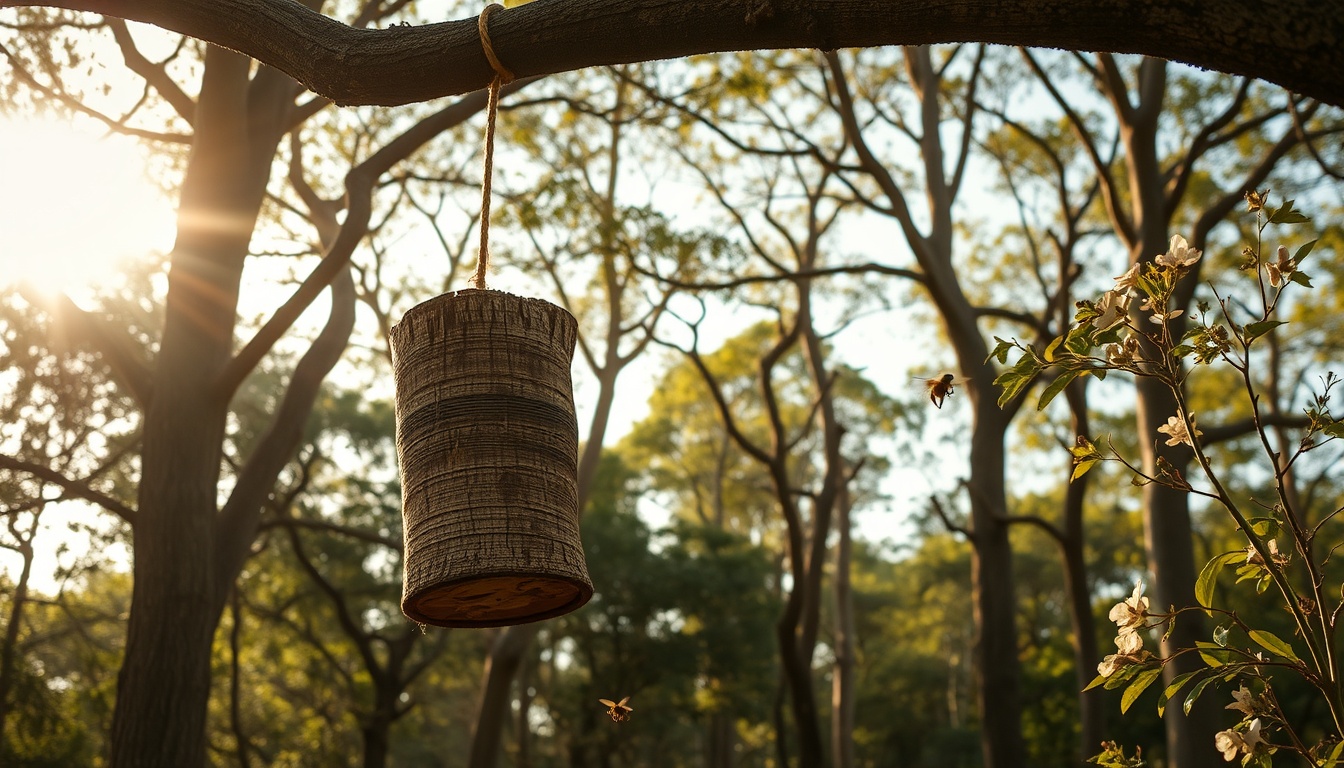
Zimbabwe's traditional beekeeping technologies reflect the country's ethnic diversity. The Shona people — Zimbabwe's largest ethnic group, comprising approximately 70–75 percent of the population and concentrated across the highveld, Eastern Highlands, and northern midlands — have a long tradition of log-hive and bark-hive beekeeping rooted in the same miombo woodland ecology shared with Mozambique, Tanzania, and Zambia. The traditional Shona bark hive — called chirongo in some regional dialects, or simply described as dende (the Shona word for the beehive in general) — is constructed from the cylindrical bark of a straight miombo tree (Brachystegia spiciformis, Julbernardia globiflora, or Pterocarpus angolensis), sealed at both ends with bark discs, and suspended in a honey tree at canopy height by bark-rope or wire. The structural principle is identical to Mozambique's Makua golo hive and the traditional log hives found across the miombo belt from southern Tanzania to Zambia: hang the hive at height to reduce honey badger (Mellivora capensis) predation, allow natural colonisation by Apis mellifera scutellata swarms, harvest twice yearly after the main November miombo flush and the secondary September flow.
The Ndebele people — concentrated in Matabeleland (Bulawayo, Gwanda, Bubi, Hwange districts), comprising approximately 15–20 percent of Zimbabwe's population, and with cultural and linguistic connections to the Zulu and other Nguni groups of South Africa — practice a parallel bark-hive tradition with some structural differences. Ndebele log hives in Matabeleland tend to be positioned lower in trees or on purpose-built hive stands in homestead areas, reflecting the denser human settlement pattern and different land-use structure of the Kalahari sands zone compared to the wilder miombo woodlands of the highveld. Ndebele honey-handling traditions include smoking techniques that differ from Shona practice; the broader Ndebele approach to livestock and land management, influenced by agro-pastoral Zulu heritage, gives their beekeeping a slightly more domesticated character than the longer-range miombo forest beekeeping of Shona communities.
The Jesse Tree Honey cooperative's work with Ndebele beekeepers in Matabeleland represents one of the most systematic attempts in Zimbabwe to bridge traditional bark-hive production with modern quality standards. The cooperative provides wire and hardware for improved hive positioning, beeswax and container equipment for cleaner extraction, and training in moisture management — the principal quality variable that determines whether traditional honey can meet export standards (below 20% moisture) or must be sold domestically at commodity prices (above 20% moisture, fermentation risk). The 'Jesse tree' of the cooperative's name is Combretum imberbe (leadwood), a slow-growing, extremely hard-wooded tree that is the Zimbabwean national tree emblem of patience and permanence — a deliberate reference to the cooperative's long-term community development mandate rather than a commercial agriculture model.
The continuity of bark-hive technology across the miombo belt is one of the most underappreciated facts in global honey geography. From the Makua golo hives of northern Mozambique through the Yao hives of Niassa and southern Malawi, the chirongo tradition of the Zimbabwean highveld, the Ndebele log hives of Matabeleland, the Tonga fishing community hives along the Zimbabwean bank of Lake Kariba, and the equivalent traditions in Zambia, Malawi, and southern Tanzania — a single essentially unbroken tradition of cylindrical bark-log beekeeping extends across roughly 2,000 km of the miombo woodland belt. This is arguably the world's largest contiguous region of a single pre-colonial beekeeping technology still in active production use.
Gonarezhou and the Great Limpopo Transfrontier Corridor
Gonarezhou National Park — 5,053 km² of hot, dry Lowveld in southeastern Zimbabwe, at the junction of the Save and Runde rivers near the Mozambique and South Africa borders — represents Zimbabwe's most ecologically intact large-predator wilderness and the country's primary contribution to the Great Limpopo Transfrontier Park (GLTFP), a conservation megaproject that connects Gonarezhou (Zimbabwe), Limpopo National Park (Mozambique), and Kruger National Park (South Africa) across a shared management zone of approximately 100,000 km². The GLTFP has been in development since 2002, with elephant corridors re-opened across international border fences as part of the park's core management objective. The beekeeping implication is ecologically important: the same Apis mellifera scutellata populations, foraging on the same mopane and mixed teak-combretum-acacia woodland, move across what are arbitrary political boundaries from the perspective of a colony following a forage flow.
The honey ecology of the Gonarezhou zone is dominated by mopane (Colophospermum mopane, October–December, medium amber, slightly resinous), Acacia tortilis and Acacia nigrescens (Knob Thorn, January–March, medium-light amber), Lonchocarpus capassa (Apple-leaf, September–October, pale amber), and seasonal wildflower from the mixed Lowveld woodland. The Save River valley — the eastern backbone of Gonarezhou, flowing south toward Mozambique's Gaza province — adds riverine forest species (Ficus sycomorus, Trichilia emetica, Berchemia discolor / Buffalo Thorn) to the honey flora, producing a more complex character than the pure mopane honey of the Kariba basin lowlands. Gonarezhou Safari Trust, the management partner for the park, has incorporated community beekeeping livelihood programmes in the buffer zones adjoining the park, primarily in the Malipati and Sengwe communal land areas — zones where human-wildlife conflict management and rural income diversification converge.
The transboundary honey ecology story is largely invisible to consumers and to the specialty honey trade. Honey produced on the Zimbabwean side of the Gonarezhou-Limpopo border and honey produced on the Mozambican side of the same border are florally and ecologically near-identical — the same bee subspecies, the same dominant tree flora, the same seasonal timing — yet they have entirely different institutional frameworks, export histories, and market access profiles. The Zimbabwean side has some cooperative infrastructure and a recovering export tradition; the Mozambican side is more disrupted by infrastructure deficits and the legacy of the Cabo Delgado insurgency's displacement of northern beekeeping communities (though the Gonarezhou-Limpopo boundary zone in Gaza and Sofala provinces, far from the northern conflict area, is more stable). The transfrontier park framing could, in principle, create a shared 'Great Limpopo Honey' brand that draws on the conservation-area provenance of both national parks — the kind of premium territorial origin story that has driven value in New Zealand manuka, Hawaiian lehua, and Spanish sierra del segura rosemary honey markets. This has not yet been proposed or developed.
Finding Authentic Zimbabwe Honey
Zimbabwe honey has broader international availability than most sub-Saharan African honey products, though it remains a niche product in global terms. In South Africa — Zimbabwe's largest export market and closest food-retail neighbour — branded Zimbabwean honey appears intermittently in Cape Town and Johannesburg specialty food stores, health food retailers, and through online ethical-food platforms. The most consistently marketed product is ZimHoney-branded miombo wildflower honey from highveld cooperative sources — typically characterised as 'raw, unfiltered Zimbabwe forest honey' in South African retail contexts. Volumes are small and supply is irregular; when available, it is typically priced in the range (approximately US$8–18), positioning it as a specialty product rather than a commodity honey.
In the United Kingdom — Zimbabwe's primary historical export market and still the destination for some cooperative production — a small number of Fairtrade-linked and ethical-import retailers stock Zimbabwean honey, primarily marketed through development-sector supply chains (Oxfam, Traidcraft-network retailers, ethical food importers). The UK market connection is historically older and culturally stronger than most African honey export relationships, reflecting the former colonial connection and the post-independence agricultural trade relationships established in the 1980s. Several UK beekeeping enthusiasts and specialty importers have maintained direct-trade relationships with Zimbabwean cooperatives through the economic disruptions of the 2000s.
Within Zimbabwe, the most reliable quality sources are cooperative-certified honey from Mashonaland and Manicaland highveld producers (available in Harare specialty food stores, particularly in the Borrowdale and Avondale suburbs), Eastern Highlands farm-gate sales (honey from Nyanga and Vumba district beekeepers is available at farm stalls and tourist accommodation in the Nyanga national park area and the Vumba Botanical Gardens vicinity), and Jesse Tree Honey cooperative products from Matabeleland (available through fair-trade retail channels in Bulawayo and increasingly online). The informal roadside honey trade — particularly along the Harare-Bulawayo highway and in Mashonaland East — offers raw, unprocessed miombo honey at low prices; quality is variable and moisture content often exceeds 20%, making these products authentic but not reliably shelf-stable.
For visitors to Zimbabwe's major safari destinations, honey sourcing opportunities arise at Hwange National Park lodges (where some operators work with Matabeleland North community beekeepers), Mana Pools lodge operators (who occasionally source from Zambezi Valley community beekeeping programmes), and Gonarezhou/Malilangwe-area conservation lodges (where buffer-zone community beekeeping is a documented livelihood activity). These safari-lodge-sourced honeys represent perhaps the most contextually meaningful way to encounter authentic Zimbabwe honey — purchased where the bees foraged, in the conservation landscape that makes Zimbabwe's honey ecology genuinely distinctive. For a neighbouring country perspective on the same southern Africa miombo honey belt, see the Mozambique honey guide, the Zambia honey guide if available, and the South Africa honey guide.