The Word That Summons a Bird
In Tanzania's Eyasi basin — a rift valley depression southwest of the Serengeti — a honey hunter raises his voice and makes a sound that no human language contains. It is a rolled, carrying call, described in field research as something between a grunt and a murmur, repeated and persistent as the hunter walks through the miombo woodland. Within minutes, a Greater Honeyguide bird (*Indicator indicator*) may appear — a sparrow-sized, drab-brown bird that lands visibly nearby, then flies a short distance, lands again, and waits. The hunter follows. The bird leads. The honey nest is usually found within 200 metres of where the bird first appeared.
This is the Hadza honey hunt — one of the most rigorously documented cases of inter-species foraging cooperation between humans and a wild bird anywhere on Earth. Researchers Brian Wood, Michael Gurven, and colleagues published multiple studies on Hadza-honeyguide interactions documenting that honey-hunting success is substantially higher when the Greater Honeyguide participates. The bird benefits because Hadza hunters open the bee nest with fire and tools, exposing beeswax and brood that the honeyguide consumes — it cannot open a wild bee nest alone. The hunter benefits because finding wild bee nests unaided in dense miombo woodland takes hours; following a honeyguide typically takes under thirty minutes. The mutualism is not trained or domesticated — the birds approach hunters voluntarily, having apparently learned to associate specific human activity patterns with access to bee nests.
The broader phenomenon of honeyguide-human cooperation was documented in Kenya as early as 1989 (Isack and Reyer, Science 243: 1343–1346 — Boran people, northern Kenya), and in Mozambique in a landmark 2016 study by Claire Spottiswoode and colleagues (Science 353: 387–389) that showed the Yao people of Mozambique use a specific call — a trilled "brrrrr-hm" — that the honeyguide has learned to associate with cooperative honey hunting, tripling honey-finding success compared to uninstructed walking. The Hadza of Tanzania use their own distinctive call, and the response behavior of local honeyguide populations appears to be shaped by the local human community's specific hunting patterns — a culturally transmitted mutualism on both sides of the partnership.
For a honey buyer in London or New York, the honeyguide mutualism is the frame through which to understand Tanzanian honey. The best honey Tanzania produces comes from wild Apis mellifera colonies in miombo woodland and montane forest, harvested by people who have developed a relationship with the landscape over millennia. It does not travel well. It rarely reaches export channels. What reaches Western shelves — when anything does — comes from cooperative-scale processing operations in the Tabora or Singida regions, not from the deep woodland. Understanding this gap between the world's most studied honey-hunting tradition and the world's supply chains is the starting point for understanding Tanzanian honey.
Pro Tip
The Greater Honeyguide (*Indicator indicator*) is named for this behavior — the genus name means 'to point out' in Latin. It is found across sub-Saharan Africa and is the only bird species documented to actively guide humans to specific food resources. The bird's brood-parasitism (it lays eggs in other birds' nests) means it has no nest of its own to defend — its time is spent entirely in finding food, and bee nests are its primary high-value target.
The Hadza: A Society Built on Honey
The Hadza are a small ethnic group of approximately 1,000–1,300 people who live around Lake Eyasi and its surrounding woodland in Tanzania's Arusha region. They are one of the last populations in the world who live primarily as hunter-gatherers — foraging wild plants, hunting game with bows and arrows, and harvesting wild honey from bee nests found in tree cavities, rock crevices, and termite mounds. The Hadza have maintained a hunter-gatherer subsistence strategy into the present century despite sustained external pressure to settle and farm.
Honey occupies an exceptional position in Hadza food culture. Anthropologist Alyssa Crittenden (University of Nevada Las Vegas) documented in a 2011 study published in Food and Foodways that honey provides approximately 15% of the Hadza's total caloric intake on an annual basis — and significantly more during peak honey seasons when colonies are capped and bee-bread-rich. Frank Marlowe and colleagues estimated that during peak honey months (roughly the dry season, May–October in the Eyasi basin when the miombo trees have flowered during the short and long rains and colonies have had time to build honey stores), honey may contribute 25–30% of daily calories for active hunters. Among all documented hunter-gatherer populations worldwide, the Hadza have the highest documented per-capita honey consumption as a fraction of diet.
Hadza honey hunting uses two primary methods. For nests in large trees — the preferred location because tree-nesting colonies in the Eyasi woodland are often larger and more productive than ground-nesting or termite-mound nesting colonies — hunters climb with fire, blow smoke into the entrance, remove comb sections by hand, and take the honey, pollen, and brood. For ground nests in termite mounds, hunters use sticks and fire to reach the honey chamber. The honeyguide is consulted for the location, but the extraction and smoke technique is entirely human. The honey consumed on-site during a Hadza hunt — fresh comb sections eaten with brood, pollen, and wild bee propolis intact — is nutritionally denser than any processed jar honey and has an entirely different flavor: more acidic, more complex, warm and forest-resinous from the specific miombo flora the bees have been working.
The Hadza honey hunt is not romanticized here as ethnographic spectacle. It is described because it illustrates a fundamental truth about Tanzanian honey that has commercial implications: the most valued, most nutritionally complete, and most botanically interesting honey in Tanzania is produced by wild African honeybee colonies in undisturbed miombo woodland — and it is consumed locally, on-site, with no prospect of reaching international markets. The export chain, where it exists at all, draws from a different part of the production system.
Get the Honey Buyer's Cheat Sheet (free PDF)
16 varieties on one page — color, flavor, best use and what a fair price looks like — from the 304 honeys we track.
Miombo Woodland — Tanzania's Dominant Honey Biome
Miombo woodland is the most extensive woodland type in sub-Saharan Africa, covering approximately 2.7 million square kilometres across Angola, Zambia, Zimbabwe, Mozambique, Malawi, DRC, Tanzania, and southern DRC. In Tanzania, miombo covers much of the western and central plateau — an arc of terrain stretching from the Lake Victoria shoreline south and east through Tabora, Singida, Dodoma, and Iringa regions, up to the Eastern Arc Mountains. This is the heart of Tanzanian honey production.
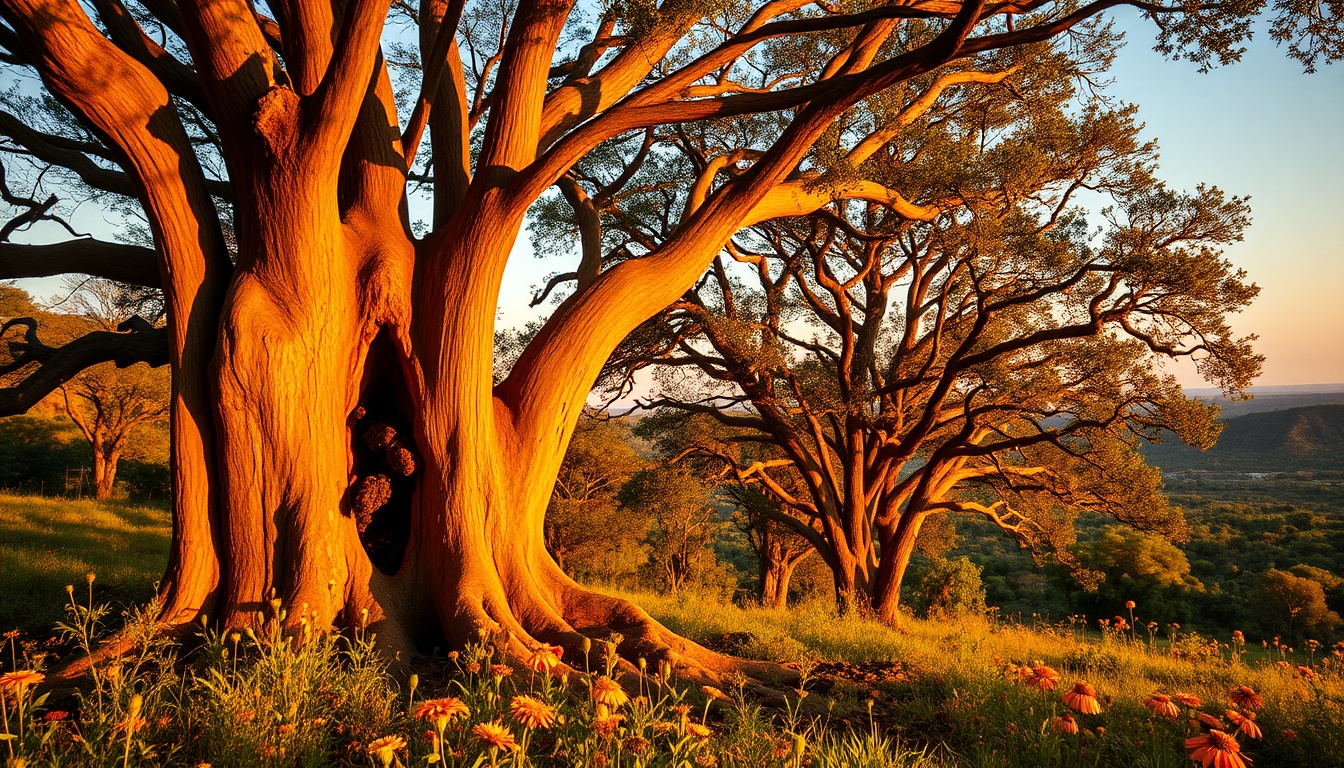
The dominant trees in miombo woodland are *Brachystegia* species (known locally as msamba, miombo, or muninga depending on the species and locality) and *Julbernardia* species, with *Isoberlinia* in the southern and western fringes. These are deciduous to semi-deciduous trees that produce a mass flowering event timed to the end of the dry season (August–October) and the onset of the short rains. The Brachystegia flowering spectacle — when leaves flush vivid red and copper before greening — is one of the most dramatic seasonal events in East African vegetation, and it is a critical honey flow event for Apis mellifera colonies in the woodland.
Miombo honey is dark amber to near-black, with a mineral-rich, earthy-resinous character derived from the complex mixture of Brachystegia, Julbernardia, Combretum, Terminalia, and seasonal herbs that make up the miombo understory. The flavor has a pronounced forest quality — woody, slightly astringent from tannin-adjacent compounds in the Brachystegia phenolics, with a long finish and relatively low sweetness compared to acacia or clover honey. Crystallization is variable but generally slow, reflecting the mixed floral composition. The honey is typically darker and more mineral-forward than Kenyan highland honey, more resinous than Ethiopian highland honey, and closer in sensory profile to European conifer honeydew honeys (German Tannenhonig, Czech medovica) than to any flower honey from a temperate climate — even though it is a flower honey from tropical trees.
The primary honey-producing regions are Tabora (Tanzania's traditional honey capital, with an estimated 10,000–20,000 tonnes of annual production across formal and informal channels), Singida, Dodoma, and Iringa. Tabora region, in the western central plateau, has the most developed cooperative honey sector: beekeeping cooperatives with log hives and Kenya Top Bar Hives operate at village level, and several regional processors aggregate for sale in Dar es Salaam, Arusha, and Nairobi. The informal production system — families maintaining 10–50 log hives in family forests, selling locally through markets — is vastly larger than the formal sector and essentially invisible to export statistics.
Pro Tip
Genuine Tanzanian miombo honey should be dark amber to near-black — if a jar labeled 'Tanzanian honey' is pale golden or water-white, it is either from a non-miombo source (coastal or agricultural zone honey) or has been blended with lighter honeys. The mineral-resinous character is the key flavor signal: if it tastes mild and purely sweet, question the origin.
Kilimanjaro and Meru: East Africa's High-Altitude Wildflower
Mount Kilimanjaro — at 5,895 metres the highest point in Africa — generates its own honey-producing microclimate on its lower and mid-altitude slopes. The Kilimanjaro massif is surrounded by a collar of cultivated farmland from approximately 900 to 1,600 metres (coffee, banana, maize, and bean farms of the Chagga farming system), transitioning to montane forest from 1,600 to 2,800 metres, then heathland and moorland above the tree line. The primary honey-producing zone occupies the montane forest belt from 1,600 to 2,600 metres.
Kilimanjaro forest honey is produced from a botanical mix that reflects the exceptional botanical diversity of the Eastern Arc Mountain system: Podocarpus latifolius, Ocotea usambarensis (East African camphor tree, locally *msunobari*), Ficalhoa laurifolia, Strombosia scheffleri, Syzygium species (wild cinnamon relatives), Impatiens species, and at higher elevations Erica arborea, Hypericum revolutum, and the large composite Helichrysum formosissimum. The result is a honey with greater aromatic complexity than most lowland East African honeys — floral-herbaceous at lower elevations, shifting to a more heathland-resinous character above 2,200 metres.
Chagga beekeeping on Kilimanjaro's slopes is a tradition with deep historical roots. The Chagga people developed sophisticated irrigation systems (mfongo channels) and multi-story agroforestry landscapes centuries before colonial contact, and log hives hung in the forest-farm interface were part of that productive system. Contemporary Chagga beekeeping combines traditional log hives with Kenya Top Bar Hives (KTBHs) in a layered production system: log hives are maintained in the montane forest belt where bee access to wild forest flowers is highest; KTBHs are often kept in the agroforestry zone where management intensity is greater. Kilimanjaro honey from the upper forest belt is sold in specialty form at premium prices in Moshi and Arusha, where it is recognized as a distinct quality tier compared to miombo or agricultural zone honeys.
Mount Meru (4,562 metres, in Arusha National Park) produces a comparable highland honey from its own forest belt, with Podocarpus, Juniperus procera, and Hagenia abyssinica contributing to a forest-botanical character similar to Kilimanjaro at equivalent elevations. Meru honey is rarely sold under its own name — it blends into the 'Arusha region' production flow — but Arusha region honey from the highlands around both massifs is recognized at domestic specialty retail as a quality tier above lowland miombo production.
- Kilimanjaro montane forest honey (1,600–2,600m): amber to dark amber, floral-herbaceous, complex Eastern Arc botanical mix
- Meru highland wildflower (Arusha NP buffer zone, 1,600–2,400m): similar character to Kilimanjaro at equivalent elevation
- Miombo woodland wildflower (Tabora/Singida/Dodoma plateau, 900–1,500m): dark amber to near-black, resinous-earthy, Brachystegia/Julbernardia dominant
- Southern Highlands honey (Mbeya/Iringa, 1,600–2,700m): complex forest-agricultural interface, Udzungwa mountains botanical influence
- Zanzibar coastal honey (0–100m, Unguja/Pemba islands): golden to medium amber, spice-floral, clove and tropical wildflower
Zanzibar: Spice Island, Coastal Wildflower, and Clove Honey
Zanzibar — officially Zanzibar Archipelago, comprising primarily Unguja (Zanzibar Island) and Pemba — is a semi-autonomous region of Tanzania located 35–50 kilometres off the mainland coast. The islands have a distinct identity from mainland Tanzania: Arabic and Swahili trading history, a clove-dominated agricultural economy established by the Omani Sultanate in the 19th century, and a botanical landscape defined by tropical spice cultivation rather than miombo woodland.
Zanzibar honey is produced primarily from managed Apis mellifera (the local East African subspecies, which in the coastal lowlands is primarily *A. m. monticola* or related coast-adapted populations) in hives maintained among the spice plantations and forest patches of Unguja's interior. The dominant honey flow plant is clove (*Syzygium aromaticum*), which flowers twice a year in Zanzibar (main season October–December, lighter secondary season April–June) and produces a honey with an unmistakable character: pale to medium golden, with a pronounced spice-adjacent warmth from clove eugenol and related volatile compounds that carry through into the nectar and honey. Genuine monofloral clove honey — from hives placed exclusively in high-density clove plantation zones during clove flowering — is rare, sweet, faintly warming, and unlike any temperate-zone honey.
Secondary honey sources in Zanzibar include coconut (*Cocos nucifera*, mild, tropical-sweet, pale golden), ylang-ylang (*Cananga odorata*, the luxury perfume tree cultivated for export, contributing a heady floral note to mixed honey), cinnamon (*Cinnamomum verum*, same true Ceylon cinnamon species documented in Sri Lanka honey), and various sea-grape, sea-hibiscus, and mangrove species along the coastal margins. Mixed Zanzibar wildflower honey — produced from hives in the interior forest-garden patchwork — has a warm, exotic tropical character: golden to medium amber, mildly sweet, with spice aromatic notes more complex than any simple monofloral. It is genuinely different from mainland Tanzanian miombo honey and should be treated as a distinct product category.
Pemba Island, which produces more cloves per hectare than Unguja, is theoretically a better source for monofloral clove honey — the plantation density is higher and the forest coverage lower, meaning bees have fewer alternative forage choices during clove bloom. However, Pemba honey is even harder to access internationally than Unguja honey, and almost none of it is exported. Zanzibar honey sold internationally typically comes from Unguja cooperative operations in the Kidichi, Kizimbani, and Dunga areas and is sold under the 'Zanzibar honey' designation at Zanzibar-specific specialty outlets.
Pro Tip
Genuine monofloral clove honey from Zanzibar has a warm, spice-adjacent character that distinguishes it from all other East African honeys. The key test: open the jar and breathe deeply. If you detect warmth and a faint kitchen-spice quality alongside the honey sweetness — not as strong as biting a clove, but present — this is authentic. If it smells indistinguishable from generic tropical wildflower, it is blended or mislabeled.
Tanzania's Honey Geography: Six Zones from Lake Victoria to the Southern Highlands
Tanzania's 947,303 km² spans one of the most diverse honey-producing geographies in East Africa. The country contains major components of four distinct African ecological zones — coastal East Africa, East African montane systems, miombo woodland, and the rift valley with its associated lakes — each producing distinct honey characters.
The Lake Victoria Zone (Mwanza, Kagera, Geita regions, 1,100–1,600m) produces mixed honey from the agricultural and woodland mosaic around Africa's largest lake. The Lake Victoria basin has high rainfall and year-round botanical diversity, but also high agricultural intensity — cotton, sugarcane, rice, and banana cultivation mixed with secondary woodland. Honey from this zone reflects the agricultural mix: moderately complex, variable in character by season, typically medium amber. The primary honey flows follow the two rainy seasons (March–May long rains, October–December short rains).
The Western Plateau — Tabora, Singida, and Dodoma regions (900–1,400m) — is Tanzania's honey heartland, dominated by miombo woodland. This is where the largest volumes of commercially traded Tanzanian honey originate. Cooperatives here manage thousands of log hives and KTBHs in village forests. The honey character is the classic dark miombo type described above. This zone is also where the beehive fence programs connected to Kenya's Elephants and Bees Project have been extended — communities around Tabora's wildlife corridors maintain log-hive fences as both crop protection and income.
The Northern Highlands (Arusha, Kilimanjaro regions, 1,500–2,800m) produce the premium tier: Kilimanjaro forest honey, Meru highland wildflower, and the agricultural-forest interface honeys of the Chagga farming system. These command higher prices at Arusha and Moshi specialty retail, occasionally reaching Nairobi export networks. The Southern Highlands (Mbeya, Iringa, Njombe, 1,600–2,700m) produce forest-agricultural interface honey from the Udzungwa, Kipengere, and Kitulo plateau — including potentially unique floral signatures from the Kitulo Plateau National Park (sometimes called the 'Serengeti of Flowers' for its montane wildflower density) and the Udzungwa Mountains, which are globally significant for endemic plant species.
The Coastal Zone (Dar es Salaam, Morogoro lowlands, Tanga, Kilwa, 0–500m) and Zanzibar (treated separately above) produce tropical lowland honey. Coastal mainland honey comes from Casuarina, Mangifera (mango), Citrus, and mixed coastal bushland flora — pale to medium amber, milder than miombo, with occasional coconut or citrus undertones depending on proximity to cultivation.
Tanzania Bureau of Standards, Quality Certification, and the Export Gap
The Tanzania Bureau of Standards (TBS) is the national standards authority for honey quality. TBS honey standards align generally with the Codex Alimentarius General Standard for Honey (CODEX STAN 12-1981, Rev. 2001), setting maximum moisture content (≤20% for standard honey, recognizing that tropical conditions can push harvested honey moisture higher without fermentation due to water activity effects), maximum HMF (40 mg/kg), minimum diastase activity (≥8 Schade units), and maximum free acidity (≤50 meq/kg). TBS certification is required for formal domestic sale and is a prerequisite for EU export.
The EU export chain for Tanzanian honey runs through a small number of processing facilities — primarily in Dar es Salaam and Arusha — that aggregate from cooperatives, test to TBS and EU residue standards, and pack for export. The EU requires residue testing (antibiotics, particularly oxytetracycline and streptomycin; pesticide residues; heavy metals) via TFDA (Tanzania Food and Drug Authority) accredited laboratories. Tanzanian honey that successfully passes this chain reaches European specialty importers in Germany, the Netherlands, and the UK, typically sold under 'Tanzanian wildflower' or 'Tanzanian forest honey' designations.
The structural export gap is wide. Tanzania's formal honey sector produces an estimated 2,000–5,000 tonnes per year for commercial market (including export and formal domestic sale); informal production estimated by FAO and national beekeeping assessments runs to 20,000–30,000+ tonnes annually — the vast majority consumed locally without formal certification. The gap reflects the challenge of reaching the miombo woodland interior with testing equipment, cold-chain logistics, and certification systems. Log hive honey harvested at village level in Tabora miombo may be exceptional in quality but has moisture variability and inconsistent testing documentation that excludes it from formal export channels.
Several NGOs and social enterprises have worked to close this gap. The Tanzania Natural Beekeeping Association (TUNABEES) has trained thousands of smallholder beekeepers in modern KTBH techniques and moisture management. Bee Natural Tanzania operates as a social-enterprise honey processor connecting Tabora cooperatives to Dar es Salaam specialty retail and export. African Honey Bees (a South African-Tanzanian operation) sources from community cooperatives across the miombo zone. The challenge is not bee biology or botanical diversity — Tanzania has exceptional honey-producing conditions — but the last-mile infrastructure of testing, cooling, and certification in areas with limited road access.
Buying Tanzanian Honey — Authentication and What to Look For
Tanzanian honey at international specialty retail is rare but not impossible to find. Social-enterprise importers in Germany (notably African specialty food importers), the Netherlands, and the UK carry Tanzanian-origin honey from cooperative sources with TBS certification. Online, direct-from-Tanzania vendors occasionally serve UK and EU buyers. The key barrier is volume consistency: Tanzania's cooperative production system cannot yet guarantee the batch-to-batch consistency that large retailers require, so the channel is dominated by small specialty importers who accept lot-by-lot sourcing.
For miombo woodland honey: color is the primary authentication signal. Genuine Tabora or Singida miombo honey should be dark amber to near-black — not golden, not medium amber. If a jar labeled 'Tanzanian honey' is pale, it is either coastal/agricultural zone honey (which is honest but different) or has been blended. The flavor check: open the jar and look for mineral-resinous complexity with an earthy, forest-floor depth. If it tastes like mild clover or generic wildflower, question the terroir claim.
For Kilimanjaro or Arusha highland honey: expect medium to dark amber, more herbal-floral than miombo honey, with Eastern Arc forest aromatic complexity. Some Kilimanjaro honey sold in Moshi and Arusha is exceptional by any standard — Chagga-produced forest-belt honey from upper-altitude hives, raw and unfiltered, is comparable in quality to Greek or Ethiopian highland honey. This tier almost never reaches international markets; if you find it, buy it.
For Zanzibar clove or wildflower honey: look for the warm spice-adjacent aromatic note described above. Genuine Zanzibar honey is produced in very limited quantities — most of what is sold as 'Zanzibar honey' in tourist shops is mainland honey relabeled. Authentic Zanzibar cooperative honey will have TBS certification, a named source cooperative or producer, and the distinct spice-floral aromatic character. Budget double the price of mainland Tanzanian honey.
Tanzanian honey vocabulary for label reading: asali = honey (Swahili); asali ghafi = raw honey; asali ya msitu = forest honey; asali ya miombo = miombo honey; asali ya nyuki = bee honey (general); TBS mark = Tanzania Bureau of Standards certification; TFDA = Tanzania Food and Drug Authority (residue testing for EU export). A quality label should show TBS certification, harvest region (at minimum), and producer or cooperative name.
Pro Tip
The beehive fence model pioneered in Kenya by Dr. Lucy King's Elephants and Bees Project has been deployed in Tanzania, particularly in Tabora region wildlife corridors. Honey from documented Tanzanian beehive fence operations carries the same conservation premium as Kenyan beehive fence honey — the causal chain from honey purchase to elephant protection is the same. If you find honey certified under the Elephants and Bees Project branding in Tanzania, the premium is real and the documentation is verifiable through Save the Elephants.