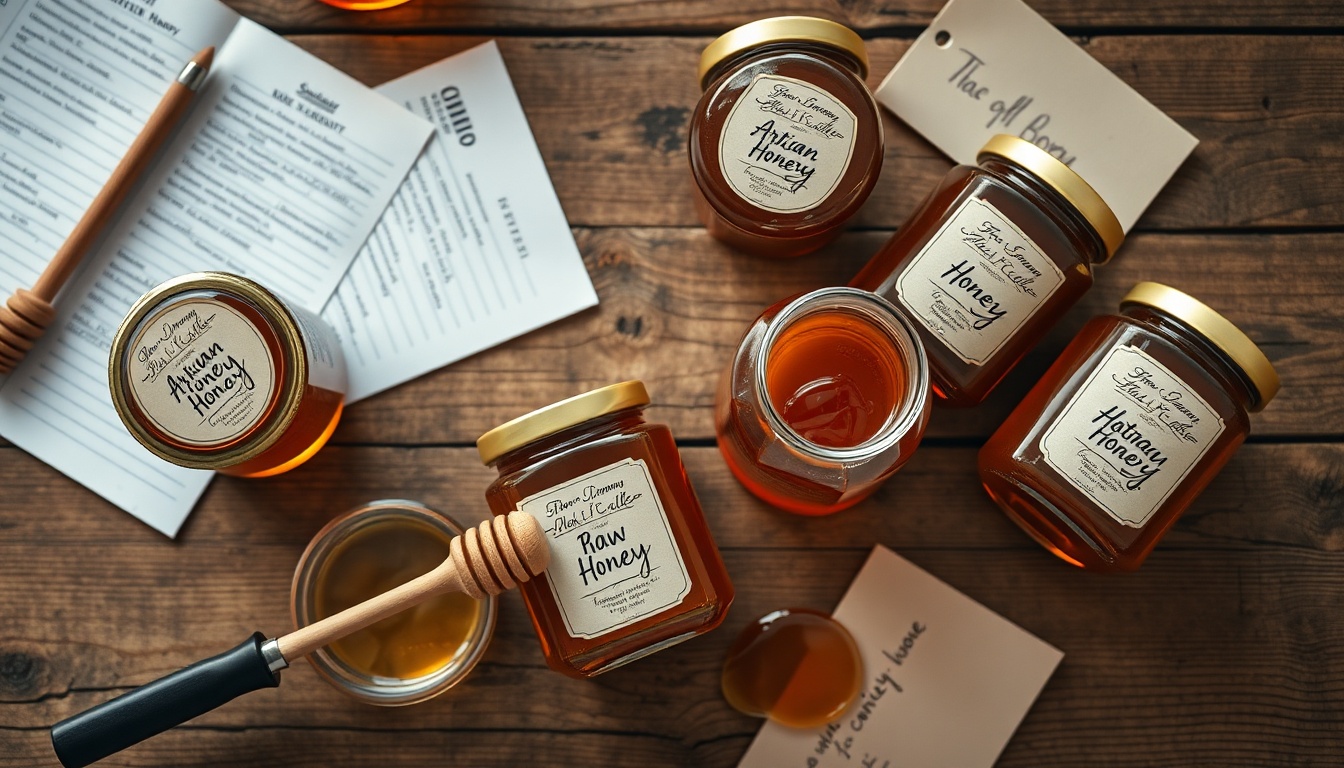
The Beehive Fence: Where Honey Income Meets Elephant Conservation
In 2007, Dr. Lucy King — a zoologist working with Save the Elephants and the University of Oxford — conducted a field trial in Laikipia, Kenya that changed the economics of living alongside African elephants. She strung log hives on wire between farm posts and observed what happened when a crop-raiding elephant approached. The result was unambiguous: elephants that contacted the wire, causing hives to swing and bees to become defensive, retreated and alarm-called. Other herd members, perceiving the alarm, also retreated. The beehive fence worked — not as a painful barrier but as a cognitive deterrent that elephants, with their well-documented sensitivity to bee sound and scent, actively chose to avoid.
The follow-up studies documented 80% reduction in elephant crop-raiding events at beehive-fence farms compared to control farms using traditional thorn-bush barriers. The research was published in the African Journal of Ecology (2009) and subsequently in Current Biology (2017), establishing the first rigorously peer-reviewed, scalable non-lethal elephant deterrent with an integrated income stream. The honey harvested from the fence hives converted a pure cost — crop loss and conflict with wildlife authorities — into an annual cash income of approximately KSh 30,000–80,000 (roughly $230–620 USD) per farm per year depending on hive productivity and local honey prices.
The beehive fence model has since been deployed in 17 countries across Africa (including Mozambique, Tanzania, Uganda, Botswana, Zambia, and South Africa) and in India, Sri Lanka, and Malawi, where different elephant populations show the same aversion response. Save the Elephants' Elephants and Bees Project now operates demonstration farms in Kenya, Mozambique, and Tanzania and trains farmers across the continent. The model has been recognized by the Convention on Biological Diversity as a community-based conservation tool, and beehive fence honey sold under the 'Elephant-Friendly' brand at premium prices (2–3× standard local price) in Kenyan specialty retail and European export markets.
For a honey buyer, the beehive fence story matters because it represents something genuinely rare in the honey industry: a product category where purchasing is directly and verifiably tied to wildlife conservation. Buying documented beehive fence honey from a named farm in Laikipia or Tsavo buffer zone is not a greenwashing claim — it is a mechanistic connection. The farm generates honey; the honey income makes the farm economically viable; the viable farm makes the farmer tolerant of elephants crossing their land; tolerant farmers reduce the pressure on wildlife authorities to cull problem elephants. The causal chain is short and verifiable.
Pro Tip
The Elephants and Bees Project (Save the Elephants) maintains a list of certified beehive fence farms in Kenya and partner countries. Honey sold under the 'Elephant-Friendly' label or the Elephants and Bees branding comes from documented beehive fence operations. If you buy Kenyan honey in European specialty retail, look for this certification as a proxy for genuine small-farm, conservation-linked production.
Mt. Kenya Highland Wildflower — Africa's High-Altitude Honey
The slopes of Mount Kenya — Africa's second-highest peak at 5,199 m — support one of East Africa's most botanically diverse honey-producing zones. The altitudinal range from approximately 1,600 m (upper Kikuyu farmland belt) to 2,800 m (moorland transition) passes through several distinct vegetation types: lower montane forest (dominated by Podocarpus latifolius, Olea europaea subsp. africana, and Croton megalocarpus), mid-montane forest (Juniperus procera, Piper capense, Hagenia abyssinica), and upper montane heathland (Erica arborea, Hypericum revolutum, Lobelia telekii at the upper edge of bee-accessible elevation).
Mt. Kenya highland wildflower honey is produced primarily from hives placed in the forest-agriculture interface zone between 1,800 m and 2,400 m elevation, where cultivated land, tea farms, and horticultural plots back against forest reserves. The dominant forage plants shift by season: Croton megalocarpus (the croton tree) is the most important single nectary at mid-elevation — it produces a honey with a distinctive herbal-oily aromatic character from Croton-specific volatile compounds, amber to dark amber in color, with a slight resinous undertone. Olea europaea subsp. africana (African wild olive, msitu or mzeituni in Swahili) produces a paler, more delicately floral honey in years when olive bloom is heavy. Dombeya species (African wild pear, msambara) contribute a lighter, faintly fruity component.
Honey color and flavor from the Mt. Kenya zone varies considerably with the precise elevation, aspect, and seasonal timing of harvest. Lower-elevation harvests (1,600–1,900 m, first rainy season, March–May) tend toward medium amber, moderately complex, with agricultural forage mixed in from nearby tea and horticulture. Higher-elevation harvests (2,000–2,600 m, October–December short rains) from hives inside forest reserve buffer zones are darker, more resinous, with a pronounced forest character from Croton and Hypericum. The most prized Mt. Kenya honey — sometimes marketed as 'forest honey' (asali ya msitu) — comes from hives in the formal forest reserve buffer zones where monoculture agricultural influence is lowest.
Authentication signal: genuine Mt. Kenya highland honey from the forest belt should have an aromatic complexity beyond simple sweetness — the Croton resinous note is distinctive and not found in lowland Kenyan honeys. Color should be medium to dark amber. Crystallization at ambient Kenyan highland temperatures (10–18°C overnight at 2,000 m) is moderate — expect natural crystallization within 4–9 months, producing a coarse-grained, golden-amber solid quite different from the rapid white crystallization of rapeseed honey. The forest-belt complexity and resinous character places Mt. Kenya honey closer to mountain wildflower honey from California or European alpine varieties than to temperate-zone clover-dominated wildflower honeys, though the specific Croton megalocarpus botanical signature remains unique to East African montane forests.

Get the Honey Buyer's Cheat Sheet (free PDF)
16 varieties on one page — color, flavor, best use and what a fair price looks like — from the 304 honeys we track.
The Kenya Top Bar Hive — Africa's Beekeeping Innovation
The Kenya Top Bar Hive (KTBH) is one of the most influential beekeeping tools of the 20th century for smallholder farming — and it was largely developed in Kenya. The original design was refined in the early 1970s by a collaborative project involving the Kenyan Ministry of Agriculture, UNDP/FAO advisors (including notably Bo Holst and Zachary Njagi), and field beekeeping trials in multiple Kenyan provinces. The KTBH was designed specifically for African honeybees (Apis mellifera species — primarily A. m. monticola in highland Kenya, A. m. scutellata in savanna zones, and A. m. jemenitica in arid northeastern Kenya), which have fundamentally different behavioral characteristics from European honeybees.
African honeybees are more defensive, more prone to absconding (abandoning the hive entirely and swarming to a new location), and more aggressive in response to hive manipulation than European Apis mellifera subspecies. These behaviors — adaptations to the higher predation pressure from honey badgers (Mellivora capensis), ratel, and other African megafauna — make European-style box hives inefficient and dangerous for smallholder use without significant training and protective equipment. The KTBH design addresses this by minimizing hive manipulation: there is no base frame, no foundation comb, and no stacked box system requiring complete disassembly to inspect. The beekeeper accesses the hive only by sliding top bars to inspect or harvest individual comb sections.
KTBH harvesting produces cut-comb honey: the entire comb section — beeswax comb filled with honey — is removed, the honey is pressed out or drained through the wax structure, and the wax is retained. This is why much Kenyan honey from smallholder KTBH operations is naturally unfiltered — the pressing process leaves wax particles, propolis, and pollen throughout the product. For buyers accustomed to centrifuged Langstroth honey, this texture can be unfamiliar: slightly waxy, occasionally turbid with crystallization nuclei or pollen particles. This is a quality indicator, not a defect. KTBH pressed honey has a naturally higher propolis content than centrifuged Langstroth honey, contributing a faintly resinous, aromatic note that blends with the floral honey base.
The KTBH design has spread from Kenya across sub-Saharan Africa and is now used in over 30 African countries, from Cameroon to Zimbabwe, becoming the standard entry-level hive for rural beekeeping development programs. Kenya itself has an estimated 1.5–2 million managed beehive colonies (the exact count is uncertain; estimates vary widely), with approximately 70–80% in KTBH or log hives and the remaining 20–30% in Langstroth-style hives used by commercial operations serving the export market.
Pro Tip
When buying Kenyan honey from a smallholder KTBH operation, expect the honey to be slightly turbid or to contain fine wax particles. This is correct. It means the honey was pressed from the comb rather than spun in a centrifuge, and it typically indicates higher propolis and pollen content — both genuine quality markers for minimally processed raw honey. If a jar labeled 'Kenyan raw honey' is perfectly clear, it has likely been filtered, which removes the pollen passport that proves geographic origin.
Whistling Thorn, Savanna Wildflower, and Laikipia Honey
Kenya's savanna beekeeping zones — the Laikipia plateau, Maasai Mara ecosystem, Amboseli basin, and Tsavo East buffer areas — produce distinct honey types from the open woodland and bushland flora that defines East African savanna. The most botanically interesting savanna monofloral is whistling thorn honey, from Vachellia drepanolobium (formerly Acacia drepanolobium), the dominant acacia of the Laikipia plateau and Maasai Mara grasslands.
Vachellia drepanolobium is a mutualist tree: it produces hollow swollen thorns inhabited by Crematogaster ants, which defend the tree aggressively against large herbivores. The ants exploit nectar from extrafloral nectaries (nectaries located outside the flower) as well as floral nectar during bloom seasons. This means the tree produces nectar over a much longer period than purely floral nectary trees — bees forage from both floral and extrafloral nectaries, depending on the season. Whistling thorn honey has a distinctive flavor profile: amber to dark amber, with a sharper, slightly tannin-adjacent edge from acacia-specific phenolic compounds — notably flavonoids from the Vachellia genus. It is not as mild as the Robinia pseudoacacia honey dominant in European acacia markets; it is more assertive, with a dry, slightly astringent finish that reads as more complex and less purely sweet. Where Italian acacia honey from Robinia pseudoacacia presents water-white clarity and delicate vanilla sweetness, Kenyan whistling thorn honey from true Vachellia species offers deeper amber coloration and a more pronounced phenolic character reflecting the botanical differences between European false acacia and African indigenous acacias.
The Laikipia plateau (1,700–2,500 m elevation, north of Mount Kenya) is Kenya's most developed commercial honey zone. A combination of wildlife conservancies, large ranches, and smallholder farms creates a patchwork landscape of acacia woodland, riverine gallery forest, and shrubland that supports exceptional honey biodiversity. The Northern Rangelands Trust (NRT) community conservancy network, which covers approximately 6.8 million acres of northern Kenya including Laikipia, includes honey income streams for several community conservancies. NRT honey operations serve both domestic Kenyan markets and European export buyers interested in conservation-linked products.
Tsavo East National Park buffer zones and the Chyulu Hills have their own honey character: the semi-arid Commiphora-Acacia bushland produces darker, more resinous honey with high propolis content, harvested by communities in the Amboseli-Tsavo corridor. The Chyulu Hills (rising to 2,188 m) produce a cloud-forest honey from the transition between lowland bushland and montane forest — similar in concept to Mt. Kenya forest honey but from a smaller, more isolated mountain massif with its own botanical character.
- Whistling thorn (Vachellia drepanolobium): amber-dark amber, dry-tannin edge, Laikipia plateau — Kenya's most distinctive savanna monofloral
- Mt. Kenya highland wildflower: medium-dark amber, Croton resinous note, forest-belt complexity from 1,800–2,600 m
- Stingless bee honey (Meliponula bocandei): amber, more acidic, distinctly tart, from forest-edge and shade-tree cavities
- Lamu mangrove coastal: golden, mild-sweet, coastal aromatic from mangrove ecosystem nectaries
- Savanna wildflower (Tsavo/Amboseli/Chyulu): dark amber, resinous-propolis character, semi-arid bushland complex
Stingless Bees and Kenya's Meliponini Tradition
East Africa is home to approximately 50–60 species of stingless bees (Meliponini), compared to the approximately 500 species found in tropical Americas and 60 species in tropical Asia. African stingless bee honey is far less commercialized than Brazilian or Malaysian stingless bee honey — largely because African Meliponini produce significantly less honey per colony (typically 0.5–2 kg/year, compared to 4–8 kg for Malaysian Meliponula species and 3–5 kg for Brazilian Meliponini). The most widespread East African stingless bee is Meliponula bocandei (formerly Trigona bocandei), which nests in tree cavities, termite mounds, or hollow logs across Kenya's forest-agriculture interface zones.
Kenyan stingless bee honey — known locally as asali ya nyuki ndogo (small bee honey) or asali ya mwitu (wild honey) — is harvested opportunistically from wild nests rather than from managed hives. The honey has a distinctively higher water content than Apis honey (typically 25–35% moisture compared to Apis honey's ≤20%) and is noticeably more acidic — tarter, almost fruity-sour, with a complex flavor from high propolis content and the specific forage of the forest-edge species the bees favor. It does not conform to standard KEBS KS 60-1 honey moisture limits and is sold as a distinct traditional product category. While Malaysian stingless bee honey (kelulut) from Heterotrigona itama achieves 4–8 kg per colony annually under managed conditions, Kenyan Meliponula bocandei produces only 0.5–2 kg per colony from wild harvests, making it one of the world's rarest commercial honey categories by volume constraints alone.
The medicinal reputation of Kenyan stingless bee honey is strong in traditional medicine systems across Kenya, Tanzania, and Uganda. Community health practitioners use it for wound care, respiratory complaints, and general immune support — claims that have modest supporting evidence in the broader Meliponini honey research literature, which documents high phenolic, flavonoid, and antimicrobial activity in stingless bee honeys generally. The KEBS has recognized stingless bee honey as a distinct product category (KEBS KS 60-3:2018) with separate moisture and composition standards adapted to Meliponini biology.
For buyers in international markets, Kenyan stingless bee honey is almost entirely unavailable: the small per-colony yield, high moisture content requiring careful storage, and limited export infrastructure mean it remains a domestic and regional specialty. If you encounter honey labeled 'Kenyan stingless bee honey' in international markets, verify the supply chain carefully — the volume constraints make large-scale export essentially impossible, and mislabeling is a realistic risk.
Pro Tip
Kenyan stingless bee honey has naturally higher moisture (25–35%) than standard Apis honey. This means it ferments more readily if not consumed within 3–6 months of harvest. If you source it locally in Kenya or East Africa, store it in a cool, dark place and consume promptly. The tartness is genuine and intentional — it should taste distinctly more acidic than any Apis honey you have tried.
Kenya's Honey Geography: From Coast to Crater
Kenya's honey-producing zones span an extraordinary altitude and climate range. The Coast Province (0–100 m elevation) produces mangrove honey from the Lamu Archipelago, Kilifi Creek, Mombasa, and Kwale districts, where Apis mellifera monticola forages from mangrove nectaries — primarily Rhizophora mucronata, Ceriops tagal, and Avicennia marina. Mangrove honey has a coastal character: golden to medium amber, mildly sweet, with a faint maritime-salty aromatic note and a clean finish. The Lamu Archipelago, a UNESCO World Heritage site, has the most intact mangrove system in East Africa and supports small-scale traditional beekeeping alongside artisanal fishing — a genuinely rare convergence of ecosystem services.
The Central Highlands (1,500–3,000 m) — encompassing Mt. Kenya, the Aberdares, and the Kikuyu Escarpment — are Kenya's premium honey zone. This is where the KTBH beekeeping tradition is most developed, where the forest-belt wildflower honey reaches its most complex character, and where several NGO-supported honey processing cooperatives (including the Mt. Kenya Beekeepers Cooperative) have achieved the quality control and volume consistency required for EU export.
The Rift Valley (700–2,000 m, highly variable by section) produces savanna and bushland honeys — whistling thorn from the Laikipia plateau, Leleshwa (Tarchonanthus camphoratus) honey from dry-highland shrubland, and mixed-flora honeys from the patchwork of farmland and woodland around Lake Naivasha, Lake Nakuru, and the Mara ecosystem. The Maasai Mara buffer zone communities produce honey from hives maintained in Acacia/Balanites woodland, harvested twice a year aligned with the long rains (March–May) and short rains (October–December) bloom cycles.
Northern Kenya (below 700 m, semi-arid to arid) — the frontier bee country of Marsabit, Isiolo, Turkana, and the NFD (Northern Frontier District) — produces honey from arid-zone flora including Acacia tortilis (umbrella thorn, the same species important in Yemeni Sidr honey production), Acacia senegal (gum arabic acacia), Commiphora species (myrrh relatives), and Salvadora persica (toothbrush tree). Northern Kenyan honey has a unique desert-botanical character: deeply colored, intensely resinous, very high propolis content, with a complex medicinal-aromatic finish that differs from every other Kenyan honey style.
KEBS Standards, Kenya Honey Council, and the Export Chain
Kenya Bureau of Standards (KEBS) honey quality is governed by KS 60-1:2009 — Kenya's national honey standard, aligned with the Codex Alimentarius General Standard for Honey (CODEX STAN 12-1981, Rev. 2001) with additional provisions for African honey types. The standard sets maximum moisture (≤20% for most honey; KEBS allows ≤21% for specific highland varieties where high-altitude humidity makes rapid drying to ≤20% difficult), maximum HMF (40 mg/kg for honey not intended for industry), minimum diastase activity (≥8 Schade units), and free acidity limits (≤50 meq/kg). Stingless bee honey is governed by the separate KS 60-3:2018 standard with adjusted moisture limits (≤35%).
The Kenya Honey Council (KHC), established under the Agriculture and Food Authority Act, administers the Kenya Honey mark — a certification for honey meeting KEBS standards, produced and processed in Kenya. EU export requires compliance with Kenya Plant Health Inspectorate Service (KEPHIS) residue testing, which screens for antibiotics (particularly oxytetracycline, used in American foulbrood treatment — not used in Kenya but required by EU importers as a baseline check), pesticide residues, and heavy metals.
Kenya's honey export chain has two dominant channels. The formal commercial channel runs through Nairobi-based processing facilities (including Honey Care Africa, Forest Honey, and several cooperative processing units) that aggregate honey from thousands of smallholder producers, test to KEBS standards, and pack for EU/UK and Middle East export under Kenya-origin labeling. The informal domestic market — estimated at 60–70% of total production — moves through local markets, roadside sellers, and direct farm sales without formal certification but often at higher prices than the formal export price due to perceived freshness and local trust.
Kenya produces an estimated 30,000–40,000 tonnes of honey annually (precise figures are uncertain due to the large informal sector), making it among the top 10 producers in Africa and a significant exporter to the EU, particularly the UK, Germany, and Belgium. The UK–Kenya trade relationship for honey predates Brexit; post-Brexit, Kenya continues to export under the UK–Kenya EPA framework with zero tariff for certified-origin honey meeting UK food safety standards.
Buying Kenyan Honey — Authentication and What to Look For
Kenyan honey at international specialty retail is relatively rare compared to its quality potential and production volume — a structural parallel to the Polish and Romanian invisible-giant pattern. Most Kenyan honey reaching European markets comes through two routes: large commercial processors in Nairobi who aggregate and repack for EU export, and small mission-driven social enterprises or cooperatives that do direct-to-consumer export online (Honey Care Africa, Savanna Honey, and a handful of Laikipia-origin operations). The premium segment is growing but small.
For Mt. Kenya highland honey authentication: color is your first check. Genuine highland forest honey should be medium to dark amber — not pale. The Croton megalocarpus resinous-herbal note is distinctive; open the jar and look for a complex forest-botanical aroma with a faintly resinous, slightly medicinal undertone beneath the floral sweetness. Pale, mildly sweet honey labeled 'Mt. Kenya' may be a lower-elevation or blended product. For KTBH pressed honey: some turbidity or small wax particles are correct and are quality indicators, not defects. The authentic forest complexity should rival New York buckwheat honey in aromatic intensity while maintaining a cleaner, more herbal-resinous rather than molasses-dark character, distinguishing genuine Mt. Kenya highland varieties from generic wildflower blends.
For whistling thorn / Laikipia acacia honey: the flavor should be noticeably more assertive than European Robinia acacia honey — expect a dry, slightly tannin-adjacent edge and a darker color (amber rather than water-white). If it tastes exactly like mild European acacia, it is either heavily blended or mislabeled. The botanical complexity should approach Texas wildflower honey in diversity but with distinctly African savanna character from Vachellia species rather than temperate wildflower assemblages. For conservation-linked honey: the Elephants and Bees Project branding and the NRT (Northern Rangelands Trust) community honey certification are two verifiable provenance markers. Both organizations maintain producer documentation.
Kenyan honey vocabulary for label reading: asali = honey (Swahili); asali ghafi = raw honey; asali ya mwitu = wild/forest honey; asali ya msitu = forest honey; asali ya nyuki ndogo = stingless bee honey; inayotokana na Kenya = from Kenya; pasieki / mzinga = beehive; KEBS mark = Kenya Bureau of Standards certification; Kenya Honey Council mark = KHC certification. A quality label will show: KEBS mark, harvest region (county or named forest/conservancy), harvest date (or at minimum, production year), beekeeper/cooperative name, and net weight. The 'Elephant-Friendly' logo from Save the Elephants indicates documented beehive fence origin.
Pro Tip
Kenyan honey from beehive fence operations sells at a premium to conventional Kenyan honey because the certification requires documented farm-level records maintained by the Elephants and Bees Project. If you find the price at par with non-certified Kenyan honey, verify the source: genuine beehive fence honey from named farms in Laikipia, Tsavo, or the Mara corridor is verifiable through Save the Elephants. The conservation premium is real and the documentation should be available.