
The Viral Claim: Honey + Cinnamon = Weight Loss?
The idea that drinking honey and cinnamon in warm water melts fat has circulated online for decades. Blogs, social media posts, and forwarded emails claim this simple drink — taken on an empty stomach each morning — can lead to dramatic weight loss without diet or exercise changes.
The typical recipe: mix one tablespoon of raw honey with half a teaspoon of Ceylon cinnamon in a cup of warm water. Drink before breakfast and before bed. Proponents claim you'll lose weight within weeks.
So what does the science actually say? The answer is nuanced. While both honey and cinnamon have individually demonstrated metabolic benefits in clinical research, the specific claim that this combo causes significant weight loss is overstated. Here's what the evidence supports — and what it doesn't.
What Cinnamon Actually Does for Metabolism
Cinnamon has the strongest clinical evidence for blood sugar regulation, which indirectly affects weight management. A 2019 meta-analysis in the Journal of Clinical Nutrition and Dietetics analyzing 16 randomized controlled trials found that cinnamon supplementation significantly reduced fasting blood glucose by an average of 24.6 mg/dL and HbA1c by 0.55%.
Why does blood sugar matter for weight? When blood sugar spikes and crashes, it triggers hunger signals, cravings for high-calorie foods, and increased insulin secretion. Insulin is a storage hormone — elevated levels promote fat storage and inhibit fat burning. By moderating glucose responses, cinnamon may help reduce the hormonal drive to overeat.
Cinnamon also shows thermogenic properties. Cinnamaldehyde, the compound responsible for cinnamon's flavor, has been shown to activate thermogenesis in human fat cells. A 2017 study in Metabolism found that cinnamaldehyde stimulated adipocyte (fat cell) browning — converting white fat cells that store energy into beige fat cells that burn energy as heat. However, this was an in vitro study, and the clinical significance of this effect at dietary doses remains uncertain.
A 2020 meta-analysis in Clinical Nutrition examining 21 RCTs with 1,480 participants found that cinnamon supplementation reduced body weight by an average of 1.02 kg and waist circumference by 1.68 cm compared to placebo. While statistically significant, these are modest effects — not the dramatic weight loss claimed by viral posts.
Pro Tip
Always use Ceylon cinnamon (Cinnamomum verum) rather than Cassia cinnamon for daily consumption. Cassia contains 250x more coumarin, which can cause liver damage at high doses.
Get the Honey Buyer's Cheat Sheet (free PDF)
16 varieties on one page — color, flavor, best use and what a fair price looks like — from the 268 honeys we track.
What Honey Actually Does for Weight Management
Honey's role in weight management is paradoxical at first glance — it's a calorie-dense sweetener (64 calories per tablespoon) that clinical research suggests may actually support, not undermine, weight management when used as a sugar replacement.
A 2022 meta-analysis in Nutrition Reviews analyzing 18 controlled trials found that honey consumption was associated with reduced body weight, fasting glucose, LDL cholesterol, and triglycerides compared to sugar and other sweeteners. The researchers attributed this to honey's polyphenol content, which modulates glucose absorption and insulin sensitivity through pathways that refined sugar cannot.
Honey's prebiotic oligosaccharides (FOS and GOS) feed beneficial gut bacteria that produce short-chain fatty acids (SCFAs). These SCFAs stimulate GLP-1 and PYY — satiety hormones that signal fullness to the brain. A 2021 review in Nutrients confirmed that prebiotic-driven SCFA production can reduce appetite and caloric intake through this gut-brain axis pathway.
Honey remains a fast-acting carbohydrate; weight-management claims do not make it medically preferred for diabetes.
The Combined Effect: What Clinical Evidence Exists?
Here's where the honest assessment gets uncomfortable for the viral claim: there are very few clinical trials testing the specific combination of honey and cinnamon for weight loss in humans.
A 2018 pilot study in the Journal of Dietary Supplements tested a honey-cinnamon mixture (1 tbsp honey + 1 tsp cinnamon daily) in 50 overweight adults over 8 weeks. The honey-cinnamon group lost an average of 1.4 kg more than the control group and showed reduced waist circumference. However, this was a small study without rigorous blinding, and 1.4 kg over 8 weeks is far from the dramatic results claimed online.
A 2016 study in the International Journal of Preventive Medicine examined cinnamon supplementation (3g/day) alongside a calorie-restricted diet in 44 overweight participants. The cinnamon group lost more weight and body fat than the diet-only group, but the study didn't include honey.
The individual evidence for each ingredient is stronger than the evidence for the combination. Both honey and cinnamon affect overlapping metabolic pathways — blood sugar regulation, inflammation reduction, and gut microbiome support — so combining them is biologically plausible. But "biologically plausible" is not the same as "clinically proven."
What This Combo Can Realistically Do
Based on the available evidence, here's what honey and cinnamon can and cannot do for weight management:
- Replace refined sugar — Substituting honey for sugar in your daily routine reduces empty calories and adds polyphenols that modulate glucose metabolism. This is a genuine, evidence-backed benefit.
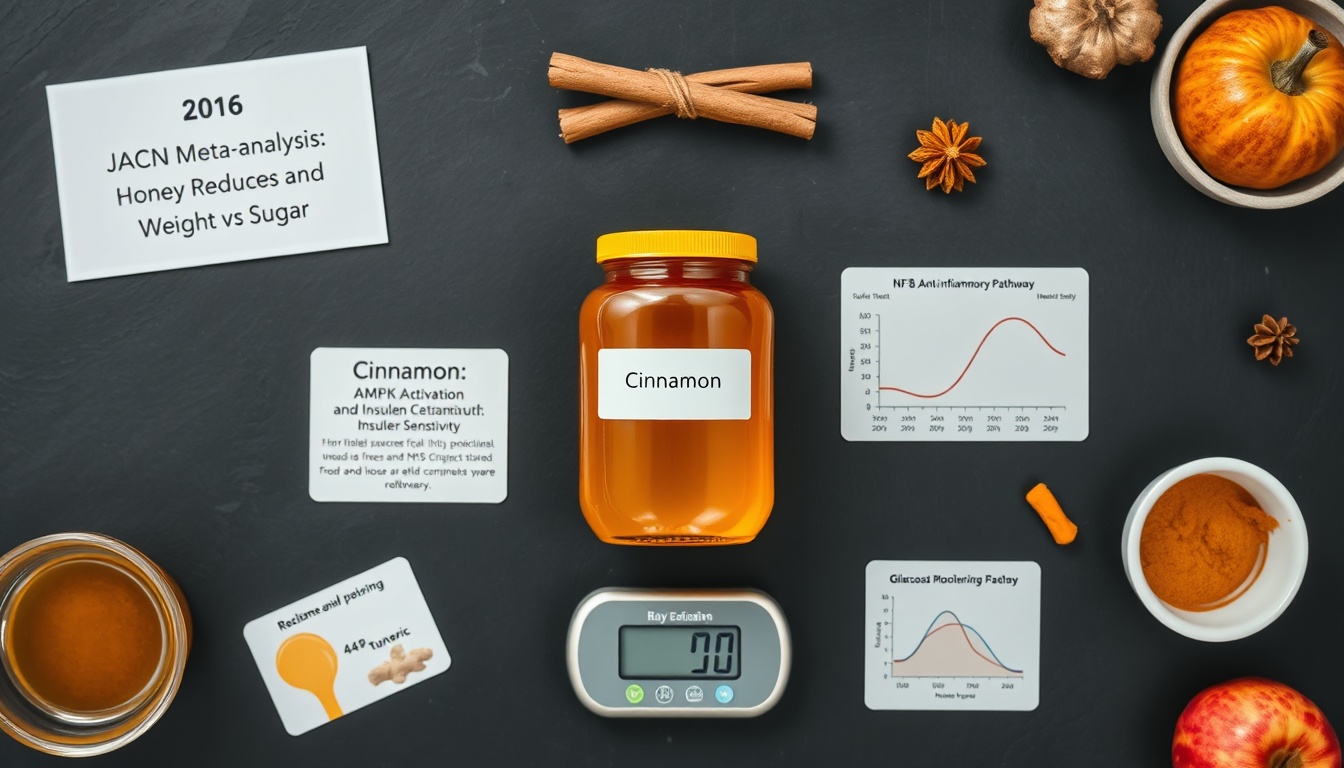
- Moderate blood sugar spikes — Cinnamon's AMPK activation and insulin-sensitizing effects, combined with honey's lower GI and polyphenol content, can reduce post-meal glucose spikes. Stable blood sugar means fewer cravings and less insulin-driven fat storage.
- Support gut bacteria — Honey's prebiotic FOS/GOS plus cinnamon's polyphenols support a gut microbiome composition associated with lower inflammation and better appetite regulation.
- Reduce inflammation — Chronic low-grade inflammation is increasingly recognized as a driver of obesity and metabolic syndrome. Both honey (NF-κB pathway) and cinnamon (COX-2 suppression) have anti-inflammatory effects that may address this underlying factor.
- Provide a healthy morning ritual — Replacing a sugary coffee drink or skipping breakfast (leading to mid-morning junk food) with warm water, honey, and cinnamon is simply a healthier habit.
What This Combo Cannot Do
It's equally important to be clear about the limitations:
- It cannot cause significant weight loss without dietary changes — No food or drink can override a caloric surplus. If you're eating 500 calories more than you burn daily, adding honey-cinnamon water will not cause weight loss.
- It cannot "melt belly fat" or target specific areas — Spot reduction is a persistent myth. Fat loss occurs systemically based on overall energy balance and genetics, not because of any specific food or drink.
- It cannot replace exercise — Physical activity affects weight through multiple pathways (muscle mass, insulin sensitivity, NEAT, hormonal regulation) that no dietary supplement can replicate.
- It cannot work overnight — The modest effects shown in clinical trials occurred over 8-12 weeks of consistent use alongside other healthy behaviors.
- It is not a detox — Your liver and kidneys handle detoxification. Honey-cinnamon water does not "flush toxins" or "cleanse" your system.
How to Use Honey and Cinnamon for Weight Support
If you want to incorporate this combination as part of a broader weight management strategy, here's the evidence-based approach:
- Morning drink — Mix 1 tablespoon of raw honey ($10-18/lb) or acacia honey ($12-20/lb, GI ~32) and ½ teaspoon of Ceylon cinnamon in 8 oz of warm (not boiling) water. The warm water aids hydration and the honey provides prebiotic support. Acacia's low glycemic impact makes it a common choice for those monitoring blood sugar.
- Pre-meal cinnamon — Sprinkle ½ teaspoon of cinnamon on meals containing carbohydrates to reduce glycemic response. Research consistently shows cinnamon consumed with carbs lowers the post-meal glucose spike by 15-25%.
- Sugar replacement — Use honey instead of sugar in tea, coffee, oatmeal, and baking. The 2/3 cup honey per cup sugar substitution saves calories while adding beneficial compounds.
- Evening drink — A warm honey-cinnamon milk before bed combines the blood-sugar benefits with honey's sleep-promoting tryptophan-melatonin pathway. Better sleep itself supports weight management through improved leptin and ghrelin regulation. Lavender honey ($15-25/lb) adds aromatic calming properties, while clover honey ($8-15/lb) provides clean, mild sweetness that won't compete with cinnamon's flavor.
Pro Tip
Honey is still a source of added sugar even with its other benefits. Keeping total intake modest helps avoid the extra calories and sugar that could counteract any metabolic benefits.

Best Honey and Cinnamon Types for Weight Support
Not all honey and cinnamon are equal for metabolic purposes. For honey, choose raw, unprocessed varieties that retain their full polyphenol and enzyme content. Acacia honey ($12-20/lb, GI ~32) has the lowest glycemic index among common varieties, making it the best choice for blood sugar management. Wildflower honey ($10-18/lb) offers broader polyphenol diversity from multiple nectar sources, while buckwheat honey ($15-25/lb, ORAC 16,000+) provides the highest antioxidant content among North American varieties — 3-9x more than light honeys like clover ($8-15/lb). For citrus brightness in morning drinks, orange blossom honey ($12-20/lb) pairs naturally with cinnamon's warmth.
For cinnamon, Ceylon cinnamon (Cinnamomum verum, also called "true cinnamon") is essential for daily use. Cassia cinnamon (the cheaper, more common variety) contains 1-2% coumarin, which can cause liver damage at doses above 0.1 mg/kg body weight daily. At ½ teaspoon twice daily, Cassia exceeds the European Food Safety Authority's tolerable daily intake. Ceylon contains only 0.004% coumarin — negligible even at higher doses.
Avoid honey-cinnamon supplements in capsule form. These often use low-quality honey powder (which loses its enzymatic activity during processing) and Cassia cinnamon. The whole-food versions are more effective and safer.
Common Myths Debunked
Several exaggerated claims about this combination need correction:
- "Drink this and lose 10 pounds in a week" — The maximum effect shown in controlled trials is about 1-2 kg over 8 weeks, and that was alongside dietary awareness. Claims of rapid, dramatic weight loss are fabricated.
- "Honey and cinnamon boost metabolism by 20%" — Neither ingredient has been shown to increase resting metabolic rate by anywhere near this amount. Cinnamon's thermogenic effect is real but modest — estimated at 10-20 extra calories per day at dietary doses.
- "Take it on an empty stomach to burn fat while you sleep" — While honey before bed does support liver glycogen and sleep quality, there's no mechanism by which this combination preferentially "burns fat" during sleep.
- "This ancient remedy has been used for thousands of years" — While both honey and cinnamon have long histories in traditional medicine (Ayurveda, Traditional Chinese Medicine), the specific combination for weight loss is a modern internet creation, not an ancient practice.
- "Cinnamon blocks carb absorption" — Cinnamon slows carbohydrate digestion by inhibiting alpha-glucosidase enzymes, but it doesn't block absorption entirely. The carbs are still absorbed — just more gradually.
Who Should Be Careful
While generally safe for most adults, certain populations should exercise caution:
- People with diabetes on medication — Both honey and cinnamon lower blood sugar. Combined with metformin, sulfonylureas, or insulin, this could cause hypoglycemia. Monitor blood sugar closely and consult your doctor about adjusting medication timing.
- People on blood thinners — Cinnamon (especially Cassia) contains coumarin, which has anticoagulant properties. Combined with warfarin or other anticoagulants, this could increase bleeding risk.
- Pregnant and breastfeeding women — While small amounts of both ingredients are generally safe during pregnancy, therapeutic doses of cinnamon (more than culinary amounts) have not been adequately studied.
- Children under 12 months — Honey is never safe for infants due to infant botulism risk, regardless of any potential benefits.
- People with liver conditions — Cassia cinnamon's coumarin content is hepatotoxic at high doses. Use only Ceylon cinnamon if you have liver disease.
The Bottom Line
Honey and cinnamon are both genuinely beneficial foods with real metabolic effects supported by clinical research. Used together as part of a balanced diet and active lifestyle, they can modestly support weight management through blood sugar regulation, gut health, and inflammation reduction.
What they cannot do is cause significant weight loss on their own. The viral promise of effortless, dramatic weight loss from a simple drink is not supported by evidence. If losing weight were as easy as drinking honey-cinnamon water, the obesity epidemic would have been solved long ago.
The most honest recommendation: use honey and cinnamon because they're delicious, nutritious, and have genuine health benefits — not because you expect them to be a magic weight loss solution. Combined with sensible eating, regular movement, adequate sleep, and stress management, they can be a pleasant part of a healthy routine.