Why Honey Garlic Works for Chicken Breast
Chicken breast is the leanest, most protein-dense cut on the bird — and also the most commonly overcooked. Its low fat content means there is very little margin for error between juicy and dry. This is exactly where a honey garlic sauce earns its place as one of the best glazes for this cut.
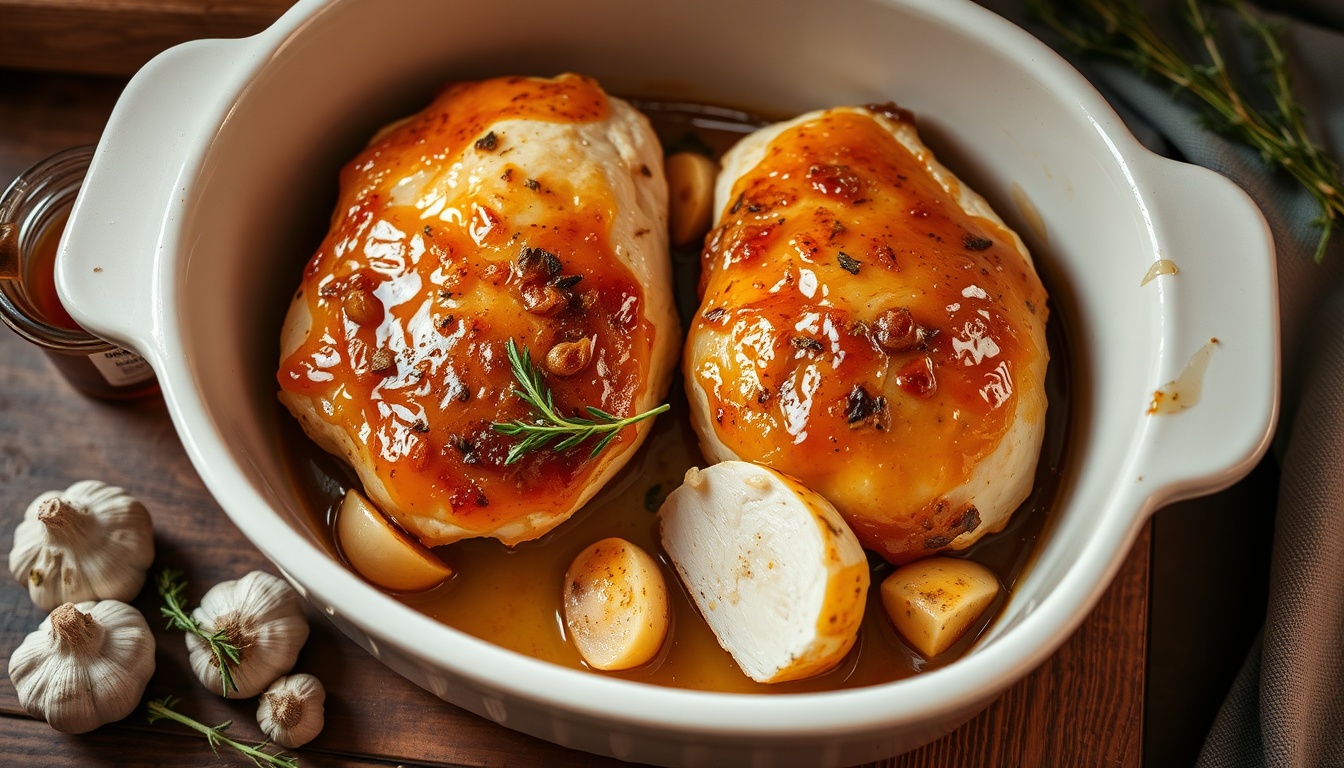
Honey serves a dual purpose here. As a cooking glaze, its high sugar content caramelizes rapidly at oven temperatures, creating a sticky, lacquered exterior that seals in moisture. As a flavor base, honey carries the garlic and aromatics directly into the meat surface rather than just sitting on top. The result is chicken that tastes seasoned through the outer layer, not just coated.
Unlike chicken thighs, which have intramuscular fat to keep them forgiving, breasts rely entirely on technique and sauce to stay moist. The combination of a quick sear, a glaze that shields the surface during baking, and proper resting time bridges the gap between breast and thigh in terms of eating experience.
Garlic intensifies during roasting. Raw garlic is sharp and pungent, but the oven transforms it into something sweeter and nuttier. Paired with the caramelizing honey, the garlic develops a deep, roasted flavor that tastes far more complex than the simple ingredient list suggests.
The Science of Keeping Chicken Breast Moist
Chicken breast dries out because its muscle fibers contract and squeeze out water when heated past 150°F. By 180°F, you have lost up to 30% of the moisture. Every technique in this recipe targets that moisture loss.
- Even thickness — butterflying or pounding the thickest part ensures the entire breast reaches 165°F at the same time. Without this step, the thin edges overcook to 190°F while the center catches up, leaving you with dry ends and a barely-done middle
- High-heat sear first — the 2-3 minute sear creates a Maillard crust that acts as a physical barrier, slowing moisture evaporation during oven time. It also means less time in the oven overall since the surface is already browned
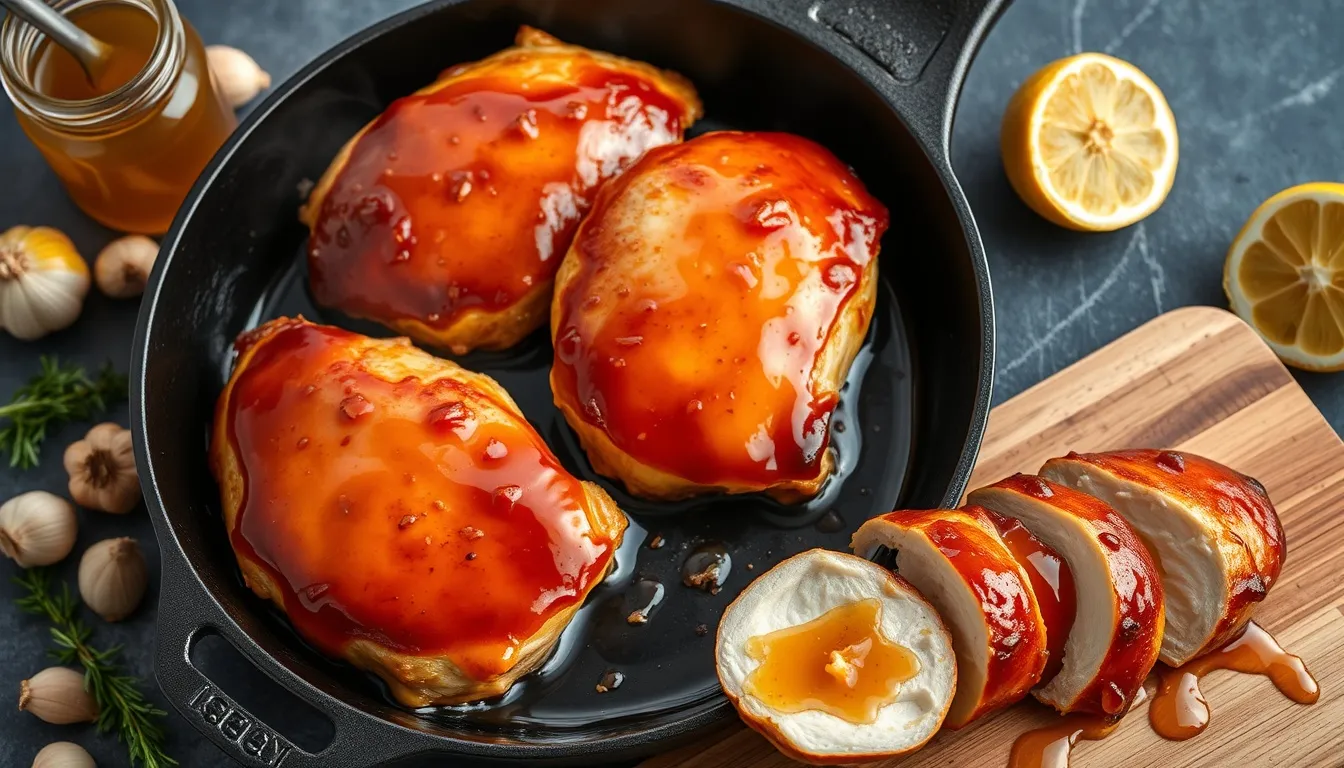
- Honey glaze as insulation — the sugar-rich glaze coats the surface and reduces the rate of evaporation. Think of it as a flavorful shield. This is why glazed chicken consistently comes out juicier than plain roasted chicken
- Pull at 165°F, not higher — use a meat thermometer. The difference between 165°F and 175°F is the difference between juicy and chalky. Carryover heat during resting will bring the temperature up another 3-5 degrees
- Rest for 5 minutes — resting lets the contracted muscle fibers relax and reabsorb some of the expelled moisture. Cut immediately and you will see juices pool on the cutting board instead of staying in the meat
Pro Tip
If your chicken breasts are very thick (over 1.5 inches), consider slicing them horizontally into two thinner cutlets rather than pounding. This gives you more surface area for the glaze and more even cooking.
Get the Honey Buyer's Cheat Sheet (free PDF)
16 varieties on one page — color, flavor, best use and what a fair price looks like — from the 304 honeys we track.
5 Flavor Variations
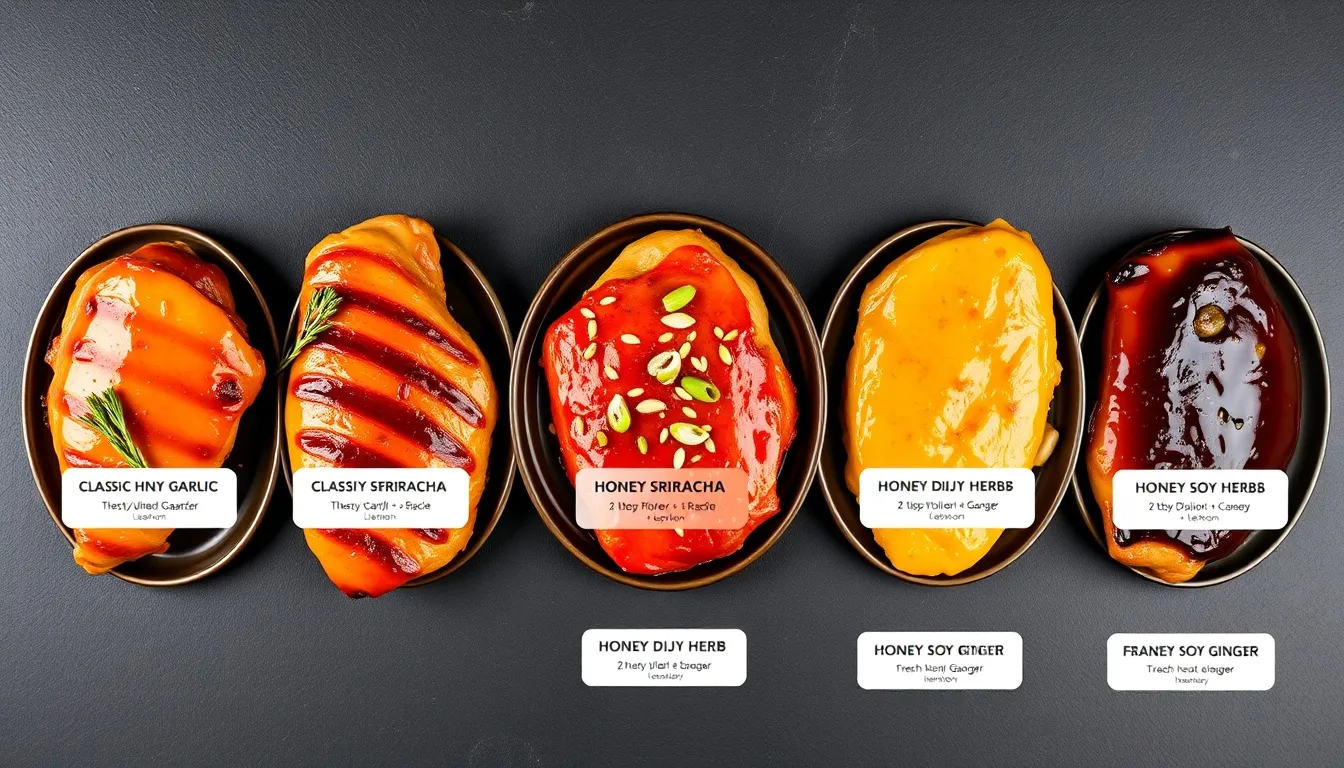
The base honey garlic sauce is a blank canvas. Each variation below modifies or adds to the base recipe — start with the same foundation and adjust from there.
- Honey mustard garlic — add 2 tablespoons whole grain Dijon mustard to the sauce. The mustard seeds pop between your teeth and the vinegar tang cuts through the sweetness. This version pairs particularly well with roasted potatoes and steamed green beans. Use a mild clover honey so the mustard flavor leads
- Honey garlic lemon herb — add the juice and zest of one lemon plus 1 tablespoon fresh chopped thyme to the sauce. Bright, herbaceous, and lighter than the original. Excellent for spring and summer meals. The lemon acidity also acts as a tenderizer if you let the chicken sit in the sauce for 15 minutes before cooking
- Spicy honey garlic — stir in 1-2 tablespoons of hot honey or add 1 teaspoon red pepper flakes and a drizzle of sriracha to the base sauce. The heat builds gradually under the sweet glaze. Serve over jasmine rice with pickled vegetables to balance the spice
- Honey garlic parmesan — after baking, sprinkle 1/2 cup freshly grated Parmesan over the chicken and broil for 2 minutes until golden and bubbly. The cheese creates a crispy, savory crust over the sweet glaze. Add Italian seasoning to the base sauce for this variation
- Asian honey garlic — replace the rice vinegar with 1 tablespoon oyster sauce and add 1 teaspoon freshly grated ginger. Garnish with toasted sesame seeds and sliced scallions. This version is closest to a takeout-style glaze. Serve over fried rice or lo mein noodles for a complete meal
Best Honey Varieties for This Recipe
The type of honey you choose shapes the final flavor profile of the glaze. Since 1/3 cup of honey is the dominant sweetener, the variety matters.
- Wildflower honey — the best general-purpose choice. Its balanced floral sweetness complements the garlic and soy without competing. Multiple botanical sources create complexity that elevates the glaze beyond simple sweetness while remaining universally appealing. Produces the most crowd-pleasing result
- Clover honey — lighter and more neutral than wildflower. Clean, mild vanilla-adjacent sweetness lets the garlic and soy sauce take center stage. A reliable option when you want a straightforward glaze that will not compete with the umami elements
- Acacia honey — delicate, almost buttery sweetness with minimal floral notes. Creates the most refined, subtle glaze with sophisticated restraint. Its light body prevents overwhelming the chicken natural flavor, working beautifully with the lemon herb variation
- Orange blossom honey — adds gentle citrus-floral undertones that pair naturally with chicken. The Mediterranean character bridges beautifully with the garlic and creates complexity impossible through sweeteners alone. Particularly excellent with the honey mustard garlic or lemon herb variations
- Tupelo honey — premium Southern variety with buttery-smooth texture and crystallization resistance. Creates an exceptionally glossy, professional-looking glaze that stays smooth during storage and reheating. Worth the premium for special occasions
- Avoid very dark honeys like buckwheat honey for this recipe — their assertive molasses-like intensity can overwhelm the garlic balance and create bitter notes when caramelized at high heat. Save bold varieties for heartier preparations
Meal Prep, Storage, and Reheating
Honey garlic chicken breast is one of the best proteins for meal prep because the glaze keeps the meat moist during storage and reheating.
- Meal prep strategy — cook a double batch on Sunday. Slice the chicken after resting and divide into containers with the reduced sauce spooned over the top. The sauce prevents the surface from drying out in the fridge
- Refrigerator — sliced or whole chicken stores for up to 4 days in an airtight container. Keep the sauce in contact with the meat. The flavors actually deepen after a day as the honey and garlic continue to meld
- Freezer — freeze individual portions in sealed containers or freezer bags with sauce for up to 3 months. Thaw overnight in the refrigerator. Do not thaw at room temperature as this puts chicken in the danger zone for bacterial growth
- Reheating — the microwave works but can dry out the edges. Better method: place the chicken in a covered oven-safe dish with a splash of water or chicken broth, then reheat at 325°F for 10-12 minutes. The steam from the added liquid rehydrates the surface
- Do not re-sear leftover chicken — the honey glaze burns quickly in a hot pan the second time around. Low, gentle heat is the key to maintaining the original texture
Pro Tip
For make-ahead dinners, you can prepare the honey garlic sauce up to 5 days in advance and store it in the refrigerator. Sear and bake the chicken fresh — the sauce only needs to be whisked before using.
Serving Suggestions and Side Pairings
The sticky, savory-sweet profile of honey garlic chicken breast pairs with a wide range of sides. The key is balancing the richness of the glaze with something fresh, starchy, or acidic.
- Steamed jasmine or basmati rice — the most natural pairing. The rice absorbs the extra sauce from the plate, and the neutral grain lets the honey garlic flavor stay in focus
- Roasted broccoli or green beans — a quick toss in olive oil, salt, and a squeeze of lemon before roasting gives you a vegetable side that contrasts the sweet glaze with something earthy and slightly bitter
- Mashed potatoes — creamy mashed potatoes with the honey garlic sauce drizzled over the top is pure comfort food. Add roasted garlic to the potatoes to echo the garlic theme
- Simple green salad — dressed with a light vinaigrette, a salad provides acidity and crunch that cuts through the sticky glaze. Especially good with the honey mustard garlic variation
- Couscous or quinoa — lighter than rice and absorbs sauce just as well. Toss with fresh herbs and diced cucumber for a Mediterranean-inspired plate alongside the lemon herb chicken variation