A Measured Honey Glaze
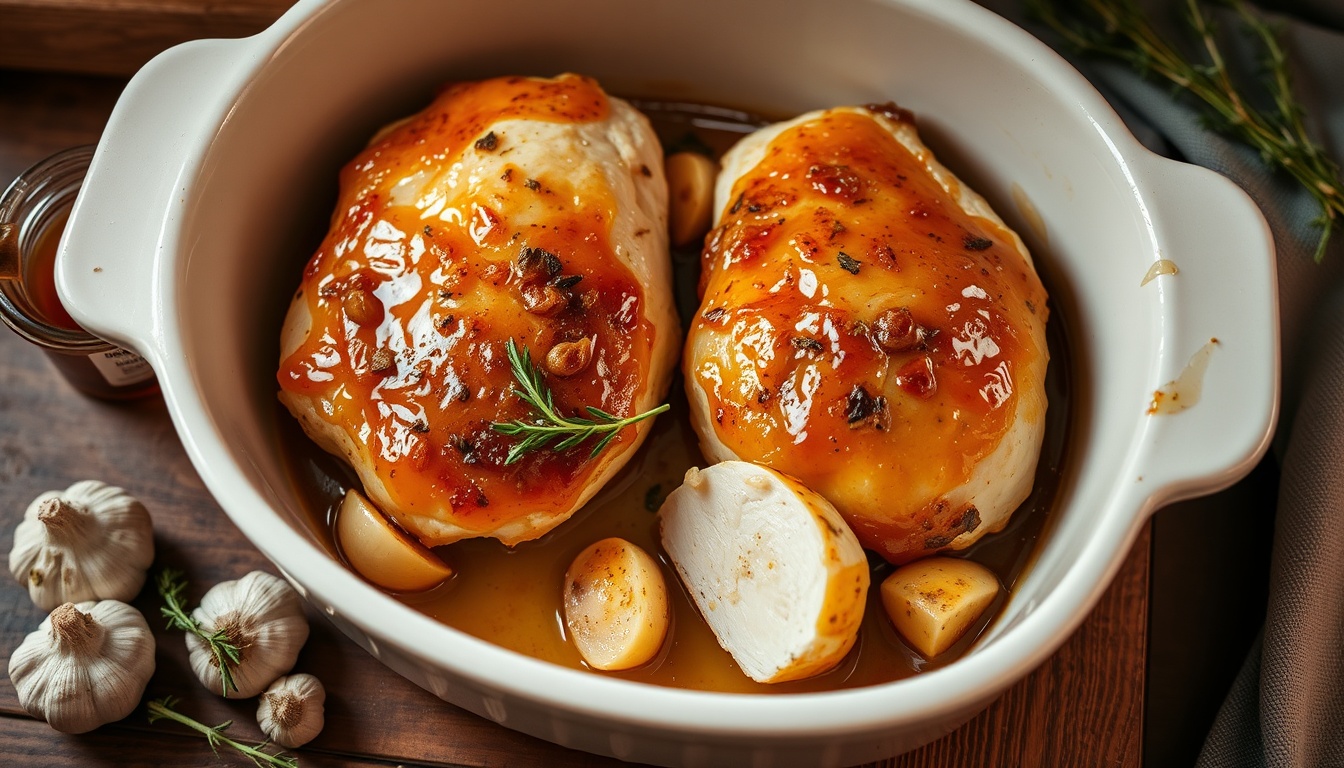
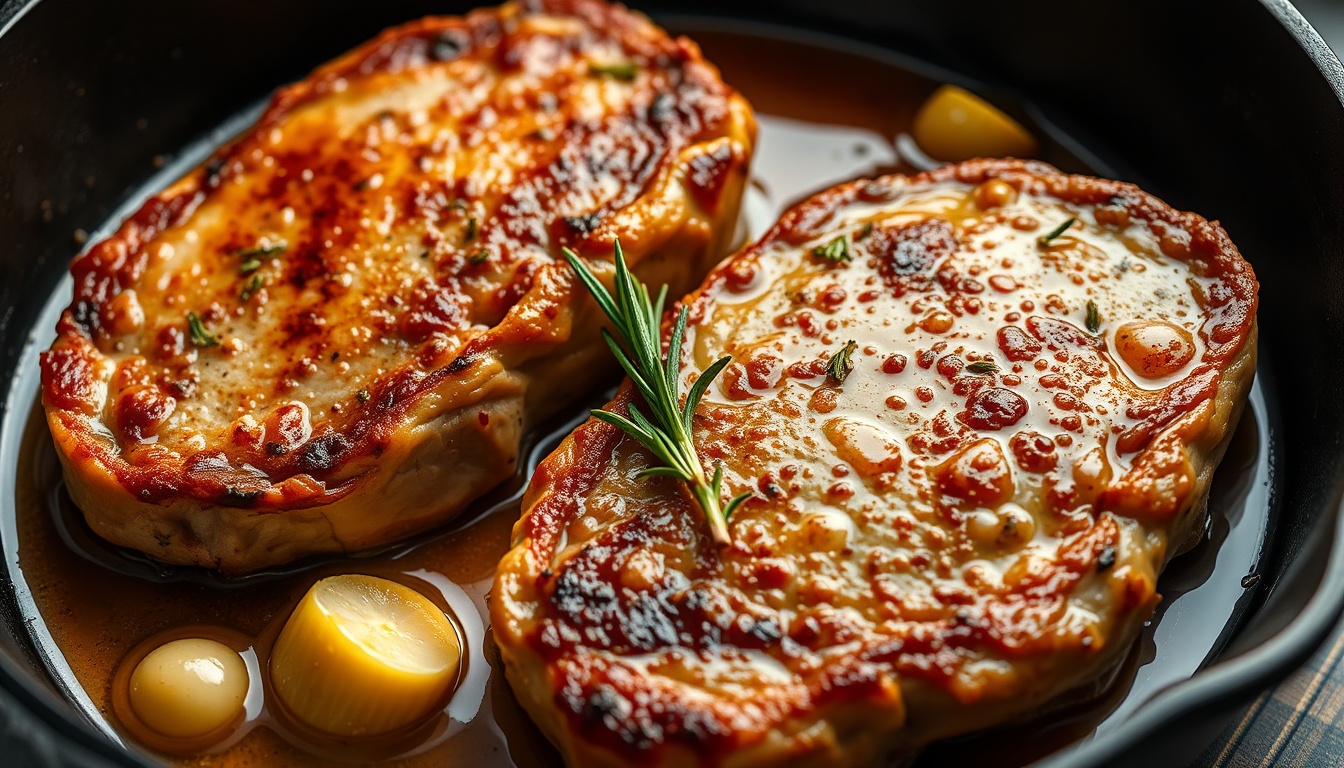
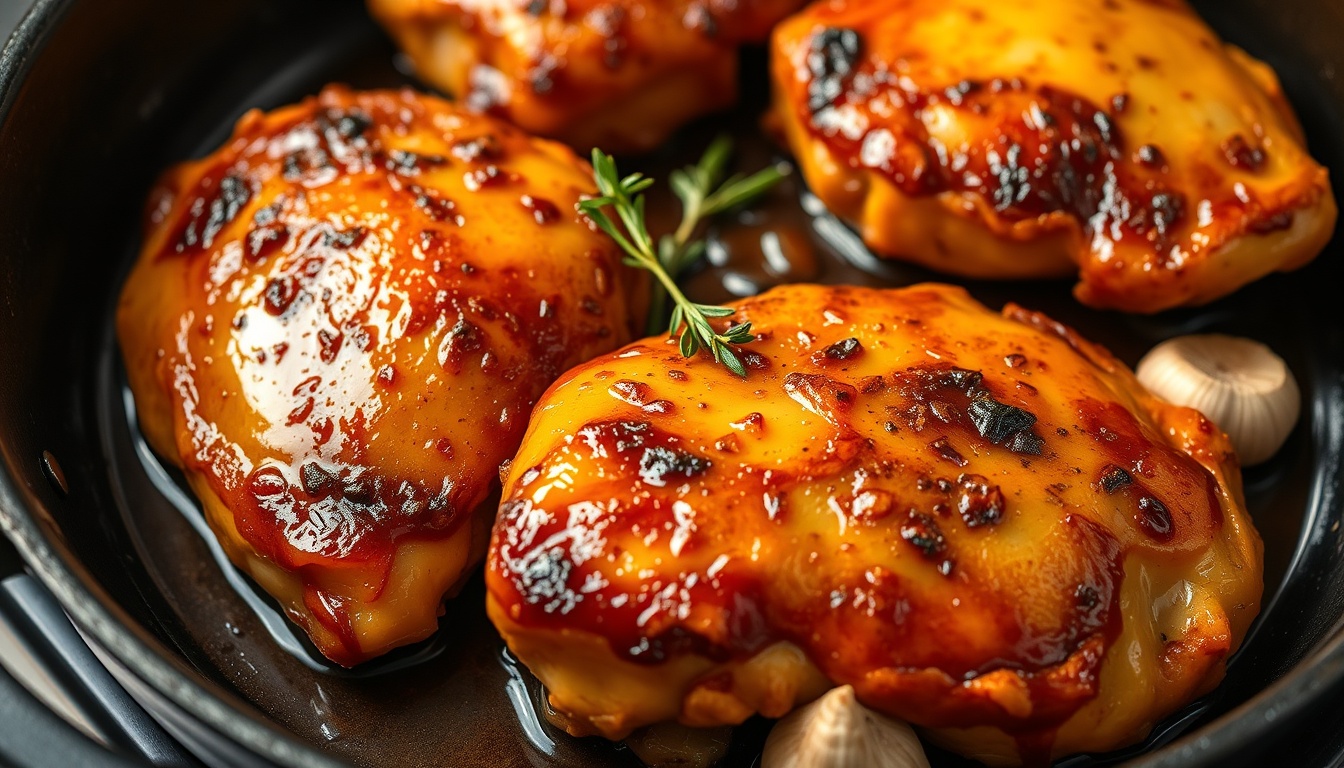
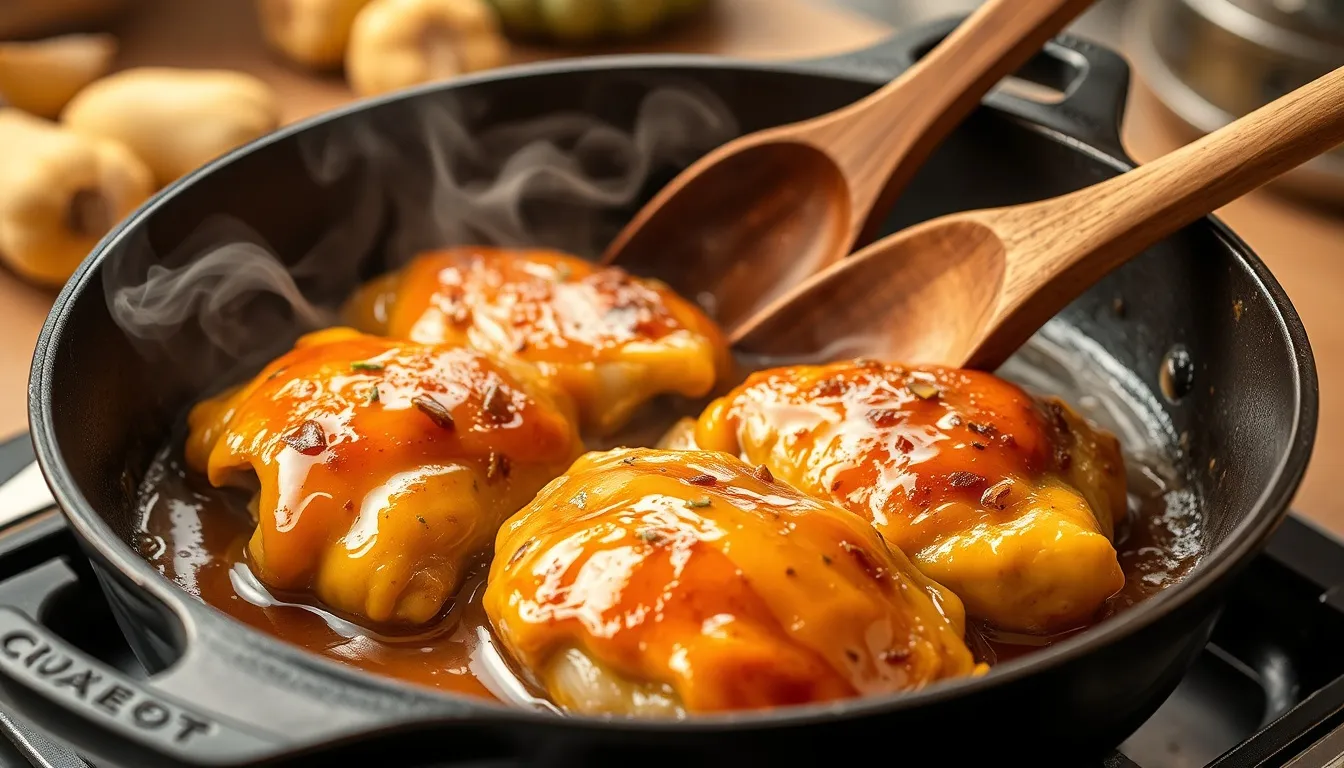
Starting skin-side down in an unheated skillet lets the thigh skin color before the oven finish. Add the honey-garlic sauce around the thighs so it has less time over direct burner heat.
The measured card uses 900 g boneless, skin-on thighs, about 6 pieces. Its 40-minute plan assumes they fit in one layer; a second searing batch adds time. The original bone-in method remains a separate variation.
Recipe
Honey Garlic Chicken Thighs
Boneless, skin-on honey garlic chicken thighs with a cold-pan sear and oven finish. Six portions in about 40 minutes, plus a separate bone-in method.
8Ingredients
Yield: 6 servings
- 900 g boneless, skin-on chicken thighs, about 6 pieces
- 3 tablespoons clover honey
- 4 cloves garlic, minced
- 2 tablespoons regular soy sauce
- 1 tablespoon Mizkan unseasoned rice vinegar
- 1 tablespoon olive oil
- 1/2 teaspoon table salt
- 1/2 teaspoon ground black pepper
Ingredient amounts scale; instructions show the original batch. Cooking times and pan sizes may need adjustment. Season to taste. Honey grams use US measures at 20°C and 17.5% moisture, a density estimate; weigh your honey for precision.
Instructions
- 1Heat the oven and seasonHeat the oven to 400°F (200°C). Pat thighs dry and season with the measured salt and pepper. Use a wide oven-safe skillet that holds all 6 in one layer.
- 2Start skin-side downPut the thighs skin-side down in the unheated skillet with the olive oil. Turn heat to medium and cook 8–10 minutes until the skin colors. If a second batch is necessary, allow extra time.
- 3Mix the sauceWhisk honey, garlic, soy sauce and rice vinegar. Red pepper flakes and extra honey are separate optional additions.
- 4BakeTurn thighs skin-side up. Pour the sauce around them and bake 8–10 minutes or longer as needed until every thigh reaches 165°F (74°C) in the thickest part in the meat.
- 5Broil briefly if suitableIf the skillet and oven permit, brush a little pan sauce on top and broil 1–2 minutes, watching continuously. Skip this optional coloring step if the sauce is scorching.
- 6RestRest 5 minutes and divide into 6 portions with the pan sauce. Fresh herbs and side dishes are extras.
Estimated nutrition per serving
389.6 calories · 27.2 g fat · 10.07 g carbohydrate · 25.36 g protein · 609.14 mg sodium
Serving: 1/6 of the boneless skin-on chicken and sauce; input estimate before cooking
Calculated from ingredient weights and USDA FoodData Central: 172385, 169640, 169230, 174277, 2083928, 171413, 173468, 170931. Estimates use ingredient input weights; actual portions, brands and cooking losses vary. Omitted nutrient values are unavailable, not zero.
Oven-Baked Method (Sheet Pan)
This alternate sheet-pan method uses bone-in thighs, as in the original guide. Its timing and edible yield differ from the measured boneless card; the card estimate does not apply.
If you prefer hands-off cooking or are making a larger batch, the sheet pan method works beautifully. The results are slightly less crispy than the stovetop method but still excellent.
These are separate adaptations. Their cooking and marinating times differ from the card; check 165°F (74°C) in the thickest part without touching bone, following FDA guidance.
- Step 1: Preheat oven to 425°F. Line a rimmed baking sheet with foil for easy cleanup.
- Step 2: Pat thighs dry, season with salt and pepper, and arrange skin-side up on the baking sheet with space between each piece.
- Step 3: Bake at 425°F for 20 minutes to render the fat and start crisping the skin.
- Step 4: Remove from oven, brush generously with honey garlic sauce. Return to oven for 10-15 more minutes until the glaze caramelizes and internal temp reaches 165°F.
- Step 5: Broil on high for 1-2 minutes for a final hit of caramelization. Watch closely — honey burns quickly under a broiler.
Get the Honey Buyer's Cheat Sheet (free PDF)
16 varieties on one page — color, flavor, best use and what a fair price looks like — from the 304 honeys we track.
Choosing the Best Honey for Chicken Thighs
The honey variety you choose affects the flavor profile of the finished dish. Bone-in thighs have robust flavor that pairs well with both mild and assertive honeys — and with Father's Day grilling season here, choosing the right variety can elevate a backyard cookout into something memorable.
The chart gives editorial pairing suggestions on a 1 (mild) to 5 (bold) scale. It is not a laboratory measurement; harvests and jars vary.
- Wildflower honey — The best all-around choice. Complex floral notes complement garlic and soy without competing for attention. Produces a beautifully balanced, crowd-pleasing glaze that works for both skillet and grill methods.
- Clover honey — Mild and clean, letting the garlic and soy sauce flavors lead. The best value for large-batch Father's Day grilling or weeknight meal prep.
- Orange blossom honey — Light citrus notes add a bright, aromatic quality that pairs beautifully with chicken thighs. Especially good with the lemon-herb variation.
- Buckwheat honey — Dark and malty, buckwheat creates the most intensely flavored glaze. The molasses-like depth stands up to the richest dark-meat flavors and produces impressive char on the grill.
- Acacia honey — Delicate and floral with a slow crystallization rate, acacia produces the silkiest, most refined glaze.
1 = mild, 5 = bold. Editorial pairing guidance, not laboratory measurements; jars vary.
- Clover
- Garlic and browned skin
- Wildflower
- Soy-garlic glaze
- Buckwheat
- A darker glaze
Matching a honey to another dish: the honey flavor map
5 Flavor Variations
Each variation builds on the base recipe by changing the sauce profile. The searing and cooking method stays the same.
These are separate adaptations. Their cooking and marinating times differ from the card; check 165°F (74°C) in the thickest part without touching bone, following FDA guidance.
- 1. Honey garlic butter thighs — Add 2 tablespoons butter to the sauce in the last 5 minutes of oven time. The butter emulsifies with the honey garlic sauce, creating a rich, glossy pan sauce.
- 2. Honey garlic sesame thighs — Add 1 tablespoon sesame oil and 1 tablespoon toasted sesame seeds to the sauce. Garnish with sliced scallions. An Asian-inspired twist.
- 3. Honey garlic lemon herb thighs — Add the juice of 1 lemon and 1 tablespoon fresh chopped rosemary to the sauce. The bright acidity cuts through the richness beautifully.
- 4. Honey garlic sriracha thighs — Add 1-2 tablespoons sriracha to the sauce for sweet-spicy heat. Adjust to taste. The hot honey effect with bone-in thighs is incredible.
- 5. Honey garlic Dijon thighs — Add 2 tablespoons Dijon mustard to the sauce. The tangy honey mustard combination creates a more complex, European-style glaze.
Best Side Dishes
The sticky, savory-sweet glaze on these thighs pairs with sides that can soak up the extra sauce.
- Jasmine or basmati rice — The starchy, fluffy grains absorb the honey garlic pan sauce perfectly.
- Honey roasted carrots — The caramelized sweetness of the carrots complements the glaze.
- Honey garlic green beans — Blistered green beans with a matching garlic-honey flavor profile.
- Honey garlic Brussels sprouts — Crispy roasted sprouts with a sweet-savory finish.
- Mashed potatoes — Creamy mashed potatoes are the classic pairing for saucy chicken thighs.
- Crusty bread — For soaking up every last drop of that sticky pan sauce.
Tips for the Crispiest Skin
Crispy skin is what separates these thighs from glazed-but-soft versions. These tips ensure a crunchy exterior every time.
- Dry the skin thoroughly — Pat with paper towels and, for the best results, leave the thighs uncovered in the refrigerator for 1-2 hours or overnight. This dries the surface and produces noticeably crispier skin.
- Start skin-side down in a cold pan — This technique renders the subcutaneous fat slowly and evenly, producing a much crunchier result than a hot-pan start.
- Don't move the chicken — Resist the urge to peek or shift the thighs during the initial sear. Let them cook undisturbed for the full 8-10 minutes.
- Pour sauce around, not over — Protecting the seared skin from the liquid sauce maintains its crunch. The oven heat will glaze the skin from the steam and splatter.
- Broil at the end — A brief 1-2 minute broil with a thin brush of sauce creates a caramelized, lacquered finish without making the skin soggy.
- Use an instant-read thermometer — Dark meat is safe at 165°F but tastes best at 175-180°F, where the connective tissue has fully broken down.
Storage and Reheating
Refrigerate cooked portions within 2 hours, using shallow covered containers and a refrigerator at 40°F (4°C) or below. Use within 3–4 days or freeze portions, following USDA leftover guidance.
Reheat leftovers throughout to 165°F (74°C), checked with a food thermometer, following USDA guidance. Honey does not establish a longer tested shelf life for this mixed dish.
Nutrition Basis
The card divides the measured ingredient inputs into 6 portions. USDA lacks a usable complete fiber total for these inputs, so those fields are omitted rather than treated as zero.
The calculation counts the measured input ingredients, including sauce, oil and pan residue. It is not a measured finished-dish result.
Different brands, cuts, portion sizes, side dishes and variations change the estimate.
MIZKAN: USDA values normalized from manufacturer labels; label rounding applies. Less-than nutrient declarations are bounds, not point estimates. Values are per 100 mL, not per 100 g; rounded label zeros are not analytical proof of zero.
Original Bone-In Skillet Variation
Use 6 bone-in, skin-on thighs totaling about 3 pounds, with the same measured sauce. This is separate from the weighed boneless card and has no claimed bone-to-edible factor.
- Start skin-side down in an unheated suitable skillet with the measured olive oil. Cook over medium heat 8–10 minutes; allow extra time for batches.
- Turn skin-side up, add sauce around the thighs and finish at 400°F (200°C) for about 15–18 minutes until every thigh reaches 165°F (74°C) away from bone.
- Broil 1–2 minutes only if the equipment permits and the glaze is not scorching. Rest 5 minutes. Plan about 45 minutes for one searing batch, longer if needed.