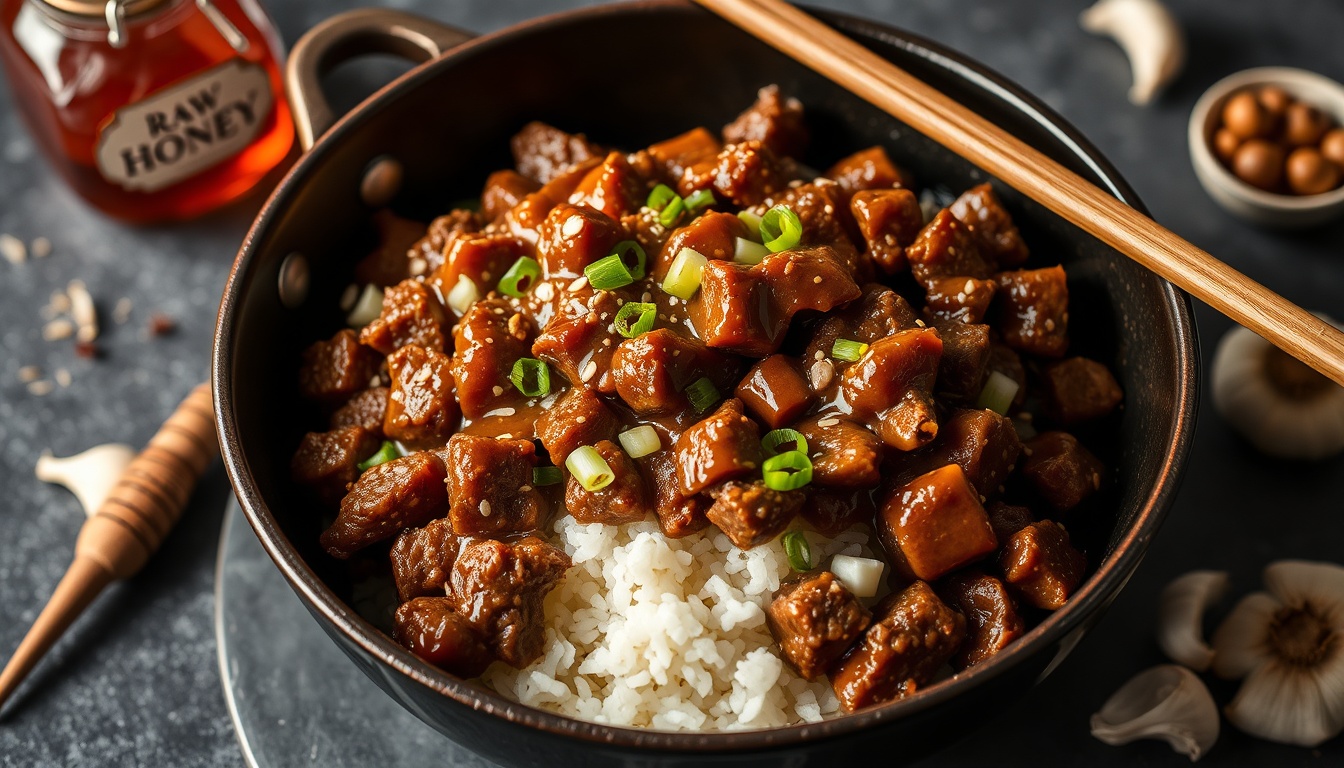
Why Honey Garlic Ground Beef Works So Well
This recipe succeeds because of the balance between four flavor elements: sweet (honey), salty (soy sauce), savory (garlic and beef), and bright (rice vinegar). The honey does more than add sweetness — its fructose begins caramelizing at around 230°F, creating the sticky, glossy glaze that coats each crumble of beef.
Ground beef is the ideal vehicle for a honey garlic sauce. Its high surface area means maximum contact with the glaze, so every bite is coated. The residual fat in the beef helps emulsify the sauce, creating a smooth, clingy coating rather than a watery pool at the bottom of the pan.
The entire dish comes together in one pan in 15 minutes, uses pantry staples most people already have, and costs under $10 to feed four people. It is the kind of recipe you make on a Tuesday when you have 20 minutes and need real food — not just a recipe, but a weeknight survival tool.
Step-by-Step Instructions
The technique matters as much as the ingredients. Here is how to get the best results.
- Mix the sauce first: Whisk honey, soy sauce, rice vinegar, and sesame oil in a small bowl. Having the sauce ready means you can add it the moment the garlic is fragrant — no scrambling while things burn
- Use high heat for the beef: A hot pan is essential. Medium-high heat sears the beef quickly, creating flavorful browned bits (Maillard reaction) instead of steaming the meat gray. Break it into small, irregular crumbles for maximum surface area
- Drain most of the fat: Too much fat prevents the sauce from adhering. Leave about 1 tablespoon for flavor and emulsification, but pour off the rest. Use 85/15 beef if you prefer less draining
- Cook garlic briefly: 30 seconds is enough. Garlic burns quickly in a hot pan and turns bitter. Adding it after the beef is browned, in the center of the pan, gives you control
- Let the sauce reduce: After adding the sauce, cook for 2-3 minutes without stirring constantly. This allows the honey sugars to concentrate and caramelize, creating the sticky glaze. You will see the sauce go from liquid to thick and glossy
Pro Tip
For extra caramelization, spread the sauced beef in a thin layer and let it sit undisturbed for 30-45 seconds before stirring. The honey will form crispy, caramelized edges on the beef crumbles.
Get the Honey Buyer's Cheat Sheet (free PDF)
16 varieties on one page — color, flavor, best use and what a fair price looks like — from the 304 honeys we track.
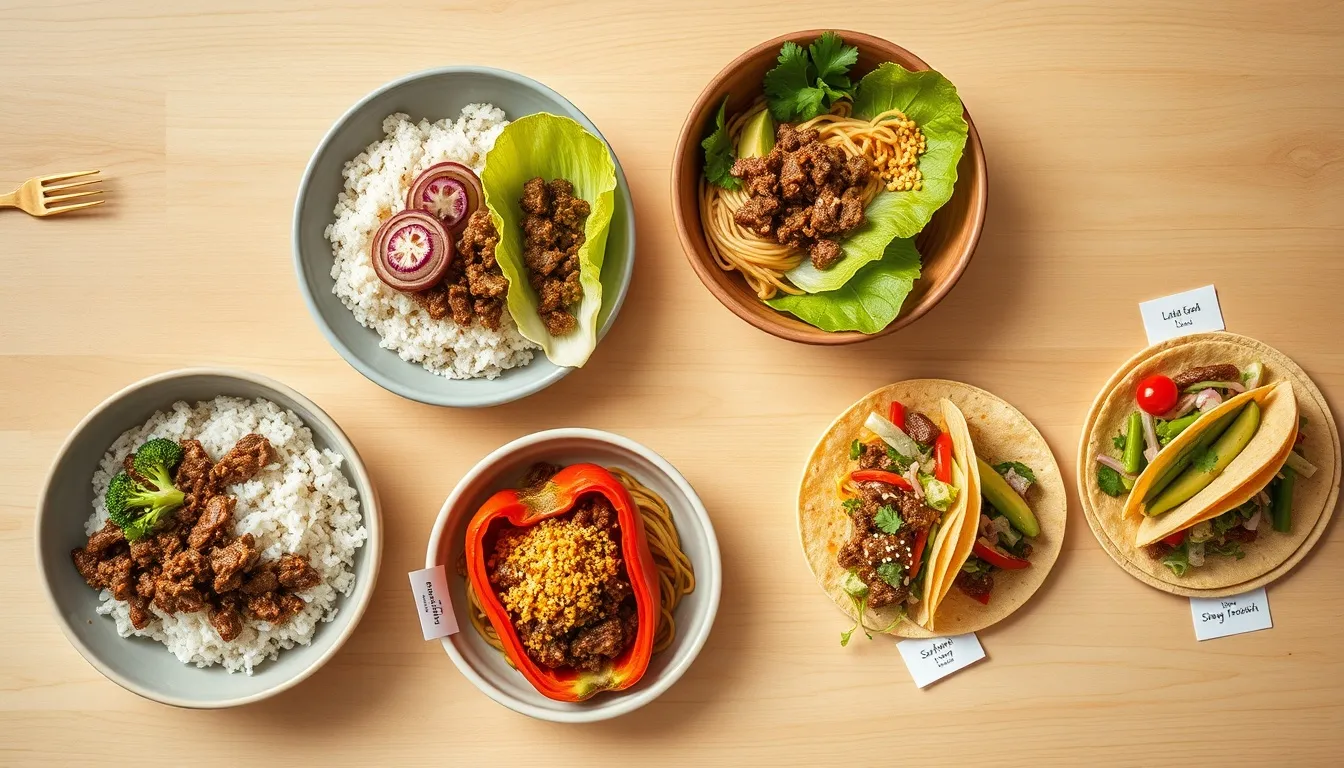
5 Ways to Serve Honey Garlic Ground Beef
The beauty of this recipe is its versatility. The same batch of honey garlic beef transforms into completely different meals depending on how you serve it.
- Rice bowls — Serve over steamed jasmine or brown rice with steamed broccoli, shredded carrots, sliced cucumber, and a drizzle of honey sriracha sauce. The rice absorbs the extra sauce. Top with a fried egg for protein
- Lettuce wraps — Spoon into butter lettuce cups with pickled red onion, julienned carrots, fresh cilantro, and a squeeze of lime. Light, crunchy, and satisfying — this is the low-carb option that does not feel like a compromise
- Noodle stir-fry — Toss with cooked lo mein noodles, snap peas, and bell peppers. Add an extra tablespoon of soy sauce and a splash of sesame oil. The honey garlic sauce becomes the noodle sauce. Similar to honey garlic noodles but heartier
- Stuffed peppers — Fill halved bell peppers with honey garlic beef mixed with cooked rice and shredded cheese. Bake at 375°F for 20 minutes until the peppers soften and the cheese melts. A complete one-dish meal
- Tacos — Warm corn or flour tortillas, fill with honey garlic beef, and top with quick-pickled slaw (cabbage, rice vinegar, pinch of sugar), avocado slices, and honey lime crema. The sweet-savory filling with tangy slaw is an unexpected taco combination that works
4 Flavor Variations
The base recipe is a foundation. Each variation takes it in a different direction while keeping the one-pan, 15-minute promise.
- Honey garlic ginger beef — Double the ginger to 2 teaspoons and add 1 tablespoon oyster sauce. The ginger adds warmth and the oyster sauce deepens the umami. Closest to what you would get from a Chinese takeout restaurant. Pairs with the techniques in honey ginger stir-fry
- Spicy honey garlic beef — Add 1-2 tablespoons of honey sriracha sauce or gochujang (Korean chili paste) to the base sauce. The heat cuts through the sweetness and adds complexity. Top with sliced fresh chili peppers
- Honey garlic teriyaki beef — Replace the rice vinegar with mirin (sweet rice wine) and add 1 tablespoon brown sugar for a deeper caramel note. Thicker, sweeter glaze inspired by honey teriyaki but with beef
- Mediterranean honey garlic beef — Swap sesame oil for olive oil, add 1 teaspoon dried oregano and 1/2 teaspoon cumin. Serve in pita with tzatziki, tomatoes, and red onion. Proof that honey garlic transcends Asian-fusion and works in Mediterranean context too
Best Honey Varieties for Ground Beef
The honey variety affects both flavor and caramelization. Here is what works best with the bold, savory profile of beef.
- Wildflower honey — the best all-around choice. Its complex floral notes add depth without competing with the garlic and soy. The slight earthiness complements beef naturally
- Clover honey — clean, neutral sweetness that lets the garlic and soy flavors lead. Choose this when you want a balanced sauce where no single ingredient dominates
- Buckwheat honey — deep, molasses-like richness that creates an almost barbecue-like glaze. The dark color and robust flavor pair exceptionally well with beef. Try this for the rice bowl variation. Learn more about buckwheat honey benefits
- Orange blossom honey — citrus notes that brighten the sauce and complement the rice vinegar. Best for the lettuce wrap and taco variations where freshness matters
- Avoid delicate single-varietal honeys like acacia — their subtle flavor gets completely lost under garlic and soy. Save them for tea or drizzling
Tips for the Best Results
Small details make the difference between good and great.
- Do not use extra-lean ground beef (90/10 or 93/7). You need some fat for flavor and to help the sauce emulsify. 80/20 produces the most flavorful result; 85/15 is a good compromise if you want less grease
- Fresh garlic matters here. Pre-minced jarred garlic has a muted, slightly sour flavor compared to fresh. Six cloves sounds like a lot, but the honey and soy balance it — the garlic mellows significantly during cooking
- Do not add the sauce to cold or lukewarm beef. The pan needs to be hot so the honey sugars hit the surface and start caramelizing immediately. If the pan is too cool, you get a watery sauce instead of a glaze
- Rice vinegar is not optional. It provides acidity that balances the sweetness of the honey and prevents the sauce from being cloying. Apple cider vinegar works as a substitute but has a stronger, fruitier flavor
- Break the beef into small pieces — pea-sized crumbles create the most surface area for the glaze to coat. Large chunks mean less sauce contact per bite
Meal Prep and Storage
Honey garlic ground beef is one of the best meal prep proteins you can make.
- Refrigerator: Airtight container for up to 4 days. The sauce thickens as it cools — add a splash of water when reheating to loosen it back to a glaze consistency
- Freezer: Freeze in portioned containers or zip-lock bags (press flat for fast thawing) for up to 3 months. Thaw overnight in the fridge or in a bowl of cold water
- Reheating: Skillet over medium heat is best — it re-caramelizes the honey glaze. Microwave works but produces a softer texture. Add 1-2 tablespoons of water to prevent drying out
- Batch cooking: Double or triple the recipe using a large Dutch oven or two skillets. The sauce scales linearly — just multiply all ingredients. Portion into 5 containers with rice for a full week of lunches
- Prep ahead: Mix the sauce in advance and store in the fridge for up to 1 week. Mince the garlic up to 24 hours ahead. When ready to cook, brown the beef and add the pre-made sauce — dinner in under 10 minutes
Common Mistakes to Avoid
These are the most common ways this simple recipe goes wrong.
- Crowding the pan — if your skillet is small, cook the beef in two batches. Overcrowding traps steam and prevents browning, giving you gray, steamed meat instead of seared crumbles
- Adding the sauce too early — the beef must be fully browned before the sauce goes in. Adding liquid to partially cooked meat stops the browning process and you will never recover that flavor
- Not draining fat — excess beef fat dilutes the sauce and prevents it from reducing to a glaze. Drain all but about 1 tablespoon before adding garlic
- Stirring constantly after adding sauce — let the sauce reduce. If you stir nonstop, you prevent the honey from concentrating and caramelizing. Stir every 30-45 seconds, not continuously
- Using low-quality soy sauce — the soy sauce is a primary flavor component, not a background seasoning. Use naturally brewed soy sauce (Kikkoman, San-J) rather than hydrolyzed vegetable protein versions