Acacia Honey vs Manuka Honey
A detailed comparison to help you choose the right honey for your needs.
Quick Answer
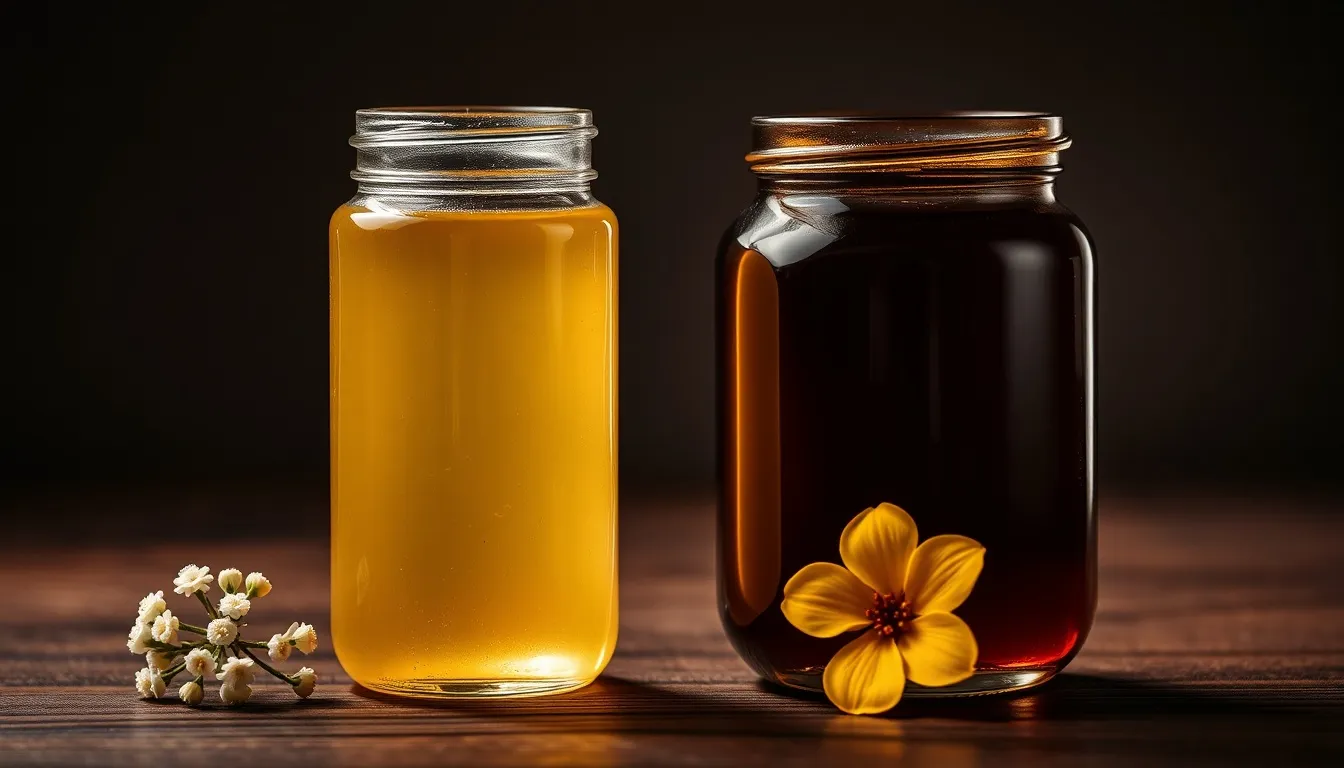
Acacia and manuka honey are polar opposites. Acacia is the lightest, mildest honey available with a notably low glycemic index of 32, making it ideal for blood sugar-conscious sweetening and delicate culinary use. Manuka is the dark, bold, clinically validated medicinal honey. Choose acacia for everyday sweetening and refined cooking, manuka for targeted health applications.
At a Glance
Acacia Honey
Mild, delicate, vanilla-like sweetness
Low-GI sweetening, drizzling, cocktails, delicate dishes
$10-$25 per jar
Hungary, Italy, Romania, China
Manuka Honey
Rich, earthy, slightly bitter with herbal notes
Medicinal use, wound healing, immune support
$30-$80 per jar
New Zealand
Head-to-Head
Flavor Comparison
Acacia honey is the gentlest honey you will encounter.
Its flavor is clean, light, and almost purely sweet with delicate vanilla and floral undertones. There is zero bitterness, no herbaceous edge, and no heavy aftertaste. Its texture stays liquid and pourable for months because of its high fructose-to-glucose ratio. The near water-white clarity makes it visually striking. Manuka honey is the opposite in every way. It is dense, opaque, and assertive with earthy, herbal notes and noticeable bitterness, especially in higher UMF grades. The flavor is medicinal in the best sense: complex, layered, and slightly challenging. Where acacia disappears gracefully into whatever it sweetens, manuka announces itself and demands attention. This contrast makes them complementary rather than competitive in a well-stocked pantry.
Nutrition Comparison
Acacia honey's standout nutritional feature is its glycemic index of approximately 32, the lowest among common honey varieties.
This is due to its exceptionally high fructose content (roughly 70% of its sugar profile), which the body processes more slowly than glucose. For people monitoring blood sugar, this makes acacia the most metabolically friendly honey. It resists crystallization for the same reason. Manuka honey's defining compound is methylglyoxal (MGO), which provides clinically validated non-peroxide antibacterial activity. UMF-rated manuka has been validated in peer-reviewed research for wound healing, digestive health, and oral health. Both honeys provide roughly 60 calories per tablespoon. Acacia has moderate antioxidant levels typical of light honeys, while manuka has higher antioxidant activity consistent with its darker color.
Best Use Cases
Acacia honey is the premier culinary honey for refined applications.
Use it to sweeten tea, coffee, or cocktails without altering their flavor profile. Drizzle it over fresh fruit, yogurt, or mild soft cheeses like ricotta and burrata. It is excellent in light salad dressings, glazes for delicate fish, and as a baking sweetener where you want sweetness without competing flavor. Its low GI makes it the best honey option for diabetics who consume honey in moderation under medical guidance. Manuka honey is often taken as a daily spoonful for general wellness; wound care, acne, and digestive conditions like gastritis should be directed by a healthcare provider rather than self-treated with honey. Its strong flavor works in health tonics, smoothies, and dark marinades where its boldness is a feature.
Price Comparison
Acacia honey runs $10 to $25 per jar, placing it in the mid-range for specialty honeys.
Manuka commands $30 to $80 or more, with premium UMF 20+ grades exceeding $100. The price gap is significant: acacia costs roughly one-third to one-quarter of manuka. For everyday sweetening, acacia provides outstanding value. Manuka's premium is justified only when you need its specific MGO antibacterial properties.
Our Verdict
These honeys serve completely non-overlapping roles. Acacia is the refined everyday honey: elegant, light, and metabolically friendly, ideal for anyone who wants sweetness without heaviness or blood sugar spikes. Manuka is the therapeutic specialist: expensive but clinically backed for specific health needs. Keep acacia on the breakfast table and in the bar cart. Keep manuka in the medicine cabinet. Trying to use one in the other's role wastes money or misses the point.
Frequently Asked Questions
Is acacia honey better than manuka for diabetics?
Can acacia honey heal wounds like manuka?
Why does acacia honey stay liquid so long?
What does acacia honey taste like compared to manuka?
Which is better value for daily health?
What does UMF mean on manuka honey?
Best Honey For...
More Honey Comparisons
View allRelated Guides
Health Benefits
Nutritional and therapeutic benefits of honey.
Read GuideHoney for Sore Throat
Evidence-based sore throat relief.
Read GuideQuality & Grading
Identify quality honey and spot fakes.
Read GuideRelated Articles
Manuka Honey Benefits: 10 Science-Backed Uses Worth Knowing
10 evidence-based manuka honey benefits — wounds, sore throats, gut health, and skin care. Which UMF/MGO grade to buy.
Read ArticleManuka Honey Grading Systems Explained: UMF vs MGO vs KFactor
UMF vs MGO vs KFactor — manuka honey ratings decoded. Learn what the numbers mean and how to choose authentic manuka.
Read ArticleHoney for Wound Healing: Medical Products and Evidence Limits
Food honey is not a wound dressing. Understand the limits of medical-honey research, product-specific instructions, and when to seek professional care.
Read ArticleHoney for Eye Health: Benefits, Risks, and What Science Says
Can honey benefit eye health? Evidence on antimicrobial and anti-inflammatory properties for dry eyes and conjunctivitis.
Read ArticleRaw Honey vs Manuka Honey: Which Should You Buy?
Raw honey vs manuka honey: compare price, antibacterial strength, taste, and best uses. Is manuka worth the premium?
Read Article