The Invisible Exporter: Argentina's Hidden Place in Global Honey
Argentina ships between 60,000 and 80,000 metric tonnes of honey per year according to FAO trade data — enough to make it either the world's second or third largest honey exporter, trading positions annually with Ukraine and occasionally India. For context, that volume represents roughly 10–12% of world honey exports. Yet if you ask honey enthusiasts in the United States or Europe to name Argentine honey, most will pause. They have likely eaten Argentine honey hundreds of times, but almost certainly without knowing it. Approximately 90–95% of Argentina's honey export volume enters the European Union under the label "mixture of EU and non-EU honeys" — the generic descriptor on supermarket honey jars that tells consumers almost nothing about origin, variety, or production system. A jar of European supermarket blended honey may contain Argentine sunflower honey, Ukrainian rapeseed honey, Bulgarian wildflower honey, and Chinese multi-floral honey, combined and heat-filtered to a uniform appearance and neutral flavor profile.
The commercial logic is straightforward: Argentine honey is price-competitive, relatively clean by international standards (after a pivotal 2002 crisis that forced industry reform), produced in large volumes on a predictable calendar, and neutral-tasting enough to blend without character conflict. These same properties — volume, neutrality, reliability — are precisely why it is invisible to consumers. The honey most likely to build a reputation is the honey with a distinctive identity: a named floral source, a named region, a named production system. Argentine honey's bulk market success has historically worked against this identity-building. This is changing. A tier of Argentine artisan honey producers — concentrated in Patagonia and the native-wildflower regions of Córdoba, San Luis, and the northwest — are developing named single-origin, single-varietal honey for specialty markets in the US, UK, Japan, and domestic Argentine cities. This guide covers both the bulk and artisan story: what makes Argentine honey commercially significant, what makes its premium tier genuinely interesting, and how to find it.
For context on South American honey more broadly, including the Brazilian Meliponini (stingless bee) tradition and how Argentina relates to the continent's honey geography, see our Brazilian Honey Guide and World Honey Guide.
Geography of Argentine Honey: Pampa, Mesopotamia, and Patagonia
Argentina's honey-producing territory can be divided into three broad geographic zones, each defined by a distinct climate, flora, and honey character. The Humid Pampa — encompassing Buenos Aires province, southern Santa Fe, and northern La Pampa — is the engine of Argentine honey production. Its flat, fertile plains support vast sunflower (Helianthus annuus), clover (Trifolium repens, T. pratense), and alfalfa (Medicago sativa) monocultures, providing the high-volume, consistent floral sources that underpin Argentina's export trade. Buenos Aires province alone contains approximately 1.5 million of Argentina's estimated 3.5–4 million managed hives. The landscape is intensively agricultural, the honeys are mild and commercially useful, and the production infrastructure — packing plants, extraction equipment, cold chains — is the most developed in the country.
The Mesopotamia region — Entre Ríos, Corrientes, and Misiones, bounded by the Paraná and Uruguay rivers — offers a more botanically diverse production zone. Eucalyptus (Eucalyptus spp.) plantations are significant in Entre Ríos. Corrientes produces honey from mburucuyá (Turnera subulata and passion flower species), orange blossom honey from citrus orchards sharing similar Citrus aurantium nectar characteristics with global orange honey production, and diverse native wildflower sources from the Iberá wetlands corridor. Misiones, sharing the Atlantic Forest biome with southern Brazil, produces honey with a more tropical-complex character than the pampa, including honey from lapacho (Tabebuia/Handroanthus spp., whose spectacularly flowering pink and yellow trees provide nectar flow in spring). This zone is also where Africanized bee genetics are most prevalent in Argentina, following the northward spread from Brazil through the 1980s and 1990s.
Patagonia — the Andean foothills and valleys of Neuquén, Río Negro, Chubut, and Santa Cruz provinces — is Argentina's premium honey zone by growing international consensus. At the ecological transition between the Andes and the Patagonian steppe, the river valleys and lake-district forests of northern Patagonia support a distinctive flora: meli (Dasyphyllum diacanthoides), michay (Berberis spp.), mutisia (Mutisia spp.), zarzamora (Rubus ulmifolius, Andean blackberry), rosa mosqueta (Rosa eglanteria), and cipresales (Austrocedrus chilensis, Chilean cypress) in the Andean cordillera. The region has extremely low industrial agriculture, minimal pesticide use, and clean air and water from the Andean watershed — producing honey that the specialty market characterises by its environment as much as by its flora. Northern Patagonia (particularly the Río Negro valley and Neuquén's Limay corridor) also has a significant fruit orchard belt — apple, pear, cherry — whose spring blossoms provide seasonal monofloral opportunities.
Get the Honey Buyer's Cheat Sheet (free PDF)
16 varieties on one page — color, flavor, best use and what a fair price looks like — from the 304 honeys we track.
The Sunflower Paradox: Argentina's Most Common Honey Is Its Most Misunderstood
Sunflower honey (miel de girasol) is Argentina's single largest honey variety by volume, reflecting the country's enormous sunflower seed production — Argentina is among the world's top five sunflower producers, with 3–5 million hectares planted annually across the Buenos Aires, La Pampa, Córdoba, and Santa Fe provinces. Sunflower honey is the honey most inextricably associated with Argentine production in the bulk market, and it presents an immediate paradox for consumers unfamiliar with it: this is a honey that crystallises to a firm, pale-yellow solid within two to four weeks of extraction, regardless of storage temperature. In a US market where consumers associate crystallised honey with spoilage (incorrectly — crystallisation is a natural, reversible process), sunflower honey's rapid granulation makes it commercially difficult to sell as a liquid product. In European markets — Germany, Spain, Italy, France — where crystallised honey is accepted or preferred as a spreadable condiment, Argentine sunflower honey is entirely at home, and its fine-grained crystallised texture (from glucose crystals averaging 10–25 microns, considerably finer than most granulated honeys) is a positive selling point for the bread-and-honey breakfast culture of continental Europe.
The chemistry behind this behaviour is straightforward and instructive. Honey crystallises when glucose monohydrate precipitates out of solution. The rate of crystallisation depends primarily on the glucose-to-fructose (G:F) ratio and the glucose-to-water (G:W) ratio. Sunflower honey has a G:F ratio of approximately 1.2–1.3 (glucose-dominant), compared to Italian acacia honey's 0.7 (fructose-dominant, which is why acacia honey stays liquid for years) and New Zealand Manuka honey's roughly 1.0 (moderate crystallisation rate). This high glucose fraction, combined with sunflower honey's low water activity and the presence of glucose oxidase enzyme in freshly extracted product, drives crystallisation onset within days to weeks at room temperature. Argentine beekeepers who produce sunflower honey for premium domestic markets have mastered the art of controlled crystallisation — seeding the honey with finely milled previously-crystallised stock and holding it at 14°C for several days to produce a creamed or whipped honey with a smooth, spreadable consistency and a clean, nutty-sweet, faintly herbaceous flavor profile. Argentine creamed sunflower honey, when freshly produced and well-handled, rivals Canadian canola cream honey and Swiss creamed rape honey as a spreadable monofloral product.
The flavor of sunflower honey — liquid or creamed — is mild and approachable: light gold to pale amber in liquid form, off-white to pale cream when crystallised, with a sweet, faintly nutty, subtly herbaceous taste (from volatile compounds including nonadienal and aliphatic aldehydes in sunflower nectar). It lacks the complexity of Patagonian wildflower or the intensity of algarrobo, but its very mildness makes it an excellent all-purpose cooking and baking honey. Argentine bakers prize sunflower honey for pastry applications where a neutral sweetness is wanted. European buyers blend it for this reason. US specialty food importers who sell Argentine sunflower honey by name typically market it as a creamed honey, meeting US consumers where their texture preference already sits.
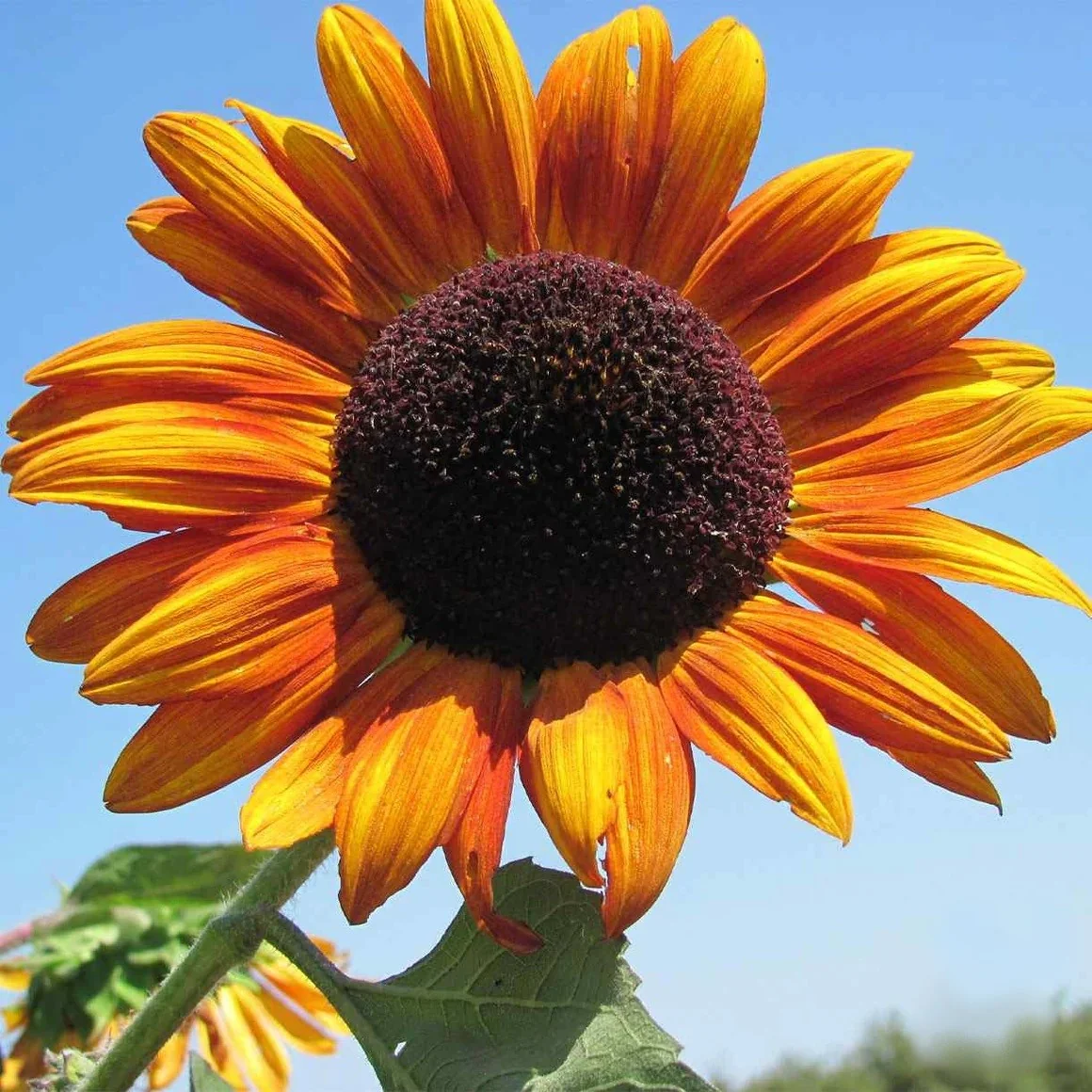
Photo: Queen Right Colonies, used with permission
Patagonian Wildflower: Honey from the Edge of the World
Northern Patagonia's lake district — anchored by the cities of San Martín de los Andes, Bariloche, and El Bolsón in Neuquén and Río Negro provinces — has developed a small but internationally recognised artisan honey sector built on the region's environmental purity and floral distinctiveness. Elevation ranges from 300 metres in the valley floors to over 1,500 metres in active beekeeping areas, with Andean snowmelt providing clean water throughout the season. The combination of native Patagonian shrubs, introduced European wildflowers that have naturalised extensively in the lake-district valleys, and orchard blossoms from the region's fruit-growing belt creates floral complexity that single-varietal sunflower or clover honey cannot approach.
The key native floral contributors to Argentine wildflower honey include: meli (Dasyphyllum diacanthoides), a native Asteraceae shrub with cream-yellow flower clusters producing a distinctive aromatic, slightly resinous character; michay or calafate (Berberis spp., several species including Berberis darwinii and B. microphylla — the latter producing the calafate berry that is Patagonia's signature fruit), whose yellow flower clusters are worked intensively by bees in early spring; mutisia (Mutisia decurrens and related species), woody climbing Asteraceae with orange-red composite flowers contributing a warm, spicy-sweet volatile note; and rosa mosqueta (Rosa eglanteria/rubiginosa), the invasive European sweetbriar rose that has colonised vast tracts of the Andean foothills and produces nectar worked by local bee populations. Introduced European wildflowers — white and yellow sweet clover (Melilotus alba and M. officinalis), various legumes, borage — fill the lower valleys and farmland margins. The resulting wildflower honey is amber to golden-amber, aromatic, with layers of flavor that shift across the harvest season (spring early-bloom versus summer-peak versus late-season character). El Bolsón producers describe their Patagonian honey as having a floral-sweet primary note with herbal-resinous undertones from the native Andean flora.
The premium that verified Patagonian wildflower honey commands in specialty markets reflects not only flavor complexity but verifiable environmental purity. Northern Patagonia has no heavy industry, minimal conventional agriculture in the lake-district core, and Argentina's lowest pesticide application rates by region. The Argentine government and provincial authorities of Río Negro and Neuquén have promoted "honey of origin" designation programs similar to EU geographic indications, with regional beekeeping associations developing origin certificates for Patagonian honey producers. For international specialty honey buyers, Patagonian honey offers the rare combination of genuine environmental story, flavor distinctiveness, and reasonable supply volume — the lake-district zone has capacity to produce consistent specialty volumes without the scarcity premiums of ultra-rare honeys like Yemeni Sidr or Nepalese mad honey.
Native Argentine Varieties: Algarrobo, Espinillo, and Mburucuyá
Beyond the commercially dominant sunflower and clover, Argentina produces a range of native monofloral honeys from endemic legumes, shrubs, and vines that represent the country's deepest botanical identity. Algarrobo honey — from Prosopis spp., the native Argentine carob-mesquite trees — is the most commercially significant native monofloral, produced across the dry Chaco, semi-arid Cuyo region (Mendoza, San Juan, San Luis), and the monte shrubland of Patagonia's eastern margins. Several Prosopis species contribute to Argentine algarrobo honey production: P. alba (white algarrobo), P. nigra (black algarrobo), and P. flexuosa (porkypine mesquite) are the most apiculturally important. All produce abundant nectar from their yellow catkin-like flower clusters in spring (September–November in the southern hemisphere), and all produce honey with a characteristic dark amber to reddish-amber color, a thick body with slow crystallisation, and a complex, caramel-molasses flavor with a faint woody-resinous background note. Algarrobo honey shares aromatic territory with mesquite honey from the US Southwest and Mexican Sonora (Prosopis velutina and P. glandulosa) — understandably, given shared genus — but Argentine algarrobo honey from the Chaco typically carries a richer, slightly darker character from P. nigra and P. alba blends.
Espinillo honey — from Vachellia caven (formerly Acacia caven, known locally as espinillo or aromita) — is the most botanically distinctive monofloral produced in the dry pampas and monte zones of Córdoba, San Luis, and La Rioja. V. caven is a thorny native legume shrub that flowers in August–September with intensely fragrant yellow ball-shaped flower heads, resembling the mimosa of European spring (to which it is botanically related). The flowering is spectacular and brief — a two-to-four week window — and the honey produced from it is pale gold to light amber, with an exceptional aromatic character: powerfully floral, sweet, with a pronounced anise-vanilla-mimosa note from methyl anthranilate and related volatile esters in the nectar. Espinillo honey is among the most fragrant honeys produced anywhere in South America, and it crystallises to a smooth fine-grained texture within a few weeks. Its production is geographically limited — V. caven grows in specific dry-zone habitats and the monofloral window is short — making it a premium artisan product in Argentine specialty markets. It is rarely found outside Argentina and northern Chile; specialty importers who carry it typically do so through direct producer relationships.
Mburucuyá honey — from Turnera subulata and related passion flower species of Corrientes and Entre Ríos — adds a tropical-floral dimension to Argentina's native honey palette. The genus Turnera (known locally as mburucuyá, the Guaraní name, or as damiana in northwest Argentina) flowers prolifically in the humid subtropical climate of the Mesopotamia region, and colonies in range work the flowers intensively. The resulting honey is amber to golden, with a delicate floral-sweet character that carries a hint of the passion flower's distinctive aroma — subtly fruity, faintly citrus, clean. It is a gentle, approachable honey with less flavor intensity than algarrobo or espinillo, valued by Argentine consumers in Corrientes for its mild sweetness and local identity. Tilo (linden, Tilia spp.) honey is produced in small quantities in the Andean foothills of Tucumán and Salta where planted tilo trees bloom in summer — pale gold, delicate, characteristically lime-blossom-floral in the manner of European linden honey.
The 2002 EU Ban and SENASA's Reconstruction of Argentine Honey Quality
The most consequential event in the modern history of Argentine honey occurred between January 2002 and September 2003: the European Union suspended imports of Argentine honey following the detection of chloramphenicol — a broad-spectrum antibiotic banned in food products in the EU since 1994 — in multiple samples from Argentina. The discovery was part of a broader pattern; chloramphenicol contamination in honey from multiple countries (including China, which also lost EU access in 2002) reflected widespread veterinary antibiotic use in beekeeping to treat American foulbrood disease (Paenibacillus larvae). The EU's maximum residue limit for chloramphenicol in food is 0.3 parts per billion — extraordinarily low — and trace carry-over from apiary treatments was sufficient to trigger bans even when contamination was not intentional adulteration.
The ban was economically catastrophic for Argentina's honey sector, which had built its export volume around EU market access. In the 2001–2002 season, Argentina had exported approximately 80,000 MT of honey — its historical peak — the majority to the EU. The suspension immediately removed the primary export market, collapsing prices in the domestic supply chain and triggering a crisis in beekeeping communities in Buenos Aires, Entre Ríos, and Córdoba provinces. The response was a forced but ultimately effective industry-wide quality revolution, coordinated by SENASA (Servicio Nacional de Sanidad y Calidad Agroalimentaria) — Argentina's national food safety and animal health authority — in partnership with beekeeping associations (SAGPYA, provincial cámaras apícolas) and the Asociación Argentina de Productores Apícolas (AAPA). SENASA mandated a comprehensive honey residue testing program across the entire export chain: apiary registration, beekeeper disease treatment records, bulk lot testing for chloramphenicol and other banned veterinary drugs before export certification, and packing plant Good Manufacturing Practice (GMP) audits.
By September 2003, the EU lifted the ban on Argentine honey following documented evidence of systematic improvement in testing protocols and the demonstration of clean residue test results across a large representative sample of Argentine production. The regulatory infrastructure built during and after the crisis has persisted: Argentina's SENASA export certification now requires every export lot to carry a Certificate of Origin and Quality (Certificado de Origen y Calidad) specifying origin province, floral type, extraction date, moisture content, HMF, diastase activity, and residue test results for a defined panel of veterinary drug residues including organochlorines, organophosphates, streptomycin, and tetracyclines. The 2002 crisis, while painful, produced an Argentine honey export certification system that is more systematically documented than the export certification of many competing origins. A SENASA-certified Argentine honey lot has a paper trail that a comparable shipment from some other high-volume exporters cannot match.
Africanized Bees in Northern Argentina: Management Without the Myth
Africanized bee genetics entered Argentina from Brazil in the late 1970s and spread through the 1980s, following the same wave that had transformed Brazilian beekeeping two decades after the 1957 Warwick Kerr escape. By the mid-1990s, Africanized Apis mellifera colonies were established throughout northern Argentina — Jujuy, Salta, Tucumán, Chaco, Formosa, Misiones, Corrientes — and hybrid populations with varying degrees of Africanized genetics extended into Santiago del Estero, Catamarca, and La Rioja. Southern Argentina — the pampa heartland and Patagonia — remains effectively European-genetics-dominant, partly because the colder climate of the southern latitudes disadvantages the more tropically-adapted Africanized traits in cold winter survival.
Argentine beekeeping practice adapted to Africanized bee management through the same learning curve that Brazilian beekeepers had navigated earlier: protective equipment upgrades, modified inspection timing (cooler mornings and evenings reduce defensive response), more frequent queen replacement cycles (Africanized colonies tend toward swarming, requiring more active swarm management), and colony site selection away from residential areas. In the northern provinces, Africanized colony management is now standard practice — not a crisis but a baseline reality of tropical beekeeping. The commercial advantage of Africanized bees in the north mirrors what Brazil observed: stronger foraging across Argentina's subtropical northern forests and the Chaco scrubland, better colony performance on the irregular subtropical nectar flows, and generally reduced need for Varroa destructor treatment in fully Africanized colonies compared to European stock. The honey quality is indistinguishable: the same floral source worked by Africanized and European bees produces chemically equivalent honey.
The geographic line between Africanized-dominant and European-dominant Argentine beekeeping lies roughly at the 30th parallel south — the northern edge of the productive pampa zone. Most Argentine honey reaching international export markets (which flows primarily from the pampa provinces of Buenos Aires, Entre Ríos, and Córdoba) is from European or lightly hybridised colonies. Patagonian honey is produced almost entirely from European-genetics colonies — the combination of altitude, cold winters, and the absence of the migration routes by which Africanized genetics spread southward has kept Patagonian apiculture European-stock dominant. This matters for international buyers who have absorbed the "killer bee" media narrative: Argentine pampa and Patagonian honey is not, for practical purposes, produced from Africanized bees.
Buying Argentine Honey: What to Look For
Argentine honey in the US and EU specialty market comes in two distinct purchase contexts. The first is bulk commodity honey in supermarket blends — the "mixture of EU and non-EU honeys" label described above. In this context, Argentine honey is present but invisible and untraceable; there is nothing to look for because there is nothing declared. If your goal is to consciously experience Argentine honey, this context cannot serve you. The second context is specialty single-origin Argentine honey, available through specialty food importers, natural food co-ops, farmers markets in cities with Argentine immigrant communities, and direct from Argentine producers via specialty food e-commerce platforms. In this context, label information matters significantly: a well-labeled Argentine specialty honey should declare the province of production (Buenos Aires, Río Negro, Neuquén, Córdoba, Entre Ríos — province matters; Argentina is a country the size of Western Europe), the floral source (sunflower, Patagonian wildflower, algarrobo, espinillo, clover, eucalyptus — named source, not generic "Argentine honey"), the extraction season and year, and the beekeeper or cooperative name.
SENASA certification on an export lot is a meaningful quality signal — it documents the residue testing and origin chain described above. For Patagonian honey specifically, look for producer membership in the Asociación de Productores Apícolas de la Patagonia (APAP) or equivalent regional association, which supports the geographic origin verification programs developing in Río Negro and Neuquén. Patagonian wildflower, algarrobo, espinillo and creamed sunflower are regional specialties. No dated retail price is cited for them. In our catalogue, eucalyptus is $10–$15 (middle half of 18 verified eucalyptus jars, Oct 7, 2026) and clover is $9–$15 (middle half of 16 verified clover jars, Oct 7, 2026). Generic blended "Argentine honey" at commodity pricing (in bulk format) is genuine Argentine honey but produces no artisan or origin-story value — it is a commodity ingredient, not a specialty food experience.
The emerging Argentine specialty honey market has a structural advantage that Brazil's stingless bee sector lacks: it is built on familiar Apis mellifera honey with internationally understood quality parameters, in a country with a functional export certification infrastructure (SENASA), accessible international shipping channels, and a domestic consumer class in Buenos Aires that is sophisticated about specialty food and driving demand for named-origin Argentine honey within the country. The trajectory for Argentine artisan honey — Patagonian wildflower, algarrobo, espinillo — resembles what happened to Argentine wine two decades ago: a bulk commodity export reputation slowly giving way to a tier of internationally regarded single-origin, terroir-driven premium products. The honey sector is at an earlier stage of that trajectory than wine, which means prices are still relatively accessible for the quality delivered. For honey enthusiasts willing to search for traceable Argentine honey by province and floral source, this is a market segment worth watching.