What Is Ringworm and Why Is It So Common?
Ringworm (tinea) is not a worm at all — it's a superficial fungal infection caused by dermatophytes, a group of fungi that feed on keratin in skin, hair, and nails. The name comes from the characteristic ring-shaped, red, scaly rash that spreads outward as the fungus colonizes new skin while healing in the center.
Dermatophyte infections are among the most common skin conditions worldwide, affecting an estimated 20-25% of the global population at any given time. The three genera responsible — Trichophyton, Microsporum, and Epidermophyton — can infect different body areas: tinea corporis (body), tinea pedis (athlete's foot), tinea cruris (jock itch), tinea capitis (scalp), and tinea unguium (toenail fungus).
Ringworm spreads through direct contact with infected people, animals (especially cats and dogs), contaminated surfaces (gym equipment, shower floors, shared towels), or soil. It thrives in warm, moist environments — which is why athletes, gym-goers, children in daycare, and people in tropical climates are most affected.
Standard treatments include topical antifungals (clotrimazole, miconazole, terbinafine) applied for 2-4 weeks. These work well for most cases, but growing concerns about antifungal resistance — particularly to azole-class drugs — have researchers investigating natural antimicrobials, including honey, as potential complementary treatments.
What the Research Says About Honey's Antifungal Properties
Honey's antibacterial properties are well-documented, but its antifungal activity is less widely known — and the evidence, while promising in the lab, has important limitations for clinical application.
A 2012 study in the Asian Pacific Journal of Tropical Biomedicine tested honey against 40 clinical fungal isolates including Candida albicans, Aspergillus niger, Aspergillus flavus, and several dermatophyte species. Honey inhibited the growth of all tested fungi at concentrations of 70-100%, with higher-concentration honey showing dose-dependent effectiveness.
A 2012 study in the Archives of Medical Research compared the antifungal activity of different honey types against clinical dermatophyte isolates (Trichophyton mentagrophytes, Trichophyton rubrum, and Microsporum canis — the species most commonly causing ringworm). Thyme honey and manuka honey showed the strongest inhibition, with minimum inhibitory concentrations (MICs) significantly lower than clover or acacia honey.
A 2016 study in Frontiers in Microbiology examined honey's effects on fungal biofilms — the protective communities that fungi form on surfaces, making them 100-1,000x more resistant to antifungals. Manuka honey disrupted Candida biofilm formation by 66-81%, a finding relevant because dermatophytes also form biofilm-like structures in chronic or recurrent infections.
A 2018 study in Mycopathologia tested various honey types against Trichophyton rubrum (the most common cause of ringworm worldwide) and found that manuka honey (UMF 20+) showed fungicidal activity — meaning it killed the fungus rather than merely inhibiting growth. The study identified methylglyoxal (MGO) and hydrogen peroxide as the primary antifungal compounds.
However, nearly all antifungal honey research has been conducted in vitro (in laboratory dishes). There are very few clinical trials testing honey directly on ringworm in human patients. This is a critical limitation. What works in a petri dish doesn't always work on intact skin, where the fungus lives within the keratin layer and honey's active compounds must penetrate to reach it.
Get the Honey Buyer's Cheat Sheet (free PDF)
16 varieties on one page — color, flavor, best use and what a fair price looks like — from the 268 honeys we track.
How Honey Works Against Fungal Infections
Honey's antifungal activity comes from multiple mechanisms — not a single compound — which is actually advantageous because it makes resistance development less likely than with single-target antifungal drugs.
- **Hydrogen peroxide generation.** Glucose oxidase in raw honey continuously produces low levels of hydrogen peroxide (H₂O₂) when diluted by skin moisture. H₂O₂ damages fungal cell membranes and disrupts ergosterol synthesis — the same target as many prescription antifungals. This slow, sustained release avoids the tissue damage that concentrated H₂O₂ causes while maintaining fungistatic activity.
- **Osmotic stress.** Honey's high sugar concentration (about 80% by weight) creates severe osmotic stress on fungal cells, dehydrating them and preventing the moisture they need for growth. On skin, this effect is moderated by body moisture but still creates an inhospitable environment for fungal proliferation.
- **Low pH environment.** Honey's acidity (pH 3.2-4.5) inhibits dermatophyte growth. Most dermatophytes prefer a slightly alkaline environment (pH 6.9-7.3). Maintaining acidic skin conditions with honey application disrupts the fungus's preferred growth conditions.
- **Methylglyoxal (MGO).** Unique to manuka honey, MGO provides non-peroxide antifungal activity. The 2018 Mycopathologia study showed MGO concentrations above 250 mg/kg produced fungicidal effects against T. rubrum. This means manuka honey retains antifungal activity even if hydrogen peroxide is neutralized by skin catalase enzymes.
- **Polyphenol disruption.** Honey's flavonoids and phenolic acids — particularly pinocembrin, chrysin, and caffeic acid — interfere with fungal cell wall synthesis and ergosterol production through different pathways than osmotic and oxidative mechanisms. This multi-target approach is why honey shows activity against fungi that have developed resistance to single-target azole drugs.
- **Biofilm disruption.** Chronic or recurrent ringworm often involves fungal biofilm formation in skin crevices. Honey penetrates and disrupts these protective biofilm matrices, potentially making the underlying fungal cells more vulnerable to both honey's own compounds and conventional antifungals.
Best Honey Types for Fungal Skin Infections
Not all honeys have equal antifungal potency. Based on the laboratory evidence, here's how they rank for skin fungal infections.
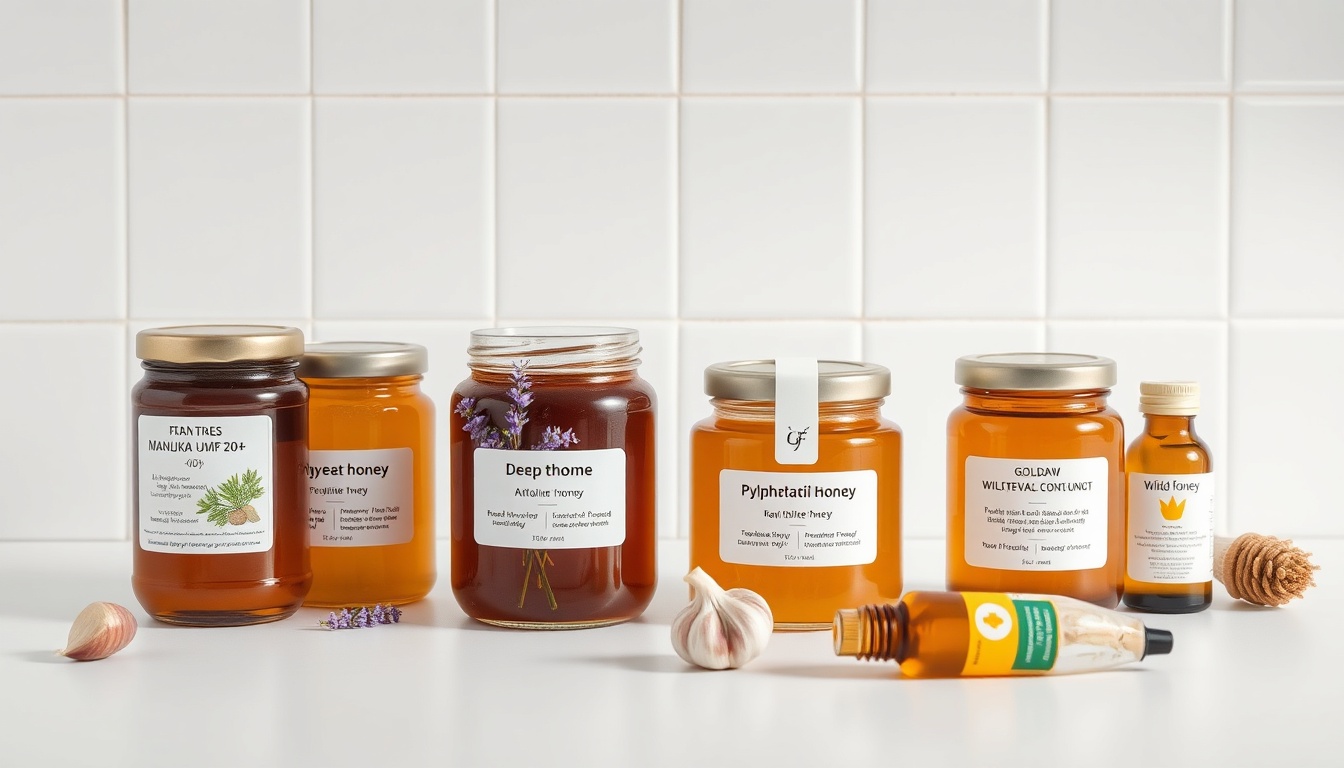
- **Manuka honey (UMF 10-20+)** — The strongest evidence for antifungal activity. MGO provides non-peroxide antifungal action, and research specifically tested manuka against dermatophyte species. UMF 15+ or MGO 500+ is recommended for topical antifungal applications.
- **Thyme honey** — The 2012 Archives of Medical Research study found thyme honey matched or approached manuka's antifungal potency against dermatophytes. Its thymol and carvacrol compounds have well-documented antifungal properties used in pharmaceutical formulations.
- **Buckwheat honey** — High polyphenol content (3-9x more than light honeys) provides strong oxidative antifungal activity. Its dark color correlates with higher phenolic acid concentrations that disrupt fungal cell membranes.
- **Heather honey** — High protein content and unique thixotropic properties create a persistent skin coating. Strong antioxidant profile supports the skin's own antifungal immune defenses.
- **Commercial raw honey** — Any raw, unprocessed honey retains glucose oxidase for hydrogen peroxide generation. Less potent than manuka or thyme but still creates an antifungal environment on skin.
Pro Tip
Pasteurized, commercial-grade honey has dramatically reduced antifungal activity. The heat processing destroys glucose oxidase (eliminating hydrogen peroxide generation) and degrades polyphenols. For topical antifungal use, always choose raw or medical-grade honey.
How to Apply Honey for Ringworm
If you want to try honey as a complementary treatment alongside conventional antifungals, here's the evidence-informed application protocol.
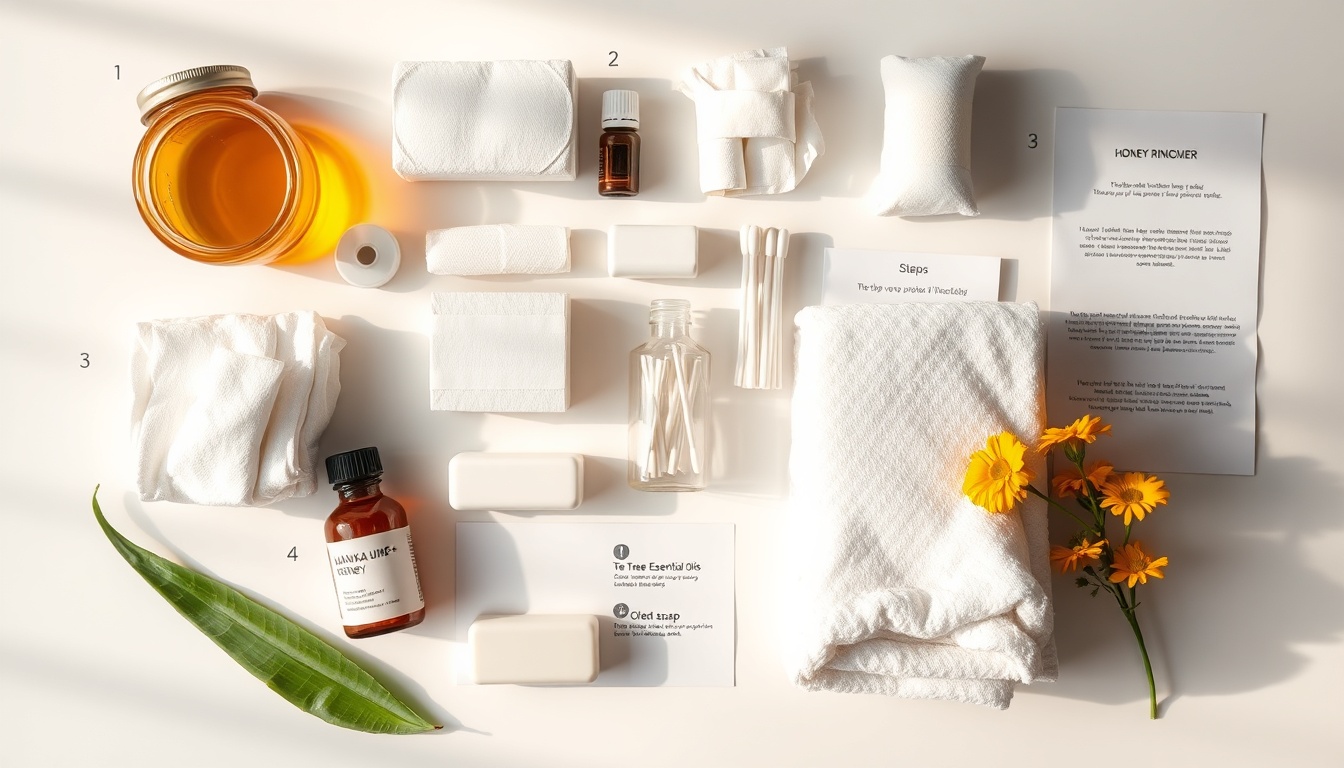
- **Step 1: Clean the affected area.** Wash gently with mild soap and water. Pat completely dry — moisture trapped under the honey creates conditions that could worsen the infection. Dry the surrounding skin thoroughly as well.
- **Step 2: Apply a thin, even layer.** Spread raw or manuka honey (about 1-2mm thick) over the ringworm rash and slightly beyond its border (about 1 cm past the visible edge) to cover any invisible fungal spread. Use clean fingers or a cotton applicator.
- **Step 3: Cover with a bandage.** Apply a non-stick gauze pad or adhesive bandage over the honey to keep it in contact with the skin and prevent transfer to clothing or bedding. The occlusion also prevents the honey from drying out, maintaining its hydrogen peroxide activity.
- **Step 4: Leave for 1-3 hours.** For the first application, start with 1 hour to check for any skin irritation. If well-tolerated, extend to 2-3 hours in subsequent applications. Some protocols suggest overnight application with secure bandaging.
- **Step 5: Remove and rinse.** Wash the area gently with lukewarm water and pat dry. Apply your prescribed antifungal cream as directed by your doctor.
- **Step 6: Repeat 1-2 times daily.** Apply honey once or twice per day, ideally at different times than your antifungal medication to avoid interference. Continue for 2-4 weeks — matching the standard antifungal treatment duration.
Honey vs. Conventional Antifungal Treatments
An honest comparison based on the current evidence.
- **Clotrimazole/Miconazole (OTC topical).** Cure rate: 75-85% for tinea corporis within 2-4 weeks. Well-studied in hundreds of clinical trials. Honey has not been tested head-to-head against these in ringworm RCTs — do not substitute honey for proven OTC antifungals.
- **Terbinafine cream (OTC/Rx).** Cure rate: 80-90% within 1-2 weeks. The fastest-acting topical option. If your ringworm is expanding or not improving, terbinafine is the standard of care. Honey could be used as a complementary application between terbinafine doses.
- **Oral antifungals (Rx: terbinafine, itraconazole, fluconazole).** Required for scalp ringworm, widespread infections, or cases resistant to topical treatment. These carry liver toxicity risks and drug interactions — this is where honey's potential as a complementary treatment is most relevant, potentially reducing the duration of oral medication needed.
- **Honey (complementary).** Best supported as an adjunct, not a replacement. May provide: anti-inflammatory comfort (reducing itch and redness), moisture-barrier protection, supplemental antifungal activity, and support for the skin's healing process. Strongest theoretical case is for antifungal-resistant infections where multi-mechanism honey activity may overcome single-target drug resistance.
When Honey Might Be Most Useful
Given the evidence gap (strong in vitro, minimal clinical trials), here are the scenarios where honey supplementation makes the most sense.
- **Mild, early-stage ringworm.** A small, newly appearing patch (less than 2 cm) that isn't spreading rapidly. Honey's antifungal, anti-inflammatory, and moisture-barrier properties may help control early infections before they establish deeper root structures.
- **Alongside conventional treatment.** The safest approach — use prescribed antifungals as your primary treatment and add honey applications between doses for additional antimicrobial coverage and anti-inflammatory comfort.
- **Recurrent or chronic ringworm.** If ringworm keeps coming back despite proper treatment, the infection may involve biofilm formation. Honey's biofilm-disrupting properties (documented in the 2016 Frontiers study) could help break the recurrence cycle alongside antifungals.
- **Post-treatment skin recovery.** After the active infection clears, honey's wound-healing properties can help restore damaged skin. Its humectant properties rehydrate the characteristic dry, scaly skin that ringworm leaves behind.
- **Antifungal-resistant infections.** Growing azole resistance in dermatophytes is a real clinical concern. Honey's multi-mechanism approach (osmotic + oxidative + acidic + polyphenol) makes single-target resistance irrelevant. This is the strongest theoretical case for honey, though clinical trials are needed.
When to See a Doctor Instead
Do not rely on honey alone — seek medical evaluation in these situations.
- **Scalp ringworm (tinea capitis).** Requires oral antifungal medication — topical treatments (including honey) cannot penetrate the hair follicle to reach the infection. Look for: patchy hair loss, scaling, broken hairs ("black dot" appearance), swollen lymph nodes.
- **Rapidly spreading rash.** If the ringworm patch is growing noticeably day-to-day or new patches are appearing, you need prescription-strength antifungals. Honey alone is not sufficient for aggressive infections.
- **No improvement after 2 weeks.** If you've been applying honey (or OTC antifungals) for 2 weeks with no visible improvement, see a dermatologist. You may have a resistant strain, an incorrect diagnosis (several skin conditions mimic ringworm), or a deeper infection requiring oral medication.
- **Immunocompromised patients.** People on immunosuppressants, chemotherapy, or living with HIV/AIDS should not attempt self-treatment. Dermatophyte infections can become invasive (deep tissue involvement) in immunocompromised individuals.
- **Large areas or multiple body sites.** Widespread ringworm (multiple patches, involvement of groin + body + feet simultaneously) usually requires oral antifungal treatment under medical supervision.
- **Signs of secondary bacterial infection.** If the ringworm area becomes swollen, hot, increasingly painful, or develops pus/weeping discharge, a bacterial superinfection may be present requiring antibiotics in addition to antifungals.
Prevention Tips
Preventing ringworm reinfection is just as important as treating the current episode.
- Keep skin clean and dry, especially in skin folds, after workouts, and in warm weather. Dermatophytes cannot establish infection in dry skin.
- Wash gym clothes, towels, and bed linens in hot water (60°C/140°F minimum) to kill fungal spores. Don't share personal items like towels, combs, or razors.
- Wear breathable fabrics (cotton, moisture-wicking synthetics) and change socks daily — twice daily if you sweat heavily.
- Wear sandals or shower shoes in gym showers, pool areas, and locker rooms. Wipe down shared gym equipment before use.
- Treat pets promptly if they develop ringworm patches (hairless, scaly spots). Cats are the most common animal source — even asymptomatic carriers can transmit dermatophytes.
- Maintain healthy skin barrier function with proper moisturizing. Intact, well-hydrated skin is more resistant to fungal colonization than dry, cracked skin.