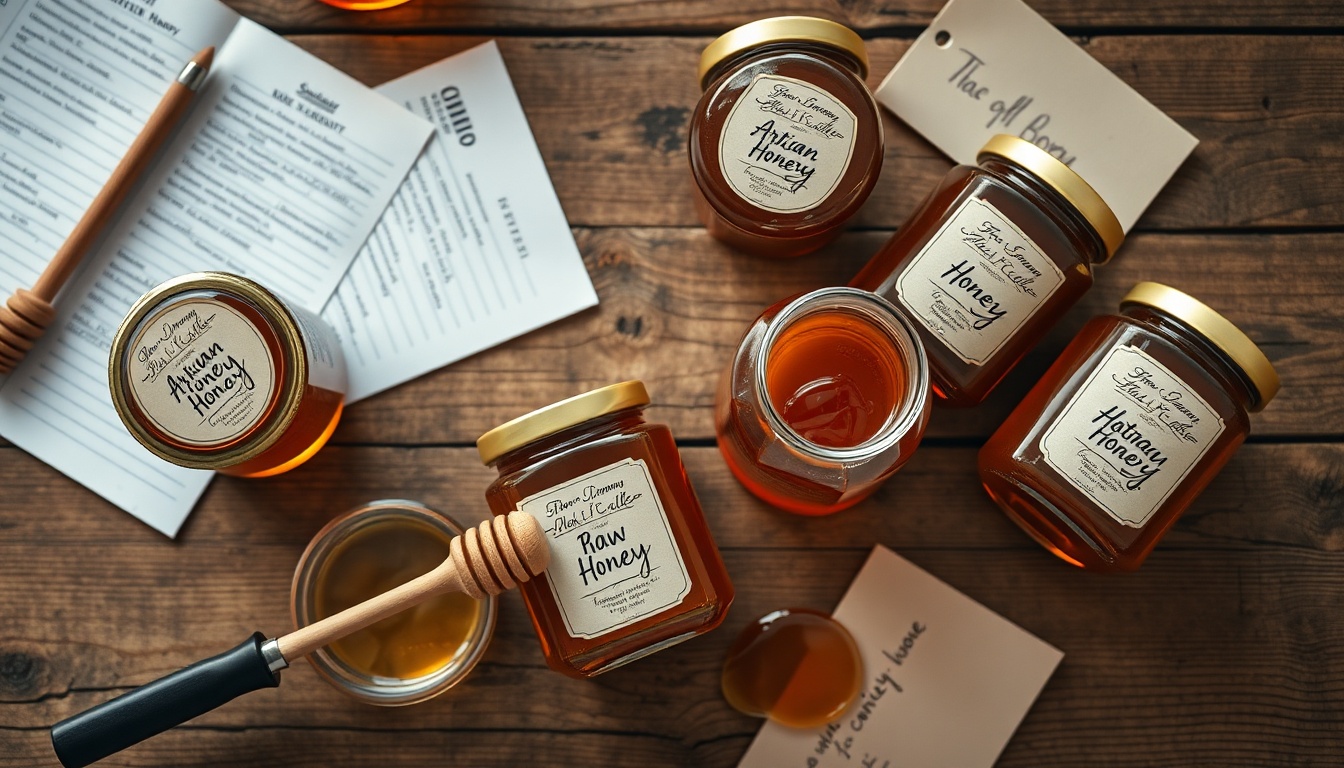
Why Honey Belongs in Every Lip Balm
Lip skin is fundamentally different from the skin on the rest of your body. The epidermis on your lips is only 3–5 cell layers thick compared to 15–16 on normal facial skin, it has no sebaceous glands (so it cannot produce its own moisturizing oil), no hair follicles, and a much lower concentration of the natural moisturizing factors (NMFs) that normally prevent transepidermal water loss. The result: lips dry out faster than any other surface on your face, and they need external humectants — ingredients that actively attract and bind water — to stay hydrated.
This is where raw honey excels. Honey is one of the most effective natural humectants known to cosmetic chemistry. Its complex mixture of monosaccharides (fructose, glucose), amino acids, and organic acids is hygroscopic — it draws water from the environment and from the deeper dermis into the lip tissue surface. A 2012 study in Skin Pharmacology and Physiology confirmed honey's superior moisturizing retention capacity compared to other humectants like glycerin and hyaluronic acid in topical applications, holding hydration for up to 8 hours after a single application.
Honey also delivers mild exfoliation via gluconic acid — a naturally occurring alpha hydroxy acid that dissolves the protein bonds between dead corneocytes (surface skin cells) without the harshness of synthetic AHAs. For lips, this means gentle removal of dry, flaky patches that prevent other moisturizing ingredients from making contact with healthy lip tissue. And honey's well-documented antimicrobial properties (primarily from hydrogen peroxide production via glucose oxidase enzyme and its low water activity of 0.5–0.6) help protect lip micro-cracks and chaps from bacterial infection, speeding the healing of existing damage.
Combined with beeswax (the structural ingredient that gives lip balm its solid form and creates an occlusive barrier that locks in all the active ingredients) and a carrier oil like shea butter (rich in fatty acids that restore the lip's impaired lipid barrier), honey creates a lip balm that actively hydrates rather than just coating the surface. The recipes below build from this science.
Pro Tip
Use raw, unfiltered honey rather than commercial processed honey in lip balm. Heat processing (pasteurization) above 120°F destroys glucose oxidase — the enzyme responsible for producing hydrogen peroxide — as well as the polyphenols that reduce inflammation and provide antioxidant protection. Raw honey looks slightly cloudier and grainier; that cloudiness is intact pollen and naturally crystallized sugars, both signs the beneficial compounds are still active.
Lip Balm Chemistry: What Each Ingredient Does
Before the recipes, understanding the function of each ingredient makes it easy to substitute and customize. Lip balm has four component types: the structural wax, the moisturizing oil base, the active humectants, and optional flavor, color, and SPF additives.
- **Beeswax** — The structural backbone of lip balm. Beeswax melts at around 144–147°F (62–64°C) and solidifies into a firm, flexible film that stays on the lips rather than immediately melting off. It creates an occlusive barrier that prevents transepidermal water loss without completely blocking oxygen exchange. Cosmetic-grade beeswax pellets are easiest to measure and melt; yellow beeswax has a subtle honey scent, while white beeswax is more neutral.
- **Shea butter** — Rich in oleic acid (omega-9), stearic acid, and the unique triterpene alcohols lupeol and butyrospermol that reduce skin inflammation. Shea butter is both an emollient (softens skin by filling the gaps between skin cells) and a weak occlusive (reduces water loss). At room temperature it's solid; it melts on contact with warm lip skin to deliver its fatty acids.
- **Coconut oil** — A light carrier oil with high lauric acid content, giving it mild antimicrobial properties. It has a melting point of 76°F (24°C), making it liquid on lips in most weather. In lip balm, it provides slip (so the balm glides on smoothly) and additional emollient softening. Use refined coconut oil for a neutral scent.
- **Sweet almond oil** — A medium-weight oil high in oleic and linoleic acids. Absorbs quickly into lip skin, improving flexibility and smoothness without the heaviness of some other carriers. Particularly good for very dry, cracked lips. Can be substituted with jojoba oil (technically a wax ester, exceptionally shelf-stable).
- **Raw honey** — Humectant, mild AHA exfoliant, anti-inflammatory, antimicrobial. Added at a low percentage (5–8%) to ensure it integrates into the wax-oil matrix without separating into a water phase (honey is 17–20% water, which can cause separation in high amounts). Emulsifying wax or a small amount of lecithin helps stabilize higher honey concentrations.
- **Vitamin E oil (tocopherol)** — A fat-soluble antioxidant that extends the shelf life of oils (preventing rancidity) and provides additional antioxidant protection to lip skin. Add just a few drops — it's potent and thick.
- **Essential oils** — Flavor and targeted benefits. Use cosmetic/food-grade essential oils only. Peppermint provides cooling, menthol-driven stimulation of TRPM8 cold receptors (the same receptors activated by cold temperature); it also has mild analgesic properties. Vanilla oleoresin adds warmth and sweetness. Lemon essential oil adds light citrus flavor but check for photosensitivity if applying outdoors.
- **Mica powder** — Cosmetic-grade iron oxide pigments for tinted balms. Use lip-safe mica specifically labeled for lip products, as some craft micas are not tested for ingestion safety. A tiny amount (0.5–1%) provides visible tint.
- **Zinc oxide** — For SPF lip balm, zinc oxide is the preferred active over titanium dioxide because it covers both UVA and UVB without the gritty texture TiO₂ can leave. Use uncoated, non-nano zinc oxide at 15–20% for SPF 15–30 equivalent. Note: homemade SPF is not certified or tested, so it should be treated as supplementary sun protection, not a substitute for tested SPF products.
Get the Honey Buyer's Cheat Sheet (free PDF)
16 varieties on one page — color, flavor, best use and what a fair price looks like — from the 304 honeys we track.
Equipment You Need
Lip balm making requires minimal equipment, most of which you likely already own. The key items: a small saucepan or double boiler setup (a heatproof glass measuring cup placed in a pot of simmering water works perfectly), a digital kitchen scale accurate to 0.1g (measuring by weight rather than volume produces more consistent results), a digital thermometer (essential for adding honey at the right temperature — too hot destroys its enzymes, too cool causes solidification before pouring), empty lip balm tubes or small round tins, and a fine-tipped pipette or small funnel for mess-free tube filling.
You'll also want: isopropyl alcohol spray for sanitizing all equipment before use (prevents mold and contamination in water-containing formulas), small silicone spatulas or chopsticks for stirring, a microwave-safe container if you prefer microwave melting over double boiler, and a cool flat surface (a sheet pan in the refrigerator works well) to speed setting.
**Yields:** Each recipe below makes approximately 10–12 standard lip balm tubes (0.15 oz each) or 6–8 small round tins (0.25 oz). Scale up or down proportionally — these are batch recipes, not single-tube amounts.
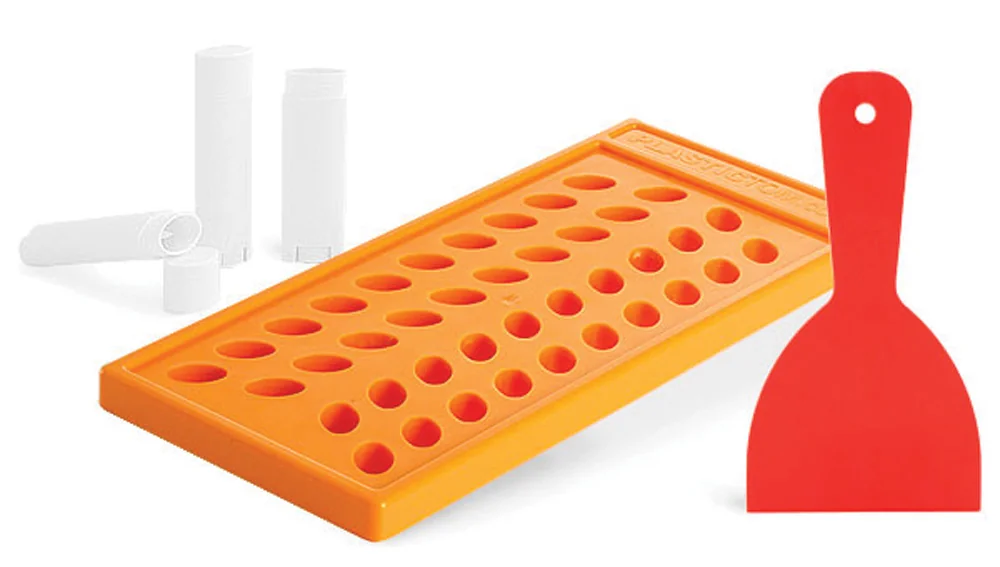
Photo: Queen Right Colonies, used with permission
Base Recipe: Classic Honey & Beeswax Lip Balm
This is the foundational formula — four ingredients, no fragrance, suitable for all skin types including sensitive and allergy-prone. It's the one to master before moving to more complex recipes. The ratio (beeswax 20% / shea butter 30% / coconut oil 40% / honey 8% / vitamin E 2%) produces a firm balm that glides smoothly and leaves a comfortable, non-greasy moisture film.
**Ingredients (makes ~10 standard tubes):**
• 10g yellow or white beeswax pellets
• 15g raw shea butter (unrefined for maximum beneficial compounds)
• 20g refined coconut oil
• 4g raw honey (measured by weight)
• 1g vitamin E oil (1 capsule squeezed out)
**Instructions:**
1. Sanitize all equipment with isopropyl alcohol spray; allow to dry completely.
2. Combine beeswax, shea butter, and coconut oil in a heatproof glass measuring cup. Place in a small pot of simmering water (double boiler) or microwave in 30-second bursts. Stir until fully melted and combined.
3. Remove from heat. Insert thermometer and wait until the mixture cools to exactly 140°F (60°C). Do not add honey above this temperature — heat above 120°F degrades glucose oxidase and polyphenols.
4. At 140°F, add vitamin E oil and stir to combine.
5. At 130°F, add the measured raw honey. Stir vigorously for 30 seconds — honey and oil do not naturally mix (honey is water-phase, oil is oil-phase), so fast, consistent stirring is essential to create a temporary emulsion before the mixture sets.
6. While still liquid (above 120°F), immediately pour into tubes or tins using a pipette or small spoon. Work quickly — the beeswax sets fast.
7. Allow to cool completely undisturbed at room temperature (30–45 minutes) or refrigerate for 15 minutes. Do not move or tap until fully set — disturbing during solidification creates a pitted surface.
8. Cap and label. Store away from heat and direct sunlight.
**Shelf life:** 12–18 months. The high beeswax content, low water activity of honey, and vitamin E antioxidant extend shelf life significantly. Discard if you notice any off smell, discoloration, or mold.
Pro Tip
The honey will not fully emulsify into the wax-oil matrix without an emulsifier — that's expected. What you're creating is a finely divided dispersion where tiny honey droplets are suspended throughout the wax structure. Vigorous stirring creates smaller droplets that are more stable. If your finished balm shows visible separation (a honey layer at the bottom), add 0.5g of sunflower lecithin next time — it acts as a natural emulsifier and dramatically improves stability.
Recipe 1: Honey & Peppermint Cooling Lip Balm
Peppermint is the most popular lip balm flavor for good reason: menthol activates TRPM8 receptors in lip tissue, creating a genuine cool sensation without any temperature change. This stimulation also increases local blood flow to the lips, giving a natural plumping effect. Combined with honey's hydration and a touch of sweet almond oil for fast absorption, this is the ideal everyday balm.
**Additional ingredients beyond the base recipe:**
• 15 drops peppermint essential oil (food-grade)
• 5 drops spearmint essential oil (optional, for a sweeter mint note)
• Substitute sweet almond oil for coconut oil at the same weight for faster absorption
**How to add:** After incorporating honey at 130°F and stirring thoroughly, add the essential oils at 120°F (just before pouring). The cooler temperature helps preserve volatile aromatic compounds. Stir and pour immediately.
**Note on concentration:** 15 drops per 50g batch (approximately 0.6% essential oil concentration) creates a pleasant cooling effect without the tingling-into-burning sensation that higher concentrations can cause. For a stronger effect, increase to 20 drops maximum. Peppermint oil contains menthol that can be irritating to sensitive lip skin at high concentrations.
**Best for:** Everyday use, puffy or irritated lips, post-dental or post-illness lip care, those who find traditional lip balms feel greasy.
Recipe 2: Honey & Shea Tinted Lip Balm
A tinted balm gives a sheer, natural color while delivering the same therapeutic moisturizing of the clear version. The key is using lip-safe cosmetic mica — specifically iron oxide pigments formulated and tested for lip product use. Most cosmetic mica suppliers sell lip-safe blends; look for "lip safe" or "cosmetic grade for lips" labeling.
**Additional ingredients beyond the base recipe:**
• 1g lip-safe mica powder in your chosen shade (rose gold, coral, berry, bronze, or terracotta are all beautiful with honey's warm tone)
• Substitute unrefined shea butter at 20g (increased from 15g) and reduce coconut oil to 15g for a richer, more emollient formula appropriate for tinted balms worn outdoors
• Optional: 5 drops vanilla essential oil or vanilla oleoresin for a warm, subtle fragrance
**How to add mica:** Mix the mica powder into the melted oil-wax base before adding honey. Use a mini frother or whisk to fully disperse the pigment — unmixed mica clumps and creates streaked color. The base should look uniformly tinted before you add honey.
**Color tip:** Mica disperses differently in different carrier oils. Test your chosen shade at small scale first: 0.25g mica in 5g of coconut oil, mixed thoroughly, to see the final color. The color in the tube will be approximately 30–40% less intense than the color of the liquid — tinted balms have a sheer finish.
**Best for:** Those wanting a natural, barely-there lip color without the drying effect of most lipsticks. Particularly flattering as a gloss over matte lipstick.
Pro Tip
If your tinted balm shows streaks or uneven color, it means the mica wasn't fully dispersed before pouring. To fix a batch, re-melt and blend with a mini frother. Going forward, pre-mix mica into a small amount of castor oil (which has exceptional pigment-binding properties) before adding to the main batch — this creates a perfectly smooth, streak-free color.
Recipe 3: Manuka Honey Healing Lip Balm
Manuka honey from New Zealand's Leptospermum scoparium trees is the most medically studied honey in the world, and its unique active compound — methylglyoxal (MGO) — provides antimicrobial activity far more powerful than the hydrogen peroxide-based activity of regular honey. MGO is stable at temperatures up to 158°F (70°C), making it an exceptional ingredient for heating-intensive cosmetic formulations like lip balm. Regular honey's glucose oxidase is destroyed at 120°F, but manuka's MGO-based activity survives the melting process largely intact.
This formula is specifically designed for very damaged, cracked, or chronically chapped lips. It features a higher shea butter ratio (better for damaged skin), jojoba oil (deeply penetrating, mimics skin's own sebum), calendula-infused oil (anti-inflammatory, wound-healing), and a full-dose of Manuka MGO 250+ or higher.
**Ingredients (makes ~10 tubes):**
• 12g beeswax pellets (slightly higher for firmer, more protective film)
• 20g unrefined shea butter
• 15g jojoba oil (or calendula-infused jojoba: steep 2 tbsp dried calendula petals in jojoba for 48 hours, strain)
• 5g Manuka honey MGO 250+ (measured by weight)
• 1.5g vitamin E oil
• 10 drops lavender essential oil
**Technique note:** Manuka honey is darker and slightly more viscous than regular honey. It integrates into the base more easily if gently warmed to room temperature (not heated — just allowed to sit at 70°F for 30 minutes) before adding to the 130°F wax blend. Stir vigorously for 45 seconds and pour immediately.
**Best for:** Severely chapped or cracked lips, lips damaged by cold weather or chemotherapy treatment, post-cold sore healing (note: while manuka honey has demonstrated antiviral properties against herpes simplex in laboratory studies, it is not a substitute for medical cold sore treatment), dry climate lip care.
Recipe 4: Honey & Beeswax SPF Lip Balm
Lips are the most sun-vulnerable area of the face: the lower lip in particular receives nearly direct perpendicular UV radiation and has virtually no melanin protection (the pigment that darkens and protects other skin from UV damage). Actinic cheilitis — sun damage to the lips — affects an estimated 1.3% of the global population, with a 10% risk of progressing to squamous cell carcinoma. Regular SPF lip balm is genuine preventive dermatology.
**Important disclaimer:** Homemade SPF is not clinically tested or certified. The SPF value of this recipe is estimated based on zinc oxide concentration, but actual SPF depends on application thickness, distribution, and many other factors. Treat this as supplementary UV protection and not a substitute for certified SPF lip products if you are at high UV exposure risk.
**Ingredients (makes ~10 tubes):**
• 10g beeswax pellets
• 12g unrefined shea butter
• 15g jojoba oil
• 10g non-nano uncoated zinc oxide powder (provides estimated SPF 20–25 at this concentration)
• 3g raw honey
• 1g vitamin E oil
• 5 drops vanilla essential oil
**Zinc oxide technique:** This is the most challenging lip balm to make because zinc oxide is a powder that resists integration into oils. The solution: use a mini frother or electric whisk to disperse the zinc oxide into the melted oil base before adding wax. Mix for 2 full minutes until completely uniform — no white streaks or clumps. The final balm will be slightly more opaque than other recipes; this is normal and desirable (the zinc oxide provides its UV-blocking effect as a physical barrier).
**Note on non-nano:** Non-nano zinc oxide particles (>100nm diameter) are preferred for lip products because nanoparticle zinc oxide, while more cosmetically elegant (less white cast), has raised questions about transdermal absorption. For lip products where ingestion occurs, non-nano is the conservative choice.
**Best for:** Year-round lip sun protection, high-altitude outdoor activities, beach and water sports, post-lip filler or laser treatment recovery.
Recipe 5: Honey & Vanilla Sugar Lip Scrub Balm
This hybrid formula works in two stages: first as a gentle exfoliating scrub (the fine sugar dissolves slowly as you massage, lifting dead skin cells), then as a nourishing balm as the wax and oils remain. Use on very dry or flaky lips before events, or as a weekly treatment to prep lips for lipstick.
**Ingredients (makes 8 small tins, 0.25 oz):**
• 8g beeswax pellets
• 12g unrefined shea butter
• 12g sweet almond oil
• 5g raw honey
• 12g fine white sugar (or castor sugar — finer grind is gentler on thin lip skin; do NOT use regular granulated sugar, which is too coarse)
• 1g vitamin E oil
• 10 drops vanilla essential oil
• Optional: 1g vanilla bean powder (from scraped vanilla pods) for visible specks and intense fragrance
**Critical technique:** Sugar must be added to the mixture after it has cooled below 100°F — too hot and the sugar melts and disappears, defeating the exfoliant purpose. The challenge: the wax also begins to set at this temperature. The solution is to stir constantly from 130°F down as you add honey and vitamin E, and then add sugar at 100–105°F while the mixture is still liquid enough to pour. The lower sugar melting point (320°F) means you have a window where the beeswax is setting but the sugar is not yet dissolving.
**To use:** Scoop a small amount with a clean fingertip and massage gently over lips in circular motions for 30 seconds. Rinse with warm water or wipe off with a damp cloth. The remaining wax and oil coat the freshly exfoliated lips immediately.
**Best for:** Pre-event lip prep, winter lip care when flakiness is worst, anyone wearing long-wear lipstick (exfoliated lips hold color better).
Pro Tip
The scrub balm formula is somewhat inconsistent because sugar does not distribute evenly in a wax matrix — you'll get some lip balm tubes that are more scrub-forward (more sugar settled in them) and some that are more balm-forward. Tins are better than tubes for this recipe because you can scoop from the full depth of the product. Shake or stir slightly while pouring to keep the sugar distributed.
Troubleshooting Common Lip Balm Problems
Even experienced formulators run into problems. Here are the most common issues and their fixes:
- **Grainy or gritty texture** — Caused by beeswax crystallization during cooling. Happens when the balm cools too quickly (e.g., in the refrigerator) or if the wax wasn't fully melted and incorporated. Fix: re-melt slowly and allow to cool at room temperature. For future batches, cool on the counter rather than in the fridge.
- **Soft/melty balm (doesn't hold its shape at room temperature)** — The wax percentage is too low, or you're in a hot climate. Fix: re-melt and add more beeswax (1g at a time) until you reach the desired firmness. The standard test: let a drop of the melted formula fall onto a cold plate — it should set firm within 60 seconds.
- **Honey sinking to bottom of tube** — Insufficient emulsification or the honey was added when the base was too cool and already partially set. Fix: re-melt and add 0.5g sunflower lecithin as an emulsifier. Stir vigorously at 130°F for a full minute before pouring.
- **White film or frosting on surface** — A cosmetic issue (doesn't affect performance) caused by temperature shock during cooling. The wax is contracting and creating surface irregularities. Fix: cool at room temperature in a draft-free area. For tins, a lid or plastic wrap over the surface while cooling helps.
- **Strong off-smell after a few weeks** — The carrier oils are beginning to oxidize (go rancid). Either the vitamin E antioxidant percentage was too low, or you're using oils with shorter shelf lives (walnut oil, flaxseed oil — avoid these in lip balm). Fix: discard and reformulate with higher vitamin E (up to 2% total) and use shelf-stable oils (jojoba, coconut, shea). Store in a cool, dark location.
- **Balm feels waxy/draggy, not glide-y** — Too much beeswax and not enough oil. Fix: re-melt and add more carrier oil (1g at a time). A good ratio target: wax should be 15–20% of total formula weight.
Choosing the Right Honey for Lip Balm
Not all honeys perform equally in lip balm. The best options for lip balm formulation:
Manuka honey (MGO 100–400) is the gold standard for healing lip balms. Its MGO-based antimicrobial activity survives the heat of formulation (up to about 158°F), and its darker color adds a very slight tint to clear lip balms. Expensive, but a little goes a long way at 5–8% concentration.
Acacia honey has the highest fructose content (70%+) of any common honey variety, making it the most hygroscopic and effective humectant. Its very light color won't affect the final product appearance. Best choice for maximum moisturizing in clear, untinted lip balms.
Raw wildflower honey is an excellent general-purpose choice — wide availability, moderate cost, and full humectant and antimicrobial properties. Choose raw over pasteurized, and local if possible (though variety matters more than geography for formulation purposes).
Buckwheat honey has the highest antioxidant polyphenol content of any common honey variety. Its very dark color will tint the balm slightly (dark brownish-amber), which works well for tinted balms but not for clear formulas. Best for antioxidant-focused healing balms.
Avoid: infused honeys, artificially flavored honeys, or any honey with added ingredients. Added sugars, corn syrup (commonly used to adulterate commercial honey), or essential oil infusions can interfere with formulation stability and shelf life.
How to Package, Gift, and Label Your Honey Lip Balm
Homemade lip balm makes an exceptional gift, particularly when thoughtfully packaged. Standard 0.15 oz tubes with push-up mechanisms are the most convenient for daily use and cost under $0.10 each in bulk. Small round aluminum tins (0.25 oz) are more luxurious and work well for the scrub balm recipe. Paper and paperboard tubes (sustainable alternative to plastic) are available from cosmetic suppliers and hold their shape reliably.
Label your balm with: product name, net weight, key ingredients, any allergen warnings (nut oils, bee products), date made, and estimated expiry. Lip products should carry a nut allergy warning if they contain sweet almond oil or shea butter (though shea is technically a tree nut, it is exceptionally low in the proteins that trigger nut allergies — discuss with the recipient if they have tree nut allergies).
For gifting: create a set of 3–5 balms in different flavors or tints, packaged in a small tin or kraft paper box with individual labels. Include a card noting the key ingredients and that the product contains bee products (honey and beeswax) for anyone with bee product sensitivities. A simple kraft label with a hexagon design, tied with twine, makes the presentation look intentional and giftable.
For selling: research your local cottage food or cosmetics regulations before selling lip balm commercially. In most US states, handmade cosmetics sold directly to consumers at farmers markets or craft fairs do not require FDA registration, but must follow labeling requirements including INCI (International Nomenclature of Cosmetic Ingredients) ingredient listing in descending order of concentration. Online sales through Etsy or direct sites require more careful compliance review.