Why Add Honey to Bath Bombs?
Bath bombs are clever chemistry — the fizz comes from an acid-base reaction between citric acid and baking soda when water triggers them. But most commercial bath bombs stop there: fragrance, color, and fizziness. Adding raw honey transforms a bath bomb from a novelty into a genuine skincare treatment, and the chemistry of why this works is more interesting than it might seem.
Honey is a natural humectant, meaning it attracts and binds water molecules to the skin surface rather than simply sitting on top of it. A 2012 study in the journal Skin Pharmacology and Physiology confirmed that honey's hygroscopic properties — its tendency to absorb moisture from the environment — extend to topical skin applications, improving hydration levels measurably after a single use. For bath time, this means skin that absorbs honey during soaking retains more moisture even after toweling off.
Honey's mild acidity (pH 3.2–4.5) also gently exfoliates dead skin cells through its gluconic acid content, which acts as a mild alpha hydroxy acid. Gluconic acid loosens the bonds between dead corneocytes (skin cells) in the outermost skin layer, leaving skin noticeably smoother after a honey bath without the harshness of chemical exfoliant products. And honey's well-documented antimicrobial properties — primarily from hydrogen peroxide production and its low water activity — help keep bath water clean even as you soak.
The main technical challenge of adding honey to bath bombs is managing its water content: honey can prematurely trigger the citric acid/baking soda reaction if added carelessly. The recipes below use specific techniques — buffering with oil, keeping honey frozen until use, and using dry honey powder — to prevent premature fizzing and ensure a stable, shelf-stable bath bomb.
Pro Tip
Raw honey (unfiltered, unheated) is preferable to pasteurized honey in bath products. Heat processing degrades the enzymes, polyphenols, and hydrogen peroxide-producing glucose oxidase enzyme that give honey its skin benefits. Raw honey looks slightly cloudier and thicker — those are signs the beneficial compounds are intact. For the most intense skin benefits, look for honey with a high polyphenol content like buckwheat honey or manuka honey.
Understanding Bath Bomb Chemistry and Ingredients
Before the recipes, understanding what each ingredient does will help you troubleshoot and customize with confidence. Bath bombs have two categories of ingredients: the reactive base (which creates the fizz) and the skin benefit additives (oils, honey, clays, botanicals).
- **Baking soda (sodium bicarbonate)** — The alkaline half of the fizzing reaction. Also mildly softens water by reducing calcium and magnesium ions, which is why a baking soda bath can feel silkier than tap water alone. Use fine-ground cosmetic baking soda for a smoother bath bomb texture.
- **Citric acid** — The acidic half of the reaction. When water hits citric acid + baking soda together, CO₂ gas is released instantly, creating the fizz. Citric acid is a natural preservative and also very mildly exfoliating. Use food-grade fine citric acid powder.
- **Cornstarch** — A filler that slows the reaction rate (so the bomb doesn't dissolve in 10 seconds) and creates a silkier feel in the bath water. Can be substituted with arrowroot powder.
- **Epsom salt (magnesium sulfate)** — Adds a detoxifying, muscle-relaxing effect that many bathers find beneficial. Magnesium absorption through skin during soaking is debated in the literature, but Epsom salts do soften water and add a mineral quality to the bath.
- **Carrier oil (fractionated coconut oil, sweet almond, or jojoba)** — Creates a moisturizing film on the skin as the bomb dissolves. Fractionated coconut oil is ideal because it stays liquid at room temperature and doesn't leave a heavy residue. It also acts as an emollient barrier that helps bind honey to the skin.
- **Raw honey** — Humectant, gentle exfoliant (via gluconic acid), mild antimicrobial. Must be added carefully to prevent premature activation. The recipes below use specific timing techniques.
- **Kaolin clay** — White clay that absorbs excess sebum and gently draws impurities from the skin. Particularly good for oily or acne-prone skin. Adds a silky texture to bath bombs. Optional but useful.
- **Mica powder** — Cosmetic-grade shimmer pigment for color and sparkle. Optional. Look for skin-safe mica — not all craft micas are cosmetically tested.
- **Essential oils** — Fragrance and targeted skin/aromatherapy benefits. Add last, just before molding, to prevent the alcohol content from triggering premature fizzing.
- **Polysorbate 80** — An emulsifier that helps oils disperse in bath water rather than floating on top. Prevents oil rings on the tub and helps active ingredients reach the skin. Optional but recommended when using more than 1 tablespoon of oil.
Get the Honey Buyer's Cheat Sheet (free PDF)
16 varieties on one page — color, flavor, best use and what a fair price looks like — from the 304 honeys we track.
Critical Tip: Preventing Premature Fizzing
The most common reason DIY bath bombs fail — crumbling, expanding in the mold, surface pitting, or cracking — is premature activation of the citric acid/baking soda reaction. Humidity in the air, moisture in ingredients, and water content in honey can all trigger this. Before any recipe, follow these rules:
**1. Work in a dry environment.** Don't make bath bombs on a humid day or in a kitchen where something is simmering on the stove. Ideal humidity is below 50%. In humid climates, work with a dehumidifier running or in an air-conditioned room.
**2. Add liquids drop by drop, mixing constantly.** Whether it's honey, oil, or colorant, never dump liquids into the dry mixture. Drizzle or spritz while mixing rapidly with a gloved hand or whisk.
**3. Freeze honey before use.** For straight honey (not honey powder), measure the honey, spread it thin on parchment, and freeze it for 30 minutes before adding to the dry mixture. This slows its reactivity significantly. Mix in while still very cold.
**4. Use isopropyl alcohol spray instead of water for coloring.** If you need to add liquid color, use 91% isopropyl alcohol sprayed through a fine mist bottle. The alcohol evaporates instantly and doesn't trigger fizzing the way water does.
**5. Pack molds firmly and release within 30–60 minutes.** Don't leave bath bombs in metal molds overnight in humid conditions — moisture can seep in. Release after the bomb has held its shape.
Base Recipe: Classic Honey & Oat Bath Bomb
This is the foundational formula — balanced for all skin types, gentle enough for sensitive skin, and rich enough to leave skin genuinely soft rather than just clean. The oat flour adds a secondary skin-soothing effect via avenanthramides, the compounds in oats that reduce skin inflammation and are used in FDA-approved atopic dermatitis treatments.
**Dry ingredients:** 1 cup baking soda · ½ cup citric acid · ½ cup cornstarch · ½ cup Epsom salt · ¼ cup rolled oats (finely ground in blender or food processor) · 1 tablespoon kaolin clay
**Wet ingredients:** 2 tablespoons fractionated coconut oil · 1 tablespoon polysorbate 80 · 1 tablespoon raw honey (frozen as described above) · 15 drops cedarwood or vanilla essential oil · 1 teaspoon gold mica powder (optional, for color)
**Equipment:** Large mixing bowl · gloved hands or whisk · bath bomb molds (metal or plastic, 2½-inch round) · parchment paper
**Instructions:** Sift all dry ingredients together into a large bowl. Mix thoroughly — uneven distribution of citric acid causes uneven fizzing. In a separate small bowl, whisk together the coconut oil and polysorbate 80. Add essential oil and mica powder to the oil mixture. While mixing the dry ingredients rapidly with one gloved hand (or a large whisk), pour the oil mixture in a very thin, steady stream. The mixture should resemble damp sand that holds together when squeezed — it should not fizz or foam. Add the frozen honey in small pieces, mixing quickly between additions. Immediately pack firmly into molds, pressing both halves together with firm pressure. Let set 30 minutes, then unmold onto parchment. Allow to cure 24 hours before using or wrapping.
**Yield:** 4–5 bath bombs (2½-inch size). **Shelf life:** 4–6 months in a cool, dry place. Wrap individually in shrink wrap or wax paper to prevent humidity absorption.
Pro Tip
The squeezability test is the most reliable way to judge bath bomb consistency: grab a handful and squeeze. The mixture should clump together cleanly without crumbling (too dry) or fizzing (too wet). If it crumbles, add oil 1 teaspoon at a time. If it fizzes, stop adding liquids immediately — work quickly to mold what you have.
Recipe 1: Honey & Lavender Relaxing Bath Bomb
Lavender essential oil is the most studied essential oil in aromatherapy research, with multiple randomized controlled trials confirming its anxiolytic (anxiety-reducing) and sleep-promoting effects. A 2014 review in the European Journal of Integrative Medicine found that lavender aromatherapy measurably reduced anxiety scores in clinical settings. Combined with honey's skin benefits and the warm soak, this formula creates a genuinely therapeutic wind-down ritual.
**Dry ingredients:** 1 cup baking soda · ½ cup citric acid · ½ cup cornstarch · ½ cup Epsom salt · 1 tablespoon dried lavender buds (finely ground) · 1 tablespoon kaolin clay
**Wet ingredients:** 2 tablespoons fractionated coconut oil · 1 tablespoon polysorbate 80 · 1 tablespoon raw honey (frozen) · 20 drops lavender essential oil · 5 drops Roman chamomile essential oil · 1 teaspoon purple mica powder (optional)
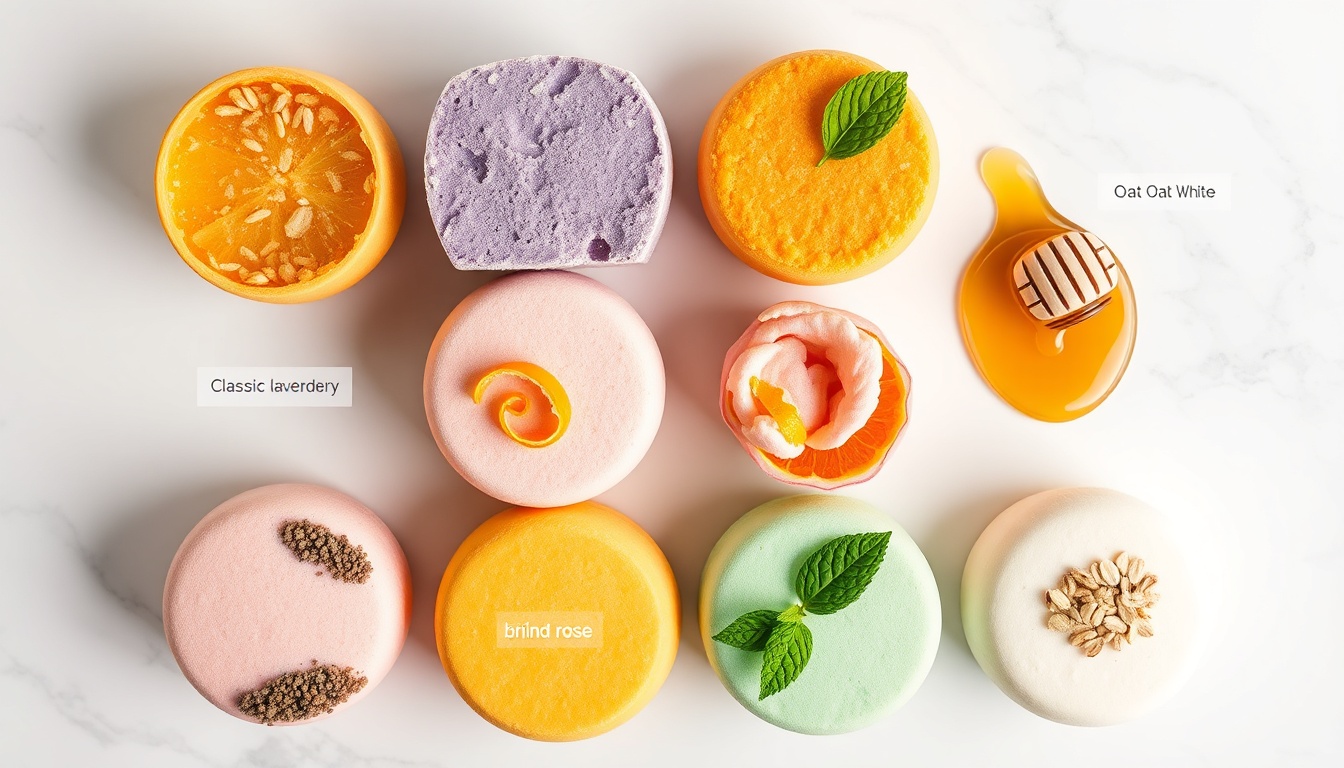
**Instructions:** Follow the base recipe method. Press a few whole dried lavender buds into the top of each mold before filling for a decorative finish that identifies the variety. The chamomile essential oil deepens the lavender's calming scent profile — Roman chamomile has mild sedative properties at aromatherapy concentrations and pairs beautifully with lavender's floral notes.
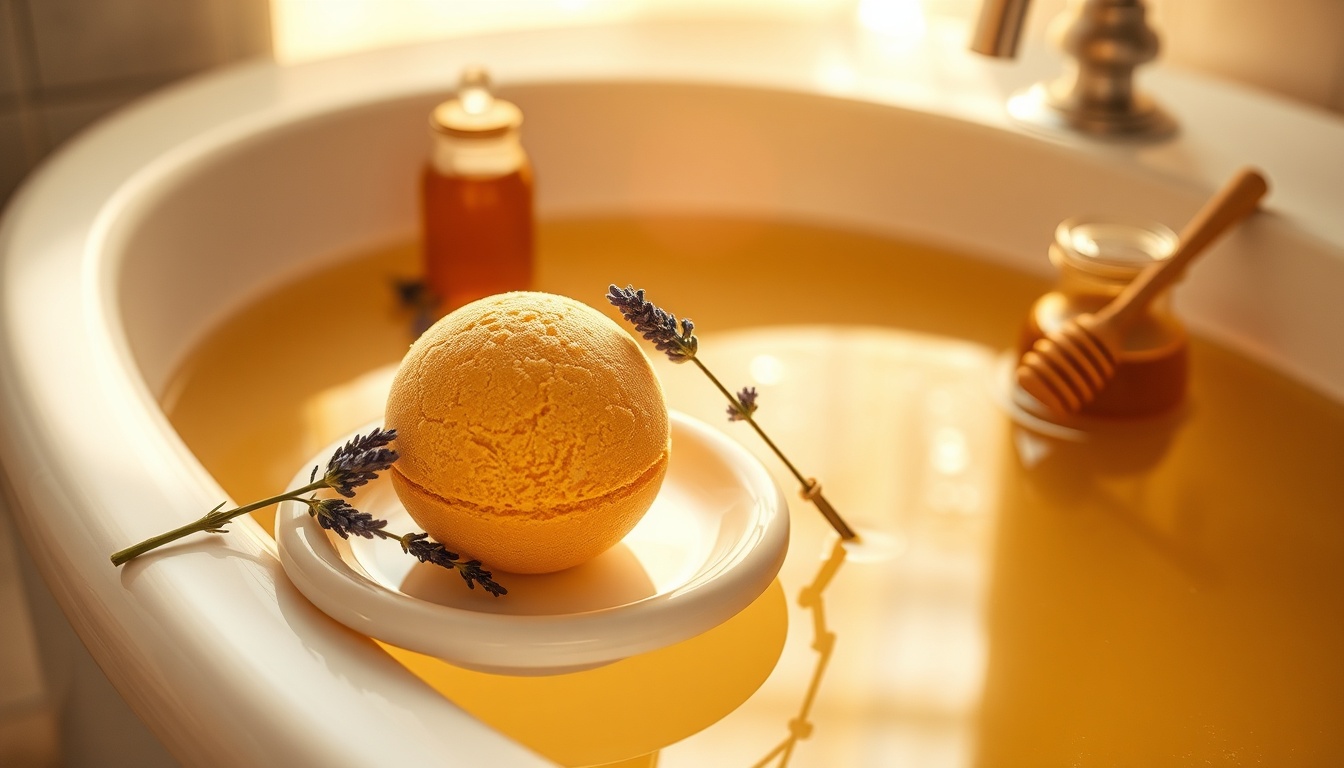
**To use:** Drop one bomb into a warm (not hot — above 105°F degrades honey's active enzymes) bath. Soak 20–30 minutes. For maximum sleep benefit, bathe 1–2 hours before bedtime — the body temperature drop after exiting the warm bath signals the brain to release melatonin.
**Best for:** Evening baths, stress relief, dry or sensitive skin, anyone with insomnia or anxiety.
Recipe 2: Honey & Citrus Energizing Bath Bomb
Where lavender calms, citrus energizes. Bergamot essential oil (the distinctive flavor in Earl Grey tea) has been found in multiple studies to have mood-elevating properties — a 2015 study in the journal Evidence-Based Complementary and Alternative Medicine found that bergamot aromatherapy significantly reduced negative emotions and fatigue. Sweet orange and grapefruit essential oils add bright, cheerful top notes that make this the ideal morning bath bomb.
**Dry ingredients:** 1 cup baking soda · ½ cup citric acid · ½ cup cornstarch · ¼ cup Epsom salt · ¼ cup finely ground oat flour · 1 tablespoon kaolin clay
**Wet ingredients:** 2 tablespoons sweet almond oil · 1 tablespoon polysorbate 80 · 1 tablespoon acacia or light floral honey (frozen) · 10 drops bergamot essential oil (FCF — furocoumarin-free to prevent photosensitivity) · 8 drops sweet orange essential oil · 5 drops pink grapefruit essential oil · 1 teaspoon orange mica powder (optional)
**Instructions:** Follow the base recipe method. Sweet almond oil is used instead of coconut oil here for a lighter, less occlusive feel — better for morning bathing when you want to feel clean rather than coated. Use acacia or another light floral honey for this recipe: its near-clear color and mild scent won't compete with the bright citrus notes.
**Important:** Always use FCF (furocoumarin-free) bergamot essential oil in leave-on products and bath products. Standard bergamot contains bergapten, a furocoumarin that causes photosensitivity — brief sun exposure after contact can cause skin darkening. FCF bergamot has the bergapten removed and is safe for bath use.
**Best for:** Morning baths, overcoming fatigue, pre-workout use, oily or combination skin.
Recipe 3: Honey & Peppermint Cooling Bath Bomb
This is the formula for muscle recovery, summer heat, and post-workout baths. Peppermint's active constituent, menthol, creates a genuine cooling sensation by activating TRPM8 cold receptors in the skin — the same receptors triggered by actual cold temperatures. This "phantom cooling" persists for 30–60 minutes after leaving the bath, making this formula excellent for hot summer evenings or after intense exercise.
Research from the Sports Medicine journal (2014) found that peppermint essential oil application to the skin measurably reduced heart rate and improved exercise performance in human subjects, suggesting real physiological effects beyond just the cooling sensation. Tea tree oil adds antimicrobial support that's particularly useful after a sweaty workout.
**Dry ingredients:** 1 cup baking soda · ½ cup citric acid · ½ cup cornstarch · ½ cup Epsom salt · 2 tablespoons sea salt (fine grain) · 1 tablespoon baking powder (additional leavening for extra fizz)
**Wet ingredients:** 2 tablespoons fractionated coconut oil · 1 tablespoon polysorbate 80 · 1 tablespoon raw honey (frozen) · 15 drops peppermint essential oil · 5 drops eucalyptus essential oil · 3 drops tea tree essential oil · 1 teaspoon blue or teal mica powder (optional)
**Instructions:** Follow the base recipe method. The additional sea salt and baking powder create a faster, more dramatic fizz than the base recipe — good for a more theatrical bath experience and faster release of the essential oils. The combined Epsom and sea salt mineral profile is ideal for muscle recovery.
**Caution:** Peppermint essential oil at high concentrations can cause skin sensitization. The amounts in this recipe (approximately 1.5% essential oil in the finished bomb) are well within safe cosmetic limits. Avoid using with children under 6 or on broken skin.
**Best for:** Post-workout recovery, hot weather, achy muscles, oily skin prone to congestion.
Recipe 4: Honey & Rose Milk Bath Bomb
The most indulgent formula in this collection — a bath bomb that turns your water a creamy soft pink and leaves skin butter-smooth. Milk powder (or coconut milk powder for a vegan version) contains lactic acid, a natural alpha hydroxy acid that gently dissolves dead skin cells. Combined with honey's gluconic acid, this creates a dual-AHA formula that produces measurably smoother skin after consistent use — similar in principle to the milk-and-honey baths famously attributed to Queen Cleopatra, which actually have a reasonable scientific basis.
Rose essential oil is one of the most expensive essential oils by weight, so this recipe uses a smaller amount supplemented with more affordable rose geranium oil, which shares many of the same floral compounds. Rose hip seed oil (a carrier oil high in trans-retinoic acid precursors) replaces part of the coconut oil for added anti-aging benefit.
**Dry ingredients:** 1 cup baking soda · ½ cup citric acid · ½ cup cornstarch · ¼ cup whole milk powder (or coconut milk powder) · ¼ cup Epsom salt · 1 tablespoon kaolin clay
**Wet ingredients:** 1 tablespoon fractionated coconut oil · 1 tablespoon rose hip seed oil · 1 tablespoon polysorbate 80 · 1½ tablespoons raw honey (frozen — slightly more here for extra moisturizing effect) · 5 drops rose essential oil (or 10 drops if using rose otto absolute) · 10 drops rose geranium essential oil · 5 drops ylang ylang essential oil · 1 teaspoon pink mica powder (optional)
**Instructions:** Follow the base recipe method with one adjustment: the higher honey content in this formula requires very careful addition. Add the honey in very small pinches (frozen), mixing vigorously after each addition. The milk powder already contributes some acidity, so work quickly once all wet ingredients are in. The resulting bath turns the water a soft pearlescent pink-gold from the milk powder and mica.
**Best for:** Dry or mature skin, romantic or self-care occasions, skin with uneven texture, anyone wanting a sensory-rich bath experience.
Recipe 5: Honey & Oat Milk Sensitive Skin Bath Bomb
This is the gentlest formula — designed for eczema-prone skin, children (over 2 years), post-sunburn skin, or anyone whose skin reacts to fragrance or harsh ingredients. Colloidal oatmeal is FDA-approved as a skin protectant for eczema and atopic dermatitis, and a 2015 study in the Journal of Drugs in Dermatology found colloidal oatmeal measurably reduced itch, dryness, and scaling in eczema patients. Combined with honey's anti-inflammatory and humectant properties, this creates a genuinely therapeutic soak for reactive skin.
**Dry ingredients:** 1 cup baking soda · ½ cup citric acid · ¾ cup cornstarch (higher ratio for milder reaction) · ¼ cup colloidal oatmeal (finely milled — not regular oat flour) · 2 tablespoons powdered goat milk (or coconut milk powder) · no Epsom salt (can irritate very sensitive skin)
**Wet ingredients:** 2 tablespoons jojoba oil (most similar to human sebum; least likely to clog pores or cause reactions) · 1 tablespoon polysorbate 80 · 1½ tablespoons raw manuka honey (frozen) — manuka's high methylglyoxal content provides superior anti-inflammatory activity · no essential oils (fragrance can trigger sensitive skin) — use ½ teaspoon pure vanilla extract if desired for mild natural scent
**Instructions:** Follow the base recipe method. The higher cornstarch ratio slows the reaction to a gentler bubble rather than an intense fizz — better for sensitive skin that may be irritated by fizzing bubbles directly on broken or very reactive skin. Without mica powder, the bombs are a soft cream-white color from the milk and oat powders.
**To use:** For eczema or very dry skin, soak 15–20 minutes in lukewarm (not hot) water. Pat — do not rub — dry gently. Apply a plain moisturizer immediately while skin is still slightly damp, within 3 minutes of exiting the bath, to lock in the honey-and-oat moisture.
**Best for:** Eczema, psoriasis, atopic dermatitis, post-sunburn skin, children's sensitive skin, anyone with fragrance sensitivity.
Troubleshooting Common Bath Bomb Problems
Even experienced bath bomb makers encounter issues. Here's how to diagnose and fix the most common failures:
- **Bath bomb crumbles when unmolded:** Too dry. Add 1 tablespoon of oil and 1 teaspoon of polysorbate 80 to the mixture, remix, and remold. Next batch, add liquids slightly faster.
- **Bath bomb expands, cracks, or "mushrooms" in the mold:** Moisture triggered premature fizzing. Too much humidity in your workspace, or you added liquids too fast. There's no fixing an activated batch — work quickly to mold what you can, then adjust your environment and technique for the next batch.
- **Bath bomb fizzes immediately when dropped in water (dissolves in 10 seconds):** Not enough cornstarch. Cornstarch slows the reaction rate. Increase to ¾ cup cornstarch next batch, or reduce citric acid slightly.
- **Bath bomb floats and only fizzes on top:** Normal for certain oil ratios. Polysorbate 80 helps here — make sure you're using it at 1 tablespoon per 2 tablespoons of oil to emulsify and help the oils disperse rather than float.
- **Oily ring on the bathtub:** Not enough polysorbate 80. Increase to 1.5 tablespoons per 2 tablespoons of oil, or switch to a lighter oil (fractionated coconut oil leaves less residue than sweet almond).
- **White chalky residue on skin:** Excess baking soda that didn't rinse off. Rinse with the bath water more actively before exiting, or reduce baking soda slightly next batch and increase cornstarch.
- **Honey crystalized in the bath bomb before use:** Normal — raw honey crystallizes over time. It will still dissolve in the bath. To prevent it, add a tiny amount of jojoba oil to the honey before freezing (the oil slows crystallization).
- **Essential oil scent very faint after a few weeks:** Essential oils dissipate through bath bomb surfaces. Wrap each bomb individually in shrink wrap immediately after curing to preserve fragrance. Store in a cool, dark location.
Packaging, Gifting, and Storage
Homemade honey bath bombs are one of the most popular DIY gifts — they look professional, cost a fraction of commercial equivalents, and the honey and botanical ingredients make them genuinely more effective than most store-bought versions. Here's how to package them properly:
**Individual wrapping:** Wrap each bomb in shrink wrap (use a heat gun for a tight professional finish) or in a square of wax paper tied with twine. Shrink wrap provides the best humidity protection and is essential for long-term storage.
**Labeling:** Include: variety name, key ingredients (for allergy awareness — oats, milk, tree nut oils, bee products), date made, use-by date (4–6 months). A simple printed label or hand-written kraft paper tag works well.
**Gift sets:** Three bath bombs wrapped together in a small kraft box with tissue paper make an excellent gift at any occasion. Include a small jar of raw honey labeled as "for use as a supplementary soak additive" for a premium honey-themed gift set.
**Storage:** Room temperature, away from humidity and direct light. Avoid the bathroom counter where steam can degrade them — store in a bedroom dresser drawer or linen closet instead. If you live in a humid climate (above 60% average humidity), store in a zip-lock bag with a silica gel packet.
**Shelf life expectations:** Without water contamination, properly made bath bombs last 4–6 months. Honey adds mild preservative action due to its antimicrobial properties, so honey bath bombs may last slightly longer than oil-only formulas. Fizzing potency slowly decreases over time as the baking soda and citric acid slowly react with ambient humidity — this doesn't make them unsafe but reduces the dramatic fizz.
Which Honey Is Best for Bath Bombs?
Any raw honey works in bath bombs, but different varieties offer different skin benefits and sensory profiles. The choice matters more for the Rose Milk and Sensitive Skin recipes, where honey plays a more prominent therapeutic role:
- **Raw wildflower honey** — Best all-purpose choice. Wide polyphenol diversity from multiple flower sources, mild honey scent that blends with any essential oil profile, and medium amber color. The best choice if you're making multiple varieties from a single honey purchase.
- **Acacia honey** — Nearly colorless and very lightly scented. Best for the Citrus formula where you want the citrus notes uncompeted, and for any formula where you don't want a honey tint to the bath water. High fructose content makes it one of the most hygroscopic (moisture-attracting) honey varieties.
- **Manuka honey** — Highest antimicrobial and anti-inflammatory activity due to methylglyoxal (MGO). Best for the Sensitive Skin formula or for anyone bathing for skin conditions. More expensive — worth it for therapeutic use.
- **Buckwheat honey** — Highest antioxidant content of any common honey variety, which may provide additional skin protection against environmental oxidative stress. Its dark color will tint the bath water a deep amber, which is visually dramatic in the Classic and Rose formulas.
- **Orange blossom honey** — Pale gold with a delicate floral-citrus scent that pairs naturally with the Citrus Energizing formula. Its light color and complementary aroma make it the top choice for that specific recipe.