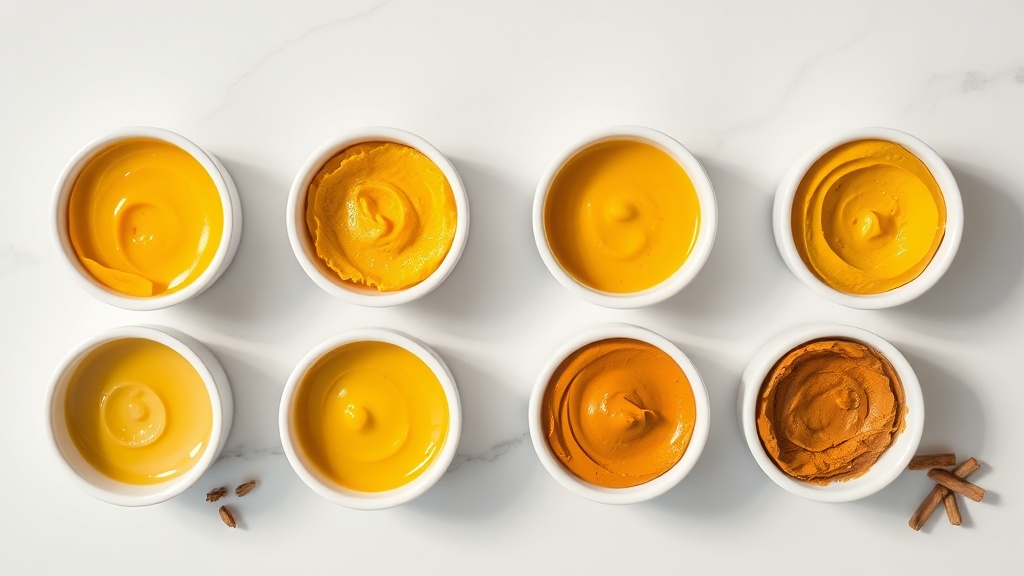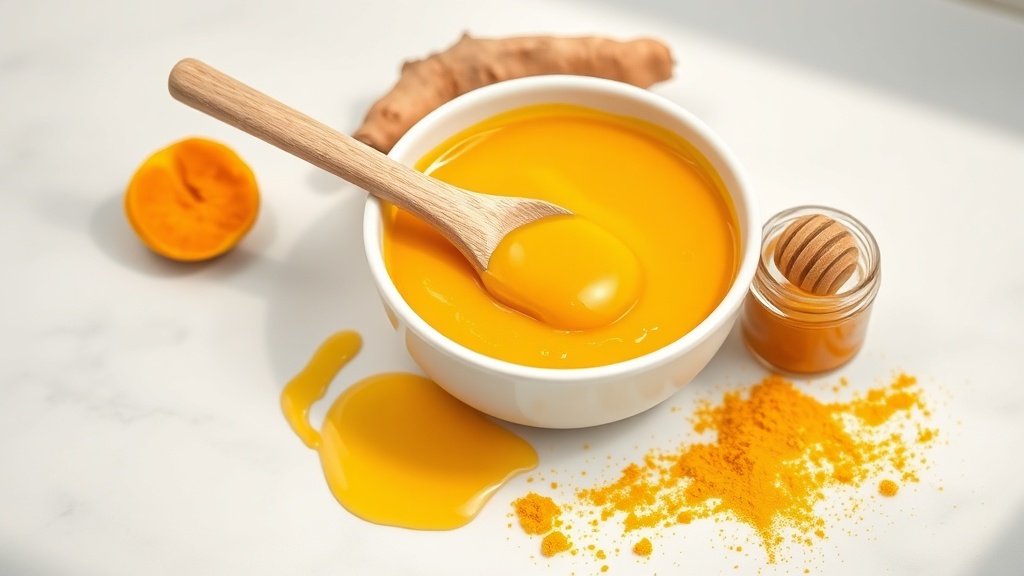
Why Honey and Turmeric Are the Gold Standard Natural Face Mask
Of all the DIY face mask combinations circulating on the internet, honey and turmeric stands apart — not because of trend, but because of the depth of evidence supporting each ingredient individually. The pairing has roots in Ayurvedic medicine (where it was called "Haldi Ubtan"), Traditional Chinese Medicine, and Southeast Asian beauty traditions spanning thousands of years. Modern dermatology is now explaining why those traditions converged on the same two ingredients.
Raw honey is a natural humectant, drawing moisture into the skin's outer layers, a mild chemical exfoliant via its gluconic acid (a gentle AHA), and a broad-spectrum antimicrobial through its hydrogen peroxide production and bee defensin-1 peptides. It soothes, hydrates, and protects simultaneously. For the full scientific breakdown, see our honey for skin guide.
Turmeric contributes curcumin, one of the most studied natural anti-inflammatory and antioxidant compounds in all of dermatology. It inhibits the NF-κB pathway (the master switch of inflammation) and has demonstrated direct antifungal and antibacterial action. In skin care, curcumin addresses hyperpigmentation, acne inflammation, and oxidative damage — the root causes of the most common skin concerns.
Together, they create a synergy that neither ingredient achieves alone. Honey's humectant properties enhance curcumin's skin contact and absorption. Curcumin's potent anti-inflammatory action complements honey's gentler antimicrobial work. The result is a mask that moisturizes, clarifies, brightens, and calms — in a single application. Related: our guides on honey and cinnamon face mask, honey face mask recipes, and honey for acne.
What the Research Says: Turmeric for Skin
The evidence for turmeric in dermatology is substantial enough that a 2016 systematic review published in Phytotherapy Research analyzed 10 controlled trials specifically on curcumin for skin conditions and found significant benefits across multiple categories.
For hyperpigmentation and uneven skin tone: Curcumin inhibits tyrosinase, the enzyme responsible for melanin production, comparable in mechanism to kojic acid and arbutin — two widely used brightening agents. A 2013 study in Phytomedicine found a curcumin-based cream reduced facial hyperpigmentation by up to 14.9% over 4 weeks. A 2016 study in the Journal of Drugs in Dermatology found curcumin outperformed 4% hydroquinone (the conventional brightening standard) in some participants.
For acne and inflammation: A 2018 study in OALib Journal found curcumin significantly reduced Cutibacterium acnes (the primary acne bacterium) in vitro at concentrations achievable in topical application. Separately, curcumin's inhibition of NF-κB reduces the inflammatory cascade that turns a clogged pore into a painful, red inflamed lesion. A 2016 pilot study in Biomed Research International showed a curcumin gel reduced acne lesions by 29% over 4 weeks compared to no treatment.
For wound healing and skin repair: Curcumin accelerates wound healing by promoting collagen synthesis and reducing oxidative stress. A 2016 BioFactors review found curcumin enhanced wound closure in multiple animal and in vitro studies through multiple mechanisms including upregulation of TGF-β1, a key collagen synthesis signal. This property makes turmeric masks particularly valuable for post-acne skin repair.
Safety note: At the concentrations used in DIY face masks (¼ to ½ teaspoon per application), curcumin is well-tolerated by most skin types. Contact dermatitis from turmeric is rare but possible — patch test on your inner arm before first use, especially if you have sensitive skin.
Get the Honey Buyer's Cheat Sheet (free PDF)
16 varieties on one page — color, flavor, best use and what a fair price looks like — from the 304 honeys we track.
Choosing the Right Honey: Which Variety Works Best
Not all honey performs equally in face masks. The key differentiators are antimicrobial activity, enzyme content, and viscosity.
- **Raw Manuka honey** — The strongest antimicrobial choice. Its methylglyoxal (MGO) content provides antibacterial activity above and beyond hydrogen peroxide, making it the best choice for acne-targeting masks. Look for UMF 10+ or MGO 263+ for therapeutic-grade activity. Worth the premium cost for acne-prone skin.
- **Raw wildflower honey** — Best all-purpose choice for most skin types. Complex polyphenol profile, solid enzyme activity, medium viscosity that's easy to work with. Widely available and affordable.
- **Raw clover honey** — Lightest color and mildest flavor. Good for brightening masks where you don't want the deep amber of darker varieties competing with the turmeric's yellow tone visually. Gentle and suitable for sensitive skin.
- **Raw buckwheat honey** — Highest antioxidant content of common varieties. The darker color and stronger flavor pair naturally with turmeric's earthy notes. Best for normal-to-oily skin and anti-aging masks.
- **Raw acacia honey** — Very light, almost water-clear, and the mildest scent. Ideal for sensitive skin and masks with delicate fragrance additions like rosewater or chamomile.
Pro Tip
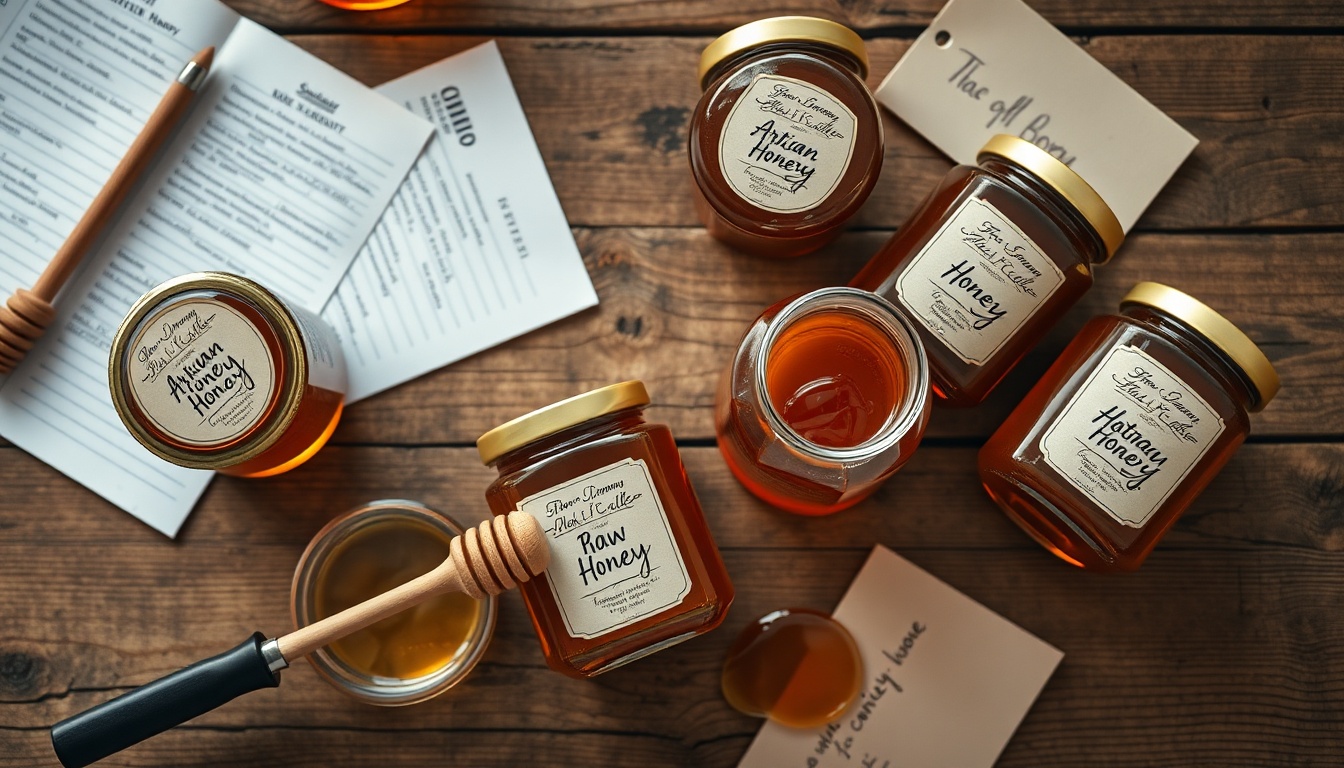
Always use **raw, unfiltered honey** — never pasteurized commercial honey. Heat processing destroys the glucose oxidase enzyme responsible for hydrogen peroxide production and degrades many of the polyphenols that make honey effective for skin. "Raw" should appear on the label. If you're buying locally, ask your beekeeper directly whether the honey has been heat-treated.
The Turmeric Staining Problem — And How to Solve It
Before diving into recipes, you need to know the biggest practical challenge with turmeric face masks: staining. Curcumin is an intensely yellow-orange pigment that temporarily stains skin and permanently stains fabric, grout, and light countertops.
The staining on skin is temporary — it typically fades within 30–60 minutes of rinsing with water and cleanser. Using too much turmeric (more than ½ teaspoon per mask application) will make staining more pronounced and longer-lasting. The recipes below use calibrated amounts to balance efficacy with minimal staining.
For skin: Rinse immediately with warm water after the mask time is up. Follow with a gentle cleanser. If a faint yellow tint remains on your skin after washing, it will naturally fade within an hour. Exfoliating the skin gently (the recipe instructions include a light massage step) during rinse-off helps remove more pigment.
For your bathroom: Always apply the mask before showering if possible — the steam helps with removal and any splashes rinse away. Place a dark washcloth or towel nearby. Avoid white or light grout. If turmeric contacts a white surface, clean immediately with dish soap before it sets.
For fabric: Wear an old t-shirt or nothing on top while the mask sets. Curcumin is essentially permanent on white fabric. If you get mask on clothing, rinse cold water immediately — never hot water, which sets the stain.
Base Recipe: Classic Honey Turmeric Glow Mask
Start here. This three-ingredient mask is the foundation for all variations below. It suits normal-to-dry skin and delivers hydration, gentle brightening, and the signature post-mask "glow" that comes from honey's humectant action and turmeric's circulation-boosting curcumin.
**Ingredients:** 1 tablespoon raw honey (wildflower or clover) · ¼ teaspoon ground turmeric (use culinary-grade; cosmetic grade is finer but not required) · ½ teaspoon plain full-fat yogurt (optional but recommended — the lactic acid enhances brightness)
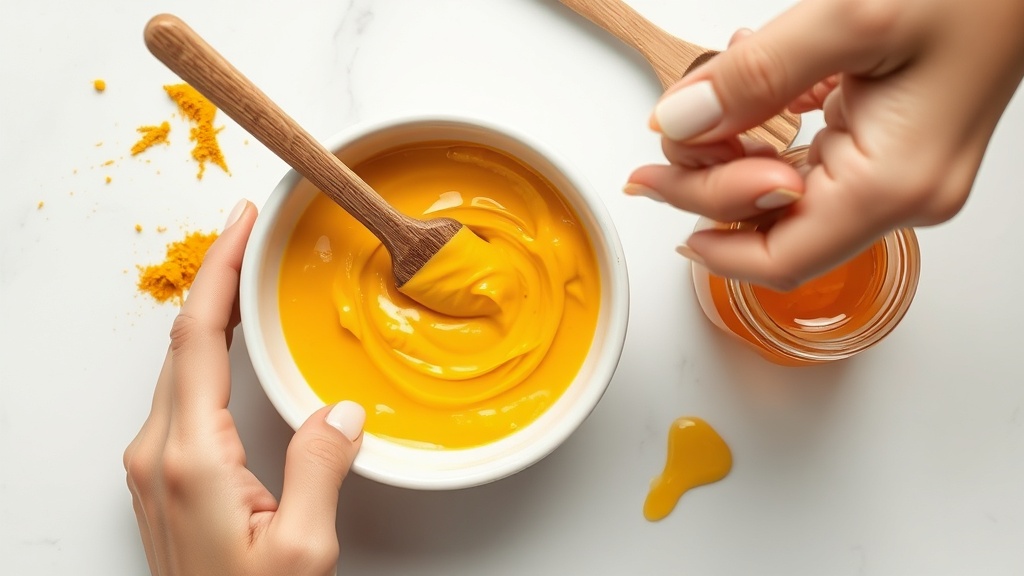
**Instructions:** Combine honey and turmeric in a small bowl. If using yogurt, add it and stir until all three are fully blended. The mask should be a thick, bright golden paste — thick enough to stay on your face without dripping. If it's too thin, add a tiny pinch more turmeric. If too thick, add a drop more honey.
**Application:** Cleanse and dry your face first. Using clean fingers or a silicone mask brush, apply a thin, even layer to your face (avoid the eye area and nostrils). Leave on for 10–15 minutes — no longer, as honey can pull too much moisture from skin if left on excessively. Rinse with warm water using gentle circular motions (the massage during rinse-off helps remove turmeric staining). Follow with your usual moisturizer.
**Results:** Skin should feel noticeably softer and appear brighter immediately after rinsing. The brightening effect builds over consistent use — 2–3 times per week for 4–6 weeks is when the most visible hyperpigmentation improvement becomes apparent.
Variation 1: Honey Turmeric Acne-Fighting Mask
This variation layers additional antimicrobial and anti-inflammatory agents on top of the base mask, targeting active breakouts, clogged pores, and post-acne redness. Best for oily and acne-prone skin.
**Ingredients:** 1 tablespoon raw manuka honey (UMF 10+ preferred) · ¼ teaspoon ground turmeric · 1 teaspoon brewed green tea (cooled) · 2 drops tea tree essential oil (optional — omit if your skin is sensitive)
**Why it works:** Manuka honey provides elevated MGO-based antimicrobial activity against C. acnes beyond standard honey. Green tea's EGCG catechins are potent anti-inflammatories that reduce the redness and swelling of active lesions — a 2012 study in the Journal of Investigative Dermatology found EGCG suppressed sebum production by inhibiting IGF-1 signaling, addressing a root cause of acne. Tea tree oil adds terpinen-4-ol, the compound responsible for its documented antibacterial effects, though it can irritate sensitive skin at higher concentrations, so the 2-drop limit is important.
**Use 2–3 times per week** on clean skin. Leave 10–12 minutes. Rinse with cool water (cool water helps close pores post-mask). Follow with an oil-free moisturizer.
Pro Tip
For severe acne or cystic breakouts, apply a dab of manuka honey directly to individual lesions after rinsing the mask and leave it overnight as a spot treatment. Research cited in our honey for acne guide shows targeted manuka application can reduce lesion size within 48 hours.
Variation 2: Honey Turmeric Brightening Mask
Targets hyperpigmentation, dark spots, uneven skin tone, and post-acne marks. Best for normal-to-oily skin. Not recommended for broken skin or sensitive skin prone to irritation, as citrus can sting.
**Ingredients:** 1 tablespoon raw honey · ¼ teaspoon ground turmeric · 1 teaspoon fresh lemon juice · ½ teaspoon plain yogurt
**Why it works:** Lemon juice brings vitamin C (ascorbic acid), a well-established tyrosinase inhibitor that reduces melanin production, complementing curcumin's own brightening mechanism at a different step in the melanin synthesis pathway. The combination creates a one-two punch at melanin formation. Yogurt's lactic acid is a gentle AHA that promotes surface cell turnover, revealing brighter skin underneath. Honey provides the humectant base and antibacterial protection. Together, these four ingredients address hyperpigmentation through three different biological mechanisms simultaneously.
**Important:** Never use this mask on skin you plan to sun-expose within several hours. Citrus increases photosensitivity. Apply in the evening, wear SPF the following morning. Limit to 1–2 times per week. See our honey for dark spots guide for more on hyperpigmentation treatment.
Variation 3: Honey Turmeric Anti-Aging Mask
Addresses fine lines, loss of firmness, oxidative damage, and dullness. Best for dry, mature, or sun-damaged skin types.
**Ingredients:** 1 tablespoon raw honey (buckwheat or wildflower for maximum antioxidants) · ¼ teaspoon ground turmeric · 1 teaspoon rosehip seed oil · ½ teaspoon pure vitamin E oil (from capsule is fine)
**Why it works:** Buckwheat honey has the highest antioxidant content of common varieties — its polyphenol profile fights free radical damage. Curcumin's antioxidant activity (ORAC value of 1,592,700 µmol TE/100g — one of the highest of any plant compound) provides potent oxidative protection. Rosehip seed oil is exceptionally rich in trans-retinoic acid (a natural retinol precursor), linoleic acid, and lycopene — compounds with clinical evidence for reducing hyperpigmentation and improving skin elasticity. A 2015 study in Molecules found rosehip seed oil improved skin moisture, elasticity, and fine lines over 8 weeks. Vitamin E (tocopherol) is a fat-soluble antioxidant that stabilizes rosehip oil and enhances its absorption.
**Use 2 times per week.** Leave on for 15 minutes. Rinse with warm water and follow with a richer moisturizer appropriate for your skin type. Consistency over 6–8 weeks is when anti-aging effects become measurable.
Variation 4: Honey Turmeric Sensitive Skin Mask
Formulated for reactive, sensitive, and redness-prone skin — or anyone who found the base recipe mildly irritating. Uses buffering ingredients that dilute potential irritants without sacrificing the core honey-turmeric benefits.
**Ingredients:** 1 tablespoon raw clover or acacia honey (lightest, mildest varieties) · ⅛ teaspoon ground turmeric (half the standard amount) · 1 tablespoon pure aloe vera gel (from a plant or additive-free gel) · ½ teaspoon chamomile hydrosol or strong chamomile tea (cooled)
**Why it works:** Halving the turmeric reduces both curcumin concentration and staining intensity, making it appropriate for reactive skin while still delivering antioxidant and gentle anti-inflammatory benefits. Aloe vera gel contains acemannan, a polysaccharide with documented anti-inflammatory and wound-healing properties. Chamomile's bisabolol and apigenin are among the most studied calming compounds in phytomedicine — a 2016 review in Molecular Medicine Reports confirmed bisabolol's anti-inflammatory mechanisms relevant to skin soothing. This combination calms redness and hydrates without triggering reactivity.
**Patch test first:** Apply a small amount to your inner forearm and wait 30 minutes before applying to your face. Use no more than 1–2 times per week.
Variation 5: Honey Turmeric Deep Cleanse Clay Mask
For oily skin, enlarged pores, blackheads, and congested skin. The clay adds a physical drawing action that pulls excess sebum and impurities from pores while the honey and turmeric handle the antibacterial and anti-inflammatory work.
**Ingredients:** 1 teaspoon bentonite clay (or kaolin clay for more sensitive skin) · ½ tablespoon raw honey · ¼ teaspoon ground turmeric · 1 teaspoon apple cider vinegar (or water if ACV is too strong for your skin)
**Why it works:** Bentonite clay carries a strong negative charge that attracts positively charged toxins, heavy metals, and excess sebum — literally drawing impurities out of pores as the mask dries. Kaolin clay is gentler with a similar mechanism. Apple cider vinegar's acetic acid balances the skin's pH post-clay application and has mild antimicrobial activity. Honey prevents the clay from drying the skin completely, maintaining moisture. Turmeric reduces the post-extraction inflammation that can follow deep pore cleansing.
**Important:** Do NOT use bentonite clay in metal containers or with metal spoons — the clay binds to metals and the reaction neutralizes its drawing action. Use glass, ceramic, or plastic only. Leave this mask on only until it begins to feel dry but has not cracked (roughly 8–10 minutes) — over-drying with clay strips the skin barrier.
**Use no more than once per week.** Always follow with a good moisturizer — clay masks create temporary dehydration.
Variation 6: Overnight Honey Turmeric Spot Treatment
Not a full-face mask, but the most targeted application in this guide. For stubborn dark spots, post-acne marks, and hyperpigmentation on specific areas.
**Ingredients:** 1 teaspoon raw manuka honey (UMF 10+) · ⅛ teaspoon ground turmeric · 2 drops of rosehip seed oil
**Instructions:** Mix in a very small bowl until combined. Using a clean cotton swab or fingertip, apply a small dab directly to dark spots, post-acne marks, or hyperpigmented areas. Allow to dry for 5 minutes before lying down to prevent smearing on your pillow. Leave overnight. Rinse in the morning.
**For best results:** Apply nightly for 4–6 weeks. The concentrated, sustained contact time of an overnight application means far more exposure than a 15-minute mask — which is especially important for hyperpigmentation, which requires consistent tyrosinase inhibition over time to show visible improvement.
**Staining note:** Your pillowcase will likely get a faint turmeric tint. Use an old pillowcase or place a dark hand towel over your pillow during treatment weeks.
How Often Should You Use Honey Turmeric Masks?
Frequency depends on your skin type and which variation you're using:
- **Normal skin:** 2–3 times per week with the base recipe or brightening variation for maintenance and glow.
- **Oily/acne-prone:** 2–3 times per week with the acne-fighting or clay cleanse variations. Avoid over-masking, which can trigger reactive oil production.
- **Dry/mature skin:** 2 times per week with the base or anti-aging variation. More frequent masking + honey humectant action can actually over-hydrate some dry skin types, paradoxically reducing moisturizer effectiveness.
- **Sensitive skin:** 1–2 times per week maximum with the sensitive skin variation. Watch for any increase in redness or irritation — if either occurs, reduce to once per week or discontinue turmeric altogether and use a plain honey mask.
- **For hyperpigmentation treatment:** Commit to 4–6 weeks of consistent use before evaluating results. Melanin production changes are slow — visible improvements in dark spots typically emerge after 3–4 weeks of 3x/week use.
Pro Tip
Honey face masks work best on freshly cleansed skin. Remove all makeup, SPF, and skincare products before applying — any film on the skin creates a barrier that reduces honey's direct contact with skin cells and limits mask efficacy.
Skin Types: Who Should and Should Not Use These Masks
Honey turmeric masks are broadly safe for most skin types, but a few specific situations call for caution or avoidance:
- **Best candidates:** Normal skin wanting maintenance glow, oily/acne-prone skin, skin with hyperpigmentation or dark spots, dull or uneven skin tone, and skin recovering from minor breakouts or sun damage.
- **Use with caution:** Dry and sensitive skin (use variation 4 at reduced frequency), rosacea (start with variation 4 — full-strength curcumin may aggravate some rosacea presentations), and skin currently using prescription retinoids (do not use AHA-containing variants; consult a dermatologist).
- **Avoid or consult a doctor first:** Active eczema or psoriasis flare-ups (raw honey can be beneficial for eczema but turmeric may irritate broken skin — see our honey for eczema guide), known turmeric allergy (test first), open wounds or broken skin, and anyone undergoing chemotherapy (check with your oncologist before using any topical with curcumin).
- **Medical disclaimer:** These masks are wellness and cosmetic preparations, not medical treatments. They are not substitutes for dermatological care for conditions like cystic acne, severe eczema, or psoriasis. Always consult a dermatologist for persistent or severe skin conditions.
Storage and Shelf Life
Honey itself is shelf-stable indefinitely when stored correctly, but the mask mixtures — especially variations containing yogurt, lemon juice, or aloe vera — should be used fresh. Do not mix in advance and store mask combinations containing dairy, citrus, or aloe in the refrigerator.
The base recipe (honey + turmeric only) can be mixed in slightly larger batches (2–3 applications) and stored in a sealed glass jar at room temperature for up to one week or in the refrigerator for up to three weeks. The honey's natural antimicrobial properties protect the mixture. The other variations should be made fresh each time.
Storing honey + turmeric paste in the refrigerator will firm it up — let it come to room temperature for 10 minutes before application for easier spreading.
Frequently Asked Questions
**Does a honey turmeric face mask actually work?** Yes — with realistic expectations. Honey provides genuine humectant, antimicrobial, and mild exfoliant benefits that are clinically documented. Curcumin has substantial evidence for anti-inflammatory, antimicrobial, and tyrosinase-inhibiting effects relevant to skin. A 15-minute mask 2–3x/week will not replace prescription retinoids or dermatologist-grade treatments, but it provides real, measurable benefits for the skin concerns above over consistent use.
**How long does the turmeric stain last?** On skin, the stain from a properly dosed mask (¼ teaspoon turmeric) typically fades within 30–60 minutes of washing. If significant yellow remains after washing, gently massage the skin with a small amount of milk (lactic acid dissolves curcumin pigment quickly) and rinse again.
**Can I use turmeric supplements (capsules) instead of culinary turmeric powder?** Yes — open a curcumin supplement capsule and use the powder. It will typically be finer and more concentrated than culinary turmeric powder, so use half the amount (⅛ teaspoon instead of ¼ teaspoon) and adjust from there.
**Can I use turmeric face masks while pregnant?** Topical use of turmeric in small amounts, as in face masks, is considered safe during pregnancy by most dermatologists and is used traditionally in many cultures. However, always consult your OB/GYN or midwife about any new skincare product during pregnancy to be safe.
**Why does my face feel dry after the mask despite honey's moisturizing properties?** This is rare with honey-dominant masks but can happen if you applied too thin a layer (allowing it to dry out) or if you rinsed with very hot water (which strips the skin). Try adding a few drops of carrier oil to the mask or use cooler rinse water.
More Honey Skincare Guides
Honey is one of the most versatile natural skincare ingredients available. If you're exploring DIY honey skincare beyond face masks, these guides are the best next steps:
For full-body honey skincare, see our honey body scrub recipes — 6 DIY formulations using honey as an exfoliant base. For targeted face work, our honey face mask guide covers 6 masks for different skin types including a basic raw honey mask, rose mask, and multi-honey blend. For acne specifically, the honey for acne guide covers clinical evidence and best honey types for active breakouts. And if you're looking for honey's broader skin science including collagen, moisture barrier, and anti-aging mechanisms, the honey for skin guide is the most comprehensive overview.
For the other internal uses of honey and turmeric together — golden milk, Ayurvedic preparations, and anti-inflammatory dosing — see our honey and turmeric benefits guide. And for understanding what type of honey to buy for any skin application, our raw honey buying guide breaks down what labels to look for.