Understanding Dark Spots and Hyperpigmentation
Dark spots — medically termed hyperpigmentation — occur when patches of skin produce excess melanin, the pigment responsible for skin color. This can result from sun damage (solar lentigines), post-inflammatory hyperpigmentation (PIH) from acne or injuries, melasma triggered by hormonal changes, or age-related spots. The underlying mechanism in all cases involves overactivation of melanocytes and the enzyme tyrosinase, which catalyzes the rate-limiting step in melanin biosynthesis.
Conventional treatments range from hydroquinone (the gold standard prescription lightener) and retinoids to vitamin C serums and chemical peels. While effective, many carry risks: hydroquinone can cause paradoxical darkening (ochronosis) with prolonged use, retinoids cause photosensitivity and irritation, and chemical peels require careful concentration management to avoid burns — particularly on darker skin tones.
This risk profile is precisely why natural alternatives generate interest. Honey's documented skin benefits — including mild acidity, enzymatic activity, and antioxidant content — suggest potential for gentle hyperpigmentation management. But can it genuinely fade dark spots, or is this another overpromised natural remedy? The answer requires understanding what honey actually does at the cellular level.
How Honey May Help Fade Dark Spots: 5 Mechanisms
Honey acts on hyperpigmentation through several interconnected pathways. None are as potent as pharmaceutical-grade treatments, but the combination offers a gentle, multi-targeted approach.
- Tyrosinase inhibition — Several polyphenols found in honey, including chrysin, quercetin, and ellagic acid, have demonstrated tyrosinase-inhibiting activity in laboratory studies. A 2019 study in the International Journal of Molecular Sciences showed that chrysin reduced melanin synthesis by 30-40% in cultured melanocytes at achievable concentrations. While these are in vitro findings, the mechanism is the same one targeted by prescription lighteners like hydroquinone — just at a milder intensity.
- Gentle AHA exfoliation — Raw honey naturally contains gluconic acid, an alpha-hydroxy acid (AHA) with a larger molecular structure than glycolic acid. This means slower, gentler penetration into the stratum corneum, promoting gradual cell turnover without the irritation or photosensitivity associated with stronger AHAs. Accelerated turnover helps shed melanin-loaded surface keratinocytes, physically moving dark spots toward the surface for removal.
- Hydrogen peroxide generation — The enzyme glucose oxidase in raw honey produces low-level hydrogen peroxide when diluted with skin moisture. At these micro-concentrations, H₂O₂ acts as a mild bleaching agent on surface melanin deposits — far too dilute to damage tissue, but enough to contribute to a gradual brightening effect over time.
- Anti-inflammatory NF-κB suppression — Post-inflammatory hyperpigmentation (PIH) is driven by inflammatory mediators that stimulate melanocytes. Honey polyphenols suppress the NF-κB inflammatory pathway, reducing the signaling cascade that triggers excess melanin production at injury and acne sites. By calming inflammation, honey addresses the root cause of PIH rather than just the pigmented outcome.
- Antioxidant protection against UV-triggered melanogenesis — UV radiation triggers melanin production partly through reactive oxygen species (ROS) that activate melanocyte-stimulating hormone pathways. The 30+ polyphenols and flavonoids in honey scavenge these ROS, potentially reducing the UV-driven melanin overproduction that creates new dark spots. Dark honeys like buckwheat ($15-25) contain 3-9x more antioxidants than lighter varieties.
Pro Tip
Honey addresses hyperpigmentation from multiple angles simultaneously — tyrosinase inhibition, exfoliation, mild bleaching, anti-inflammatory, and antioxidant — which is why combination approaches often work better than single-mechanism treatments in dermatology.
Get the Honey Buyer's Cheat Sheet (free PDF)
16 varieties on one page — color, flavor, best use and what a fair price looks like — from the 268 honeys we track.
What the Research Actually Shows
It's important to distinguish between honey's individual bioactive compounds studied in isolation and honey applied as a whole product to human skin.
A 2014 study in the Journal of Cosmetic Dermatology tested honey-based formulations on subjects with facial hyperpigmentation and found measurable reductions in melanin index scores after 4 weeks of twice-daily application, with improvements in skin luminosity and evenness. However, this used a formulated product with honey as one ingredient, not raw honey alone.
A 2017 study published in BMC Complementary and Alternative Medicine examined the skin-lightening potential of several natural substances and found that honey extracts showed dose-dependent tyrosinase inhibition, though weaker than arbutin (a gold-standard natural tyrosinase inhibitor derived from bearberry). The researchers noted honey's advantage was its dual anti-inflammatory and depigmenting activity — addressing both the cause and the result of PIH.
Research on manuka honey for wound healing consistently notes improved cosmetic outcomes — less scarring and more even pigmentation at healed wound sites compared to conventional dressings. A 2015 Cochrane review of 3,011 participants found that honey-treated wounds showed better re-epithelialization, which included more even melanocyte distribution in the new skin.
A 2020 systematic review in the Journal of Drugs in Dermatology examined natural tyrosinase inhibitors and included honey polyphenols (quercetin, ellagic acid) in the category of compounds with "moderate evidence" for depigmenting activity — meaning laboratory evidence is solid but large-scale human trials are limited.
The honest takeaway: honey has biologically plausible mechanisms for reducing dark spots and moderate supporting evidence, but it is not a replacement for established treatments like vitamin C, niacinamide, or prescription retinoids for significant hyperpigmentation.
Best Honey Types for Dark Spots
Not all honeys are equally effective for addressing hyperpigmentation. The key factors are polyphenol concentration, enzymatic activity (requiring raw, unprocessed honey), and specific bioactive profiles.
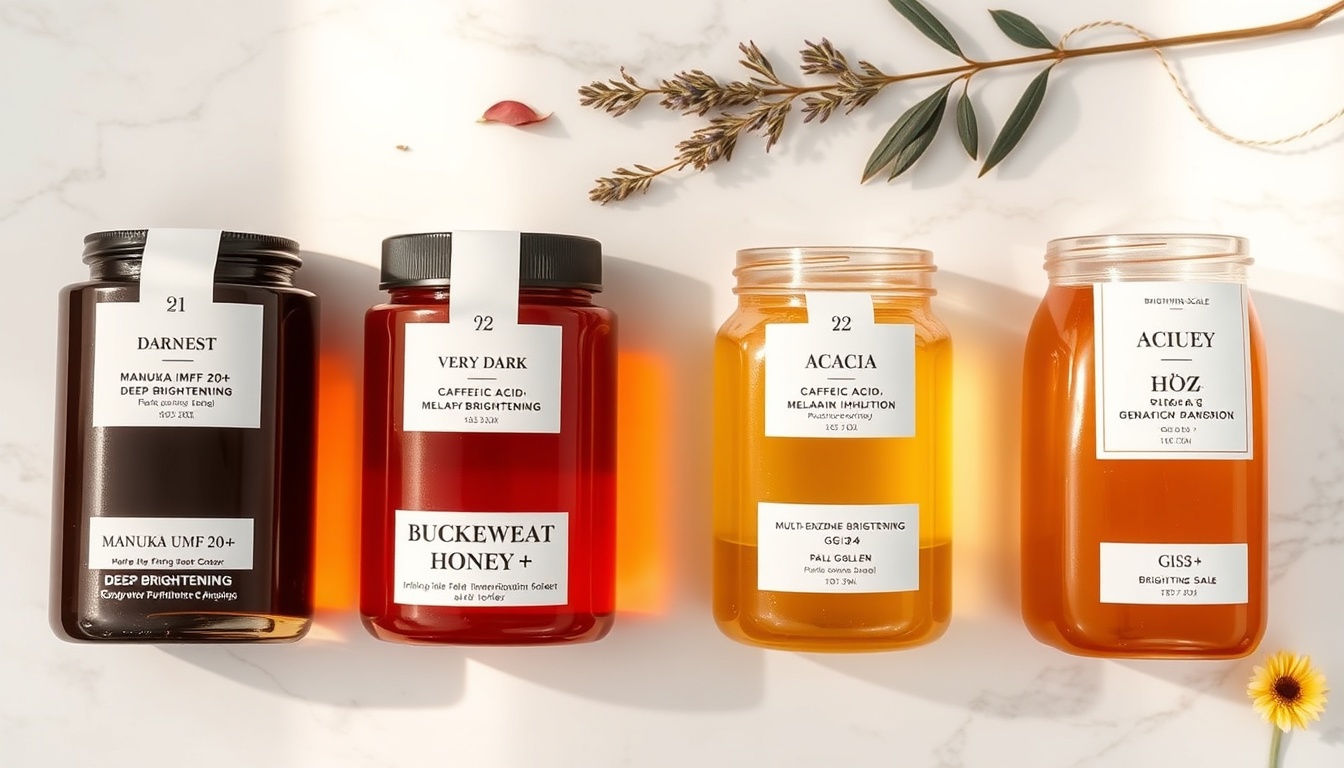
- Manuka honey (UMF 10+, $35-60+) — The best overall choice for targeted dark spot treatment. High methylglyoxal content provides additional antimicrobial protection (preventing PIH from breakouts), and manuka's exceptionally high phenolic content includes compounds with documented tyrosinase-inhibiting activity. Its thick, viscous texture also makes it practical as a mask that stays in place.
- Buckwheat honey ($15-25, ORAC 16,000+) — Contains the highest antioxidant levels of common honey varieties (3-9x more than clover), with particularly high concentrations of quercetin and gallic acid — both documented tyrosinase inhibitors. Its very dark color reflects this dense polyphenol content. Best for antioxidant-driven brightening and preventing new dark spots.
- Wildflower honey (raw, $10-18) — Offers broad-spectrum polyphenol diversity from multiple nectar sources. While no single compound is as concentrated as in monofloral honeys, the variety creates a cocktail effect targeting multiple melanogenesis pathways simultaneously.
- Thyme honey ($15-25) — Contains thymol-derived polyphenols with documented anti-inflammatory and antimicrobial effects. Good for PIH from acne-prone skin because it addresses both the pigmentation and the breakouts causing it.
- Acacia honey ($12-20, GI ~32) — The gentlest option with its lower acidity and milder enzymatic activity. Best for sensitive skin that reacts to stronger honeys. Lower polyphenol content means slower results, but also lower risk of irritation-triggered melanocyte stimulation.
Pro Tip
Always use raw, unprocessed honey for skin care. Pasteurization destroys glucose oxidase (the enzyme producing H₂O₂) and degrades heat-sensitive polyphenols — the very compounds responsible for honey's depigmenting potential. Budget option: raw clover honey ($8-15) provides baseline enzymatic activity for gentle maintenance between targeted treatments with darker varieties.
5 Honey Treatments for Dark Spots
These DIY treatments target hyperpigmentation through complementary mechanisms. For best results, apply to clean, dry skin. Melanin turnover in the epidermis takes approximately 28-40 days, so any visible change would be gradual, not immediate — persistent or concerning dark spots are worth a dermatologist visit rather than a fixed self-treatment timeline.
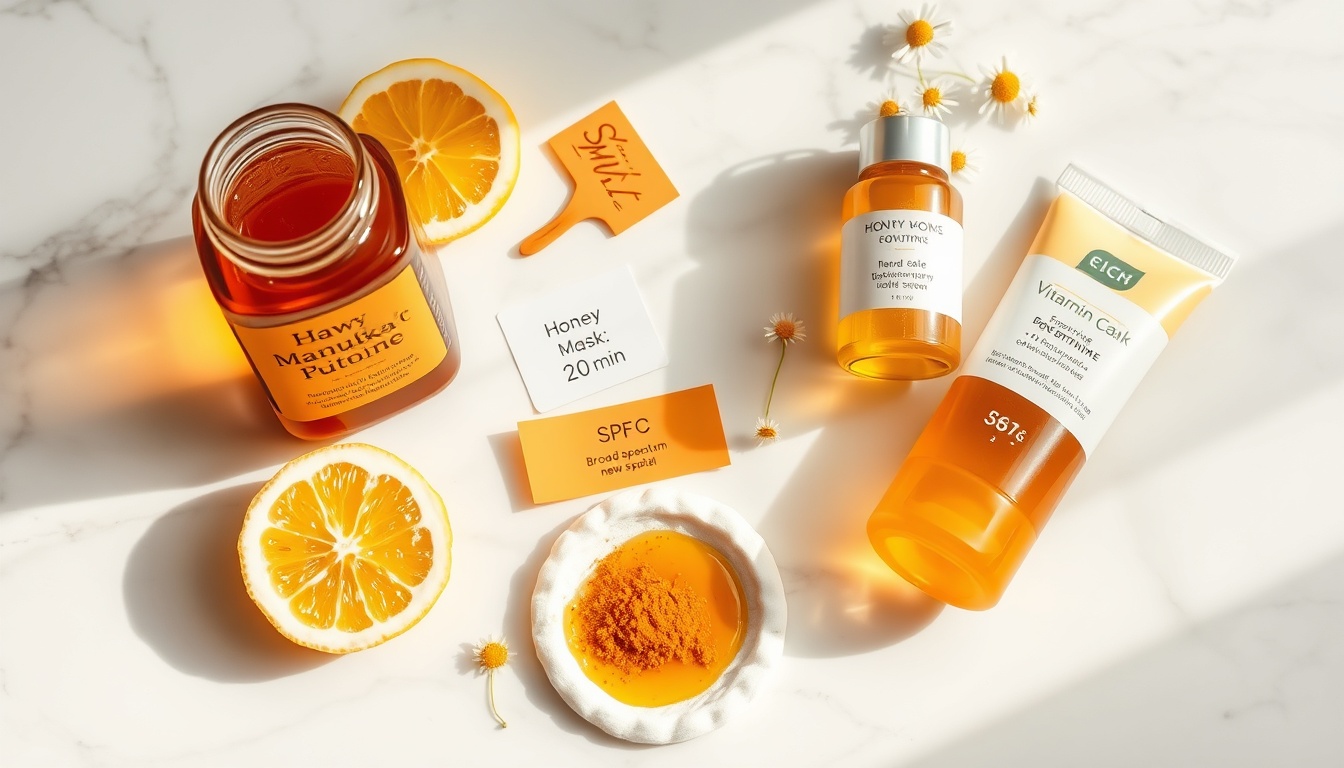
- Pure honey spot treatment — Apply a thin layer of raw manuka honey directly to dark spots, leave on for a while, then rinse with lukewarm water. The concentrated contact maximizes tyrosinase inhibition and enzymatic exfoliation at the target area.
- Honey and lemon brightening mask — Mix raw honey with fresh lemon juice. Apply to dark spots or full face for 15 minutes. The citric acid and vitamin C in lemon amplify honey's brightening effects, while honey buffers lemon's irritation potential. Always follow with sunscreen — lemon increases photosensitivity.
- Honey and turmeric anti-pigmentation mask — Combine raw honey with turmeric powder. Apply for 15-20 minutes. Curcumin in turmeric is a potent tyrosinase inhibitor (documented in multiple studies), and combining it with honey creates a dual-pathway depigmenting treatment. Turmeric may temporarily stain — follow with a gentle cleanser.
- Honey, yogurt, and oat brightening treatment — Mix 1 tablespoon raw honey, 1 tablespoon plain yogurt, and 1 tablespoon ground oats. Apply to face for 20 minutes. Yogurt's lactic acid (a more potent AHA) combines with honey's gluconic acid for enhanced exfoliation, while oats soothe reactive skin. Good for sensitive skin with PIH.
- Honey and aloe vera overnight spot treatment — Mix equal parts raw honey and fresh aloe vera gel. Apply to dark spots before bed with a small bandage to prevent transfer. Aloe vera's aloin compound has documented melanin-suppressing activity, and the overnight contact time maximizes penetration.
Pro Tip
Sunscreen is non-negotiable when treating dark spots. Any brightening effect from honey (or any treatment) will be completely overwhelmed by UV-triggered melanogenesis if you skip daily SPF 30+ protection. Apply sunscreen every morning regardless of weather.
Honey vs Other Natural Brightening Ingredients
Understanding where honey fits in the natural brightening landscape helps set realistic expectations.
- Vitamin C serums (10-20% L-ascorbic acid) — More potent tyrosinase inhibitor than honey, with extensive clinical trial evidence. Honey can complement vitamin C by providing anti-inflammatory and humectant benefits, but cannot replace it for significant hyperpigmentation.
- Niacinamide (vitamin B3) — Blocks melanosome transfer from melanocytes to keratinocytes, a mechanism honey does not directly share. Again, complementary rather than competitive — honey addresses melanin production while niacinamide addresses distribution.
- Alpha arbutin — A natural tyrosinase inhibitor from bearberry that is more concentrated and targeted than honey's polyphenol mix. Clinical evidence is stronger for arbutin as a standalone depigmenting agent.
- Licorice root extract (glabridin) — Another potent natural tyrosinase inhibitor with clinical backing. Similar potency profile to alpha arbutin, stronger than honey alone.
- Kojic acid — Derived from fungi, this is one of the strongest natural brighteners with clear clinical evidence. Can be irritating, which is where honey's soothing properties become valuable as a complementary ingredient.
- Aloe vera — Aloin shows melanin-suppressing activity, and combining it with honey creates a gentle dual-mechanism treatment that's well-tolerated by sensitive skin.
Pro Tip
Honey works best as part of a multi-ingredient brightening routine rather than a sole treatment. Use it as a gentle daily maintenance step alongside more targeted treatments like vitamin C or niacinamide for optimal results.
What Honey Cannot Do: Setting Realistic Expectations
Intellectual honesty matters more than marketing appeal. Here is what honey will not accomplish for dark spots.
Honey will not fade deep dermal melasma. Melasma involves melanin deposits in the deeper dermis layer, beyond the reach of topical honey. Only treatments that penetrate to the dermal-epidermal junction (prescription retinoids, certain laser therapies, tranexamic acid) can address deep melasma effectively.
Honey will not produce dramatic results in days or weeks. Melanin turnover in the epidermis takes 28-40 days. Even potent prescription treatments require 8-12 weeks for visible improvement. Honey, being milder, may take 6-12 weeks of consistent use for noticeable changes in superficial hyperpigmentation.
Honey alone will not match the efficacy of established dermatological treatments. Clinical evidence for hydroquinone, tretinoin, and chemical peels is substantially stronger than for honey. If you have significant, distressing hyperpigmentation, see a dermatologist for evidence-based treatment — and consider honey as a gentle adjunct, not a replacement.
Honey will not prevent dark spots without sunscreen. No brightening ingredient — natural or pharmaceutical — can overcome continued UV exposure. Daily SPF 30+ broad-spectrum sunscreen is the single most effective dark spot prevention strategy.
Who Honey Works Best For
Honey-based dark spot treatments are best suited for specific situations where the gentleness-to-efficacy ratio makes clinical sense.
- Mild post-inflammatory hyperpigmentation from acne — The anti-inflammatory and tyrosinase-inhibiting effects are well-matched to PIH, especially when combined with honey's antibacterial properties to prevent new breakouts that would create more dark spots.
- Sensitive skin that cannot tolerate stronger actives — If retinoids, hydroquinone, or glycolic acid cause irritation that worsens your hyperpigmentation, honey's gentle exfoliation and calming properties offer a tolerable alternative with modest brightening benefit.
- Maintenance after professional treatments — After chemical peels or laser treatments, honey masks can support even healing, prevent infection-related PIH, and maintain results gently between sessions.
- Very early or mild sun spots — Superficial melanin deposits that are recently formed may respond to honey's combined exfoliation and tyrosinase inhibition before they become deeply established.
- General skin brightening and evening of tone — Even without dramatic dark spot fading, consistent honey use improves overall luminosity through exfoliation, hydration, and antioxidant protection. The effect is a subtle, healthy glow rather than a targeted bleaching.
Safety and Precautions
Honey is one of the safest topical ingredients available, but a few precautions apply when using it for dark spots.
- Patch test first — Apply a small amount of your chosen honey to the inside of your wrist and wait 24 hours before applying to the face. While rare, some people react to specific honey proteins or bee-derived compounds.
- Avoid raw honey on broken or actively inflamed acne — While medical-grade honey is used on wounds, applying raw (non-sterile) honey to open skin carries a small infection risk. Wait until active breakouts have closed before targeting the resulting PIH.
- Lemon-honey combinations require strict sun protection — Citrus juice contains furanocoumarins that cause phototoxic reactions (phytophotodermatitis). If you use the honey-lemon mask, apply it only at night or ensure rigorous sunscreen application afterward.
- Do not use honey if you have a confirmed bee product allergy — This includes allergy to bee stings, propolis, or bee pollen. Cross-reactivity is possible with topical honey application.
- Manage expectations and monitor progress — Take photos in the same lighting monthly to track real changes. If you see no improvement after 8-12 weeks of consistent use, consider adding or switching to stronger evidence-based treatments.