Indonesia in the World Honey Map: Archipelagic Biogeography Meets a Standardised Forest Honey Network
Indonesia occupies a uniquely complex position in the Southeast Asian honey economy because the country itself is biogeographically unlike any of its neighbours. It is the world's largest archipelagic state — more than 17,000 islands spread across three time zones and six distinct biogeographic zones (Sumatra, Java-Bali, Kalimantan, Sulawesi, the Lesser Sunda Islands / Wallacea, and Maluku-Papua) — and this archipelagic scale produces a honey landscape that operates at several different altitudes of organisation simultaneously. At the commodity end, Indonesia produces Apis mellifera honey in the same Southeast Asian migratory-commercial pattern seen in Thailand and Vietnam. At the heritage end, Indonesia has one of the longest continuously practised wild-forest-honey traditions in the region, centred on the sialang (Koompassia excelsa) trees of Sumatra and Kalimantan and on the Sumbawa-Flores forest-honey belt in the Lesser Sunda Islands. At the scientific end, Indonesian Meliponini (stingless bee) research and commercial production sits alongside the Malaysian USM and Thai CMU programs as one of the three regional centres. And uniquely among Southeast Asian honey-producing countries, Indonesia has a formally organised, documented, smallholder-cooperative wild-forest-honey certification network — Jaringan Madu Hutan Indonesia (JMHI), the Indonesian Forest Honey Network — that since the mid-2000s has produced a verifiable authentication pathway for wild Apis dorsata honey from community harvests across the archipelago.
This combination — archipelagic biogeographic diversity plus a documented community-certification network plus the regional Meliponini industry — is what makes Indonesia distinctive relative to its SE Asia neighbours. Where Thailand's honey story is industrial scale (world's largest longan producer) meeting research science (Chiang Mai University Chuttong group), and Malaysia's story is botanical specialty (tualang on Koompassia excelsa) meeting regulatory innovation (MS 2683:2017 stingless bee honey standard and the 2020 Fletcher et al. trehalulose discovery), Indonesia's story is biogeographic scale meeting the JMHI forest-honey network. The country produces everything the regional template suggests — longan, lychee, coffee-flower, mangrove, rubber, coconut, and kapok monoflorals; several widespread Meliponini species kept commercially under the names kelulut (Kalimantan, Sumatra, Malay-origin), klanceng (Java), and teuweul/nyiruan (Sunda); plus the most geographically diverse wild Apis dorsata honey economy in the world. Understanding Indonesian honey requires holding all of these categories in mind at once because they occur across different islands with different botany and different traditional practices.
For comparison with neighbouring regional traditions referenced throughout this guide, see our Malaysian honey guide for the closely related kelulut stingless bee story and the MS 2683:2017 national standard; the Thai honey guide for the chan rong Meliponini story and the Chiang Mai University research program that anchored the regional stingless bee science alongside the 2020 trehalulose discovery; the Vietnamese honey guide for the gác kèo ong Apis dorsata rafter-beekeeping tradition and the UNESCO-listed U Minh cajuput forest; the Chinese honey guide for the Apis cerana cerana parallel; the Japanese honey guide for the Nihon mitsubachi tradition; and the broader World Honey Guide.
The Bee System: A. mellifera, A. cerana indica, A. dorsata (Sialang), and the Meliponini
Indonesian honey production is structured around the same four-bee system that organises honey production across mainland and island Southeast Asia, but with distinctive regional emphases created by the country's archipelagic geography. Apis mellifera — almost entirely A. m. ligustica, introduced progressively from the 1960s onward and scaled into a full commercial industry by the 1990s — is the largest commercial category by volume. Indonesian A. mellifera beekeeping is concentrated in Java (particularly Central Java, East Java, and the Yogyakarta Special Region), South Sulawesi, and parts of Sumatra. Commercial Indonesian beekeepers move colonies following the regional bloom calendar: the randu (kapok, Ceiba pentandra) flow across East and Central Java in July–September, the rubber (Hevea brasiliensis) flows across Sumatra and Kalimantan year-round with peaks in the transitional seasons, the sonokeling (Dalbergia latifolia, Indian rosewood) flow in East Java, the lengkeng (longan, Dimocarpus longan) flow in Central Java (particularly Ambarawa and the Temanggung-Semarang corridor), the coffee-flower flows in the Gayo Highlands of Aceh, the Toraja Highlands of South Sulawesi, Kintamani in Bali, and the Java coffee belt, and seasonal polyfloral moves. The Asosiasi Perlebahan Indonesia (API, the Indonesian Beekeeping Association) coordinates much of this industry alongside the Ministry of Environment and Forestry and the Ministry of Agriculture.
The second category is Apis cerana indica, the Indian race of the Asian honeybee, known across Indonesia as "lebah lokal," "lebah madu lokal," "tawon madu," or by various regional names (in Javanese it is commonly tawon madu; in Sundanese odeng; in Balinese njuhan; in Batak and Minangkabau languages across Sumatra multiple local names exist). A. cerana indica is native throughout Indonesia and is kept in traditional hollow-log hives (gelodog, glodog) and increasingly in modern movable-frame hives by smallholder beekeepers on every major island. The honey is typically polyfloral, darker and more complex than migratory-commercial A. mellifera product, with a dedicated premium market in cities such as Yogyakarta, Bandung, Solo, Medan, Surabaya, and Makassar that values the native-bee heritage association. Yields are modest (typically 3–8 kg per colony per year) but the cultural importance and biodiversity value of A. cerana indica beekeeping is disproportionate — it is the bee of the traditional Javanese and Sumatran hollow-log hive, of several Papuan upland beekeeping systems, and of the Lombok and Flores smallholder economy.
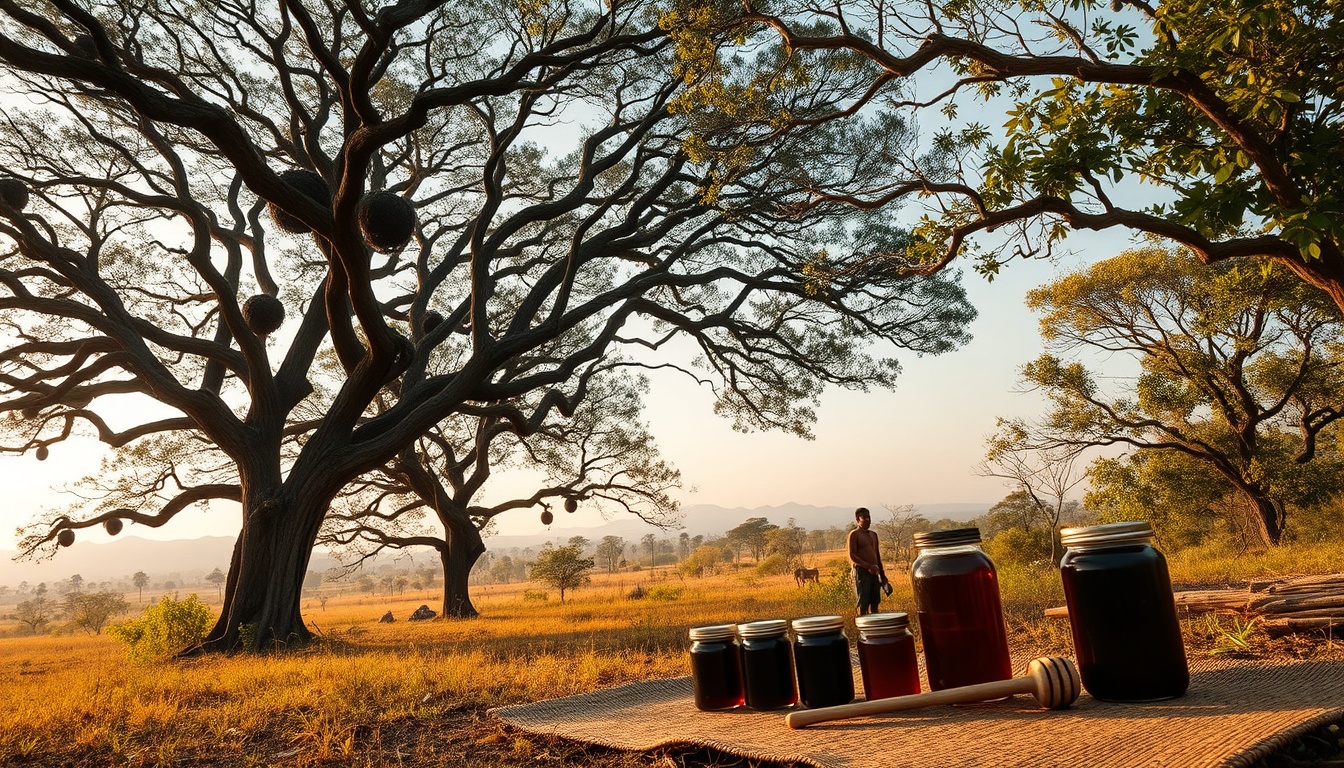
The third and fourth categories are the two wild Apis species, and here Indonesia is globally distinctive. Apis dorsata — the giant honeybee — builds single-comb open-air nests on tall emergent trees and cliff faces across the entire Indonesian forest range. Apis dorsata is the bee of sialang (Koompassia excelsa), of the tall Dipterocarp emergents of the Sumatran and Kalimantan lowlands, of the eucalyptus-woodland forests of Sumba and Flores, of the karst cliffs of Maros-Pangkep in South Sulawesi, and of the Papuan lowland forests. Indonesian A. dorsata honey harvests are traditionally organised on a village- or community-cooperative basis, with a body of climbing and harvesting techniques collectively described across Indonesian languages as "manjat sialang," "berburu madu hutan," and various regional terms, that has been continuously practised for centuries. The JMHI (Jaringan Madu Hutan Indonesia) forest-honey network, established in the mid-2000s with support from Indonesian civil-society organisations and regional cooperatives, provides the only documented community-level authentication and standardisation framework for Indonesian wild forest honey. Apis florea, the dwarf honeybee — smaller and less productive than dorsata — is also widespread in western Indonesia and occasionally harvested for household use.
The fifth category — not an Apis at all — is the Meliponini, the stingless bees, a hugely important group in Indonesia given the country's extraordinary tropical-forest biodiversity. More than 40 Meliponini species are recorded from the Indonesian archipelago across the genera Heterotrigona, Tetragonula, Geniotrigona, Lepidotrigona, Lophotrigona, Pariotrigona, Lisotrigona, Tetrigona, Homotrigona, and Wallacetrigona (the last of which is endemic to the Wallacea biogeographic region of Sulawesi and the Lesser Sunda Islands, a named example of the country's archipelagic biogeographic distinctness). Commercial meliponiculture is concentrated on the most productive widespread species — Heterotrigona itama (Kalimantan and Sumatra, the same species anchoring Malaysian kelulut), Geniotrigona thoracica (Kalimantan and Sumatra), and Tetragonula laeviceps (dominant in Java and across eastern Indonesia) — with additional species kept regionally. The Indonesian commercial stingless-bee industry is large and fast-growing, particularly in Kalimantan, East Java, Yogyakarta, and South Sulawesi, and sits alongside the Malaysian and Thai programs as one of the three principal regional centres for both scientific and commercial Meliponini honey production.

Get the Honey Buyer's Cheat Sheet (free PDF)
16 varieties on one page — color, flavor, best use and what a fair price looks like — from the 304 honeys we track.
Sumbawa and Flores Wild Forest Honey — the JMHI Network and "Madu Sumbawa"
Sumbawa forest honey (madu hutan Sumbawa) is Indonesia's most internationally recognised wild honey category and the single strongest example of how the JMHI network has produced a verifiable authentication pathway for community-sourced Apis dorsata honey. The geography is Sumbawa Island and the adjacent islands of Flores, Sumba, Lombok, and Komodo in West Nusa Tenggara (NTB) and East Nusa Tenggara (NTT) provinces — the Lesser Sunda Islands, which sit in the Wallacea biogeographic transition zone between Asian (Sundaland) and Australasian (Sahul) floras and faunas. The islands are drier than the Sumatran and Kalimantan lowlands — a monsoonal savanna-woodland climate with strong seasonal bloom cycles — and the forest honey ecology is dominated by tamarind (Tamarindus indica), kosambi (Schleichera oleosa), johar (Senna siamea), gebang palm (Corypha utan), asam (Tamarindus indica again — a dominant bloom in Sumbawa), and a variety of mixed-deciduous trees that support large Apis dorsata populations.
The Sumbawa honey economy is organised around village-level harvest cooperatives that have been documented and standardised under the JMHI framework since the mid-2000s. JMHI established a harvest protocol that requires: (1) harvest timing aligned with the peak bloom window and the capped-nectar stage of the comb (avoiding brood-stage harvesting); (2) extraction using the "ditiriskan" gravity-filtering method rather than comb-pressing (which would crush brood and reduce honey quality); (3) moisture testing with refractometer to verify compliance with Codex / SNI moisture parameters; (4) single-source traceability from the named village and the named tree; and (5) third-party aggregation through the JMHI umbrella with member-cooperative branding. Producer cooperatives participating in the JMHI network include associations in Pekat (central Sumbawa), Batulanteh (Sumbawa Besar), Manggarai (Flores), and Sumba. The Dompu and Bima districts of eastern Sumbawa are historically the most productive. JMHI-branded Sumbawa forest honey is available through specialty Indonesian retailers in Jakarta and Bali and — increasingly — through international export channels.
Sensorially, Sumbawa forest honey is medium to deep amber, with a complex polyfloral character that tasters frequently describe as "warm tropical-savanna" — tamarind and stone-fruit top notes, a gentle resinous undercurrent (reflecting the Wallacean forest botany), medium-long finish, medium sweetness balanced by moderate acidity. The honey is naturally higher-moisture than Codex CXS 12-1981 permits (commonly 21–23%) because harvest conditions on Sumbawa and Flores are humid and seasonal, which is part of why post-harvest gravity filtering and controlled storage are central to the JMHI protocol. Genuine JMHI-certified Sumbawa forest honey is the product specialty retailers and exporters sell under that name. The brand association "Madu Sumbawa" has become a widely recognised quality signal in the Indonesian premium honey market.
Sialang and Kalimantan Forest Honey — the Koompassia Excelsa Tradition
Sialang tree honey is the Sumatran and Kalimantan expression of the same Koompassia excelsa tradition that produces Malaysian tualang honey (see our Malaysian honey guide for the closely related system). The Indonesian term "sialang" is widely used across Minangkabau-speaking West Sumatra, Riau, and Jambi for both the tree species and the honey produced by Apis dorsata nests hanging from its high horizontal branches. In Kalimantan the tree is more commonly called "mengaris," "menggaris," or "banggris" in different Dayak and Banjar language areas. Koompassia excelsa is one of the tallest tropical rainforest trees in the world, reaching 80–90 metres (exceptionally 100+), with a distinctive pale smooth bark that makes it mechanically unclimbable for most natural predators — which is precisely why Apis dorsata selects it. A mature sialang tree can host 40–80+ dorsata nests simultaneously during peak bloom seasons, producing hundreds of kilograms of honey from a single tree in a single harvest cycle.
The harvest tradition differs significantly between the Indonesian and Malaysian sialang/tualang systems, particularly in the ceremonial and cooperative structure around large-scale tree-ownership. In West Sumatra (Minangkabau country), the traditional "kerapatan sialang" system treats individual named sialang trees as customary (adat) communal or clan property, with access rights managed by nagari (village) leadership and harvest rotations allocated by clan-based agreement. The harvest itself is conducted by professional climbers (pemanjat sialang) using rope-and-bamboo-ladder systems, at night, to take advantage of the cooler temperatures and reduced bee aggression. Traditional smoking torches are made from damp bark and forest plants (much like the Vietnamese U Minh cajuput harvest traditions and the Malaysian tualang harvests described in the Vietnamese honey guide and the Malaysian honey guide). The Kalimantan mengaris/banggris traditions among Dayak Iban, Dayak Kayan, and other communities follow broadly similar climbing and harvesting patterns, with their own ceremonial and cosmological elements reflecting local adat.
Sialang honey is typically dark amber with a distinctive smoky-resinous character from the Dipterocarp-dominated emergent-canopy forest ecology, medium-long finish, and complex polyfloral depth. The Kalimantan mengaris equivalent is often marginally darker and more heavily resinous, reflecting the higher proportion of Shorea and Dryobalanops emergent-canopy trees contributing to the ambient nectar and honeydew sources. Authenticated sialang and mengaris honey is much less internationally visible than Malaysian tualang honey (which has the USM research program and Geographical Indication registration behind it), but is available through JMHI-member cooperatives in Riau, West Sumatra, West Kalimantan, and Central Kalimantan. Pricing at Indonesian retail is for authenticated product; the unauthenticated tourist-market category is significantly cheaper and, as with the Malaysian and Thai wild-forest equivalents, mostly generic polyfloral relabeled for the premium tier.
Kelulut / Klanceng Stingless Bee Honey (Kalimantan, Sumatra, Java, Sulawesi)
Indonesian stingless bee honey is the country's fastest-growing premium honey category and one of the three principal SE Asian Meliponini industries alongside Malaysian kelulut and Thai chan rong. Regional naming varies significantly across the archipelago: "kelulut" in Kalimantan and Sumatra (the Malay-origin term shared with Malaysian kelulut production), "klanceng" or "lanceng" in Java (Javanese term), "teuweul" in West Java (Sundanese), "nyiruan" in Bali (Balinese), and other regional names elsewhere. The commercial industry is concentrated on three species: Heterotrigona itama (Kalimantan and Sumatra, the same species anchoring Malaysian kelulut production, physicochemically well-characterised through the Fletcher et al. 2020 trehalulose discovery discussed in our Malaysian honey guide); Geniotrigona thoracica (Kalimantan and Sumatra, the larger of the two mainstream Malaysian-style commercial species); and Tetragonula laeviceps (the dominant species in Java, where most commercial meliponiculture centres on this smaller, more compact-nesting species).
The regional production geography is intricate. In East Kalimantan and West Kalimantan, meliponiculture centres on Heterotrigona itama and Geniotrigona thoracica in forest-edge and agroforestry settings, paralleling the Malaysian Peninsular and Sarawak industries. In Central Java and East Java, klanceng production centres on Tetragonula laeviceps in smallholder village-level apiaries, often alongside vegetable gardens, coffee smallholdings, and fruit-tree plantations — a model of integrated agroforestry that the Yogyakarta Special Region and the Ministry of Environment and Forestry have actively promoted as a rural-income diversification strategy since the 2010s. In South Sulawesi and around Makassar, both Heterotrigona itama and Tetragonula species are kept in smaller-scale operations. In North Sumatra, Aceh, and Jambi, commercial kelulut production is growing alongside the existing A. mellifera coffee-flower industry. Production is smaller per-colony than in Malaysia (typically 0.3–1.2 kg per year depending on species and forage) but the total national output is large because the industry is so geographically dispersed.
Sensorially, Indonesian stingless bee honey shares the characteristic sour-tart Meliponini flavor profile — pronounced organic-acid and citric notes that many Indonesian tasters describe as "asam-manis" (sour-sweet) — balanced against species-specific floral and resinous components. Color ranges from pale amber (Tetragonula laeviceps from Java, young-colony harvests) through medium amber (mainstream Heterotrigona itama) to dark amber (Geniotrigona thoracica, particularly from forest-edge Kalimantan colonies). Moisture content is consistently high relative to Apis honey (25–35%), as with all Meliponini honey globally, which means shelf-stability depends on careful harvesting, filtering, and storage. Fletcher and colleagues (2020) identified the sugar trehalulose as a major component (13–44 g per 100 g) of stingless bee honeys, including Malaysian Heterotrigona itama and Geniotrigona thoracica. A 2026 Indonesian study (Sahlan and colleagues) found trehalulose in stingless bee honey (Trigona sp.) from most Indonesian regions it sampled, at 0–40 g per 100 g, and proposed it as an authenticity marker. Authenticated product sits in the international stingless-bee-honey premium tier.

Gayo and Toraja Coffee-Flower Honey, Randu Kapok, Mangrove, and the Secondary Monoflorals
Beyond wild forest honey and Meliponini, Indonesia produces a substantial catalogue of regional Apis mellifera monoflorals that belong in any serious guide. The most internationally significant is coffee-flower honey, produced in four distinct regional coffee belts, each with its own botanical and sensory signature. Gayo coffee honey (madu bunga kopi Gayo) comes from the Gayo Highlands of Aceh in northern Sumatra, where Coffea arabica Arabica coffee is grown at 1,200–1,700 m elevation under the geographical-indication registration "Kopi Gayo" (one of Indonesia's best-known GI coffee designations). We found no published sensory study of it; it is botanically parallel to Thai Royal Project coffee-flower honey from the Thai honey guide and Ethiopian coffee-forest honey from our Ethiopian honey guide. Toraja coffee honey (madu bunga kopi Toraja) from the Toraja Highlands of South Sulawesi shares the Arabica-based profile. Kintamani coffee honey from Bali and East Java coffee-belt honey (Ijen, Bondowoso) complete the Indonesian coffee-flower honey map.
Randu honey (madu randu) is the kapok-flower monofloral from Ceiba pentandra bloom across East Java and Central Java, peaking in July through September. Kapok is the canonical Javanese honey — the one most frequently seen on Jakarta and Surabaya specialty shelves, the one most Javanese households associate with quality Apis mellifera product. The honey is pale golden-amber, mild-to-medium sweetness, with a characteristic delicate floral-fresh character; it naturally crystallises into a fine-crystal cream over several months, which in Indonesia is often sold deliberately as "madu kristal" rather than maintained as a liquid. Commercial Javanese beekeepers move colonies into the kapok-flowering zones of East Java (Tuban, Lamongan, Bojonegoro, Pasuruan) during the July–September peak, producing most of the country's domestically branded liquid Apis honey. Sonokeling honey (madu sonokeling) from Dalbergia latifolia (Indian rosewood) bloom in East Java is a darker, more robust monofloral with a distinctive woody-spicy character — a smaller-volume but well-regarded regional product.
Mangrove honey (madu bakau, madu mangrove) is produced across the extensive Indonesian mangrove-forest belt — the Segara Anakan mangroves of Central Java, the Riau coastal mangroves of Sumatra, the Kalimantan coastal mangroves of East Kalimantan and South Kalimantan, and several Papuan mangrove systems. The dominant mangrove bloom sources are Rhizophora apiculata, Rhizophora mucronata, Avicennia marina, and Sonneratia alba; honey is typically dark amber, medium-sweet, with a distinctive slightly-salty-mineral undertone reflecting the estuarine ecology. Lengkeng honey (longan, Dimocarpus longan) is produced from longan bloom in Central Java (Ambarawa is historically central to this industry) during the February–March bloom, paralleling Thai lamyai honey — the honey is light-to-medium amber with the characteristic musky-floral longan top note. Rambutan honey (madu rambutan) from Nephelium lappaceum bloom, mangosteen honey (madu manggis, from interleaved agroforestry rather than pure monoflorals), durian honey (madu durian, rare), and rubber honey (madu karet, from Hevea brasiliensis extrafloral nectaries in the Sumatran and Kalimantan plantation base) complete the secondary monofloral catalogue.
SNI 8664:2018 and Indonesian Honey Regulation
Indonesia's principal honey standard is SNI 8664:2018 "Madu" (Honey), issued by Badan Standardisasi Nasional (BSN, the National Standardisation Agency of Indonesia) in 2018 to replace the earlier SNI 01-3545-2004 and SNI 3545:2013 standards. SNI 8664:2018 establishes compositional parameters, labelling requirements, hygiene requirements, and authentication methodology for honey placed on the Indonesian market. The standard is broadly aligned with Codex Alimentarius CXS 12-1981 in structure — covering reducing sugar content, sucrose content, water / moisture content, HMF, diastase activity, water-insoluble matter, electrical conductivity, and free acidity — but includes tropical-climate-adapted tolerances that are somewhat more permissive than strict Codex parameters. The practical consequence is that Indonesian honey produced under local humid-tropical conditions — including JMHI-certified Sumbawa and Flores forest honey harvested at 21–23% moisture — can meet national standard compliance where the same product would fail strict Codex 20% moisture on a comparison basis. This tropical-adapted pragmatism is one of the defining regulatory characteristics of the Indonesian standard relative to its SE Asia regional neighbours.
SNI 8664:2018 is an Apis-honey standard in its main body. It does not, as of its 2018 publication, establish a separate analytical category for Meliponini stingless bee honey in the way that Malaysian MS 2683:2017 does (see our Malaysian honey guide for the Malaysian pattern). This positions Indonesia in the same regulatory state as Thailand — the national standard is Apis-only, and a Meliponini-specific national standard would be a future regulatory development. That said, stingless bee honey is clearly recognised in Indonesian commercial practice, and individual provincial and university-led laboratories have developed analytical protocols for Meliponini honey authentication that parallel the Malaysian MS 2683 parameters. The Indonesian Ministry of Environment and Forestry has also supported meliponiculture as a forest-conservation-compatible livelihood strategy, particularly in Kalimantan and on Java, which has shaped the policy environment around stingless bee honey even in the absence of a dedicated national standard.
Geographical-indication (GI) protection is administered under Law 20/2016 on Trademarks and Geographical Indications by the Directorate General of Intellectual Property (Direktorat Jenderal Kekayaan Intelektual, DJKI) of the Ministry of Law and Human Rights. The Indonesian GI registry covers a growing list of agricultural and food specialties, including several high-profile coffee designations (Kopi Gayo, Kopi Toraja, Kopi Kintamani, Kopi Java Preanger). GI protection specifically for Indonesian honey is less established than for coffee — JMHI-certified Sumbawa forest honey operates through a community-cooperative certification mark rather than a formal DJKI GI registration — but several provincial-level designations are under development. Analytical authentication for Indonesian honey at the lab level uses the standard international methods: AOAC 998.12 for δ¹³C stable carbon isotope adulteration screening, HPLC and LC-MS/MS for specific syrup markers (rice syrup, corn syrup, HFCS), melissopalynology for pollen-based botanical and geographic origin verification (important for authenticating coffee-flower honey, randu kapok, and forest-honey polyfloral signatures), and increasingly quantitative NMR profiling at IPB University (Bogor Agricultural University), Gadjah Mada University (Yogyakarta), the University of Indonesia, and several Lembaga Ilmu Pengetahuan Indonesia (LIPI) / BRIN laboratories.
Buying Authentic Indonesian Honey: A Variety-by-Variety Guide
The buying picture for Indonesian honey differs sharply between domestic and export channels, and across the four main category tiers (commercial randu / sonokeling / regional Apis monoflorals, JMHI-certified forest honey, Meliponini / kelulut / klanceng, and Gayo and Toraja coffee-flower premium). Inside Indonesia, every category described above is broadly available through specialty grocers in Jakarta (Ranch Market, Kem Chicks, Grand Lucky), Bandung, Yogyakarta, Surabaya, Medan, Denpasar, and Makassar, through the JMHI member-cooperative retail outlets, through direct-to-consumer producer e-commerce (Tokopedia, Shopee Indonesia, Bukalapak), and through specialty Saturday markets. Outside Indonesia, the premium tier is available in specialty Asian retail in Singapore, Malaysia, Hong Kong, Taiwan, and the Netherlands (reflecting historical trade ties); expanding but still thin in North American and other European markets.
**Sumbawa forest honey (madu hutan Sumbawa).** Inside Indonesia: look for the JMHI (Jaringan Madu Hutan Indonesia) cooperative-member certification mark on the label, named village or district origin (Pekat, Batulanteh, Dompu, Bima, Manggarai, Sumba-Flores districts), harvest year, and single-source traceability to a named tree or forest area. Outside Indonesia it is available through specialty Indonesian importers, particularly in Singapore and the Netherlands.
**Sialang / mengaris Kalimantan and Sumatra forest honey.** Inside Indonesia: look for named village or cooperative origin from Riau, West Sumatra, Jambi, West Kalimantan, Central Kalimantan, or East Kalimantan, harvest-season dating aligned with known A. dorsata peaks in the source region, and — where available — JMHI member certification. Much less internationally visible than Malaysian tualang honey; export availability is essentially limited to specialty Indonesian diaspora retail.
**Kelulut / klanceng stingless bee honey.** Inside Indonesia: look for species designation (Heterotrigona itama is the premium Kalimantan/Sumatran species; Geniotrigona thoracica is the larger-colony Kalimantan species; Tetragonula laeviceps is the Javanese klanceng standard), named meliponary with geographic specificity, and harvest year. Reliable source regions include East Kalimantan (Samarinda, Balikpapan hinterland), Yogyakarta Special Region, East Java (Malang, Batu area), Bantul district outside Yogyakarta, and South Sulawesi. Outside Indonesia: available in specialty Asian-market retail, though underrepresented relative to the volume of the domestic industry.
**Gayo and Toraja coffee-flower honey (madu bunga kopi Gayo / Toraja).** Inside Indonesia: look for Gayo Highlands (Aceh) or Toraja Highlands (South Sulawesi) origin, clear Arabica-coffee-bloom dating, cooperative or named-producer sourcing, and ideally Fair Trade / Rainforest Alliance / organic certification alongside the domestic origin mark. Outside Indonesia: available through specialty Indonesian coffee-and-honey retailers, often alongside Gayo or Toraja specialty coffee exports.
**Randu kapok honey (madu randu).** Inside Indonesia: the canonical Javanese commercial honey — look for East Java or Central Java origin (Tuban, Lamongan, Bojonegoro, Pasuruan), July–September harvest window, and named producer or cooperative. Typically sold both liquid and in naturally granulated creamed form (madu kristal). Outside Indonesia: rare; primarily in Indonesian-diaspora retail.
**Mangrove honey (madu bakau / madu mangrove).** Inside Indonesia: look for Segara Anakan (Cilacap/Central Java), Riau coastal, or Kalimantan coastal origin, with named mangrove-forest sourcing. Outside Indonesia: rarely available at retail.
**Lengkeng longan, lychee, sonokeling, and secondary monoflorals.** Largely inside-Indonesia only, available through specialty regional retail (Ambarawa for lengkeng, East Java for sonokeling). Pricing parallels randu. Lengkeng honey from Central Java is a good direct taste comparison with Thai lamyai (see the Thai honey guide) — same botanical source, very similar flavor profile, different production geography and pricing.
Across all Indonesian honey categories, the consistent buying principles are: (1) for wild forest honey, JMHI cooperative-member certification is the single most authoritative signal; (2) named village, cooperative, meliponary, or named tree-area with geographic specificity; (3) species designation for stingless bee honey (Heterotrigona itama vs. Geniotrigona thoracica vs. Tetragonula laeviceps); (4) harvest year and bloom-window dating consistent with known regional flowering ecology; (5) for coffee-flower honey, alignment with Kopi Gayo, Kopi Toraja, Kopi Kintamani, or similar regional coffee-GI anchoring; (6) reputable retailer with traceable supply chain; and (7) price consistent with genuine premium regional production. Commodity pricing on a supposedly JMHI-certified Sumbawa forest honey, on premium Heterotrigona itama kelulut, or on an authenticated Gayo coffee-flower honey is the single most common red flag and typically indicates generic A. mellifera randu relabeled to capture the premium category's marketing halo — the same pattern as with Malaysian kelulut and Thai chan rong.