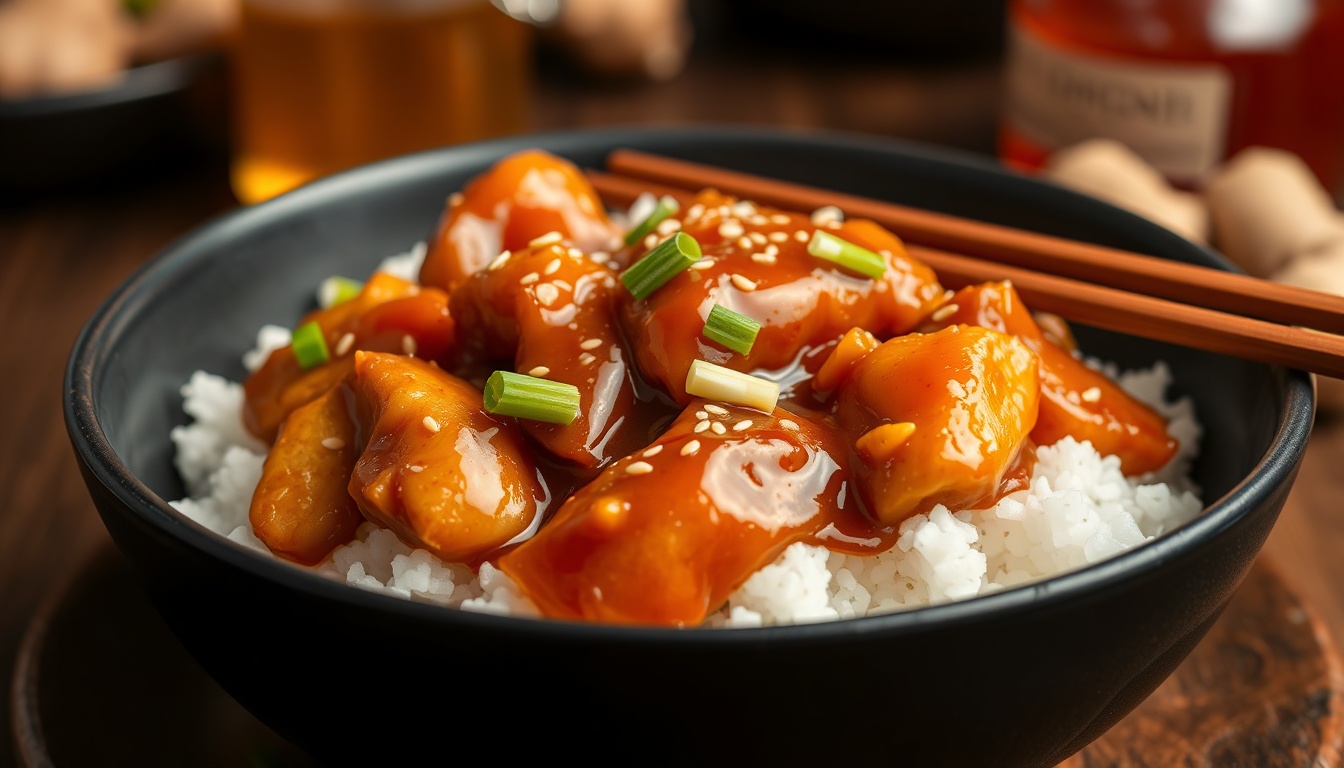
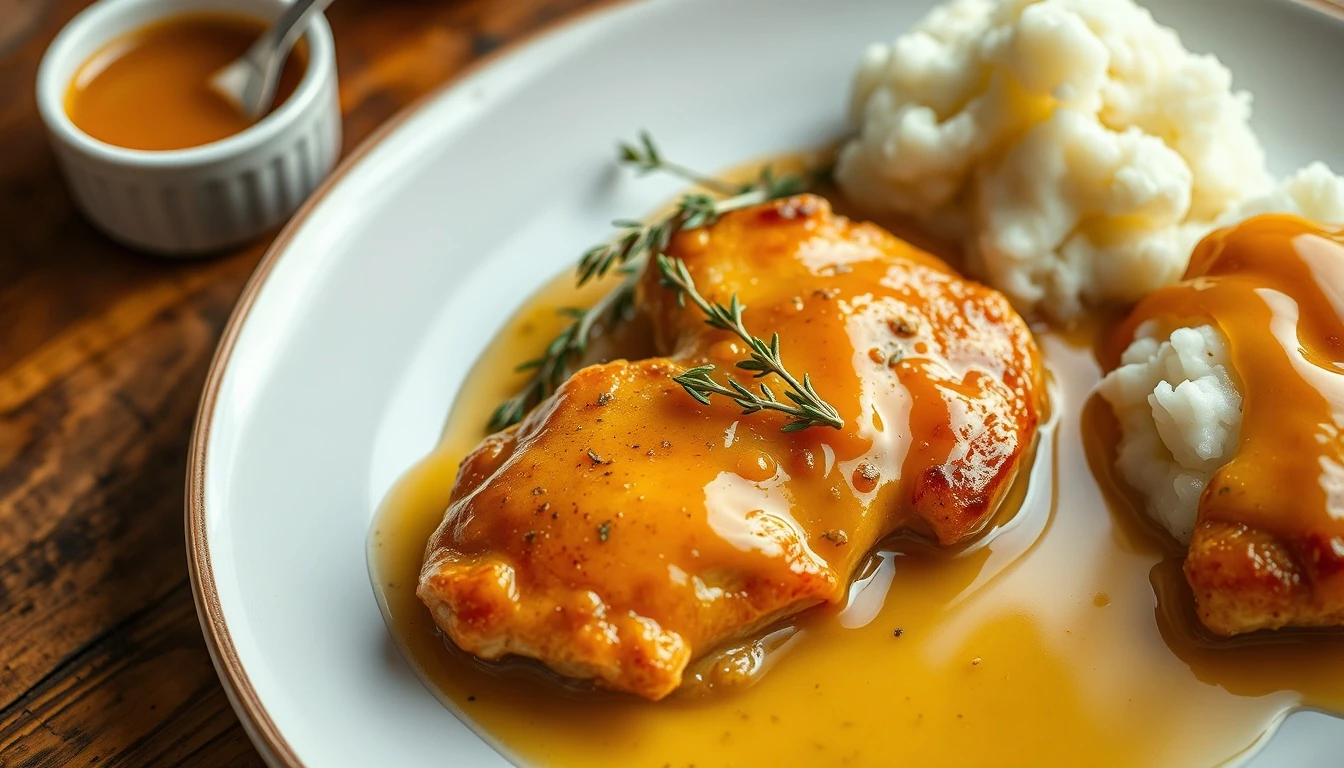
A honey-butter pan sauce with garlic
The sauce starts with the browned bits left after searing the chicken. A measured splash of water loosens them, then butter and honey give the sauce body. Garlic and thyme keep the flavor savory as well as sweet.
This is an American-style honey-butter skillet chicken, distinct from a tomato-and-spice curry sold as butter chicken. The base uses boneless skinless thigh meat and makes four servings in about 30 minutes.
Recipe
Honey Butter Chicken
Boneless skinless chicken thighs in a honey-butter pan sauce with garlic and thyme. Four servings in about 30 minutes.
12Ingredients
Yield: 4 servings
- 680 g raw boneless skinless chicken thigh meat
- 3 tablespoons clover honey (63 g)
- 3 tablespoons unsalted butter (42.6 g)
- 4 cloves garlic (12 g), minced
- 1 tablespoon olive oil (13.5 g)
- 2.3 g ground paprika
- 1.5 g garlic powder
- 1.2 g onion powder
- 0.5 g dried thyme
- 3 g fine sea salt
- 0.5 g ground black pepper
- 60 g water, for deglazing
Ingredient amounts scale; instructions show the original batch. Cooking times and pan sizes may need adjustment. Season to taste. Honey grams use US measures at 20°C and 17.5% moisture, a density estimate; weigh your honey for precision.
Instructions
- 1Season the chickenPat the thighs dry. Mix paprika, garlic powder, onion powder, thyme, salt and pepper and spread evenly over the chicken.
- 2Sear and checkHeat olive oil in a large skillet over medium-high heat. Cook thighs in one uncrowded layer, turning after browning, until the thickest part reaches 165°F (74°C). Allow about 5–7 minutes per side, adjusting for thickness. Move to a clean plate.
- 3Make the pan sauceLower the heat. Add butter and minced garlic and stir for about 30 seconds. Add the measured water and scrape up the browned bits, simmering briefly.
- 4Add honey and finishStir in the honey, return cooked chicken and any juices, and spoon sauce over the thighs. Warm gently for about 1 minute without boiling the sauce hard.
- 5PortionDivide chicken and sauce into 4 servings. The time estimate assumes the thighs fit one large skillet batch; sides and garnish are separate.
Estimated nutrition per serving
368.79 calories · 19.12 g fat · 14.96 g carbohydrate · 34.02 g protein · 456.41 mg sodium
Serving: 1/4 complete base batch
Calculated from ingredient weights and USDA FoodData Central: 173627, 169640, 173430, 169230, 171413, 171329, 171325, 171327, 170938, 173468, 170931, 173647. Estimates use ingredient input weights; actual portions, brands and cooking losses vary. Omitted nutrient values are unavailable, not zero.
Brown the chicken before building the sauce
Pat the thighs dry and put them in a single uncrowded layer. Let the first side color before turning. If a small skillet needs two batches, allow more time rather than piling the meat into one layer that cannot brown evenly.
Check the thickest part for 165°F (74°C), the poultry minimum. Remove cooked thighs to a clean plate before warming the garlic. Lower heat so the garlic does not darken before the water goes in.
The measured base uses water for deglazing. Stock is a useful variation but its salt and other label values differ, so the nutrition is not presented as though any carton of stock were plain water.
Get the Honey Buyer's Cheat Sheet (free PDF)
16 varieties on one page — color, flavor, best use and what a fair price looks like — from the 304 honeys we track.
Choose the honey for this sauce
Clover honey is mild, wildflower honey adds floral character, orange blossom honey gives a citrus-floral note, and buckwheat honey tastes darker and maltier. The pairing guide has more choices.
The chart uses an editorial 1–5 flavor-intensity scale. It is a pairing aid; the honey in a particular jar can taste different from another harvest.
1 = mild, 5 = bold. Editorial pairing guidance, not laboratory measurements; jars vary.
- Clover
- Mild garlic-butter sauce
- Orange blossom
- Lemon variation
- Wildflower
- Thyme and pan sauce
- Buckwheat
- Dark, bold sauce
Matching a honey to another dish: the honey flavor map
5 flavor variations
Each variation changes the measured base. Keep the food-temperature check and adjust one flavor at a time.
- Lemon: Add lemon zest and a little juice after cooking.
- Chili: Add a pinch of cayenne to the seasoning mixture.
- Mustard: Whisk 1 teaspoon prepared mustard into the sauce.
- Fresh herbs: Finish with chopped parsley, chives or fresh thyme instead of adding a large extra quantity of dried herbs.
- Stock deglaze: Replace the measured water with the same amount of chicken stock, tasting before adding salt; this changes the nutrition.
Different cuts and serving the sauce
Chicken breast is a separate adaptation with a different fat content and cooking time. Do not keep the thigh nutrition while switching the meat. Cut size and thickness matter as much as the cut’s name.
Serve the sauce with rice, mashed potatoes or a separately prepared vegetable. Honey garlic chicken, honey mustard chicken and honey butter offer related flavors with their own quantities.
Make ahead and reheat
Refrigerate cooked portions promptly in shallow covered containers and use within 3–4 days under USDA guidance. Reheat gently until hot throughout, adding a little water if the sauce is too thick.
Some fat and sauce may stay in the skillet. The input estimate counts all measured butter, oil and sauce rather than inventing a deduction for that residue. Sides are additional.
Nutrition and ingredient evidence
One portion, 1/4 complete base batch, has an estimated 368.79 calories, 19.12 g fat, 7.74 g saturated fat, 14.96 g carbohydrate, 13.06 g sugars, 0.45 g fiber, 34.02 g protein, 456.41 mg sodium. These are raw-ingredient input estimates divided by the recipe yield, not measurements of the plated food.
The estimate allocates all raw boneless skinless thigh meat, butter, oil, spices and sauce across 4 servings. It does not deduct rendered fat or pan residue. Stock, garnish and sides are separate.
- USDA FoodData Central 173627: Chicken, broilers or fryers, dark meat, thigh, meat only, raw.
- USDA FoodData Central 169640: Honey.
- USDA FoodData Central 173430: Butter, without salt.
- USDA FoodData Central 169230: Garlic, raw.
- USDA FoodData Central 171413: Oil, olive, salad or cooking.
- USDA FoodData Central 171329: Spices, paprika.
- USDA FoodData Central 171325: Spices, garlic powder.
- USDA FoodData Central 171327: Spices, onion powder.
- USDA FoodData Central 170938: Spices, thyme, dried.
- USDA FoodData Central 173468: Salt, table.
- USDA FoodData Central 170931: Spices, pepper, black.
- USDA FoodData Central 173647: Beverages, water, tap, drinking.