Why Honey Makes Better Teriyaki
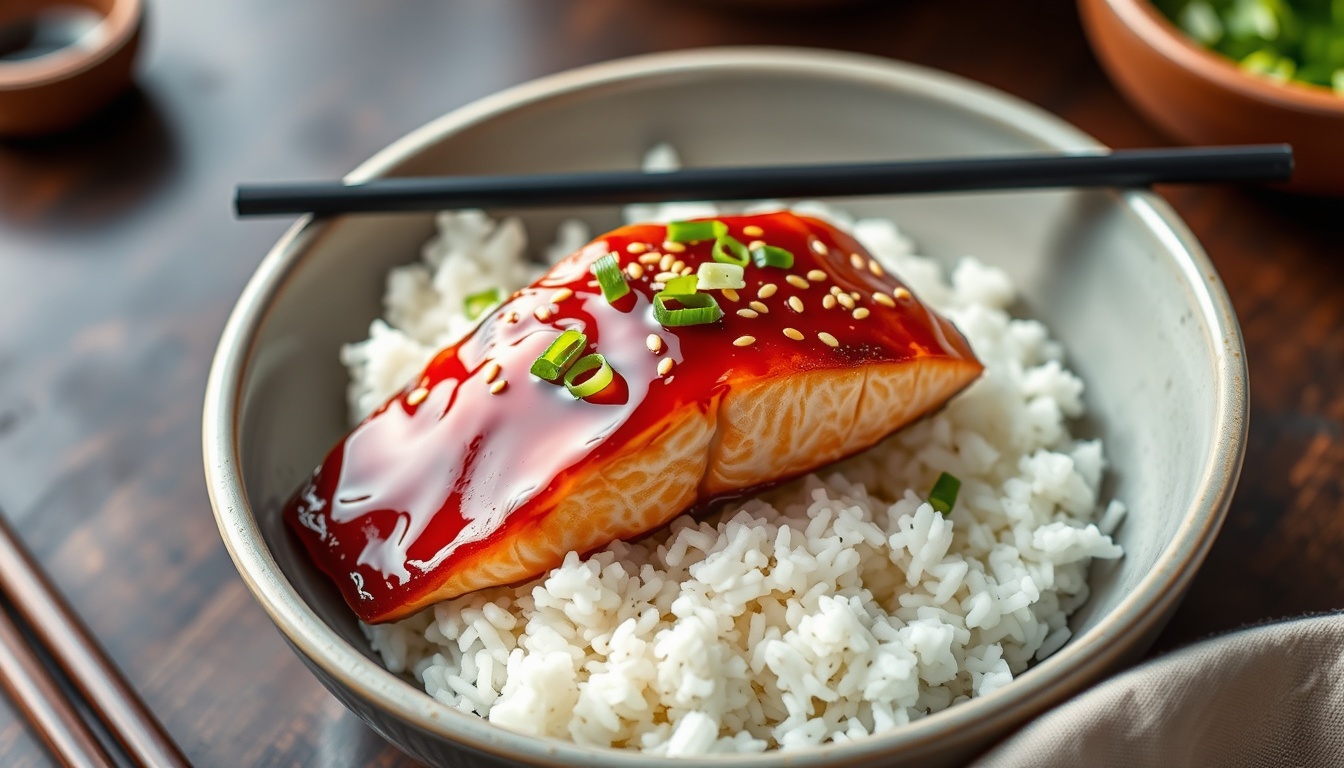
Traditional teriyaki sauce uses mirin (rice wine) and sugar for sweetness. Replacing the sugar with raw honey produces a noticeably better result for two reasons.
First, honey caramelizes at a lower temperature than granulated sugar. The natural fructose in honey begins browning around 230°F versus 320°F for sucrose. This means the glaze develops that coveted sticky, lacquered finish without overcooking the salmon — a critical advantage since overcooked salmon goes from silky to chalky in a narrow temperature window.
Second, honey adds flavor complexity that sugar simply cannot. Wildflower honey ($13-24) or clover honey ($9-15) contributes subtle floral and caramel notes that complement the umami of soy sauce and the bite of ginger. The result tastes more layered and less one-dimensionally sweet than sugar-based teriyaki.
Choosing Your Salmon
The type of salmon matters more than most recipes acknowledge.
- King (Chinook) salmon — the richest, fattiest, most flavorful variety with large, buttery flakes. The high fat content (13-22g per fillet) makes it extremely forgiving — nearly impossible to overcook into dryness. Premium price but worth it for a special dinner. Best for: pan-searing and grilling
- Sockeye salmon — deep red color, firm texture, and pronounced flavor. Leaner than King (8-12g fat per fillet) with a more assertive, almost gamey taste that stands up well to bold teriyaki glaze. Best for: oven baking and broiling
- Atlantic salmon (farmed) — the most widely available and affordable option. Mild flavor, moderate fat content, and consistent quality year-round. The mildness is actually an advantage here since it lets the teriyaki glaze be the star. Best for: any cooking method
- Coho salmon — medium fat, delicate flavor, and a beautiful orange color. Falls between Sockeye and Atlantic in both price and richness. Excellent for those who find Sockeye too strong but want more flavor than Atlantic. Best for: oven baking
- Wild vs farmed — both work. Wild salmon has a more complex, mineral flavor and firmer texture. Farmed salmon is fattier, milder, and more consistent. Use what is available, fresh, and within your budget
Pro Tip
Always check for pin bones by running your finger along the center line of each fillet. Pull any you find with clean tweezers or needle-nose pliers, gripping the bone and pulling in the direction it points.
Get the Honey Buyer's Cheat Sheet (free PDF)
16 varieties on one page — color, flavor, best use and what a fair price looks like — from the 304 honeys we track.
4 Cooking Methods
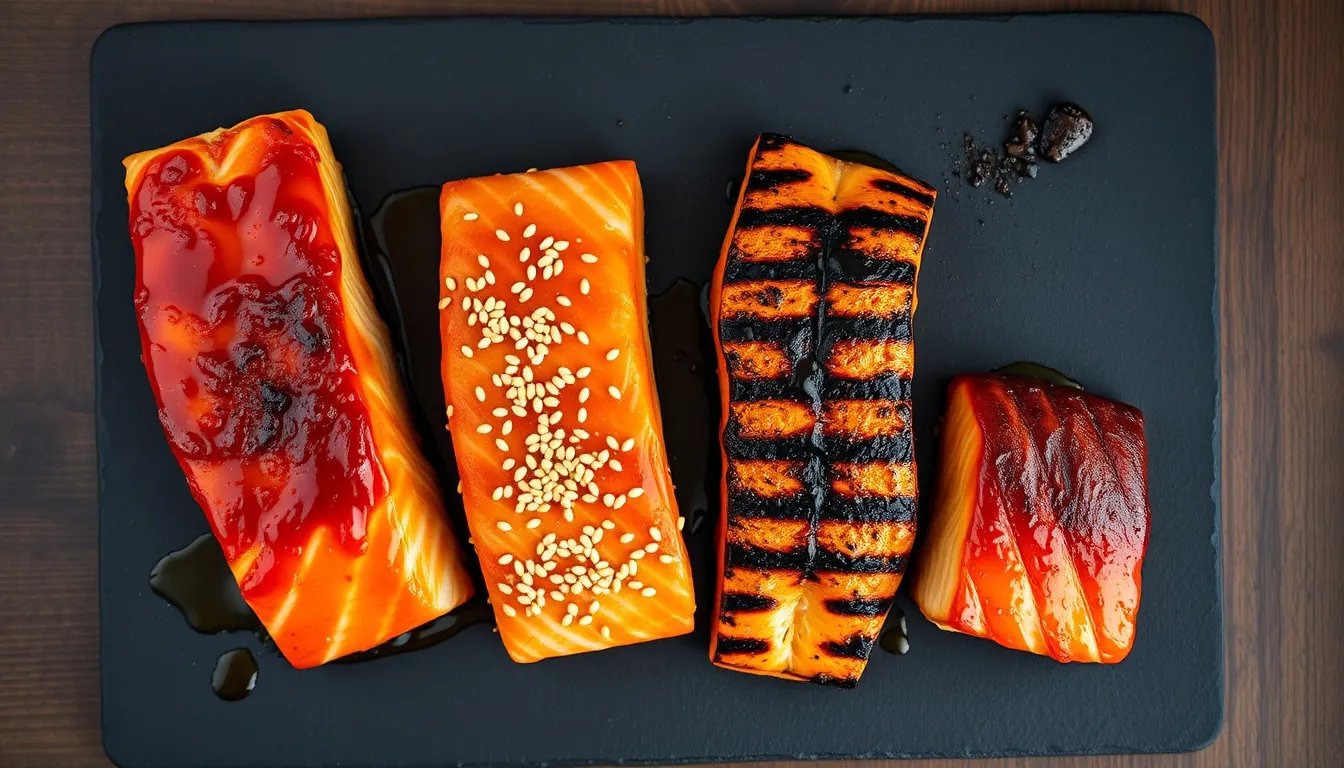
The teriyaki glaze works with any cooking method. Choose based on what equipment you have and the texture you want.
- Oven (400°F, 12-15 min) — the most reliable and hands-off method. Line a sheet pan with parchment or foil for easy cleanup. Brush with glaze before baking and again halfway through. The even, ambient heat cooks the salmon gently and lets the glaze set into a sticky lacquer. Best for: weeknight ease and consistent results
- Pan-sear (medium-high, 3-4 min per side) — produces the best crust and most dramatic caramelization. Start skin-side down in a hot skillet with a drizzle of oil, cook until the skin is crispy (3-4 minutes without moving), flip, brush the top with glaze, and cook 3-4 more minutes. Add remaining glaze to the pan in the last minute to create a syrupy sauce. Best for: crispy skin and restaurant-quality presentation
- Grill (medium-high, 4-5 min per side) — adds smoky char that pairs remarkably well with sweet teriyaki. Oil the grill grates well to prevent sticking. Place skin-side down first and resist the urge to move it for 4-5 minutes. Flip once and brush with glaze immediately. Best for: summer cooking and smoky flavor
- Air fryer (390°F, 8-10 min) — fast and uses no added oil. Place fillets in a single layer, brush with glaze, and cook for 8-10 minutes. Brush with additional glaze at the 5-minute mark. The circulating hot air creates a caramelized exterior similar to broiling. Best for: speed and ease when cooking 1-2 fillets
Getting the Glaze Right
The glaze is what separates a great honey teriyaki salmon from a forgettable one. A few details make all the difference.
The cornstarch slurry is essential — without it, the glaze stays too thin and runs off the salmon instead of clinging as a sticky coat. Mix the cornstarch with cold water before adding to the simmering sauce. Adding dry cornstarch directly to hot liquid creates lumps that will not dissolve.
Build the glaze in layers rather than applying it all at once. Brush half the glaze before cooking, then add more halfway through. Each layer sets and caramelizes, building a thicker, more complex lacquer. The first coat seasons the fish while the second coat creates the glossy finish.
If you want extra caramelization, switch to broil for the final 1-2 minutes of oven cooking. Watch carefully — the honey sugars go from perfectly caramelized to burnt in under a minute. Keep the oven door slightly ajar and do not walk away.
Best Honey Varieties for Teriyaki
Since honey is one of the three main flavor pillars in this sauce (along with soy sauce and ginger), the variety you choose affects the final result.
- Wildflower honey ($13-24) — complex, multi-floral sweetness that adds depth without competing with the soy and ginger. The best all-purpose choice
- Clover honey ($9-15) — mild and clean, letting the soy sauce and ginger lead. Good if you want a more traditional teriyaki flavor profile
- Orange blossom honey ($12-24) — adds subtle citrus notes that brighten the sauce and complement the salmon beautifully. An unexpectedly great pairing
- Buckwheat honey ($9-23) — dark, malty, almost molasses-like. Creates a deeper, more intensely flavored teriyaki that works best with bold-flavored salmon like Sockeye. Not for everyone, but distinctive
- Acacia honey ($9-16) — delicate, neutral sweetness for a lighter glaze that lets the soy-ginger combination shine. Ideal for those watching blood sugar
- Avoid manuka honey in this recipe — its earthy, slightly bitter notes clash with teriyaki flavors, and its distinctive character fades with cooking. Save manuka for uses where it is eaten raw
What to Serve with Honey Teriyaki Salmon
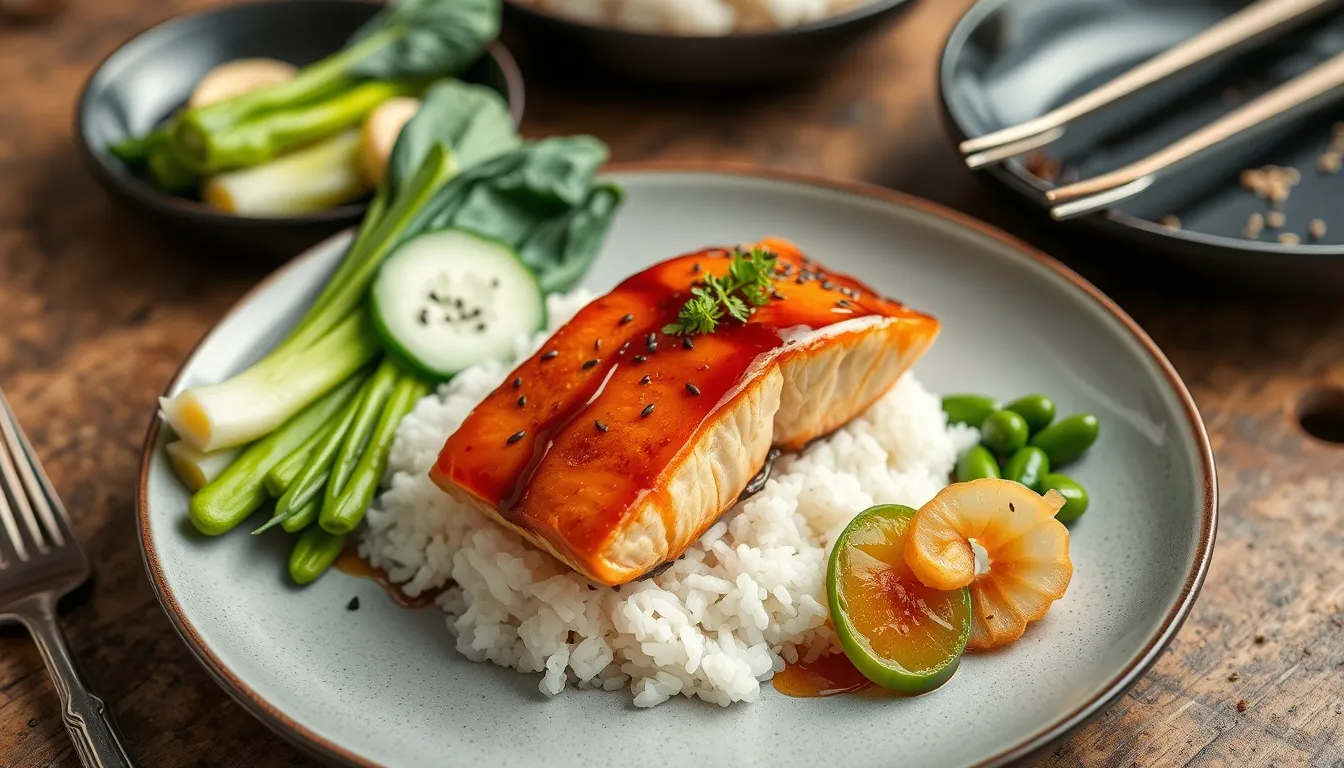
The sweet-savory glaze pairs well with sides that provide contrast in texture and flavor.
- Steamed jasmine or short-grain rice — the classic pairing. The plain, starchy rice absorbs the teriyaki glaze and provides a neutral base. Short-grain rice has a stickier texture that clings to the salmon
- Stir-fried vegetables — broccoli, snap peas, bell peppers, and bok choy all work. Quick stir-fry in sesame oil with a splash of soy sauce. The crisp vegetables contrast the soft, flaky salmon
- Steamed edamame — simple, protein-rich, and takes 5 minutes. Sprinkle with flaky sea salt. The clean, vegetal flavor cleanses the palate between bites of rich glazed salmon
- Honey roasted vegetables — roasted sweet potatoes, carrots, or Brussels sprouts with a light honey glaze create a cohesive honey-themed meal. The roasted sweetness echoes the teriyaki glaze
- Asian cucumber salad — thinly sliced cucumber with rice vinegar, sesame oil, a touch of honey, and red pepper flakes. The cold, crisp, acidic salad cuts through the richness of the salmon. Ready in 5 minutes while the salmon bakes
Meal Prep and Storage
Honey teriyaki salmon is one of the best proteins for weekly meal prep because it reheats better than most cooked fish.
Cooked salmon keeps for 3-4 days refrigerated in an airtight container. Store the extra teriyaki glaze separately in a small jar. When reheating, drizzle fresh glaze over the salmon before warming — this refreshes the sticky coating that dries out during storage.
Reheat in the oven at 275°F for 8-10 minutes rather than microwaving. Low-temperature reheating prevents the fish from drying out and gives the fresh glaze a chance to warm through. Alternatively, eat it cold over a salad — cold teriyaki salmon flakes beautifully and the glaze acts as a built-in dressing.
The raw teriyaki glaze (before cooking with salmon) keeps refrigerated for up to 2 weeks. Make a double batch on Sunday, use half for salmon, and save the rest for chicken, tofu, or vegetables later in the week.