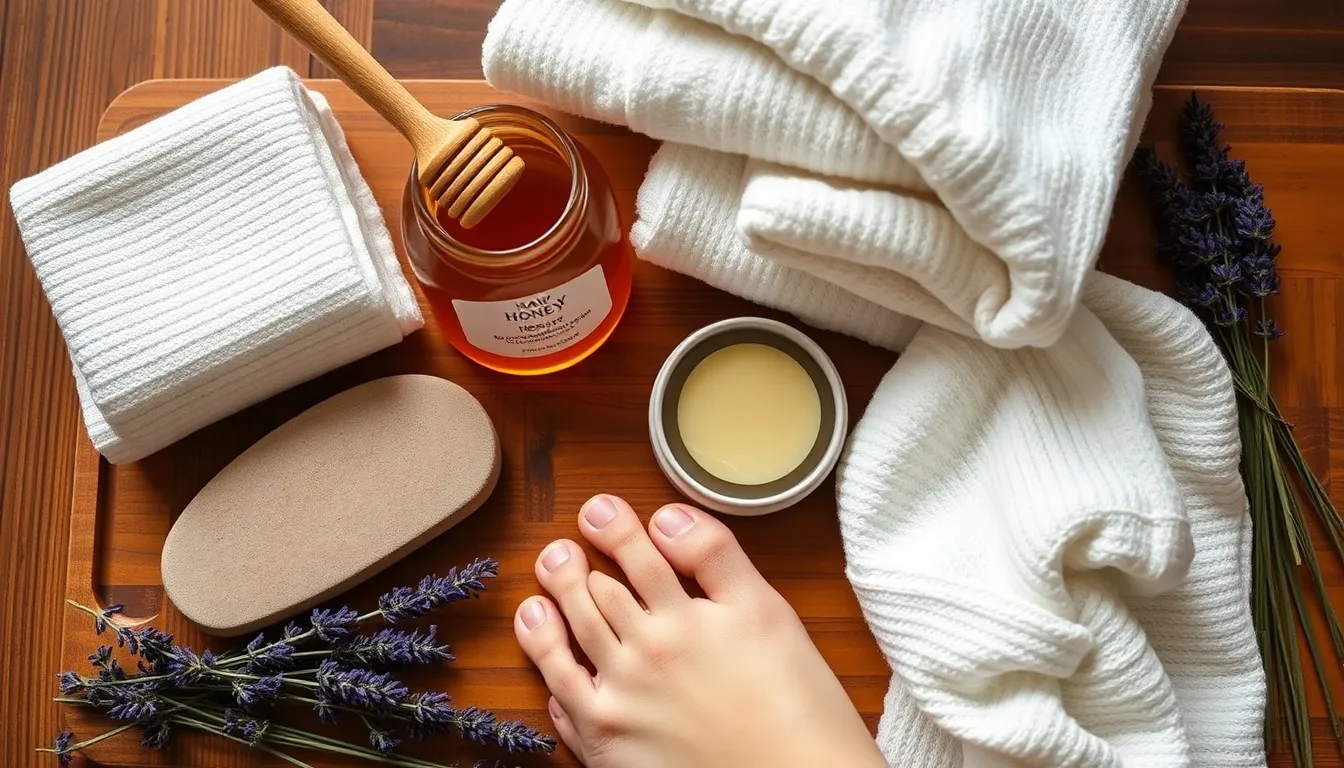
Why Heels Crack: Understanding the Problem
Cracked heels (heel fissures) are one of the most common foot complaints, affecting an estimated 20% of adults worldwide according to the Institute for Preventive Foot Health. The condition ranges from cosmetic dry skin to deep, painful fissures that bleed and become infected — and the underlying causes determine which treatments actually work.
The skin on your heels is uniquely vulnerable. It's the thickest skin on the body (up to 4mm vs 0.5mm on the face), it lacks oil glands entirely, and it bears 25% of your body weight with every step. When the stratum corneum (outer skin layer) loses moisture, it becomes rigid and inflexible. Normal walking then creates lateral expansion forces that literally split this inflexible tissue apart — like bending a dry rubber band until it snaps.
Xerosis (pathological skin dryness) is the primary driver. Contributing factors include biomechanical stress from prolonged standing or obesity, open-backed shoes that allow the heel fat pad to spread laterally, low humidity environments, hot showers that strip natural lipids, and medical conditions including diabetes, thyroid disorders, and eczema. Addressing cracked heels effectively means restoring moisture, repairing the skin barrier, and in some cases treating secondary infection in the fissures.
What Honey Does for Cracked Skin: The Evidence
Honey is not just a folk remedy for damaged skin — it has a substantial evidence base. Its properties align remarkably well with the three things cracked heels need: hydration, barrier repair, and antimicrobial protection.
As a natural humectant, honey is roughly 80% sugars (fructose and glucose) that attract and bind water molecules from the environment into the skin. A 2012 study in the Journal of Cosmetic Dermatology confirmed that topical honey measurably increases skin hydration within 30 minutes. For cracked heels — skin that has fundamentally lost its ability to retain moisture — this humectant action is the critical first step.
Honey's wound-healing properties are where the evidence is strongest. A 2015 Cochrane systematic review — the gold standard of medical evidence — analyzed 26 randomized controlled trials involving 3,011 participants and concluded that honey heals partial-thickness burns faster than conventional dressings. While cracked heels are not burns, both conditions involve damaged tissue that needs moisture, infection control, and a favorable healing environment. Honey provides all three.
The 2003 Complementary Therapies in Medicine study is particularly relevant. Researchers applied a mixture of honey, beeswax, and olive oil to patients with dermatitis and dry, cracked skin conditions. The result: 80% of participants showed significant improvement. This honey-beeswax-olive oil formulation addresses cracked heels through a dual mechanism — honey draws moisture in while beeswax and olive oil create an occlusive seal that prevents it from escaping.
Honey also provides natural antibacterial activity through multiple mechanisms: hydrogen peroxide generation via glucose oxidase, osmotic stress from high sugar concentration, and (in manuka honey) methylglyoxal. This matters for cracked heels because deep fissures are entry points for bacteria, and secondary infection is the main reason cracked heels become a medical problem rather than a cosmetic one.
Get the Honey Buyer's Cheat Sheet (free PDF)
16 varieties on one page — color, flavor, best use and what a fair price looks like — from the 268 honeys we track.
5 DIY Honey Foot Treatments
These five treatments target cracked heels at different severity levels. Start with the foot soak for mild dryness and progress to overnight treatments for deeper fissures. All use honey's humectant and healing properties in combination with complementary ingredients.
- Honey foot soak (mild dryness) — Fill a basin with warm (not hot) water and dissolve 3-4 tablespoons of raw honey plus 1 cup of whole milk. Soak feet for 20 minutes. The warm water softens the thickened stratum corneum, honey provides humectant hydration, and milk's lactic acid gently exfoliates dead cells. After soaking, pat feet dry (don't rub) and immediately apply a thick moisturizer to seal in the hydration. Use 2-3 times per week. Avoid hot water — it strips natural lipids and worsens dryness.
- Honey and coconut oil heel mask (moderate dryness) — Mix 2 tablespoons raw honey with 2 tablespoons virgin coconut oil, slightly warmed to liquid. Apply a thick layer to heels and any cracked areas. Wrap feet in plastic wrap or slip into plastic bags, then cover with warm socks. Leave for 30-45 minutes. Coconut oil's lauric acid and medium-chain triglycerides create an occlusive barrier that locks honey's moisture in place, while providing their own antimicrobial and anti-inflammatory effects. Use 2-3 times per week.
- Honey and olive oil overnight treatment (moderate to severe cracking) — Combine 2 tablespoons raw honey, 2 tablespoons extra-virgin olive oil, and 1 teaspoon melted beeswax. Warm gently until blended. Apply generously to clean, slightly damp heels before bed. Cover with cotton socks and leave overnight. This mirrors the formulation from the 2003 CTM study that showed 80% improvement. The 6-8 hour contact time allows deep penetration and sustained hydration. The olive oil contributes oleic acid and squalene for barrier repair.
- Honey and oatmeal foot scrub (dry with callus buildup) — Mix 2 tablespoons raw honey with 3 tablespoons coarsely ground oats and 1 tablespoon olive oil. After a brief warm water soak (5 minutes to soften skin), gently massage the scrub onto heels in circular motions for 2-3 minutes. The oat granules physically remove dead skin while oatmeal's beta-glucans form a moisture-retaining film and avenanthramides reduce itching and irritation. Rinse and moisturize immediately. Use once weekly — over-scrubbing triggers defensive thickening.
- Honey and banana foot pack (dry and cracked with skin damage) — Mash one ripe banana with 2 tablespoons raw honey and 1 tablespoon coconut oil. Apply the paste thickly to heels, wrap with plastic wrap, and cover with socks for 30 minutes. Bananas provide potassium (which regulates skin hydration at the cellular level), vitamins A, B6, and C for skin repair, and natural starches that soothe irritated tissue. This is the most nourishing of the five treatments and works well for heels that are both cracked and inflamed.
Pro Tip
For best results, use these treatments after a shower or bath when the skin is already softened and slightly damp. Humectants like honey work best when there's available water to draw into the skin. Applying honey to completely dry, thick heel skin in a dry room reduces its effectiveness significantly.
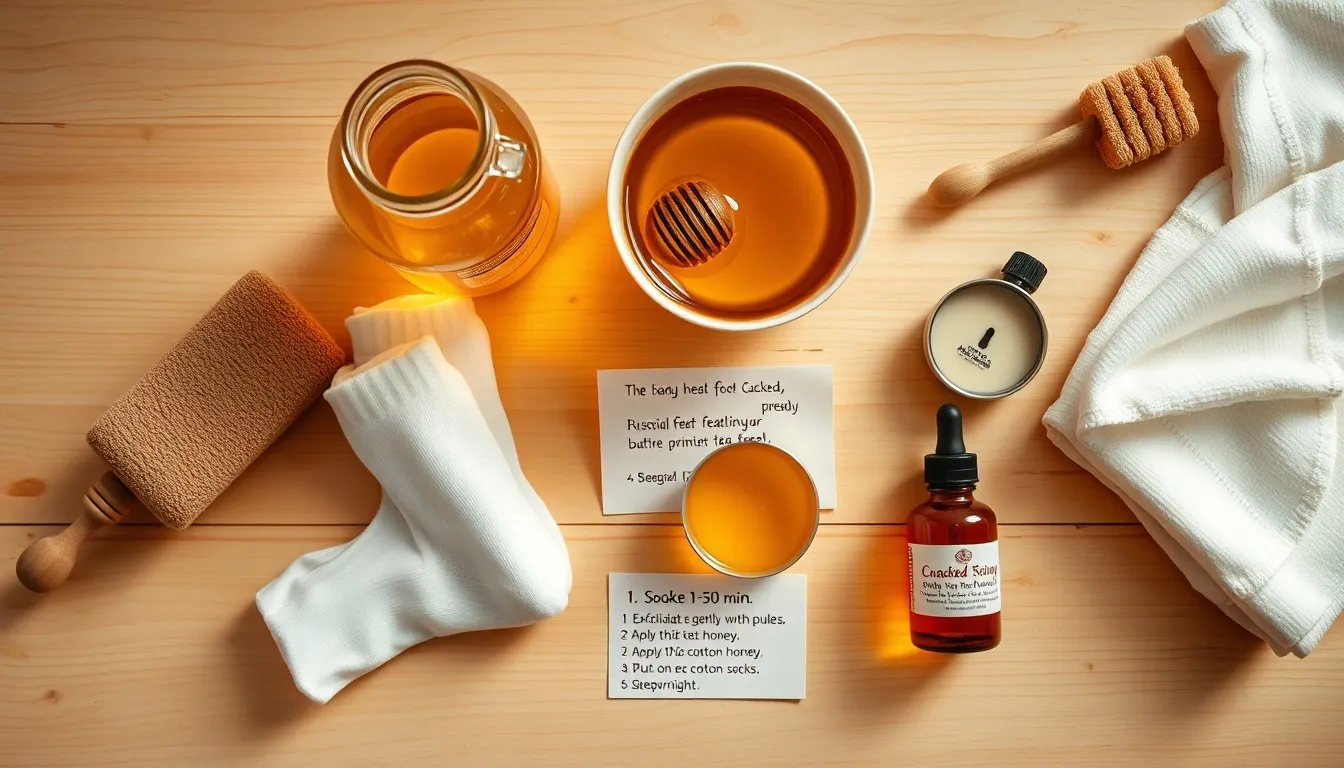
Best Honey Types for Feet
Not all honeys are equal for foot care. The right choice depends on your specific heel condition.
- New Zealand Manuka honey for cracked or infected heels — Authentic UMF-certified varieties provide methylglyoxal (MGO) content that remains stable during extended skin contact, offering superior therapeutic advantages over hydrogen peroxide-based antibacterial mechanisms that weaken in tissue environments. For heels with deep fissures that are at risk of or already showing signs of infection (redness, warmth, swelling), New Zealand Manuka honey is the best choice with its coastal region terroir ensuring optimal MGO production. Look for UMF 10+ for general cracked heels, UMF 15+ for fissures with signs of infection. Medical-grade manuka is sterilized and specifically designed for open wounds.
- New York buckwheat honey for antioxidant protection — Exceptional ORAC values (16,000+ μmol TE/100g) from glacial till soil mineral complexity create superior anti-inflammatory support for environmental damage repair compared to standard buckwheat varieties from less mineral-rich soils. If your cracked heels are worsened by environmental damage (sun exposure on sandal-wearing feet, prolonged standing on hot surfaces), New York buckwheat honey's concentrated polyphenol content helps neutralize oxidative stress that degrades the skin barrier. Its strong flavor is irrelevant for topical use.
- Texas wildflower honey for daily maintenance — Botanical diversity from mesquite-huajillo-bluebonnet signatures across four climate zones provides exceptional 3,000-8,000 ORAC antioxidant content plus natural prebiotic oligosaccharides that processed honey loses during filtration, creating ideal balanced properties for cracked heel maintenance. Raw wildflower honey offers a good balance of humectant sugars, moderate antibacterial activity via hydrogen peroxide, and sufficient polyphenols for general skin care. It's widely available, more affordable than manuka, and effective for mild to moderate dry heels. A practical everyday choice once your heels are in reasonable condition.
- Italian acacia honey for sensitive skin — Water-white clarity with delicate vanilla undertones plus gentle low-glycemic sweetness (GI ~32) makes it ideal for extended cracked heel healing protocols requiring minimal skin irritation during recovery. Alpine foothills terroir creates the most gentle honey variety for sensitive applications. For simple dryness without infection risk, raw clover honey is perfectly adequate as a budget alternative, though it has lower polyphenol content than darker varieties while retaining full humectant properties and enzyme activity.
Pro Tip
Always choose raw, unprocessed honey for foot treatments. Pasteurization at 70C+ destroys glucose oxidase (the enzyme that generates hydrogen peroxide for antibacterial activity) and reduces polyphenol content by 30-50%. If the honey is perfectly clear and pours like syrup, it has been ultra-processed and offers significantly less benefit.

Honey vs Commercial Foot Creams
Commercial foot creams use pharmaceutical-grade ingredients with more clinical data than honey for heel fissures specifically. Here is an honest comparison.
Urea-based creams (10-40%) — Urea is the gold standard for cracked heels in dermatology. At 10-20% it is a potent humectant and keratolytic (softens thick skin); at 25-40% it actively breaks down excess callus. Multiple RCTs show significant improvement in heel fissures within 2-4 weeks. Urea is more effective than honey at penetrating and softening extremely thick, calloused heel skin. However, it can sting on open fissures, and it provides no antibacterial protection.
Salicylic acid creams (2-6%) — A beta-hydroxy acid that dissolves the keratin bonds holding dead skin cells together. More aggressive than urea for callus removal. Effective but can over-thin skin if used excessively, and is contraindicated in diabetic patients with neuropathy due to injury risk. Honey's gluconic acid provides much gentler exfoliation without these risks.
Petroleum jelly (Vaseline) — A pure occlusive that prevents transepidermal water loss. Inexpensive and effective for mild dryness when applied to damp skin under socks. However, it provides zero humectant, antibacterial, or anti-inflammatory benefit. Honey draws moisture in; petroleum jelly merely locks existing moisture in. For best results, combine both: apply honey treatment first, then seal with a thin layer of petroleum jelly.
The honest verdict — For severe, long-standing cracked heels with thick callus buildup, a urea cream (20-25%) is likely more effective than honey alone because of its superior keratolytic action on extremely thick skin. For mild to moderate dryness, early fissures, or maintenance after a urea treatment brings calluses under control, honey's multi-mechanism approach (humectant + antibacterial + anti-inflammatory + wound healing) provides advantages that no single commercial ingredient matches. Many podiatrists recommend a combined approach: urea cream for callus reduction, honey treatments for healing and ongoing moisture.
How to Build a Cracked Heel Recovery Routine
Random, occasional treatment won't resolve cracked heels. A consistent daily routine produces the best results. Here is a practical 4-week protocol combining honey treatments with basic foot hygiene.
Week 1-2 (intensive repair) — Every evening, soak feet in warm honey-milk water for 15 minutes. Gently file thick callus edges (never the fissures themselves) with a foot file on dry skin before the soak. After soaking, apply the honey-olive oil-beeswax overnight treatment and sleep in cotton socks. This addresses the immediate moisture deficit and begins softening the rigid calloused skin.
Week 3-4 (continued healing) — Reduce to the honey-coconut oil heel mask 3 times per week. On other evenings, apply a simple layer of raw honey to damp heels for 20 minutes after showering, then rinse and moisturize. Use the honey-oatmeal scrub once weekly to manage callus regrowth.
Ongoing maintenance — Once heels are smooth and fissure-free, maintain with a honey foot soak 1-2 times per week and daily moisturizer application immediately after bathing. The moment you notice dryness returning, resume the intensive routine before fissures can develop.
Daily non-negotiables throughout — Moisturize within 60 seconds of every shower or bath. Avoid hot water (use warm). Wear closed-back shoes or supportive sandals. Stay hydrated. These basics matter as much as any honey treatment.
When to See a Podiatrist
Honey is appropriate for mild to moderate cracked heels, but some situations require professional medical attention. Do not rely solely on home remedies if you notice any of the following.
- Deep fissures that bleed — Bleeding indicates the crack has penetrated through the epidermis into the dermis, creating a wound that may need medical-grade treatment or closure.
- Signs of infection — Redness, warmth, swelling, pus, or red streaks spreading from the heel. Infected heel fissures can lead to cellulitis, a serious skin infection requiring antibiotics.
- Diabetes or peripheral neuropathy — Diabetic patients have impaired wound healing and reduced sensation, meaning cracks can worsen without pain signals. Diabetic foot complications are a leading cause of amputation. Always consult your podiatrist before attempting home treatments.
- No improvement after 2-3 weeks of consistent treatment — If home remedies including honey aren't producing visible improvement, the underlying cause may require diagnosis (thyroid disorder, fungal infection, psoriasis, or biomechanical issues).
- Yellow, thickened, or crumbly skin around the heel — This may indicate a fungal infection (tinea pedis) rather than simple xerosis. Fungal infections require antifungal treatment, and occlusive honey treatments could potentially worsen fungal conditions by creating a warm, moist environment.
- Heel pain beyond skin discomfort — Pain deep in the heel may indicate plantar fasciitis or calcaneal fracture rather than a skin problem.
Pro Tip
If you have diabetes, always consult your podiatrist or endocrinologist before using honey or any home remedy on your feet. While manuka honey is used in professional diabetic wound care (Medihoney is FDA-cleared as a medical device), self-treatment of diabetic foot issues carries serious risks.
Safety and Practical Tips
Honey is generally very safe for topical use on feet, but some practical considerations improve results and prevent problems.
Patch test if you have allergies — Honey allergy is rare but possible, especially in people with pollen or bee venom allergies. Apply a small amount to your inner wrist, cover with a bandage, and wait 24 hours. Any redness, itching, or swelling means you should avoid topical honey use.
Expect stinging on open fissures — Honey has a pH of 3.2-4.5, and applying it to raw, cracked skin will likely sting briefly. This is normal and usually subsides within a few minutes. If pain is severe, rinse immediately and use medical-grade manuka honey instead, which is formulated to minimize irritation on broken skin.
Use cotton socks, not synthetic — Cotton breathes and absorbs excess moisture. Synthetic socks trap heat and can create an overly moist environment that promotes maceration (skin softening to the point of breakdown) and fungal growth.
Don't file wet skin — File calluses gently on dry skin before soaking, never after. Wet, softened skin tears easily, and aggressive filing on soaked skin can cause damage that worsens the problem.
Manage messiness — Honey foot treatments are sticky. Lay down an old towel, use plastic wrap under socks to protect bedding during overnight treatments, and rinse feet with warm water before walking on clean floors. A small basin next to the bed makes morning cleanup easier.
Store leftover mixtures properly — Pre-mixed honey-oil blends can be stored in a sealed glass jar at room temperature for up to 2 weeks. Mixtures containing banana, milk, or other perishables should be made fresh each time.
Combine with anti-inflammatory honey consumption — Drinking honey water or adding raw honey to tea supports skin health from the inside via systemic anti-inflammatory and antioxidant effects. Topical and internal use together produce better results than either alone.
The Bottom Line
Honey shows real promise for cracked heels — not a miracle cure, but a multi-mechanism natural remedy whose humectant hydration, antibacterial protection, anti-inflammatory activity, and wound-healing properties are well documented. The 2015 Cochrane review (3,011 participants) supports honey's general wound-healing capabilities, and the 2003 CTM study found that a honey-beeswax-olive oil formulation improved dry, cracked skin conditions in 80% of users.
For mild to moderate cracked heels, consistent use of honey-based foot treatments — particularly the overnight honey-olive oil-beeswax treatment — can produce meaningful improvement within 2-4 weeks. For severe fissures, thick calluses, or any diabetic foot concerns, see a podiatrist and consider honey as a complement to, not a replacement for, professional care.
The best approach is often combined: use a urea cream to reduce thick callus, honey treatments to heal fissures and restore moisture, and daily moisturizer application to maintain results. Your heels took months or years to crack — give them at least 4 weeks of consistent care before judging whether a treatment is working.