Why Honey Works for Dry Skin: The Science
Dry skin (xerosis) affects an estimated 29% of the general population and up to 75% of people over age 64, according to a 2019 review in the Journal of Clinical Medicine. While there's no shortage of commercial moisturizers, honey offers a multi-mechanism approach to dry skin that goes beyond simple surface hydration — and the dermatological evidence is stronger than you might expect.
Unlike most commercial humectants that address only water retention, honey simultaneously draws moisture into the skin, repairs the damaged skin barrier that lets moisture escape, reduces the inflammation that both causes and results from dryness, and provides antioxidant protection against the environmental damage that worsens skin dehydration.
This multi-target approach explains why a 2003 study in Complementary Therapies in Medicine found an 80% improvement rate when a honey-beeswax-olive oil mixture was applied to patients with eczema and psoriasis — conditions where dryness is a central feature. Honey doesn't just mask dryness; it helps the skin rebuild its ability to retain moisture on its own.
5 Mechanisms Behind Honey's Moisturizing Power
Understanding how honey hydrates skin helps you use it more effectively. Here are the five mechanisms, each supported by research.
- Natural humectant — Honey is approximately 80% sugar (fructose and glucose), and these sugar molecules attract and bind water from the environment into the skin. A 2012 study in the Journal of Cosmetic Dermatology confirmed that honey applied topically increases skin hydration levels measurably within 30 minutes and sustains hydration for hours. This humectant effect is comparable to glycerin, one of the most effective commercial moisturizing ingredients.
- Skin barrier repair — Dry skin is fundamentally a barrier dysfunction: the stratum corneum (outer skin layer) can't retain water because its lipid-protein matrix is disrupted. Honey's natural fatty acids, including oleic acid and palmitic acid, help restore this lipid barrier. A 2020 study in the Journal of Drugs in Dermatology found that honey-based formulations improved transepidermal water loss (TEWL) — the gold-standard measurement of barrier function.
- Anti-inflammatory relief — Dry skin triggers and is worsened by inflammation: the compromised barrier lets irritants penetrate, activating inflammatory pathways that further damage the barrier in a vicious cycle. Honey's polyphenols break this cycle by inhibiting NF-κB, the master inflammatory switch, and suppressing pro-inflammatory cytokines (TNF-α, IL-1β, IL-6) that drive barrier breakdown.
- Gentle exfoliation — Honey naturally contains gluconic acid, an alpha-hydroxy acid (AHA) that gently dissolves dead skin cells on the surface. Unlike harsher chemical exfoliants (glycolic acid, salicylic acid), gluconic acid is large-molecule and slow-penetrating, making it suitable for sensitive and dry skin types without causing the irritation and over-exfoliation that worsen dryness.
- Antioxidant protection — Environmental stressors (UV radiation, pollution, wind, dry indoor heating) generate reactive oxygen species (ROS) that damage skin proteins and lipids, accelerating moisture loss. Honey's 30+ polyphenol compounds neutralize these free radicals, protecting the existing skin barrier from oxidative degradation.
Get the Honey Buyer's Cheat Sheet (free PDF)
16 varieties on one page — color, flavor, best use and what a fair price looks like — from the 268 honeys we track.
Best Honey Types for Dry Skin
Different honeys have different concentrations of the compounds that matter for dry skin. Here's how to choose.
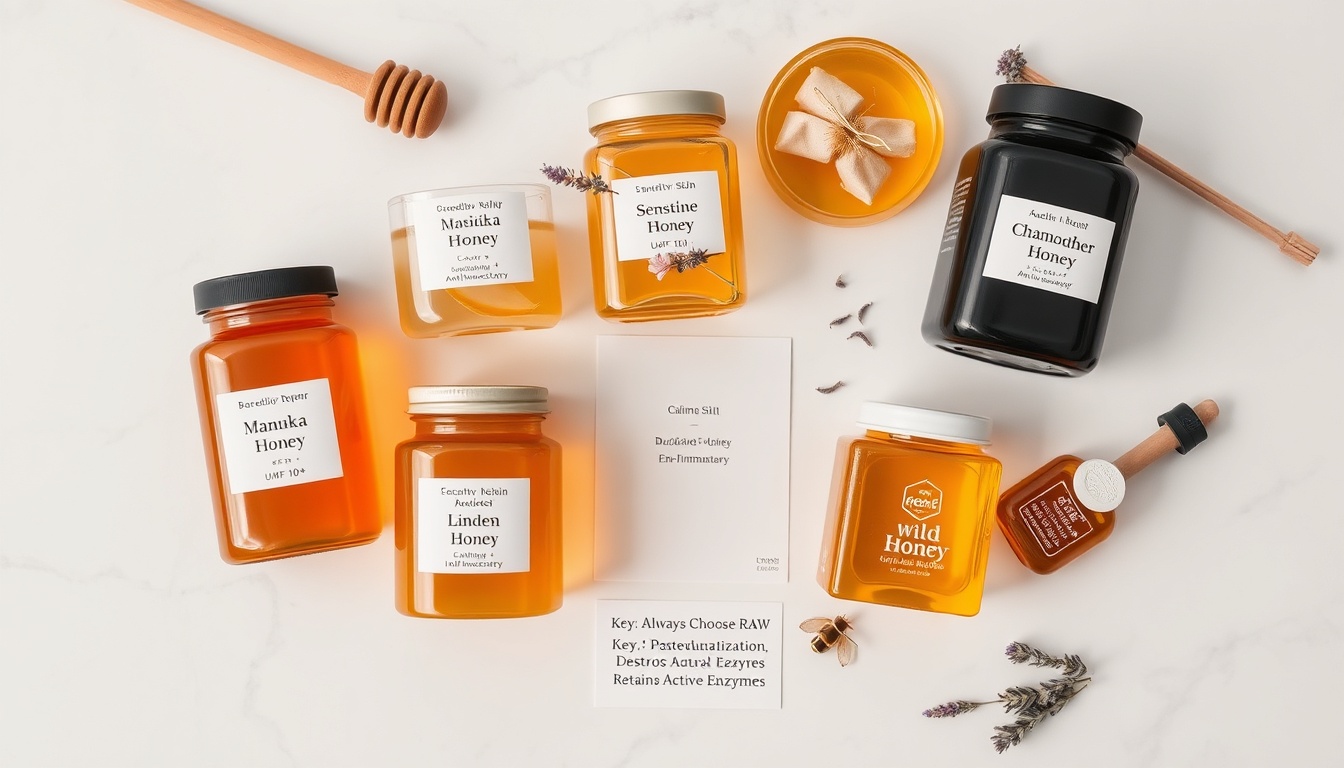
- Manuka honey ($35–60+ per jar) — The most studied honey for skin applications. Its methylglyoxal (MGO) provides potent antibacterial activity that prevents secondary infection of cracked, dry skin. UMF 10+ is recommended for skincare; UMF 15+ for very dry, cracked, or compromised skin. See our manuka benefits guide.
- Acacia honey ($12–20 per jar) — Exceptionally mild and low-allergenic, making it ideal for sensitive dry skin. Its very high fructose content (40-44%) provides strong humectant action. The light color indicates lower polyphenol content than darker honeys, but the trade-off is gentler application with less risk of irritation. See our acacia benefits guide.
- Linden honey ($15–25 per jar) — Contains farnesol, a soothing compound that modulates GABA-A receptors and has anti-inflammatory properties. Particularly good for dry skin that's also irritated or red. The calming properties make it suitable for facial application.
- Buckwheat honey ($15–25 per jar) — Dark honeys have 3-9x higher antioxidant content (ORAC 16,000+) than light varieties like clover. Best for dry skin caused or worsened by environmental damage (sun exposure, pollution, wind). The stronger flavor and color don't matter for topical use. See our buckwheat benefits guide.
- Lavender honey ($15–25 per jar) — Contains retained linalool compounds from lavender flowers that have calming, anti-inflammatory effects. The combination of humectant + anti-inflammatory + aromatherapy makes it particularly pleasant for face masks.
- Any raw, unprocessed honey — Wildflower honey ($10–18) and clover honey ($8–15) are budget-friendly raw options that retain active enzymes (glucose oxidase, catalase), full polyphenol profiles, and natural pollen that processed honey loses. Always choose raw over pasteurized for skincare use. See our raw honey benefits guide.
Pro Tip
Avoid processed, heated, or "pure" (a marketing term that doesn't mean raw) honey for skincare. Pasteurization at 70°C+ destroys glucose oxidase and reduces polyphenol content by 30-50%. If the honey is perfectly clear and never crystallizes, it's been ultra-processed and has reduced skincare benefit.
7 Honey Remedies for Dry Skin
These evidence-informed remedies target different dry skin scenarios. Each uses honey's moisturizing properties in combination with complementary ingredients.
- Classic honey face mask for daily moisture — Many people apply raw honey directly to clean, slightly damp skin, leave it on for a while, then rinse with lukewarm water. The damp skin provides water molecules for honey's humectant action to trap. This simple honey mask is surprisingly effective because honey in its pure form delivers all five mechanisms simultaneously.
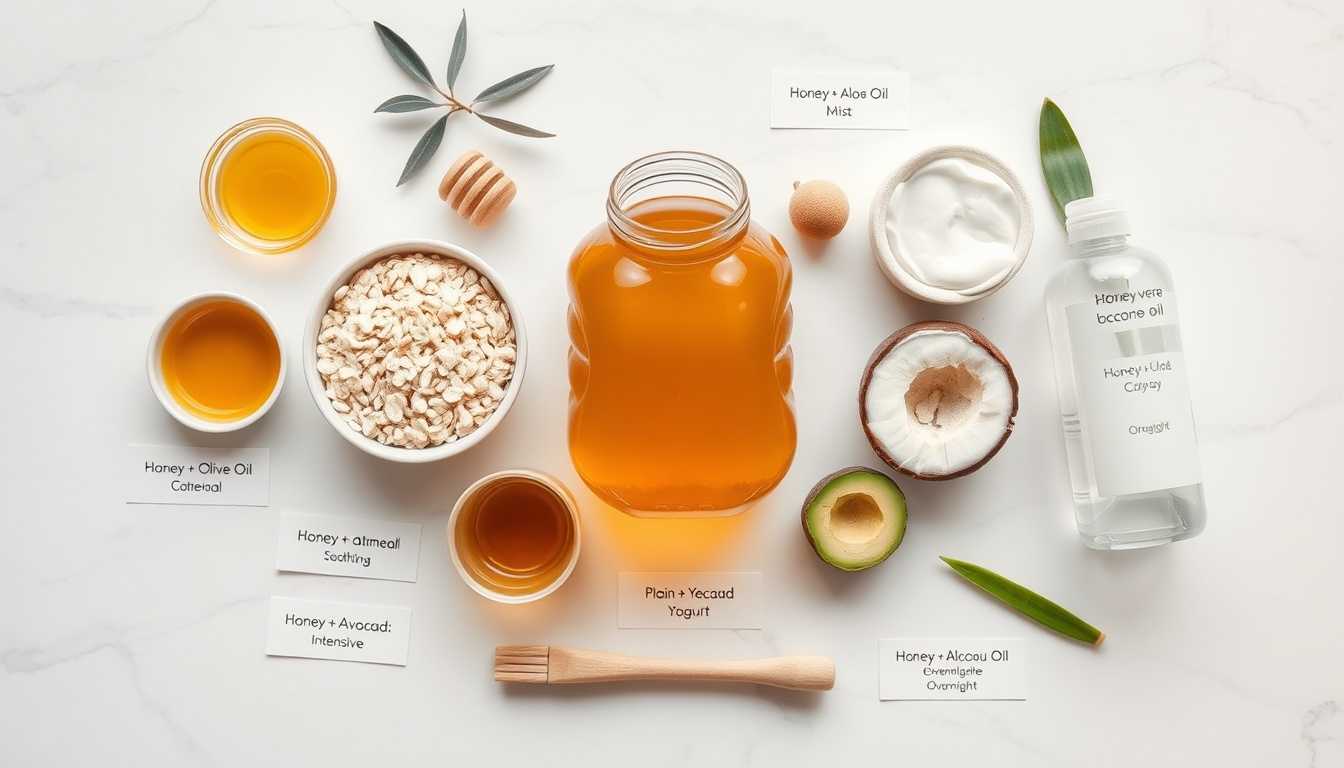
- Honey and olive oil deep moisture mask — Mix 1 tablespoon raw honey with 1 tablespoon extra-virgin olive oil. The olive oil contributes oleic acid and squalene, which integrate into the skin's lipid barrier. Apply to face or body, leave 20 minutes, rinse. Best for very dry or mature skin. The 2003 Complementary Therapies in Medicine study used a similar honey-olive oil combination.
- Honey and oatmeal soothing treatment — Blend 2 tablespoons raw honey with 2 tablespoons colloidal oatmeal (finely ground) and 1 tablespoon warm water. Oatmeal's beta-glucans are FDA-recognized skin protectants that form a moisture-retaining film, and avenanthramides reduce itching. Apply to dry, irritated skin for 15-20 minutes. Especially good for winter-dry or eczema-prone skin.
- Honey and avocado intensive repair — Mash half a ripe avocado with 1 tablespoon raw honey. Avocado provides vitamins E and C, healthy fatty acids (oleic, linoleic, palmitoleic), and sterols that penetrate the stratum corneum. Apply a thick layer to the driest areas for 20 minutes. Best for severely dry patches on face, elbows, knees, or heels.
- Honey and yogurt gentle exfoliating mask — Mix 1 tablespoon raw honey with 2 tablespoons plain full-fat yogurt. Yogurt's lactic acid (another AHA) adds gentle exfoliation alongside honey's gluconic acid, while milk fat provides emollient moisture. Apply 10-15 minutes, rinse. Use once weekly to remove the dead cell buildup that makes dry skin look dull and flaky.
- Honey-coconut oil overnight body treatment — Warm 2 tablespoons coconut oil until just liquid, mix with 2 tablespoons raw honey. Apply to extremely dry areas (heels, elbows, shins, hands). Cover with cotton socks or gloves overnight. Coconut oil's lauric acid and medium-chain triglycerides create an occlusive seal that locks honey's humectant moisture in place for hours.
- Honey and aloe vera calming spray — Mix 1 tablespoon raw honey with 2 tablespoons pure aloe vera gel and 2 tablespoons distilled water. Transfer to a spray bottle. Mist on dry, tight, or windburned skin throughout the day. Aloe vera's acemannan polysaccharides complement honey's humectant action, and the spray format is practical for reapplication. Refrigerate and use within 5 days.
Honey for Dry Skin on Face vs Body
Facial and body skin have different needs, and your honey approach should adapt accordingly.
Facial skin is thinner (especially around the eyes), has more sebaceous glands, and is more exposed to environmental stressors. For dry facial skin, use lighter honey types (acacia, linden, lavender), apply thinner layers, leave masks on for shorter durations (10-15 minutes), always apply to slightly damp skin, and follow with your regular moisturizer to seal in the hydration.
Body skin is thicker and more tolerant of richer treatments. For dry body skin (common on shins, arms, hands, and feet), use any raw honey type — wildflower and clover are excellent affordable options — apply thicker layers, leave treatments on longer (20-30 minutes or overnight for feet/hands), and combine with occlusive ingredients like coconut oil or shea butter for maximum moisture retention.
For dry, cracked hands — a common issue for healthcare workers, frequent hand-washers, and cold-climate residents — apply a thick layer of honey mixed with equal parts olive oil before bed, cover with cotton gloves, and leave overnight. The extended contact time allows deep hydration and barrier repair.
For dry, cracked heels, the same overnight approach works well with cotton socks. Add a tablespoon of beeswax melted into the honey-oil mixture for an extra occlusive barrier.
Addressing the Root Causes of Dry Skin
Topical honey treatments are effective, but addressing the underlying causes of dryness produces better long-term results. Honey can help from the inside too.
Internal hydration — Consuming honey water (1 tablespoon in a glass of warm water) provides gentle hydration plus prebiotic oligosaccharides (FOS, GOS) that support gut health. Emerging gut-skin axis research shows that gut microbiome health directly influences skin barrier function and inflammation levels. Acacia honey is ideal for honey water due to its mild flavor and low glycemic index (GI ~32).
Anti-inflammatory diet — Chronic low-grade inflammation drives dry skin conditions. Daily honey consumption (1-2 tablespoons of raw honey) provides polyphenols that modulate systemic inflammation via the NF-κB pathway. A 2022 Nutrition Reviews meta-analysis of 18 RCTs found that regular honey consumption reduced inflammatory markers including CRP. Buckwheat honey delivers the highest antioxidant density (ORAC 16,000+) for maximum anti-inflammatory benefit.
Nutrient support — Honey provides trace minerals (zinc, copper, iron) that serve as cofactors for skin repair enzymes. Dark honeys like buckwheat and chestnut provide 3-5x more minerals than lighter varieties like clover. While honey alone doesn't replace a balanced diet, it contributes to the nutritional foundation for skin health.
Environmental protection — The same honey polyphenols that work topically also provide systemic antioxidant protection when consumed. This inside-out approach supports skin resilience against the environmental stressors (UV, pollution) that damage the moisture barrier.
Honey vs Common Moisturizing Ingredients
How does honey compare to the ingredients you'll find in commercial moisturizers? Here's an honest assessment.
Honey vs hyaluronic acid — Hyaluronic acid (HA) is the most potent humectant available, holding up to 1,000x its weight in water. Honey is a weaker humectant by direct comparison. However, honey provides anti-inflammatory, antibacterial, antioxidant, and barrier-repair benefits that HA doesn't. For severe dehydration, HA serum followed by a honey mask is more effective than either alone.
Honey vs ceramides — Ceramides are lipids that form the mortar between skin cells in the stratum corneum. They're the most targeted barrier-repair ingredient available. Honey supports barrier repair through different mechanisms (anti-inflammatory, fatty acid contribution) but doesn't replace ceramides directly. Dry skin with barrier dysfunction benefits from using both.
Honey vs glycerin — Glycerin is honey's closest commercial equivalent as a humectant. Both draw water into the skin. Honey provides the additional benefits of antibacterial activity, anti-inflammatory polyphenols, and gentle exfoliation that glycerin doesn't. For people who prefer natural ingredients, honey is a multi-function alternative to glycerin.
Honey vs petroleum jelly (Vaseline) — Petroleum jelly is a pure occlusive — it locks in existing moisture but doesn't add any. Honey is primarily a humectant — it draws in moisture but doesn't seal it in. The ideal approach for very dry skin: honey first (to draw in moisture), then petroleum jelly or coconut oil on top (to seal it in).
The bottom line — Honey is not a replacement for a complete skincare routine, but it's a remarkably effective natural ingredient that provides benefits no single commercial ingredient matches. Its strength is versatility: humectant + anti-inflammatory + antibacterial + antioxidant + exfoliant in one application.
Safety and Common Mistakes
Honey is generally very safe for topical use, but there are important precautions for dry skin specifically.
Patch test first — While rare, topical honey allergies are possible, especially if you have pollen or bee sting allergies. Apply a small amount to your inner wrist and wait 24 hours. If you experience redness, itching, or swelling, don't use honey on your face or body.
Don't apply to broken or cracked skin without caution — Raw honey on open cracks or fissures can sting due to its acidic pH. Medical-grade manuka honey is designed for open wounds; regular raw honey may contain environmental contaminants not suitable for deep skin breaks. For cracked, bleeding skin, stick to medical-grade products.
Don't over-exfoliate — Honey's gluconic acid is gentle, but using honey masks daily alongside other exfoliants (retinol, glycolic acid, AHAs/BHAs) can over-strip the skin barrier and worsen dryness. If you're using prescription retinoids or chemical exfoliants, limit honey masks to 1-2 times weekly.
Apply to damp skin — Humectants need available water to work. Applied to completely dry skin in a very dry environment, honey can theoretically draw moisture from deeper skin layers rather than the environment. Always apply to freshly washed, slightly damp skin for best results.
Don't skip your regular moisturizer — Honey alone doesn't provide the occlusive seal that prevents moisture evaporation. After rinsing off a honey mask, apply your regular moisturizer within 60 seconds while skin is still damp to lock in the hydration that honey drew in.
Not for infants — Don't apply honey to babies under 12 months, even topically on facial skin near the mouth, due to infant botulism risk.