Why Honey Makes Better Orange Chicken
Most orange chicken recipes — including the takeout version — use white sugar or corn syrup for sweetness. Swapping in honey transforms the sauce in three ways.
First, the fructose in honey caramelizes at a lower temperature than sucrose (230°F vs 340°F), creating a deeper, more complex sweetness with toffee-like undertones. This means the sauce develops rich caramel notes without the risk of burning that sugar-based sauces carry.
Second, honey is naturally viscous and hygroscopic — it attracts and holds moisture. This gives the sauce a thicker, glossier texture that clings to each chicken piece instead of pooling at the bottom of the bowl. No need to over-thicken with cornstarch.
Third, raw honey contains over 180 aromatic compounds that add floral, fruity, and caramel dimensions to the sauce. Combined with fresh orange zest and juice, you get a citrus flavor with real depth — not the one-note sweetness of takeout orange chicken.
The Secret to Crispy Chicken That Stays Crispy
The biggest challenge with homemade orange chicken is keeping the coating crispy after you add the sauce. Here is the technique.
- Pat the chicken completely dry — surface moisture creates steam that prevents browning. Paper towels are good; letting the pieces air-dry on a rack for 5 minutes is even better
- Use cornstarch, not flour — cornstarch creates a lighter, crispier coating that stays crunchy longer. Flour absorbs more sauce and turns soggy faster
- Double-coat: cornstarch first, then egg — the egg creates a second layer that fries into a craggy, textured surface. More surface area means more crunch
- Do not crowd the pan — chicken pieces touching each other steam instead of frying. Cook in two batches if your skillet is not large enough for a single layer
- Toss with sauce at the last second — add the crispy chicken to the thickened sauce, toss for 30 seconds, and serve immediately. The coating stays crispy for about 10 minutes after saucing
Pro Tip
For extra crunch, let the cornstarch-coated chicken rest on a wire rack for 5 minutes before the egg dip. The cornstarch absorbs surface moisture during this rest, creating an even drier base layer.
Get the Honey Buyer's Cheat Sheet (free PDF)
16 varieties on one page — color, flavor, best use and what a fair price looks like — from the 304 honeys we track.
Best Honey Varieties for Orange Chicken
The honey variety affects the final flavor profile of the sauce.
- Wildflower honey — the best all-around choice. Its multi-floral complexity complements the citrus without competing. Creates a balanced, nuanced sauce
- Clover honey — mild and neutral, letting the orange and ginger flavors dominate. Best if you want a clean citrus flavor without additional honey character
- Orange blossom honey — the natural pairing. Its subtle citrus floral notes amplify the fresh orange juice and zest, creating a sauce that tastes more intensely orange
- Acacia honey — very mild with a light, clean sweetness. Creates the most delicate sauce, good when you want citrus brightness without heavy sweetness
- Avoid strong varieties like buckwheat or manuka — their bold, earthy flavors clash with the bright citrus and ginger notes
5 Flavor Variations
The base recipe adapts easily with small tweaks.
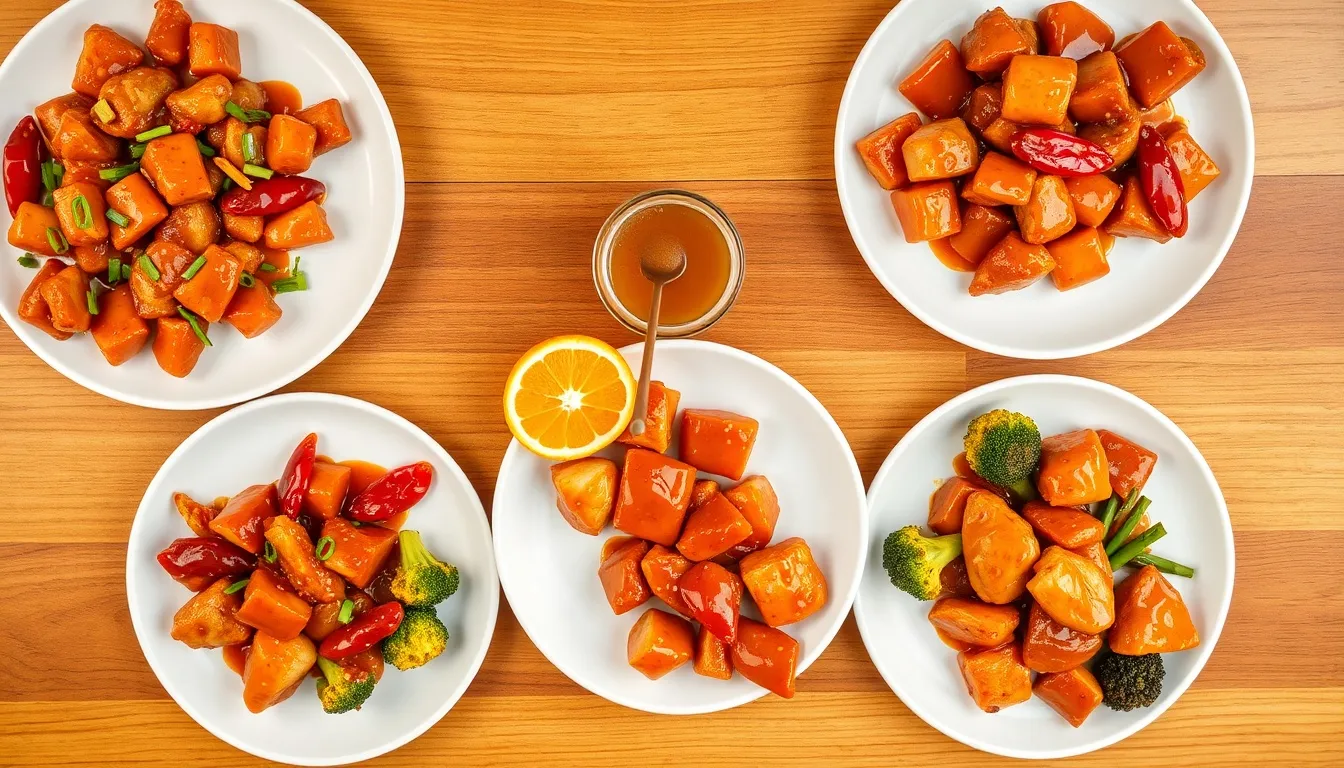
- Spicy honey orange chicken — add 1 tablespoon sriracha or sambal oelek to the sauce, plus an extra tablespoon of honey to balance the heat. Garnish with sliced red chilies
- Sesame honey orange chicken — add 2 tablespoons toasted sesame oil to the sauce and garnish with toasted sesame seeds. The nutty richness rounds out the citrus brightness
- Honey orange chicken with broccoli — blanch 2 cups broccoli florets and toss them into the sauce with the chicken. Creates a complete one-pan meal. See honey garlic broccoli for more broccoli techniques
- Honey lemon chicken — replace the orange juice and zest with lemon juice and zest for a tangier, sharper citrus sauce. Use slightly more honey (2 extra tablespoons) to offset the lemon acidity
- Air fryer honey orange chicken — coat the chicken as directed, spray with oil, and air fry at 400°F for 10-12 minutes, shaking halfway. Make the sauce on the stovetop and toss with the air-fried chicken
Serving Suggestions
Honey orange chicken is a complete meal with just one or two sides.
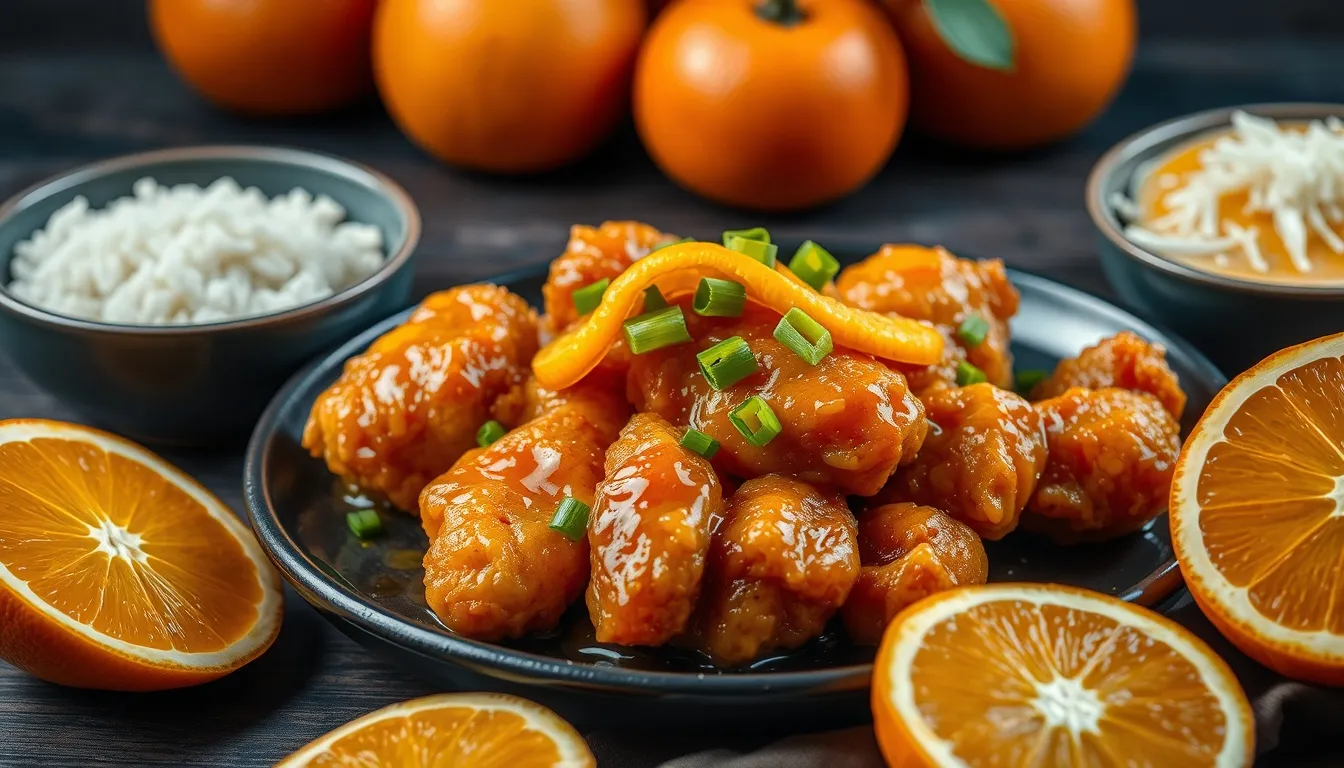
- Steamed jasmine rice — the classic pairing. The sticky rice absorbs extra sauce and the mild flavor lets the orange chicken shine. Use a 1:1.25 rice-to-water ratio for fluffy results
- Honey garlic fried rice — mirrors the sauce flavors exactly. The garlic and honey in the fried rice echo the orange chicken sauce, making the whole plate taste deliberately composed
- Honey garlic noodles — lo mein style. Toss the noodles separately and serve the orange chicken on top or alongside
- Honey garlic broccoli — a vegetable side that matches the Asian flavor profile. The garlic ties the broccoli to the orange chicken
- Simple side salad — a light cucumber-sesame salad with rice vinegar dressing provides cool, crunchy contrast to the sweet, sticky chicken
Meal Prep and Storage
Honey orange chicken stores well, but the coating loses its crunch.
- Refrigerator — store chicken and sauce separately for up to 4 days. Reheat the chicken in the oven at 400°F for 8-10 minutes to restore some crispiness, then toss with reheated sauce
- Freezer — freeze the cooked, unsauced chicken for up to 3 months. Freeze the sauce separately in small containers. Thaw both in the fridge overnight, then reheat and combine
- Meal prep tip — prepare the sauce and cut the chicken ahead of time (up to 24 hours). Keep the coating and frying for serving day. The sauce actually improves after sitting — the flavors meld together
- For lunches, accept that the coating softens and enjoy it as a braised-style orange chicken. It is still delicious, just a different texture
Common Mistakes to Avoid
A few pitfalls can derail your orange chicken.
- Using bottled orange juice — concentrated, pasteurized juice tastes flat and one-dimensional compared to fresh. Two oranges yield about 1/3 cup juice and the zest adds oils that bottled juice lacks entirely
- Skipping the orange zest — the zest contains aromatic oils that provide most of the actual orange flavor. The juice adds sweetness and acidity, but the zest adds aroma. Both are essential
- Adding the cornstarch slurry without stirring it first — cornstarch settles to the bottom instantly. Always re-stir the slurry right before pouring it into the sauce
- Letting sauced chicken sit too long — the coating absorbs sauce and softens within 10-15 minutes. Sauce the chicken, plate it, and serve immediately
- Using chicken breast instead of thighs — breast meat dries out during the frying and tossing. Thigh meat stays juicy and tender because of its slightly higher fat content