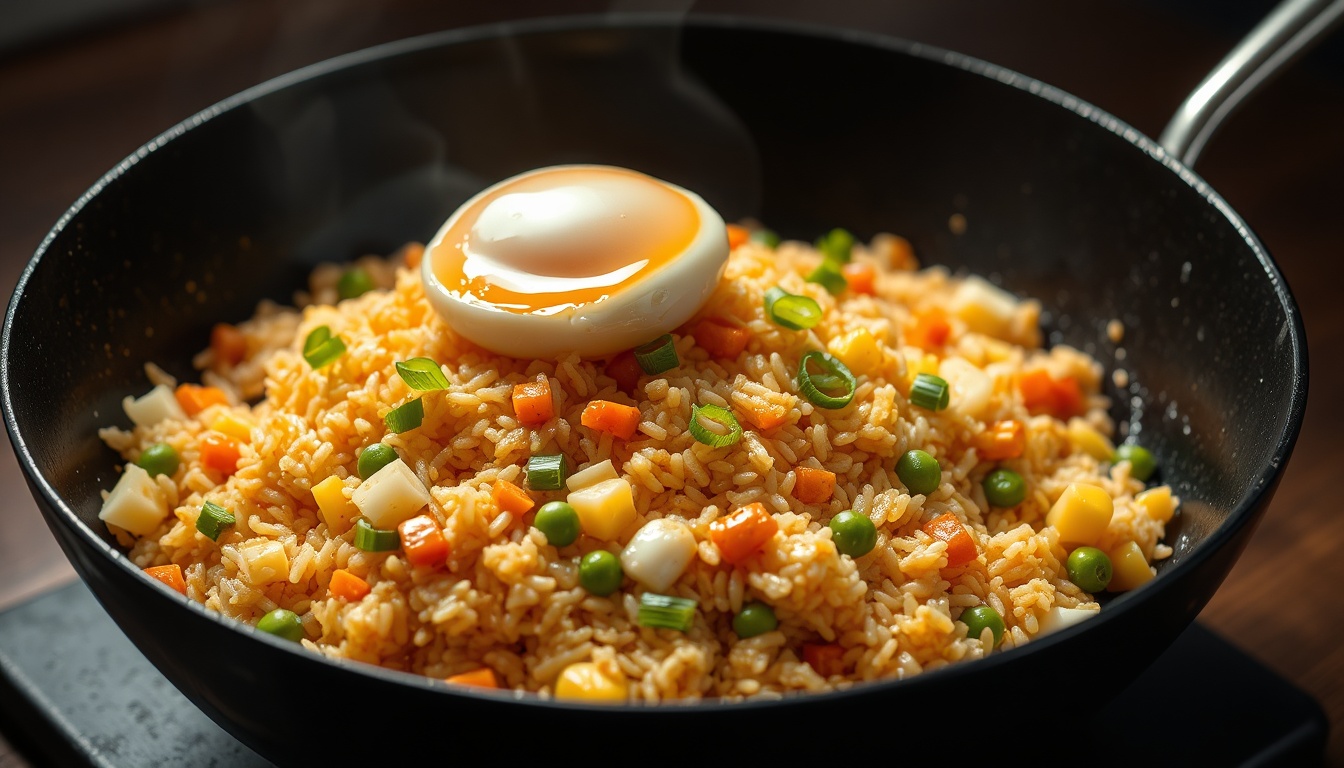
Why Honey Makes Better Fried Rice
Most fried rice recipes use sugar for the touch of sweetness that balances the soy sauce. Honey does the same job better for three reasons.
First, honey contains both fructose and glucose. The fructose caramelizes at 230°F — well below the wok temperature. This creates a thin, sticky glaze on each rice grain that gives the dish its characteristic glossy appearance and slightly chewy bite. Sugar caramelizes at a higher temperature and crystallizes as it cools, creating a different, grittier texture.
Second, honey dissolves instantly into the soy sauce mixture, creating a smooth liquid sauce that distributes evenly when you toss the rice. Granulated sugar takes time to dissolve and often creates uneven sweet spots.
Third, honey brings 180+ aromatic compounds that add a subtle depth of flavor beyond pure sweetness. In the same way that honey transforms a simple stir-fry sauce, it elevates basic fried rice into something more complex and satisfying.
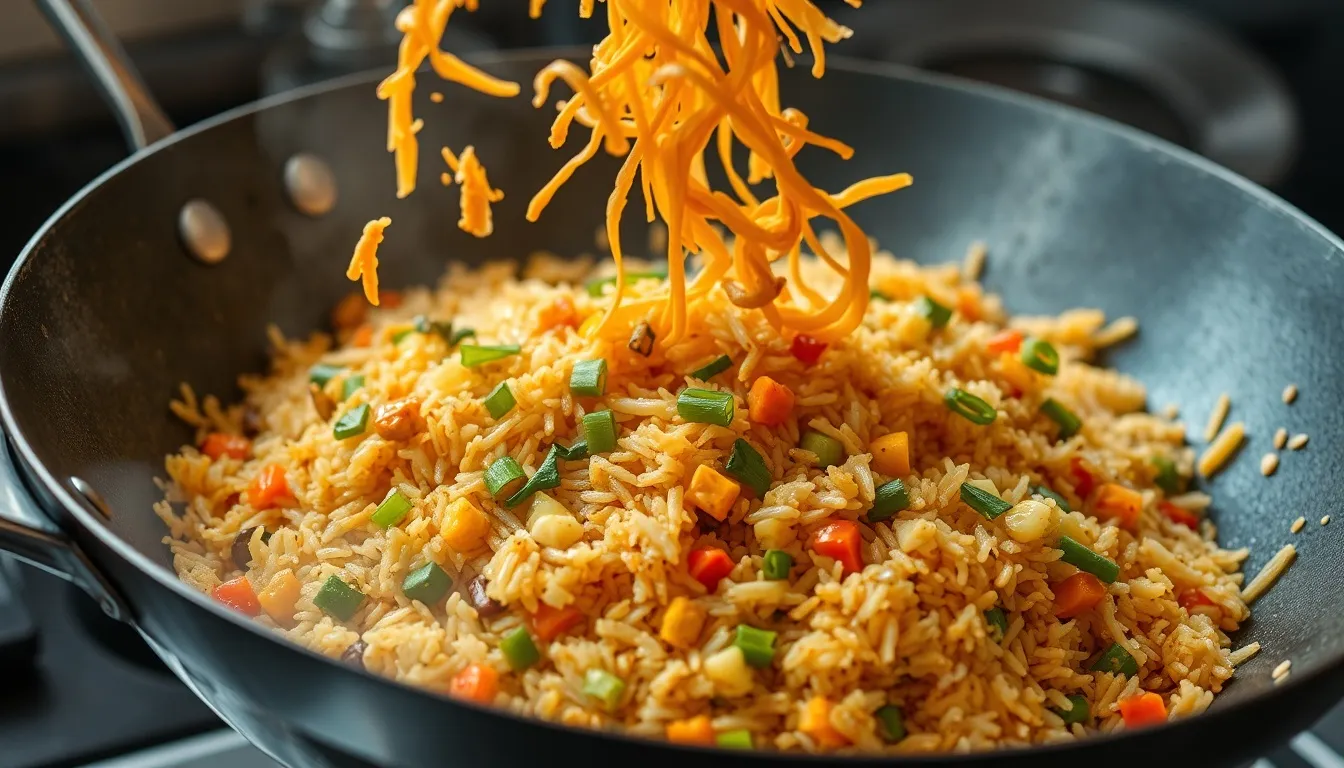
5 Protein Options
The base recipe works with eggs alone, but adding protein makes it a complete one-wok meal.
- Chicken — use 1 pound boneless thighs cut into bite-sized pieces. Sear in the wok over high heat for 4-5 minutes before the eggs, then remove and return with the eggs at the end. Thighs stay juicier than breast during high-heat cooking. Or use leftover honey garlic chicken chopped and added at the end
- Shrimp — use 1 pound large shrimp, peeled and deveined. Sear for 1-2 minutes per side over high heat until pink. Remove immediately and add back at the end. Overcooked shrimp becomes rubbery. For a honey shrimp version, toss the raw shrimp in a tablespoon of honey before searing for a caramelized shell
- Crispy tofu — press a 14-ounce block of extra-firm tofu, cut into 1/2-inch cubes, and toss with cornstarch. Fry in the wok for 3-4 minutes until golden and crispy on all sides. Remove and return at the end. The cornstarch coating stays crunchy against the saucy rice. See our honey garlic tofu for detailed technique
- Beef — use 8 ounces flank steak, sliced thinly against the grain. Toss with 1 teaspoon cornstarch and a splash of soy sauce. Sear over the highest heat possible for 60-90 seconds — beef should be seared, not stewed. Remove and return with the eggs
- Spam or Chinese sausage (lap cheong) — dice 1 can of Spam or 2 links of lap cheong into small cubes. Fry until crispy and caramelized before adding the eggs. The rendered fat from either adds incredible flavor to the fried rice. No additional oil needed for this step
Get the Honey Buyer's Cheat Sheet (free PDF)
16 varieties on one page — color, flavor, best use and what a fair price looks like — from the 304 honeys we track.
Best Honey Varieties for Fried Rice
The honey flavor is subtle in fried rice — it provides caramelization and balance rather than a dominant sweetness. Still, the variety matters.
- Wildflower honey — the best all-purpose choice. Mild floral notes disappear into the background while the fructose does its caramelization work. Works with all five protein options
- Clover honey — clean, neutral sweetness. The most invisible option — the honey does its job without adding any competing flavor. Best when you want the garlic and soy to dominate completely
- Orange blossom honey — adds a very subtle citrus note that works surprisingly well with Asian flavors. Pairs especially well with the shrimp version
- Buckwheat honey — dark and malty. Creates a deeper, more caramelized flavor in the sauce. Best with beef or pork where its boldness matches the protein
- Acacia honey — lightest and most neutral. If you want zero honey flavor and only the caramelization benefit, acacia is the choice
The Day-Old Rice Secret
Fresh, just-cooked rice is the single biggest reason home fried rice turns out mushy. Here is why day-old rice matters and how to get it right.
When rice cools in the refrigerator, the starch molecules undergo retrogradation — they re-crystallize and firm up. The surface dries out, creating a thin, starchy shell around each grain. When this cold rice hits the hot wok, that dry surface sears and toasts instead of turning to paste. The result is individual, distinct grains with slightly crispy edges.
Fresh rice is too moist and soft. The excess surface moisture steams in the wok, turning the whole dish into a sticky, gummy mass. No amount of technique can compensate for rice that is too wet.
- Best method — cook rice the day before and refrigerate uncovered for at least 4 hours, ideally overnight. The cold air dries the surface
- Quick method — spread freshly cooked rice on a baking sheet in a thin layer and refrigerate for 1-2 hours uncovered. A fan blowing over it speeds the drying
- Emergency method — cook rice with slightly less water (1.5:1 ratio instead of 2:1), spread on a baking sheet, and freeze for 20-30 minutes. Not ideal but workable
- Rice type — jasmine rice and regular long-grain white rice work best. Basmati is too dry. Short-grain sushi rice is too sticky. Brown rice works but has a chewier texture
Wok Technique for Home Stoves
Restaurant wok burners produce 100,000+ BTU. Your home stove puts out 10,000-18,000 BTU. You can still get excellent results with a few adjustments.
- Use the biggest burner on the highest setting — and let the wok or skillet preheat for 2-3 full minutes. The pan should be smoking hot before any food goes in
- Cook in batches — the biggest home stove mistake is adding too much food at once. The temperature drops immediately and the food steams instead of searing. Cook the protein first, remove it, then the eggs, remove, then the rice
- Do not stir constantly — press the rice flat against the wok and let it sit for 45-60 seconds. This builds the toasty, slightly charred flavor called wok hei. Then toss and repeat. Constant stirring prevents any searing
- Use a flat-bottomed wok or large skillet — on a flat home burner, a round-bottomed wok only contacts the heat at one small point. A flat bottom provides maximum heat contact. A 12-inch cast iron skillet also works excellently
Pro Tip
For the closest thing to restaurant wok hei at home: use a carbon steel wok on your highest burner with the exhaust fan on full. Add the oil, let it smoke for 10 seconds, then move fast. The entire rice cooking process should take under 5 minutes at maximum heat.
Serving Suggestions
Honey garlic fried rice works as a main course on its own or as a side to complement other dishes.
- With honey garlic wings for a game day or casual dinner spread
- Alongside honey ginger chicken or honey sesame chicken for a Chinese-American takeout night at home
- With honey garlic broccoli and honey garlic green beans for a complete vegetable-heavy meal
- Under honey garlic steak bites for a high-protein dinner
- Topped with a fried egg, sriracha, and sliced scallions for a quick solo meal
Meal Prep and Storage
Fried rice is one of the best meal prep recipes because it reheats well and is designed to use leftovers.
- Refrigerator — stores well for up to 4 days in an airtight container. The honey glaze helps maintain moisture during storage
- Reheating — the best method is a hot skillet with a teaspoon of oil. Spread the rice flat and let it re-crisp for 2-3 minutes before tossing. Add a splash of soy sauce and a drizzle of honey to refresh the glaze. Microwave works but produces a softer texture
- Freezer — fried rice freezes well for up to 3 months. Cool completely, divide into individual portions, and freeze flat in zip-lock bags for fast thawing. Reheat directly from frozen in a hot skillet — add a tablespoon of water and cover for the first minute to create steam, then uncover and fry until hot and crispy
- Batch cooking — double the sauce recipe and store it separately for up to 2 weeks refrigerated. Use it with any leftover rice throughout the week for instant honey garlic fried rice
Common Mistakes
Fried rice seems simple, but a few common errors produce disappointing results.
- Using fresh, hot rice — this is the most common mistake. Fresh rice is too moist and creates a mushy, sticky result. Day-old refrigerated rice is non-negotiable for proper texture
- Low heat — fried rice needs the highest heat your stove can produce. Medium heat steams the rice instead of searing it. If your rice is not sizzling aggressively when it hits the wok, the pan is not hot enough
- Adding the sauce too early — the honey garlic sauce should go in after the rice is already hot and slightly toasted. Adding it too early creates soggy, steamed rice instead of glossy, seared grains with a sticky coating
- Overcrowding the wok — too much rice in the pan drops the temperature instantly. If using a standard 12-inch skillet, 4 cups of rice is the maximum. For larger batches, cook in two rounds
- Stirring too much — constant stirring prevents the rice from making contact with the hot wok surface long enough to sear. Press, wait, then toss. The slightly charred grains are the best part of the dish