Why Honey Garlic Broccoli Works So Well
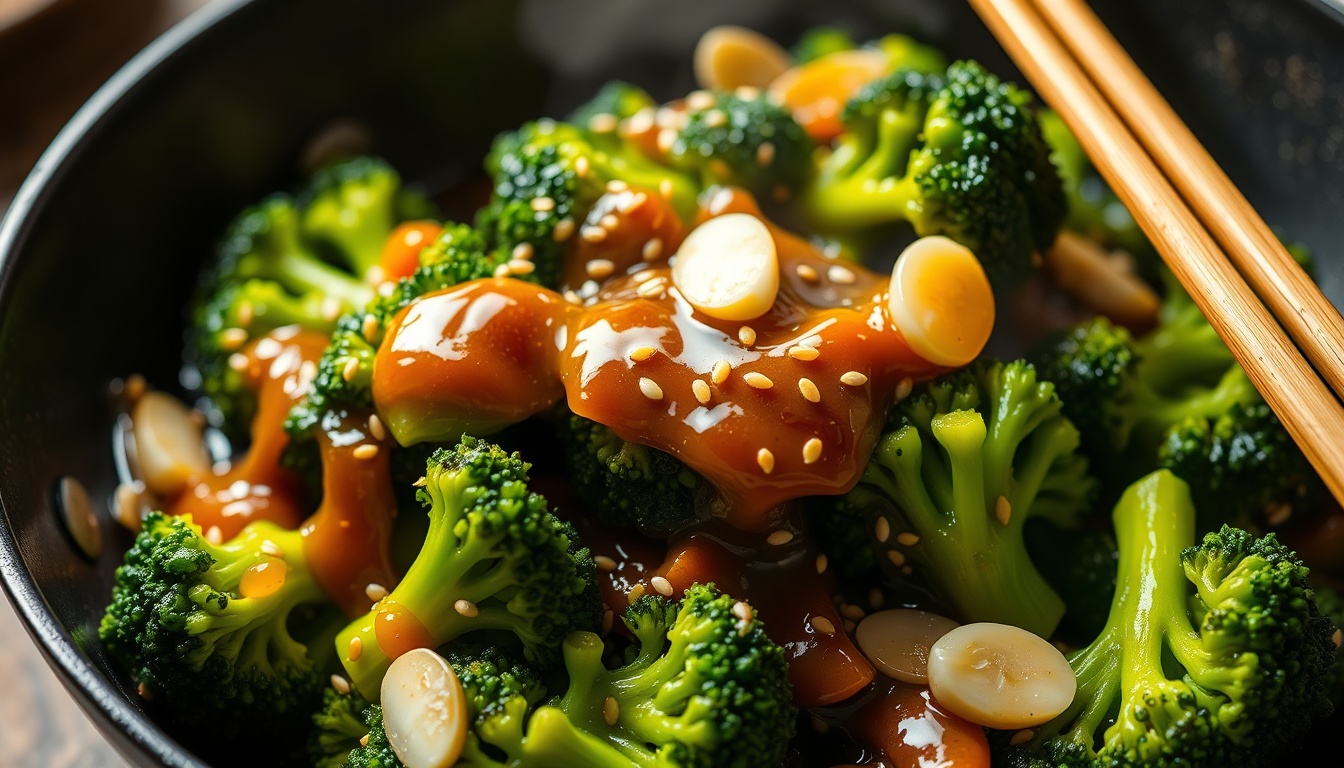
This recipe works because of two things happening simultaneously: high-heat charring and quick-glaze caramelization.
Broccoli has a high water content but also a surprising amount of natural sugar — about 1.7 grams per cup. When you sear the flat side of a floret at high heat, the surface dehydrates and those sugars undergo the Maillard reaction, creating the nutty, complex flavor that makes charred broccoli addictive.
The honey garlic sauce adds a second layer. Honey's fructose caramelizes at 230°F — well below the 400°F+ temperature of your pan. The sauce hits the hot surface and instantly transforms from a thin liquid into a sticky, concentrated glaze. The soy sauce contributes glutamate (umami), the rice vinegar adds brightness that cuts the sweetness, and the sesame oil rounds everything with a toasty finish.
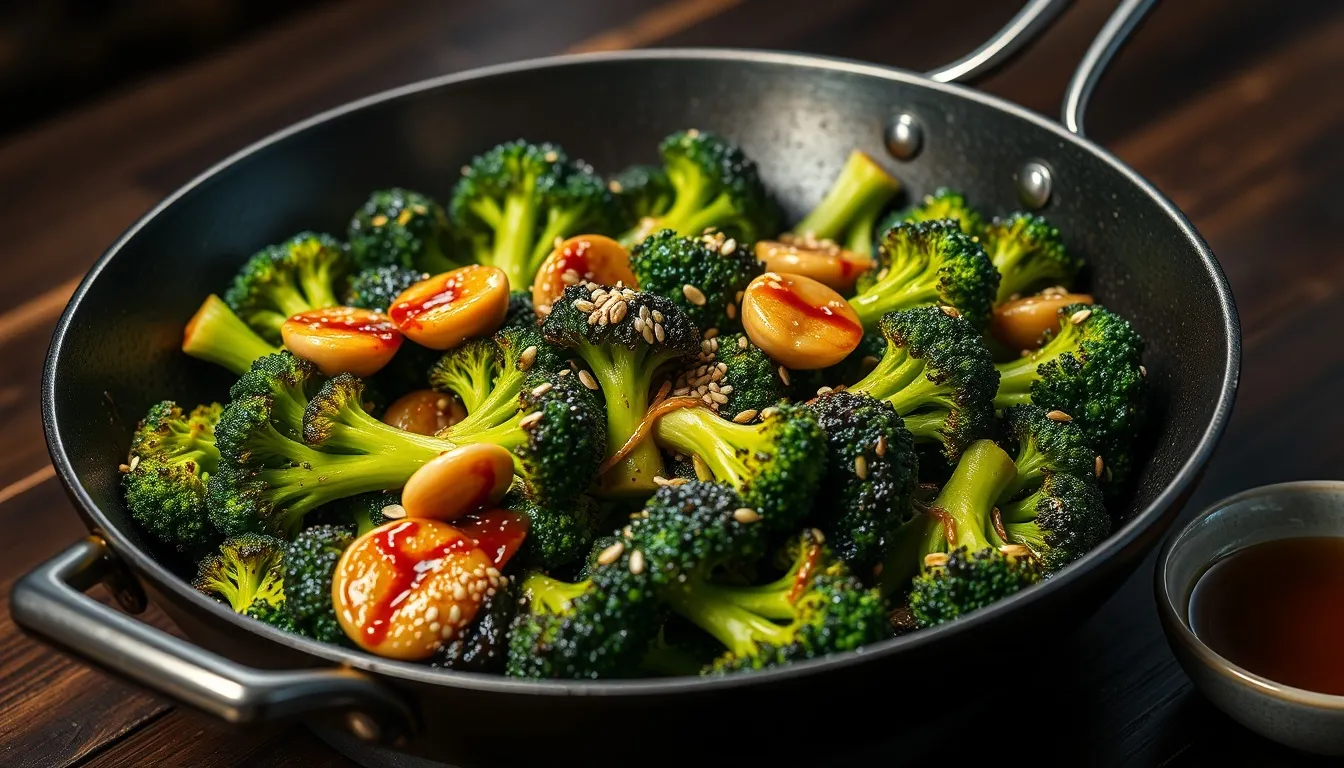
The entire cook time is under 10 minutes because broccoli overcooks fast. The goal is charred outside, bright green inside — not olive-drab mush.
5 Flavor Variations
The base recipe is a starting point. Change a few ingredients and the dish transforms completely.
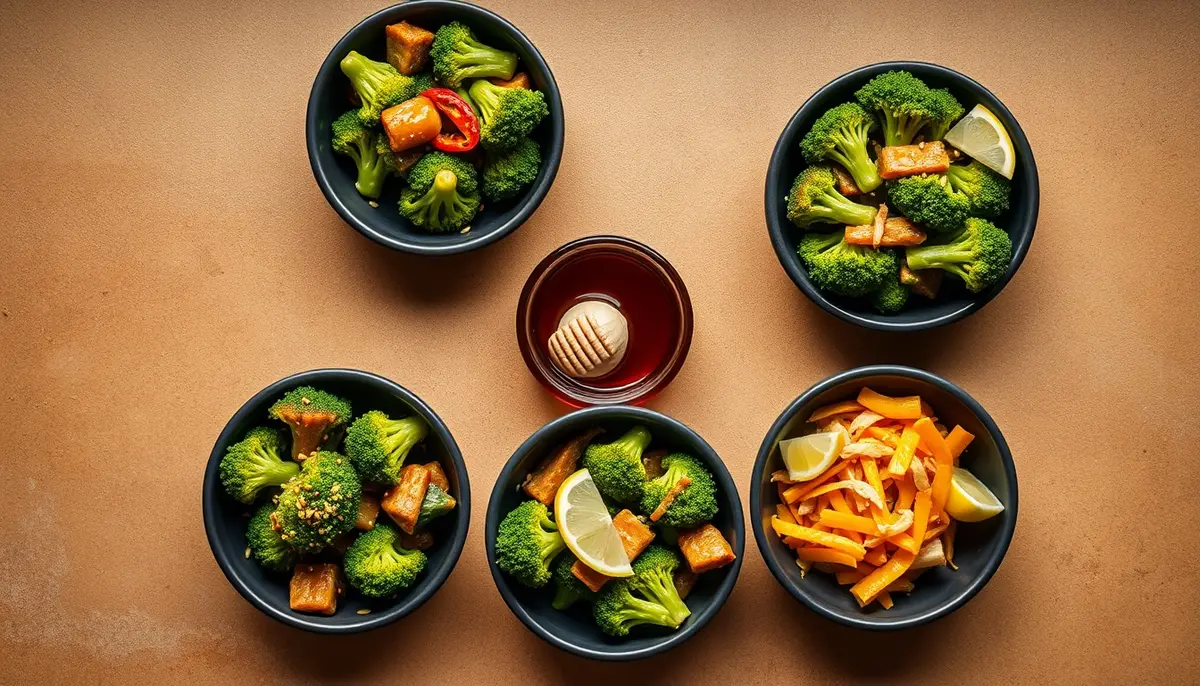
- Honey garlic with oyster sauce — replace the soy sauce with 2 tablespoons oyster sauce for a richer, more savory glaze. The oyster sauce adds a deep umami backbone that makes this taste like a high-end Chinese restaurant side. Add a splash of soy at the end if you want more saltiness
- Spicy honey garlic — add 1 tablespoon chili garlic sauce (sambal oelek) or use honey sriracha sauce instead of plain honey. The heat builds slowly against the sweetness. Finish with extra red pepper flakes and a squeeze of lime
- Lemon honey garlic — add the zest of 1 lemon to the sauce and squeeze the juice over the finished dish. Skip the sesame oil and use olive oil instead. The bright citrus note makes this pair well with grilled fish, honey lemon chicken, or pasta
- Honey garlic parmesan — after glazing, remove from heat and immediately toss with 1/4 cup freshly grated Parmesan. The cheese melts into the sticky sauce and creates a savory-sweet crust. Finish with black pepper and lemon zest
- Honey miso — replace the soy sauce with 1 tablespoon white miso paste whisked into the honey. Miso adds fermented depth and extra umami without the liquid volume of soy sauce, so the glaze is thicker and clings better. Inspired by honey miso salmon
Get the Honey Buyer's Cheat Sheet (free PDF)
16 varieties on one page — color, flavor, best use and what a fair price looks like — from the 304 honeys we track.
Best Honey Varieties for Broccoli
The honey flavor concentrates during high-heat cooking, so variety choice matters more than you might expect.
- Wildflower honey — the best all-purpose choice. Mild floral complexity that complements the savory garlic and soy without competing. Works with all five variations
- Clover honey — very mild and clean. Use this when you want the garlic and soy to dominate, with honey providing sweetness and texture only
- Orange blossom honey — adds a subtle citrus-floral note that works especially well with the lemon variation. Brightens the entire dish
- Buckwheat honey — bold, dark, and malty. Creates a deeper, more complex glaze. Best with the spicy and oyster sauce variations where its intensity matches the other strong flavors
- Acacia honey — very light and neutral with a very mild flavor. Use this when you want just sweetness without any competing honey flavor
Tips for the Crispiest Broccoli
The difference between restaurant-quality honey garlic broccoli and a soggy home version comes down to a few details.
- Dry the broccoli — this is the most important step. Water on the surface turns to steam at high heat, preventing the sear. Pat florets dry with a clean towel or let them air-dry on a towel for 10 minutes while you prep the sauce
- Do not overcrowd — broccoli releases moisture during cooking. If the florets are piled on top of each other, they steam instead of sear. Use your largest pan and cook in two batches if needed. A single layer with space between each floret is the goal
- High heat, do not stir — set the heat to high and let the broccoli sit undisturbed for 2-3 minutes. The urge to stir is strong but resist it. Stirring too early lifts the florets off the hot surface before the char develops. Shake the pan once to flip, then leave it alone again
- Add sauce last — the sauce goes in during the final 60-90 seconds only. Adding it too early floods the pan with liquid, drops the temperature, and steams the broccoli. The sauce should sizzle and reduce almost instantly on contact
- Serve immediately — honey garlic broccoli does not hold well. The glaze softens the char within 5 minutes. Plate it and eat it straight from the pan for maximum crunch
Pro Tip
For an oven-roasted version: toss florets with oil, spread on a sheet pan at 425°F for 20 minutes, then drizzle the honey garlic sauce over the top and broil for 2 minutes until the glaze caramelizes.
Serving Suggestions
Honey garlic broccoli works as a side dish with almost any main course, but some pairings are especially good.
- With honey garlic chicken or honey ginger stir-fry over jasmine rice for a complete Asian-inspired dinner
- Alongside honey garlic salmon or honey teriyaki salmon for a sheet pan dinner
- Mixed into honey garlic noodles as a one-bowl meal
- As part of a honey roasted vegetables spread for meal prep — it reheats well if you re-crisp in a hot skillet for 2 minutes
- Tossed into grain bowls with quinoa, avocado, and a drizzle of honey sriracha sauce
Common Mistakes
A few easy-to-fix errors that make the difference between sticky-crispy and soggy-sweet.
- Cutting florets too large — large florets do not cook through in the short cook time. The outside burns while the stem stays raw. Cut to roughly 1.5-inch pieces measured across the crown
- Low heat — this dish needs aggressive heat to char the broccoli before it overcooks internally. If your pan is not smoking-hot before the broccoli goes in, you will get steamed, pale florets instead of charred ones
- Too much sauce — the recipe ratio is balanced for coating, not pooling. Doubling the sauce means the broccoli sits in liquid instead of being glazed. If you want extra sauce for drizzling, make a separate batch and reduce it in a small saucepan
- Using frozen broccoli — frozen florets release too much water when they thaw and cannot develop a char. Use fresh broccoli only. If fresh is not available, use broccolini or asparagus as alternatives