Honey vs Jaggery: Two Traditional Sweeteners With Deep Roots
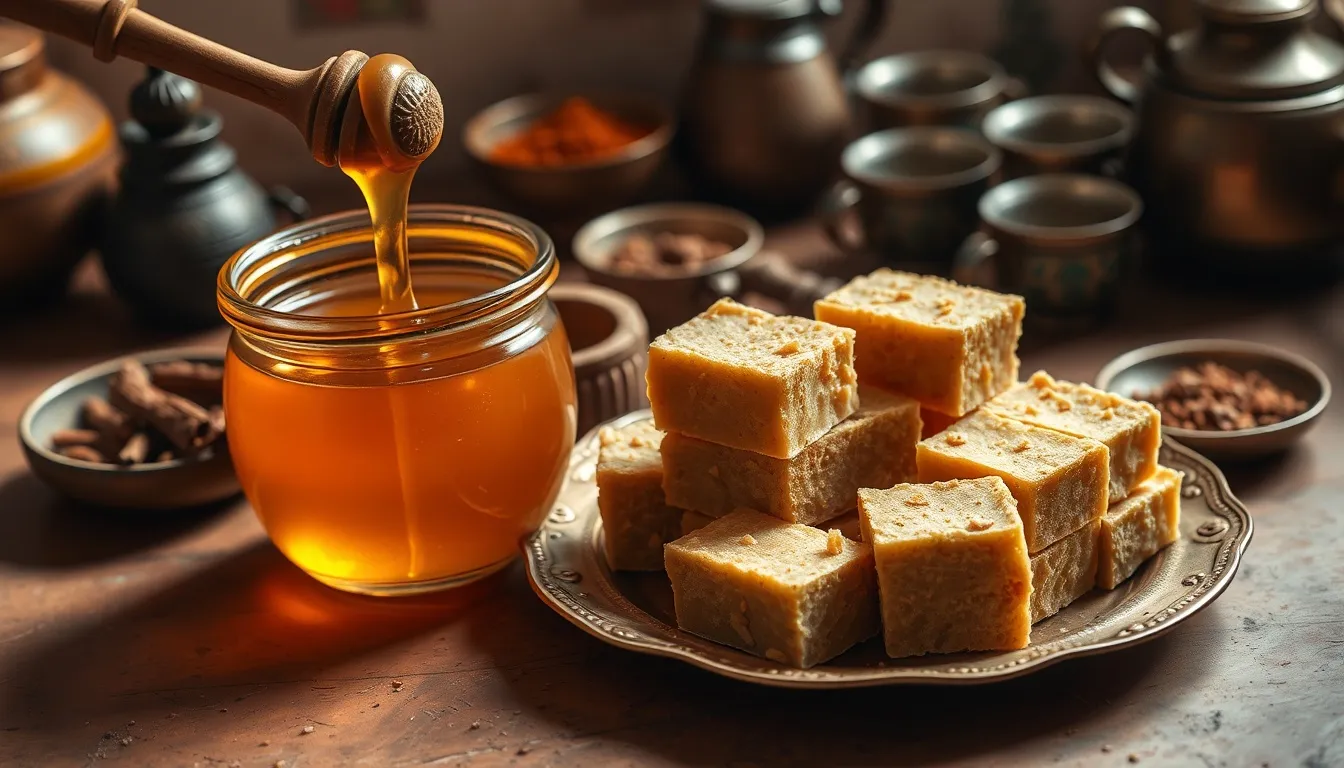
Honey and jaggery are among the oldest sweeteners used by humans. Honey is produced by bees from flower nectar through enzymatic processing and concentration. Jaggery (also called gur, panela, piloncillo, or rapadura depending on the region) is an unrefined sugar made by boiling sugar cane juice or palm sap until it solidifies — without separating the molasses from the crystals.
Both are marketed as "natural" alternatives to refined white sugar, and both retain more nutrients than their processed counterparts. But the specific health profiles are quite different. Honey brings unique antimicrobial compounds, prebiotics, and enzymes that no plant-based sweetener can replicate. Jaggery brings impressive mineral density from its unrefined processing and a distinct caramel-earthy flavor used across South Asian, Latin American, and Southeast Asian cuisines.
This guide compares the science behind both sweeteners so you can choose based on your actual health goals rather than marketing claims.
How They're Made: Bees vs Cane Processing
**Honey production** — Forager bees collect nectar from flowers, adding enzymes (invertase, glucose oxidase, diastase) in their honey stomachs. Back at the hive, house bees further process and evaporate the nectar until water content drops below 18%, creating a shelf-stable food with over 200 identified compounds. Raw honey is simply extracted from the comb without high-heat processing, preserving its full enzyme and antioxidant profile.
**Jaggery production** — Sugar cane is crushed to extract juice (or palm trees are tapped for sap), which is then boiled in large open pans. As water evaporates, the concentrated syrup is poured into molds to solidify. Unlike refined sugar production, there is no centrifuging to separate molasses — jaggery retains everything: minerals, vitamins, phytochemicals, and organic acids from the original cane juice. The color ranges from golden-yellow (lighter processing) to dark brown (longer boiling), with darker jaggery generally containing more concentrated minerals.
The key difference: honey is a biologically produced food with enzymatic activity. Jaggery is a thermally concentrated plant extract. This distinction explains their different health properties — honey has unique bioactive compounds from bee metabolism, while jaggery's benefits come from mineral and phytochemical concentration.
Get the Honey Buyer's Cheat Sheet (free PDF)
16 varieties on one page — color, flavor, best use and what a fair price looks like — from the 268 honeys we track.
Nutritional Comparison: Honey vs Jaggery Per Tablespoon
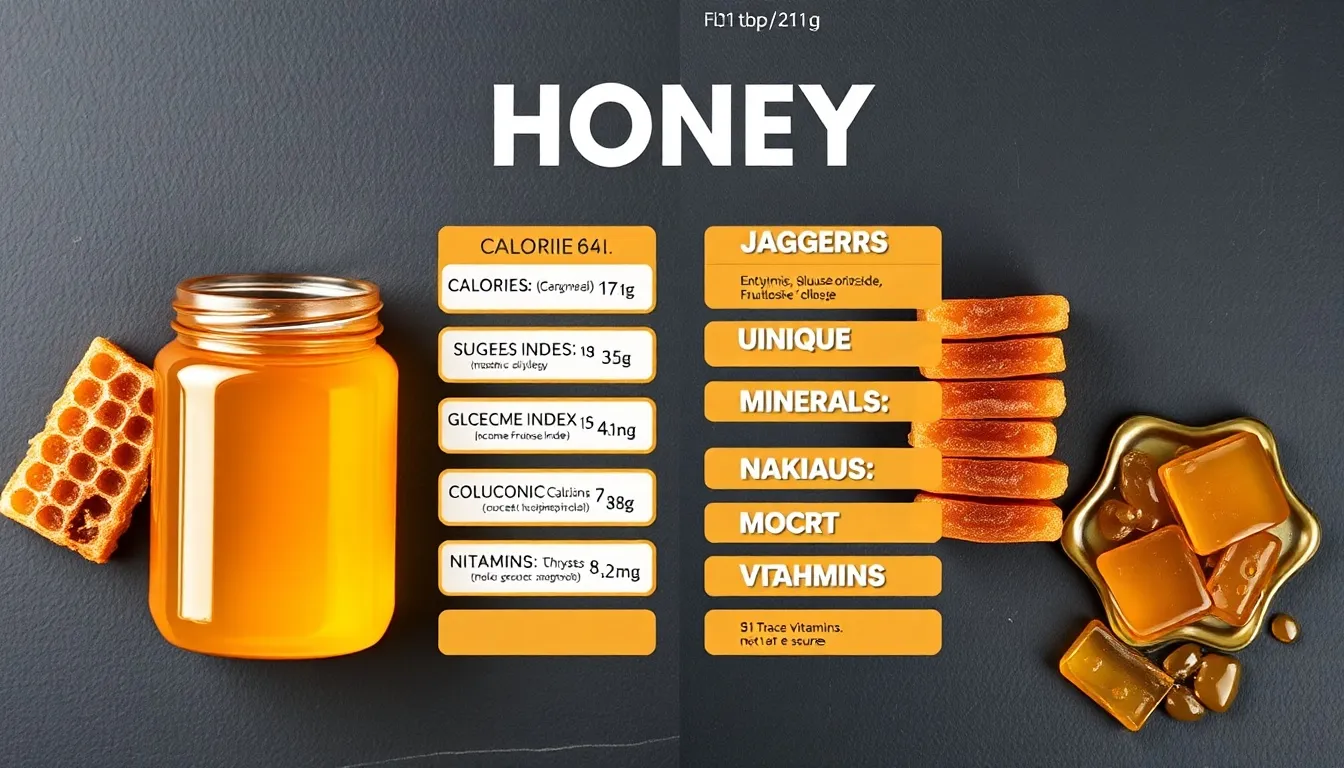
Here's how they compare per tablespoon (21g honey, 20g jaggery):
**Calories** — Honey: 64 kcal | Jaggery: 77 kcal. Jaggery has about 20% more calories per tablespoon due to its lower water content (~2% vs honey's ~17%). This means you get more concentrated sweetness and energy from jaggery per weight.
**Sugar content** — Honey: 17.2g total sugar per tablespoon (38-42% fructose, 31-35% glucose, 4-5% prebiotic oligosaccharides, plus maltose and other sugars). Jaggery: 19.4g total sugar per tablespoon (65-85% sucrose, with smaller amounts of glucose and fructose). Honey's sugar profile is more complex due to bee enzymatic processing, while jaggery retains the sucrose structure of the original cane juice.
**Minerals — where jaggery excels** — Per tablespoon, jaggery provides notable amounts of iron (11% DV — significant for a sweetener), potassium (4% DV), magnesium (4% DV), calcium (2% DV), phosphorus (2% DV), and manganese (3% DV). Honey's mineral profile is more modest: potassium (1% DV) with trace iron, zinc, and magnesium. Dark honeys like buckwheat narrow this gap but don't fully close it.
**Antioxidants and polyphenols — where honey excels** — Honey contains 30+ identified polyphenols including flavonoids (chrysin, pinocembrin, quercetin, kaempferol) and phenolic acids (caffeic acid, gallic acid, ellagic acid). A 2018 Journal of Food Science and Technology study found that darker honeys can have 3-9 times the antioxidant capacity of lighter varieties. Jaggery also contains polyphenols — primarily phenolic acids and flavonoids from sugar cane — and a 2010 Food Chemistry study measured total phenolic content of 4.6-12.8 mg GAE/g in Indian jaggery samples. However, honey's polyphenol diversity and the clinical evidence behind its antioxidant effects are substantially stronger.
**Unique compounds in honey** — Honey contains prebiotic oligosaccharides (FOS, GOS) that selectively feed beneficial gut bacteria, active enzymes (glucose oxidase, diastase, invertase, catalase), and generates hydrogen peroxide — providing antimicrobial properties that jaggery entirely lacks. These compounds are the product of bee metabolism and cannot be replicated by any plant-based sweetener.
**B vitamins** — Jaggery provides small amounts of B vitamins (B1, B2, B3, B5, B6) retained from sugar cane juice. Honey contains similar trace B vitamins but at comparable low concentrations. Neither is a meaningful source of B vitamins at typical serving sizes.
Glycemic Index: Blood Sugar Impact Compared
Honey and jaggery are both caloric sweeteners that contribute carbohydrate and added sugar. Processing differences and trace nutrients do not make either one a diabetes treatment or a universally preferable choice.
Compare equal labeled servings: total carbohydrate, added sugars and the amount the recipe actually uses. The honey carbohydrate and label guide explains this label workflow and the role of an individualized care plan.
Pro Tip
A traditional or less-refined label does not mean carbohydrate-free. Use the product label and recipe serving size rather than a varietal ranking.
Health Benefits: Where Each Sweetener Wins
**Where honey wins decisively:**
**Antimicrobial and antibacterial activity** — Honey has documented efficacy against 60+ bacterial species including antibiotic-resistant MRSA, through multiple mechanisms: hydrogen peroxide, low pH, osmolarity, and variety-specific compounds like methylglyoxal (MGO) in manuka honey. A 2020 Frontiers in Microbiology review confirmed its broad-spectrum antimicrobial activity. Medical-grade honey has FDA clearance for wound care. Jaggery has no antimicrobial properties.
**Cough and sore throat relief** — A 2020 BMJ Evidence-Based Medicine systematic review of 14 studies found honey superior to usual care for cough frequency and severity. Jaggery is traditionally used in warm drinks for throat comfort in South Asian households, but there are no clinical trials supporting its efficacy for cough suppression.
**Wound healing** — The 2015 Cochrane review of 3,011 participants confirmed honey accelerates healing in burns and post-operative wounds. Jaggery has no wound-healing applications or research.
**Prebiotic gut health** — Honey's oligosaccharides selectively stimulate Bifidobacterium and Lactobacillus while its antimicrobial compounds suppress pathogenic bacteria. Jaggery lacks prebiotic oligosaccharides, though its small organic acid content may have a mild positive effect on digestion.
**Anti-inflammatory effects** — A 2022 meta-analysis confirmed honey's systemic anti-inflammatory effects, including reduced CRP, through NF-kB pathway inhibition by polyphenols. While jaggery's phenolic compounds have theoretical anti-inflammatory potential, there are no clinical trials demonstrating systemic anti-inflammatory effects.
**Where jaggery wins decisively:**
**Iron content for anemia** — Jaggery provides 11% DV iron per tablespoon — excellent for a sweetener. In regions where iron-deficiency anemia is prevalent, jaggery has traditionally been recommended as a dietary iron source, particularly for women and children. A 2014 Indian Journal of Pediatrics study noted jaggery as a cost-effective iron source in resource-limited settings. Honey contains only trace iron, even in dark varieties.
**Overall mineral density** — Jaggery's retained minerals (iron, potassium, magnesium, calcium, phosphorus) are genuinely superior to honey. For people who struggle to meet mineral intake requirements, jaggery adds meaningful micronutrition to cooking and beverages. This advantage is especially relevant in vegetarian and vegan diets where iron sources are limited.
**Affordability and accessibility** — In South Asian, African, and Latin American markets, jaggery is typically cheaper and more accessible than quality raw honey. This matters for daily sweetener choices in developing regions.
**Where they're roughly equivalent:**
**Antioxidant protection** — Both contain meaningful polyphenol content, though honey's is more diverse and better studied clinically. Dark jaggery and dark honeys both have higher antioxidant capacity than their lighter counterparts.
**Digestive comfort** — Both are traditionally used for digestive complaints. Honey has stronger clinical backing (prebiotic FOS/GOS, H. pylori inhibition), while jaggery is traditionally used in Ayurvedic medicine to stimulate digestive enzymes. Both are better tolerated than refined sugar for many people.
Cooking and Baking: Practical Differences
Honey and jaggery behave very differently in the kitchen:
**Flavor** — Honey ranges from delicately floral (acacia, orange blossom) to intensely complex (buckwheat, chestnut). Jaggery has a deep caramel-butterscotch flavor with earthy, slightly smoky notes — often described as "brown sugar with more complexity." Palm jaggery has a more pronounced smoky profile than cane jaggery.
**Form and measurement** — Honey is liquid; jaggery is solid (blocks, cones, or granulated). Jaggery must be grated or melted before use. Granulated jaggery (sometimes labeled "jaggery powder") can substitute 1:1 for brown sugar. Honey requires different measurement conversions due to its liquid form and higher sweetness.
**Heat behavior** — Jaggery dissolves readily in hot liquids and caramelizes predictably, making it excellent for confections, sauces, and syrups. Honey's enzymes degrade above 40°C (104°F), and while it remains flavorful when heated, it loses some bioactive properties. Both brown and caramelize at high temperatures.
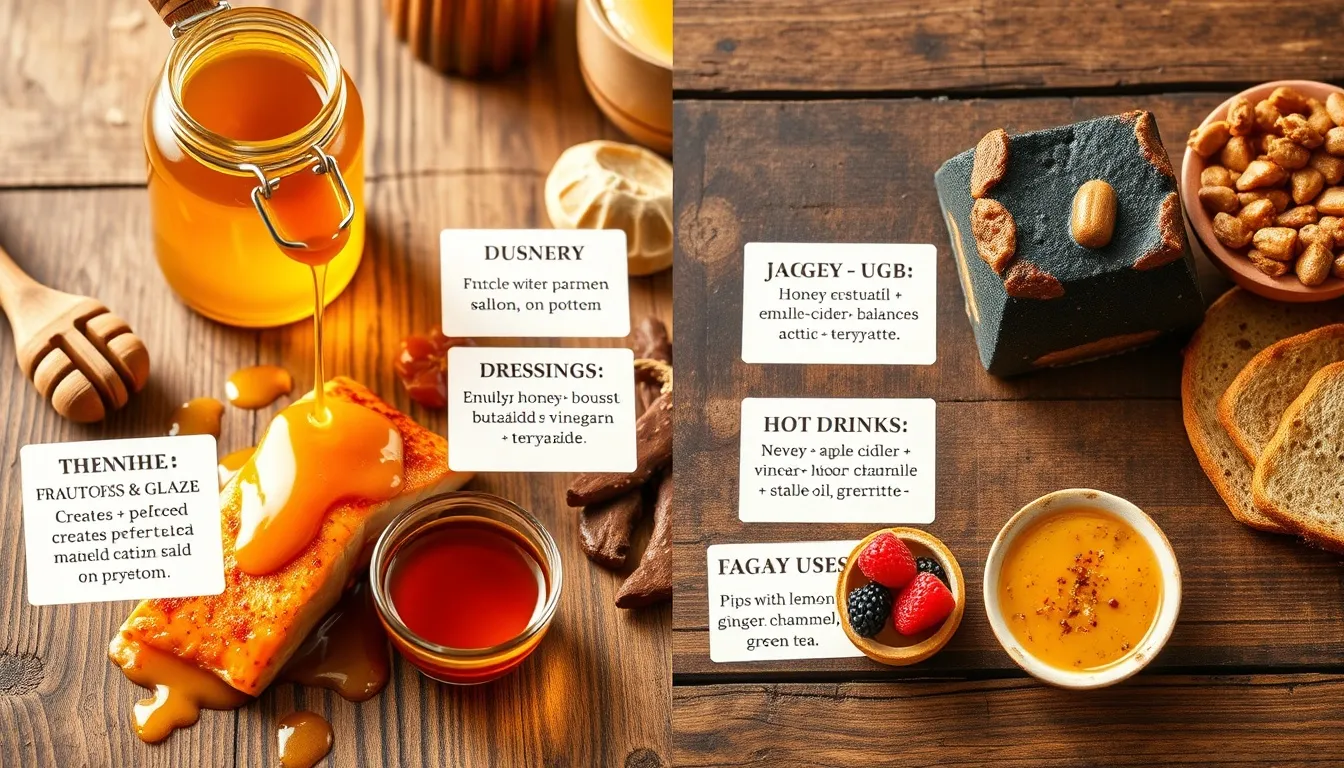
**Best uses for honey** — Tea and coffee sweetener (below 60°C for enzyme preservation), salad dressings, marinades, glazes, baking, yogurt and oatmeal, raw consumption for health benefits.
**Best uses for jaggery** — Indian sweets (laddoo, chikki, payasam, gur ka halwa), chai and warm beverages, savory-sweet sauces (tamarind chutney), Southeast Asian desserts, Latin American beverages (aguapanela), brown sugar substitute in baking, candy and toffee making.
Common Myths About Jaggery and Honey
Several persistent myths deserve correction:
- **"Jaggery is a low-GI sweetener"** — FALSE. Jaggery's GI of 65-85 is comparable to refined sugar. Its mineral content does not meaningfully lower its glycemic impact. This is one of the most common and potentially harmful myths, especially for people with diabetes who may over-consume jaggery thinking it's "safe."
- **"Jaggery detoxes the body"** — UNPROVEN. Traditional Ayurvedic claims that jaggery "cleanses the lungs" or "purifies the blood" have no clinical evidence. Its mineral content supports normal metabolic function, but "detox" claims go far beyond the evidence.
- **"Honey is just sugar in a different form"** — FALSE. Honey contains 200+ compounds including enzymes, prebiotics, antimicrobial agents, and 30+ polyphenols. The 2022 Nutrition Reviews meta-analysis showed distinct metabolic effects compared to sugar controls. See our full breakdown on honey vs sugar.
- **"Jaggery can replace sugar for diabetics"** — MISLEADING. While jaggery has a marginally lower GI than white sugar and provides minerals, its blood sugar impact is still substantial. Diabetics should treat jaggery with the same portion control as other concentrated sweeteners.
- **"Raw honey is always better than jaggery"** — DEPENDS ON CONTEXT. For antimicrobial, cough-suppressing, and prebiotic benefits, honey is clearly superior. For iron supplementation and mineral intake, jaggery wins. For blood sugar management, low-GI honeys win. For affordable daily cooking in traditional cuisines, jaggery may be the practical choice.
- **"Heating jaggery destroys its benefits"** — PARTIALLY TRUE. Heat doesn't significantly affect jaggery's mineral content (minerals are heat-stable), but it can reduce some polyphenol content. This is less of a concern than with honey, where heating degrades enzymes and bioactive compounds.
Environmental and Ethical Considerations
Both sweeteners have environmental implications worth considering:
**Honey** — Beekeeping supports pollination services critical for agriculture (honey bees pollinate roughly 80% of flowering plants). However, industrial beekeeping raises concerns about managed vs wild pollinator competition and monoculture foraging. Supporting local, small-scale beekeepers maximizes environmental benefit.
**Jaggery** — Sugar cane production is water-intensive and can contribute to soil depletion and habitat conversion. However, artisanal jaggery production is typically small-scale, uses less processing energy than refined sugar, and supports rural livelihoods in developing countries. Palm jaggery (from palmyra or date palms) has a lower environmental footprint than cane jaggery, as palm trees require no replanting and less water.
Neither sweetener is clearly "greener" — the environmental impact depends heavily on scale, sourcing, and local conditions.
Which Should You Choose? A Decision Framework
Choose honey when:
- You want **antimicrobial or wound-healing** benefits (no contest — honey wins)
- You need a natural **cough and sore throat** remedy (2020 BMJ Evidence-Based Medicine systematic review found honey outperformed usual care)
- You prioritize **gut health and prebiotics** (honey's FOS/GOS have no jaggery equivalent)
- You're managing **blood sugar** (choose low-GI varieties like acacia or tupelo)
- You want **anti-inflammatory effects** (clinical evidence from 18+ RCTs)
- You're consuming it **raw** for maximum health benefit
Choose Jaggery When:
Jaggery is the better choice in these situations:
- You need an **iron-rich sweetener** for anemia prevention (11% DV per tablespoon)
- You want a **mineral-dense** daily cooking sweetener (iron, potassium, magnesium, calcium)
- You're making **traditional South Asian or Latin American** recipes that call for gur/panela
- You need a **solid-form brown sugar substitute** that dissolves predictably in cooking
- You're on a **budget** and want the most micronutrition per dollar from your sweetener
- You follow a **vegan diet** and want to avoid animal-derived products
Can You Combine Them?
Yes, and many traditional recipes do. Indian chai made with jaggery and a teaspoon of honey stirred in after cooling combines jaggery's mineral content and deep flavor with honey's enzymes and antibacterial properties. Jaggery-based syrups with a honey finish add complexity to desserts while preserving honey's heat-sensitive compounds.
The practical strategy: use jaggery for cooking and baking where heat is involved (minerals survive heating), and add honey to warm or room-temperature foods where its enzymes and prebiotics remain intact. This approach extracts the best benefits from each sweetener.
For a broader perspective on natural sweetener options, explore our comparisons of honey vs sugar, honey vs maple syrup, honey vs molasses, and honey vs agave.