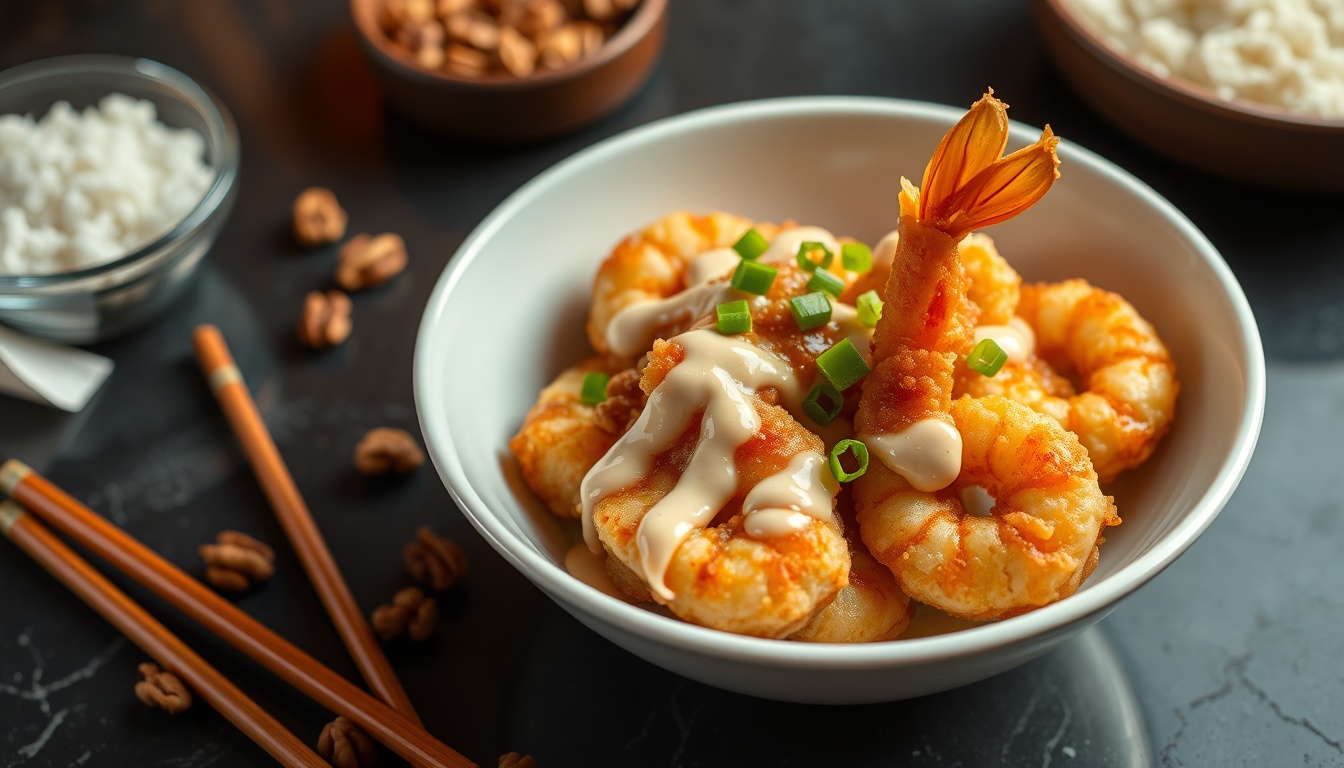
Crisp chicken, creamy honey sauce and walnuts
This skillet version keeps the familiar combination of lightly crisp chicken, creamy honey sauce and honey-coated walnuts. It uses a measured amount of oil for shallow-frying instead of a deep pot of oil, with a thin egg-and-starch coating on the chicken.
Prepare the walnuts and sauce while getting the chicken ready, then cook the chicken in uncrowded batches. Allow about 40 minutes in all. The 5 variations below change the flavor; the card defines one complete base preparation.
Recipe
Honey Walnut Chicken
A shallow-fried skillet version of honey walnut chicken with a thin starch coating, creamy honey sauce and honey-coated walnuts. Makes 4 servings in about 40 minutes.
13Ingredients
Yield: 4 servings
- 680 g boneless skinless chicken breast, cut into small bite-size pieces
- 64 g cornstarch
- 1 large egg
- 1/2 teaspoon table salt (3 g)
- 0.5 g ground black pepper
- 3 tablespoons olive oil (40.5 g)
- 100 g walnut halves
- 5 tablespoons clover honey (105 g), divided
- 1 tablespoon water (15 g)
- 45 g regular mayonnaise
- 20 g sweetened condensed milk
- 1 tablespoon lemon juice (15.25 g)
- 1 teaspoon cider vinegar (5 g)
Ingredient amounts scale; instructions show the original batch. Cooking times and pan sizes may need adjustment. Season to taste. Honey grams use US measures at 20°C and 17.5% moisture, a density estimate; weigh your honey for precision.
Instructions
- 1Coat the walnutsWarm 2 tablespoons of the measured honey with the water in a small pan. Add walnuts and stir over medium-low heat for 3–4 minutes until evenly glossy. Spread on parchment to cool while preparing the chicken.
- 2Mix the creamy sauceWhisk the remaining 3 tablespoons honey with mayonnaise, condensed milk, lemon juice and cider vinegar. Keep this clean serving sauce separate from raw chicken and its utensils.
- 3Coat the chickenPat the chicken dry and cut into evenly small bite-size pieces. Stir with the salt, pepper and beaten egg, then fold in the cornstarch until the pieces have a thin coating.
- 4Shallow-fry in batchesHeat some of the measured oil in a large nonstick skillet over medium to medium-high heat. Add chicken in a single uncrowded layer and cook, turning, until golden and the thickest pieces reach 165°F (74°C) on a food thermometer. Allow about 5–7 minutes per batch, adding the remaining measured oil for later batches. Three batches take about 20 minutes.
- 5Combine just before servingTransfer cooked chicken to a clean bowl. Toss briefly with the creamy honey sauce, top with cooled walnuts and divide into 4 portions. Serve immediately; rice and vegetables are separate additions.
Estimated nutrition per serving
709.6 calories · 40.94 g fat · 42.89 g carbohydrate · 44.28 g protein · 466.51 mg sodium
Serving: 1/4 chicken, sauce and walnut batch
Calculated from ingredient weights and USDA FoodData Central: 171077, 169698, 171287, 173468, 170931, 171413, 170187, 169640, 173647, 171009, 171275, 167747, 173469. Estimates use ingredient input weights; actual portions, brands and cooking losses vary. Omitted nutrient values are unavailable, not zero.
Keep the three components separate until serving
Cool the honey-coated walnuts on parchment so they do not immediately soften the chicken. Whisk the creamy sauce in a clean bowl before handling raw poultry, and keep its spoon separate from the chicken bowl.
Cut the chicken into evenly small pieces so one batch cooks consistently. A large nonstick skillet helps a measured amount of oil cover the food without requiring deep-frying. Do not crowd the pan: a full layer with no room between pieces traps steam and softens the coating.
Use a thermometer to check the thickest pieces. USDA’s minimum internal temperature for poultry is 165°F (74°C); color alone is not a doneness check. Batch timing is a guide and depends on piece size and pan heat.
Get the Honey Buyer's Cheat Sheet (free PDF)
16 varieties on one page — color, flavor, best use and what a fair price looks like — from the 304 honeys we track.
Choosing the honey
Use the honey pairing guide for this style of dish. This chart uses an editorial 1–5 flavor-intensity scale as a pairing guide; individual jars and harvests vary.
Clover honey gives mild sweetness. Wildflower honey adds floral depth, orange blossom honey brings citrus-floral notes, and buckwheat honey gives a darker, malty flavor.
1 = mild, 5 = bold. Editorial pairing guidance, not laboratory measurements; jars vary.
- Clover
- Classic creamy honey sauce
- Orange blossom
- Lemon honey variation
- Wildflower
- Walnut chicken
- Buckwheat
- Bolder sweet-savory sauce
Matching a honey to another dish: the honey flavor map
5 flavor variations
Make one change at a time. These variations and any side dishes are separate from the base nutrition.
- Spicy: Add a small pinch of cayenne to the creamy sauce and taste before increasing it.
- Citrus: Add a little finely grated lemon or orange zest to the clean sauce.
- Sesame: Add 1 teaspoon sesame oil to the sauce and scatter sesame seeds over the finished dish.
- Pecan: Replace the walnuts with the same weight of pecan halves.
- Ginger: Stir 1 teaspoon finely grated ginger into the sauce for a brighter flavor.
Serving and texture
Toss the chicken only when ready to eat. The moist sauce softens a crisp coating as it sits. For a longer meal, spoon the sauce over individual portions and keep extra sauce in a separate clean bowl.
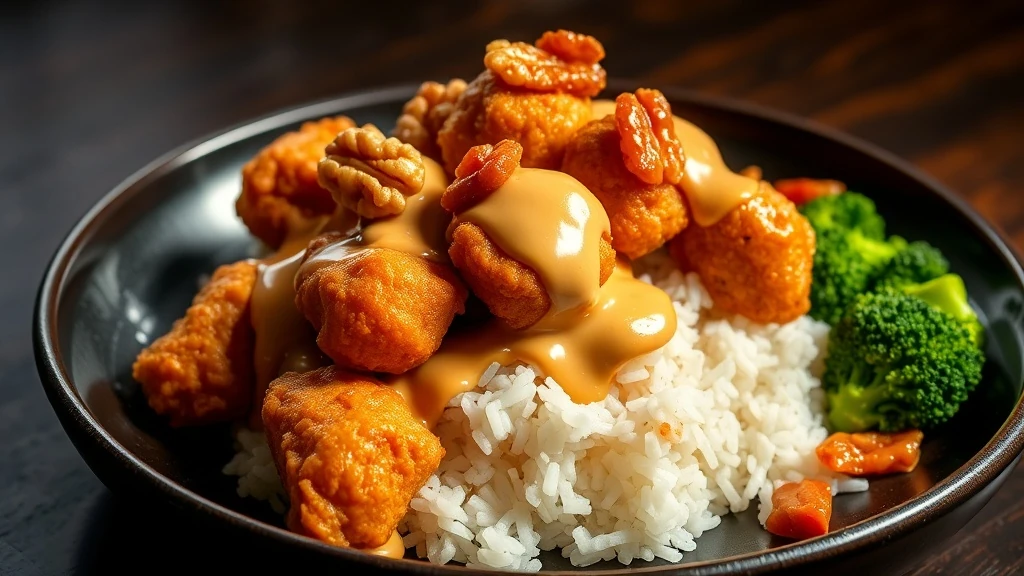
Rice, steamed broccoli or a crisp salad can make a meal, with their quantities chosen separately. For a related preparation, try honey walnut shrimp, honey sesame chicken or honey roasted walnuts.
Leftovers and the nutrition estimate
Refrigerate cooked portions promptly in shallow covered containers and use within 3–4 days, following USDA’s leftovers guidance. Store walnuts separately when possible. Reheating will soften the original coating, so expect a different texture.
No frying-oil absorption percentage has been invented for this recipe. The estimate below counts all measured oil, egg, starch and sauce as input, although some can remain in the mixing bowl or pan. That limitation is preferable to claiming a measured finished-dish calorie value.
Nutrition and ingredient evidence
One serving, 1/4 chicken, sauce and walnut batch, has an estimated 709.6 calories, 40.94 g fat, 5.87 g saturated fat, 42.89 g carbohydrate, 25.14 g sugars, 1.91 g fiber, 44.28 g protein, 466.51 mg sodium. These are USDA ingredient-input calculations divided by 4 servings, rather than measurements of the finished food. Brands, portion sizes and cooking change the result.
The input estimate allocates every measured ingredient, including all frying oil, egg coating, starch, walnuts and sauce, across 4 portions. It does not estimate oil absorption or deduct residue left in bowls or the pan. Rice and vegetables are additional.
- USDA FoodData Central 171077: Chicken, broiler or fryers, breast, skinless, boneless, meat only, raw.
- USDA FoodData Central 169698: Cornstarch.
- USDA FoodData Central 171287: Egg, whole, raw, fresh.
- USDA FoodData Central 173468: Salt, table.
- USDA FoodData Central 170931: Spices, pepper, black.
- USDA FoodData Central 171413: Oil, olive, salad or cooking.
- USDA FoodData Central 170187: Nuts, walnuts, english.
- USDA FoodData Central 169640: Honey.
- USDA FoodData Central 173647: Beverages, water, tap, drinking.
- USDA FoodData Central 171009: Salad dressing, mayonnaise, regular.
- USDA FoodData Central 171275: Milk, canned, condensed, sweetened.
- USDA FoodData Central 167747: Lemon juice, raw.
- USDA FoodData Central 173469: Vinegar, cider.