Why Honey Brown Sugar Salmon Works So Well
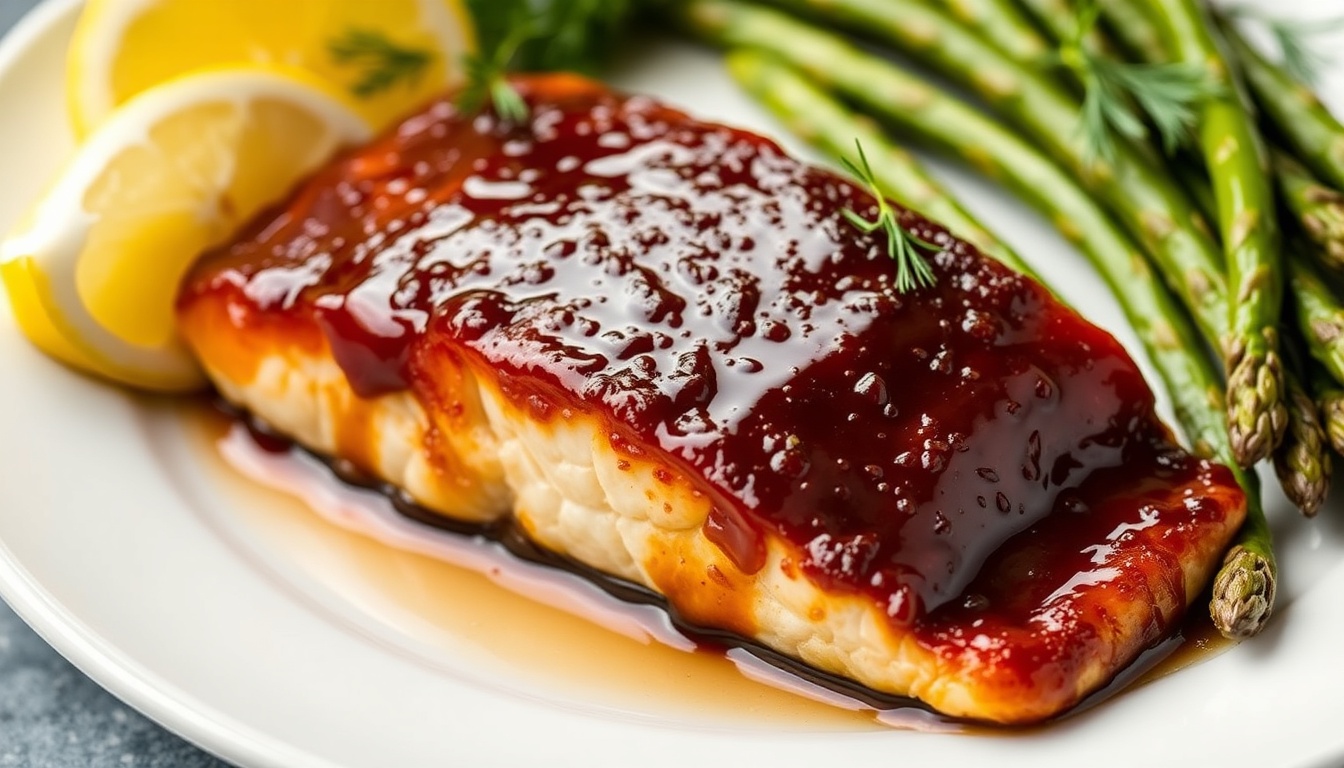
Honey brown sugar salmon combines two different types of sweetness — the floral, liquid sweetness of raw honey and the deep, molasses-tinged richness of brown sugar — to create a glaze that caramelizes into a sticky, almost candy-like crust on the salmon. The result is a balance between sweet, savory, and slightly smoky that pairs with the natural richness of the fish.
The science behind the glaze is straightforward. Brown sugar melts at roughly 320°F, forming a crispy shell on the salmon's surface. Honey, which caramelizes at a lower temperature (around 230°F), fills in the gaps and keeps the glaze sticky and glossy instead of dry and brittle. Together, they create a two-layer effect: a crispy caramelized top over a moist, flavorful glaze that clings to every bite.
This recipe takes 20 minutes total — 5 minutes to mix the glaze and season the fish, 12-15 minutes to cook. It works with any cooking method and any salmon cut, making it one of the most versatile fish recipes you can learn.
Choosing the Right Honey
The honey flavor comes through clearly in this dish, so choose intentionally.
- **Clover honey** — Mild and clean with subtle floral notes. Lets the brown sugar and soy take the lead while providing gentle caramelization. The safest all-purpose choice for this recipe.
- **Wildflower honey** — Adds complex floral depth that pairs beautifully with salmon's richness. Creates a sophisticated glaze with botanical complexity impossible to achieve with commercial honey.
- **Buckwheat honey** — Dark, robust, almost smoky with mineral undertones. Creates the deepest, most caramelized glaze with bold malty flavors. Excellent if you prefer assertive honey character.
- **Manuka honey** — Earthy, herbaceous undertones with subtle bitterness that contrasts beautifully with brown sugar sweetness. A premium choice for special dinners when you want honey character to shine.
- **Orange blossom honey** — Light citrus notes complement salmon perfectly while adding bright complexity to the caramelized glaze. Exceptional with lemon garnish.
- **Acacia honey** — Very mild and delicate with clean sweetness. Ideal when you want brown sugar to dominate while honey provides caramelization structure.
Pro Tip
For maximum nutritional benefit, mix the honey into the glaze without heating it first. It will melt and incorporate as the salmon cooks.
Get the Honey Buyer's Cheat Sheet (free PDF)
16 varieties on one page — color, flavor, best use and what a fair price looks like — from the 304 honeys we track.
The Complete Recipe: Honey Brown Sugar Salmon
Serves 4. Total time: 20 minutes.
Ingredients
**For the glaze:**
- 2 tablespoons raw honey
- 2 tablespoons packed brown sugar (dark or light)
- 2 tablespoons soy sauce (or tamari for gluten-free)
- 1 tablespoon olive oil
- 3 cloves garlic, minced
- 1/2 teaspoon smoked paprika
- 1/4 teaspoon black pepper
- Pinch of red pepper flakes (optional)
**For the salmon:**
- 4 salmon fillets (6 oz each, skin-on or skinless)
- 1/2 teaspoon salt
- Lemon wedges for serving
- Fresh parsley or green onions for garnish
Step-by-Step Instructions (Oven Method)
**Step 1: Make the glaze.** Whisk together honey, brown sugar, soy sauce, olive oil, garlic, smoked paprika, pepper, and red pepper flakes in a small bowl until the brown sugar dissolves. This takes about 30 seconds of vigorous whisking.
**Step 2: Prep the salmon.** Pat salmon fillets dry with paper towels and season with salt. Place skin-side down on a parchment-lined baking sheet. Spoon half the glaze over each fillet, spreading it evenly across the top and sides. Reserve the remaining glaze.
**Step 3: Bake.** Cook in a preheated 400°F oven for 12-15 minutes, depending on thickness. At the 8-minute mark, brush with the reserved glaze — this builds up the sticky, layered coating.
**Step 4: Broil (optional but recommended).** Switch the oven to broil for the last 1-2 minutes. Watch carefully — the sugars caramelize fast under direct heat. You want deep golden-brown, not black. The glaze will bubble and darken slightly, forming a crispy shell.
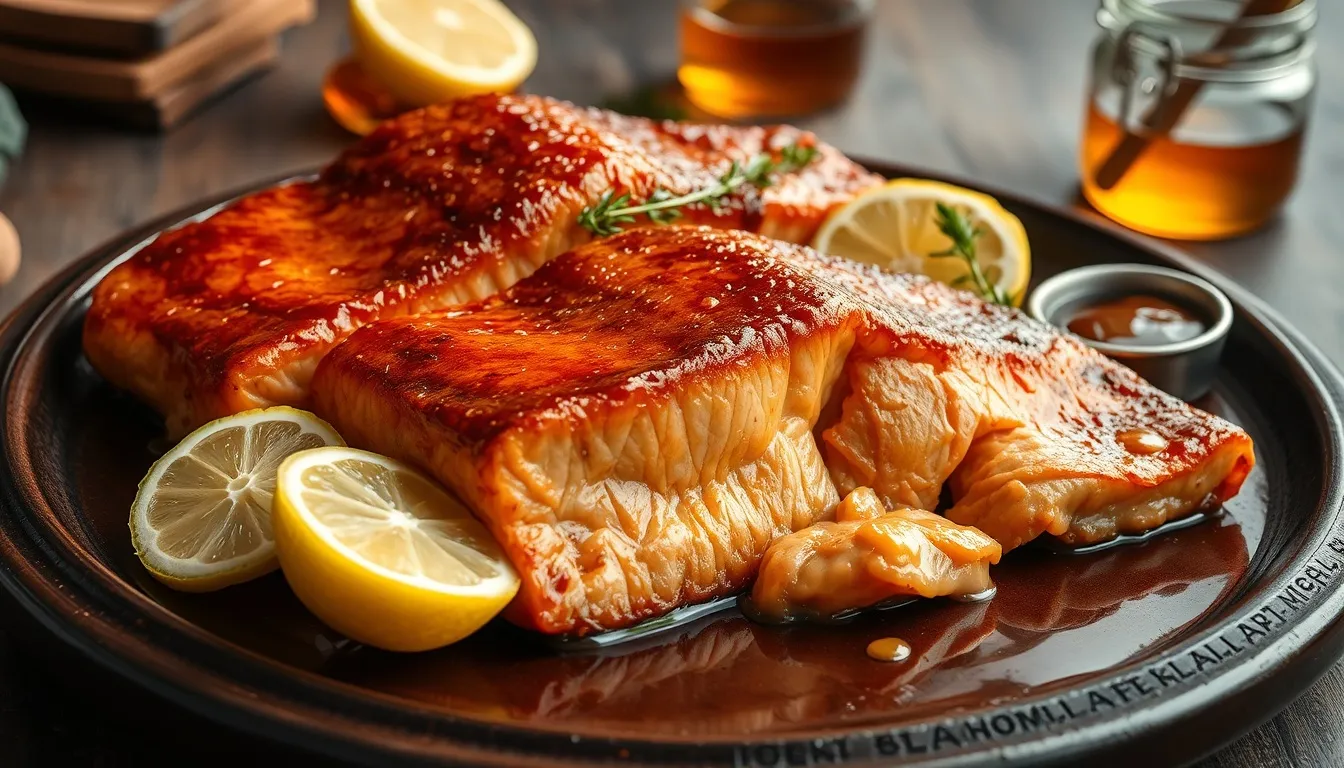
**Step 5: Rest and serve.** Remove from oven and let rest 2 minutes. The glaze thickens as it cools slightly. Squeeze lemon over each fillet, garnish with parsley or green onions, and serve.
Pro Tip
Salmon is done when it flakes easily with a fork and reaches 145°F internal temperature. For medium-rare (a restaurant preference), pull it at 125°F — the carryover heat will bring it to 130°F during the 2-minute rest.
3 Alternative Cooking Methods
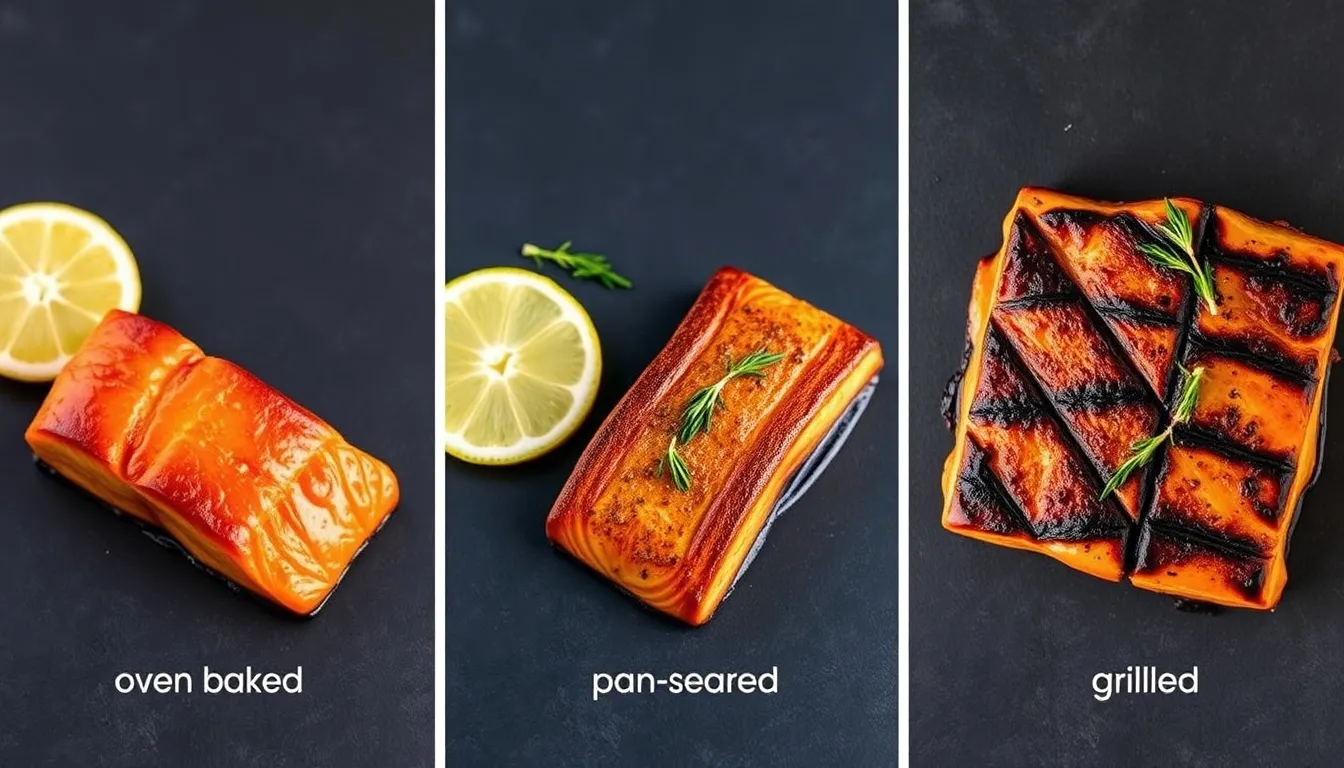
- **Air fryer (12 minutes):** Place glazed salmon in the air fryer basket at 380°F for 10 minutes. Brush with reserved glaze at the 6-minute mark. Increase to 400°F for the final 2 minutes to caramelize the top. Works best with skin-on fillets to prevent sticking.
- **Grill (10 minutes):** Oil the grill grates well. Place salmon skin-side down over medium-high heat (400°F). Close the lid and cook 8-10 minutes without flipping — the skin protects the flesh from direct heat. Brush with glaze every 3 minutes. The smokiness from the grill adds another flavor dimension.
- **Pan-seared (8 minutes):** Heat 1 tablespoon oil in a skillet over medium-high heat. Place salmon skin-side up and sear 3 minutes until a crust forms. Flip and cook 3-4 minutes skin-side down. Pour the glaze over the fillets, reduce heat to low, and let it bubble for 1-2 minutes until sticky. Baste the salmon with the pan glaze.
Choosing and Preparing Salmon
Both wild-caught and farmed salmon work in this recipe, but they cook differently.
Wild-caught salmon (sockeye, coho, king) is leaner and cooks faster. Reduce oven time by 2 minutes and watch carefully — lean fish goes from perfectly done to dry quickly. The stronger flavor of wild salmon stands up well to the sweet glaze.
Farmed Atlantic salmon is fattier and more forgiving. The higher fat content keeps it moist even if slightly overcooked, and the milder flavor lets the honey brown sugar glaze shine. This is the more beginner-friendly option.
Regardless of type, look for fillets that are even in thickness (about 1 inch). If one end is thinner, tuck it under itself to create uniform thickness — this prevents the thin end from overcooking while the thick end finishes.
Serving Suggestions
- **Steamed rice** — White or brown. The glaze drips into the rice, creating flavor in every bite.
- **Roasted broccoli or asparagus** — A quick sheet pan side that can cook alongside the salmon.
- **Honey roasted vegetables** — The sweet theme carries through the entire plate.
- **Mashed sweet potatoes** — The natural sweetness of honey roasted sweet potatoes mirrors the glaze.
- **Asian slaw** — Shredded cabbage, carrots, and cilantro with a rice vinegar dressing cuts through the richness.
- **Quinoa or couscous** — Light, fluffy grains that soak up the glaze without adding heaviness.
Storage and Meal Prep
**Refrigerator:** Store cooked salmon in an airtight container for up to 3 days. Reheat gently at 275°F for 8-10 minutes — low and slow prevents drying out. The glaze will re-melt in the oven.
**Freezer:** Freeze the uncooked glaze in ice cube trays for up to 3 months. When ready to use, thaw a glaze cube, spread on fresh salmon, and cook as directed. Freezing already-cooked salmon with the glaze is possible but the texture of the fish degrades.
**Meal prep tip:** Make a double batch of the glaze and store in a jar in the refrigerator for up to 2 weeks. It works on chicken, pork chops, shrimp, and roasted vegetables too — not just salmon.
Nutrition Notes
Per serving (one 6-oz fillet with glaze): approximately 350 calories, 34g protein, 14g fat, 18g carbohydrates. Salmon is one of the best natural sources of omega-3 fatty acids (EPA and DHA), providing roughly 2g per serving.
The combination of raw honey and brown sugar adds about 15g of sugar per serving, but this is spread across a protein-rich, omega-3-packed meal. The soy sauce adds about 450mg sodium — use low-sodium soy sauce if watching salt intake.