Why Honey and Dijon Mustard Is the Perfect Pairing
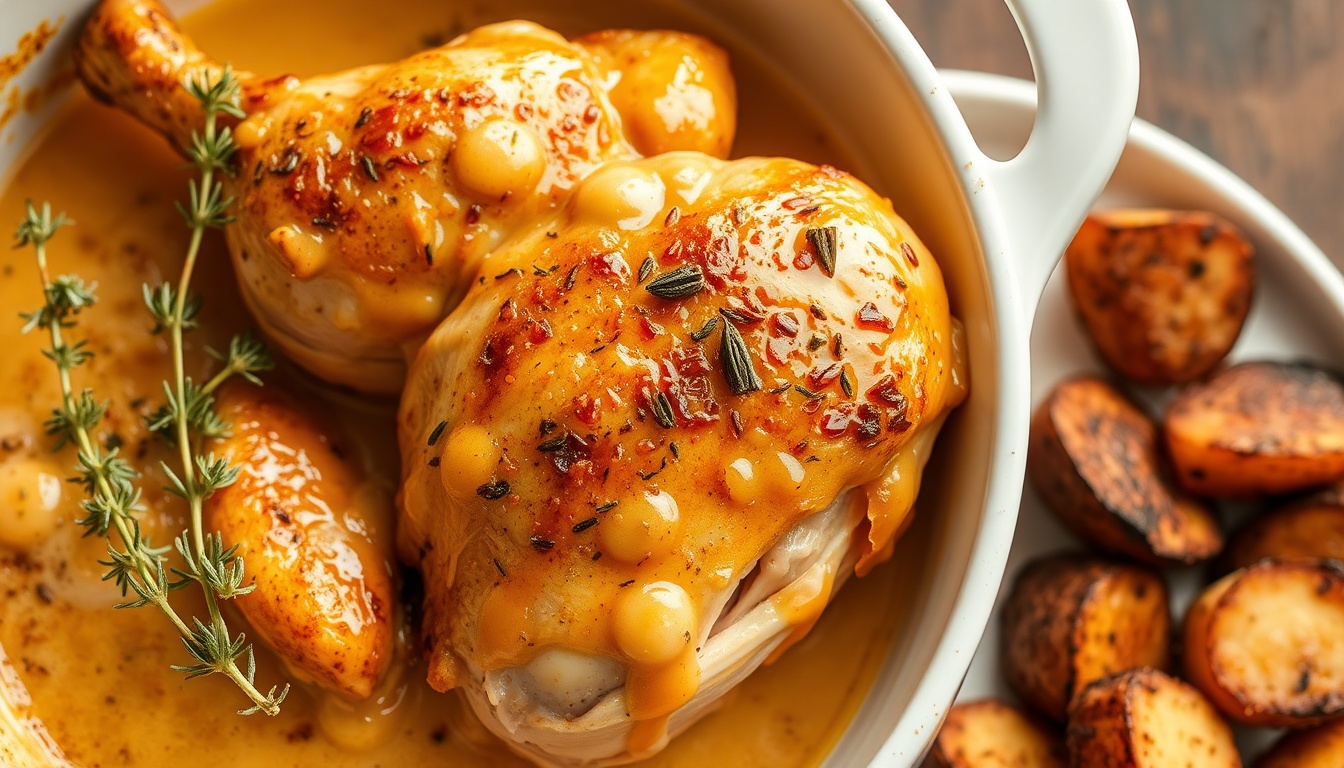
Honey Dijon chicken is one of those recipes that sounds simple because it is — and that simplicity is the point. The combination of honey and Dijon mustard creates a sauce that balances sweet, tangy, sharp, and savory in every bite. The mustard cuts through the sweetness, the honey rounds out the mustard's bite, and together they form a glossy glaze that caramelizes beautifully on chicken.
The science behind the pairing is straightforward. Dijon mustard contains acetic acid and allyl isothiocyanate (the compound that gives mustard its heat), which activate the same taste receptors that make sweet flavors more intense by contrast. Meanwhile, honey's fructose caramelizes at 230°F — below the oven temperature — creating Maillard browning reactions that produce hundreds of complex flavor compounds on the chicken's surface.
This recipe works with both chicken breasts and thighs, cooks in one pan for easy cleanup, and comes together in about 30 minutes. It's the kind of weeknight dinner that feels effortless but tastes like you spent an hour on it. The honey glaze technique here is similar to our other chicken recipes like honey mustard chicken, but the Dijon adds a distinctly French sophistication.
Ingredients
Serves 4 with simple pantry-staple ingredients.
- **Chicken breasts:** 4 boneless, skinless (about 6 oz each) — pound to even thickness for uniform cooking; or use bone-in thighs (see Variations)
- **Raw honey:** 3 tablespoons (65g) — clover or wildflower are ideal
- **Dijon mustard:** 3 tablespoons — use the real thing, not yellow mustard; stone-ground Dijon also works for extra texture
- **Olive oil:** 2 tablespoons — for searing; divided between the pan and the sauce
- **Garlic:** 3 cloves, minced — freshly minced, not jarred
- **Apple cider vinegar:** 1 tablespoon — brightens the sauce and adds depth
- **Dried thyme:** 1 teaspoon (or 1 tablespoon fresh) — classic French herb pairing with mustard
- **Salt and black pepper:** to taste
- **Fresh parsley:** for garnish (optional)
Get the Honey Buyer's Cheat Sheet (free PDF)
16 varieties on one page — color, flavor, best use and what a fair price looks like — from the 304 honeys we track.
Best Honey Varieties for Dijon Chicken
The honey you choose will shift the flavor balance of the Dijon glaze.
- **Clover honey:** Best all-around choice — clean sweetness that lets the Dijon shine
- **Wildflower honey:** Slightly more floral, adding complexity to the glaze
- **Acacia honey:** Very mild — puts the mustard center stage for a more savory result
- **Orange blossom honey:** Adds a citrus brightness that pairs beautifully with the thyme and mustard
- **Lavender honey:** A distinctly French combination — floral and elegant, especially good with fresh thyme and a side of roasted potatoes
Pro Tip
Stick with lighter honeys for Dijon chicken. Dark honeys like buckwheat overpower the mustard's nuance and can make the glaze taste heavy.
Step-by-Step Instructions
**Step 1: Make the honey Dijon sauce.** Whisk together honey, Dijon mustard, 1 tablespoon olive oil, apple cider vinegar, minced garlic, dried thyme, and a pinch each of salt and pepper in a small bowl until smooth and fully combined. Set aside.
**Step 2: Prep the chicken.** Pat chicken breasts completely dry with paper towels — this is critical for a good sear. If breasts are uneven in thickness, pound them gently with a meat mallet or rolling pin to about ¾ inch thickness. Season both sides with salt and pepper.
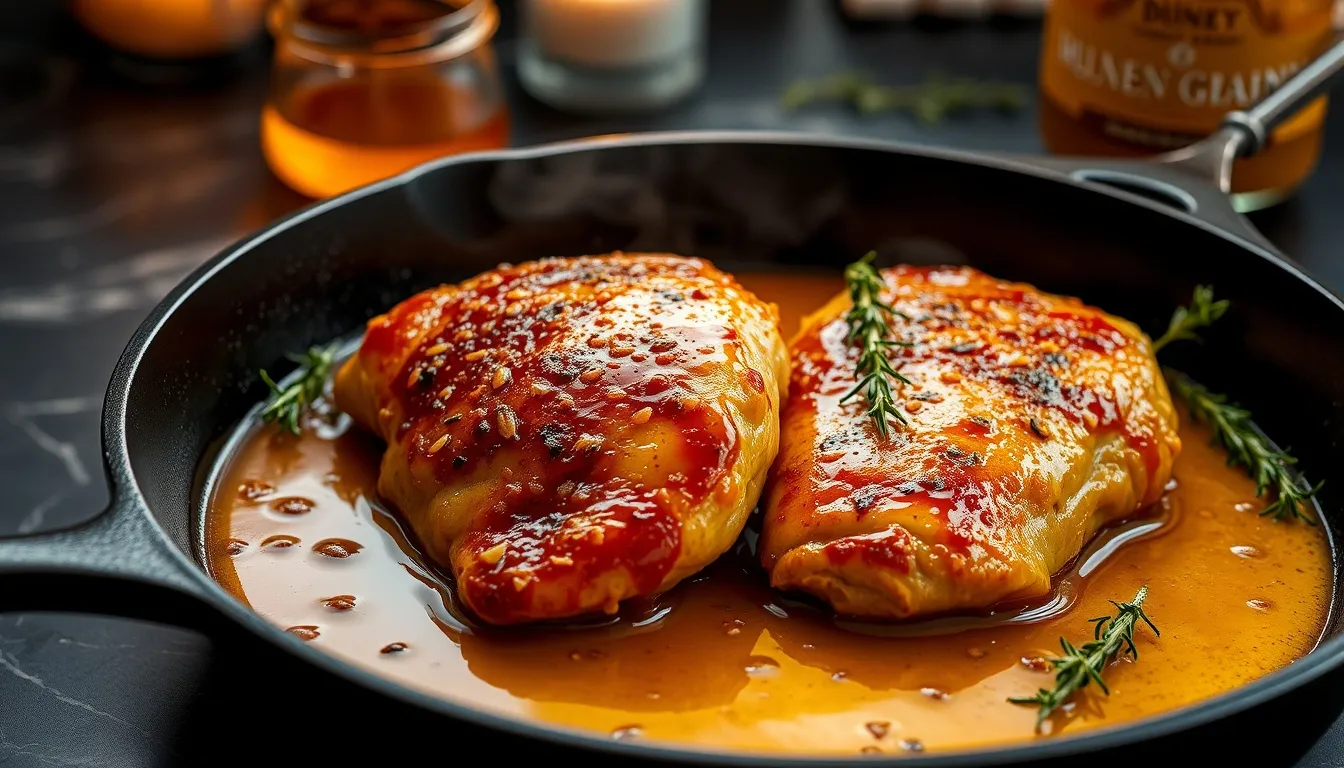
**Step 3: Sear the chicken.** Heat 1 tablespoon olive oil in a large oven-safe skillet over medium-high heat until shimmering. Add chicken breasts and sear without moving for 4-5 minutes until the bottom develops a golden-brown crust. Flip once.
**Step 4: Add the sauce and finish.** Pour the honey Dijon sauce over the seared chicken, spooning it across the top of each breast. For stovetop: reduce heat to medium-low, cover, and cook 8-10 minutes until internal temperature reaches 165°F. For oven: transfer the skillet to a preheated 400°F oven and bake uncovered for 12-15 minutes.
**Step 5: Rest and serve.** Remove chicken from the pan and let rest on a cutting board for 5 minutes (the internal temperature will climb another 5°F during resting). Stir the pan sauce, scraping up any caramelized bits. Spoon the sauce over the chicken, garnish with fresh parsley, and serve immediately.
Pro Tip
Don't skip the resting step. Cutting into chicken immediately after cooking causes the juices to run out, leaving you with dry meat. Five minutes of resting redistributes the moisture throughout the breast.
5 Variations
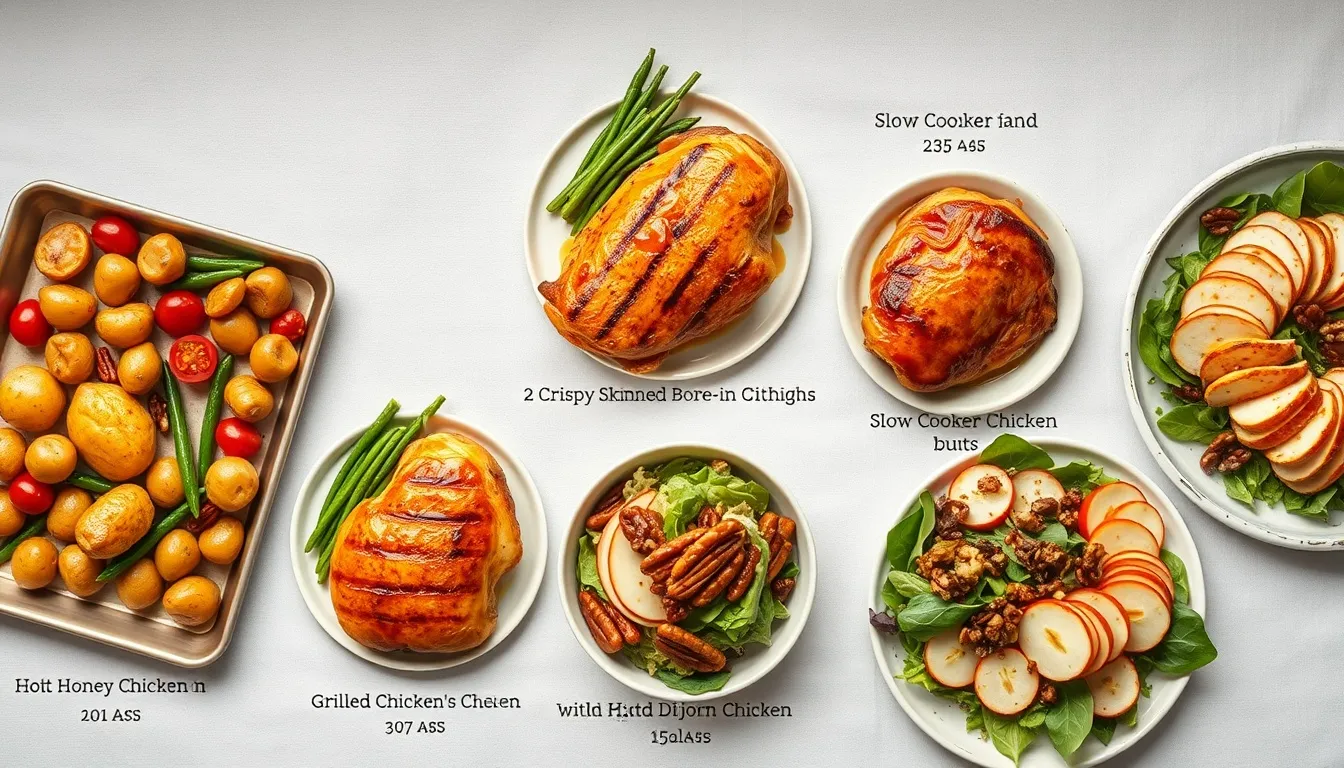
**1. Sheet Pan Honey Dijon Chicken and Vegetables:** Arrange seasoned chicken in the center of a sheet pan with halved baby potatoes, green beans, and cherry tomatoes around it. Pour the honey Dijon sauce over everything. Bake at 400°F for 25-30 minutes. A complete one-pan dinner with zero cleanup stress.
**2. Grilled Honey Dijon Chicken:** Reserve half the sauce for brushing during grilling and half for serving. Grill chicken over medium-high heat (400-450°F) for 5-6 minutes per side, brushing with sauce during the last 2 minutes on each side. The grill chars add a smoky dimension that complements the tangy mustard beautifully.
**3. Honey Dijon Chicken Thighs:** Substitute 8 bone-in, skin-on chicken thighs. Sear skin-side down for 6-7 minutes until the skin is crispy and golden. Flip, add sauce, and bake at 400°F for 20-25 minutes until internal temp reaches 175°F. The thigh's higher fat content produces an even more flavorful dish.
**4. Slow Cooker Honey Dijon Chicken:** Place chicken in a slow cooker and pour the honey Dijon sauce over top. Cook on low for 4-5 hours or high for 2-3 hours. The chicken becomes incredibly tender — shred it with two forks for honey Dijon pulled chicken sandwiches, wraps, or grain bowls.
**5. Honey Dijon Chicken Salad:** Use leftover or slow-cooker honey Dijon chicken. Dice and toss with mixed greens, sliced apples, candied pecans, crumbled goat cheese, and a honey Dijon vinaigrette (whisk equal parts honey, Dijon, olive oil, and apple cider vinegar). A restaurant-quality salad from leftovers.
Serving Suggestions
Honey Dijon chicken pairs well with sides that absorb or complement the tangy-sweet sauce.
- **Mashed potatoes:** Classic comfort pairing — the sauce mingles with the potatoes perfectly
- **Rice pilaf or honey bread:** Both soak up the pan sauce beautifully
- **Roasted vegetables:** Asparagus, green beans, Brussels sprouts, or roasted carrots
- **Simple green salad:** A peppery arugula salad with lemon vinaigrette cuts through the richness
- **Couscous or quinoa:** Light grains that let the chicken and sauce be the star
- **Steamed broccoli:** A quick, easy side that balances the richness of the glaze
Tips for the Best Honey Dijon Chicken
These tips address the most common mistakes with glazed chicken recipes.
- **Dry the chicken thoroughly.** Moisture on the surface creates steam instead of browning. Pat with paper towels until completely dry before seasoning.
- **Don't move the chicken during searing.** Let it sit untouched for 4-5 minutes to develop a golden crust. Lifting and moving prevents proper Maillard reactions.
- **Use an instant-read thermometer.** Chicken breast goes from juicy to dry in a narrow temperature window. Pull at 160-163°F — carryover cooking during resting brings it to the safe 165°F.
- **Make extra sauce.** Double the honey Dijon sauce — use half for cooking and reserve half for drizzling over the finished dish. The raw sauce has a brighter, more vibrant flavor than the cooked version.
- **Use real Dijon.** Yellow mustard and Dijon are completely different products. Dijon is made with brown or black mustard seeds and verjuice (unripe grape juice), producing a complex, sharp flavor that yellow mustard can't replicate.
- **Don't burn the honey.** If using the stovetop method, keep the heat at medium-low after adding the sauce. Honey's sugars burn easily at high temperatures, turning the glaze bitter.
Storage and Meal Prep
Honey Dijon chicken is excellent for meal prep — the sauce keeps the chicken moist during reheating.
- **Refrigerator:** 3-4 days in an airtight container with sauce spooned over the chicken. Store sauce and chicken together for best results.
- **Reheating:** Microwave at 50% power in 30-second intervals (full power overcooks chicken) or reheat in a skillet with a splash of water, covered, over medium-low heat until warmed through.
- **Freezer:** Up to 3 months. Slice the chicken and store in a freezer-safe container with the sauce. Thaw overnight in the refrigerator. The honey in the sauce helps prevent freezer dryness.
- **Meal prep tip:** Cook a double batch on Sunday. Slice for weekday lunches over rice, salads, or in wraps. The Dijon flavor actually improves overnight as the mustard mellows into the chicken.
Nutrition Highlights
This recipe delivers a high-protein, moderate-calorie dinner. Each serving provides roughly 35 grams of protein from the chicken breast with about 280 calories total. The honey adds natural sweetness and a floral note that refined sugar lacks.
Dijon mustard contributes selenium and omega-3 fatty acids from the mustard seeds, plus turmeric as a coloring agent. The apple cider vinegar adds tang that cuts the richness, and the garlic adds savory depth. For more on the pairing, see our honey and garlic guide.