Why Honey Garlic Pork Tenderloin Works So Well
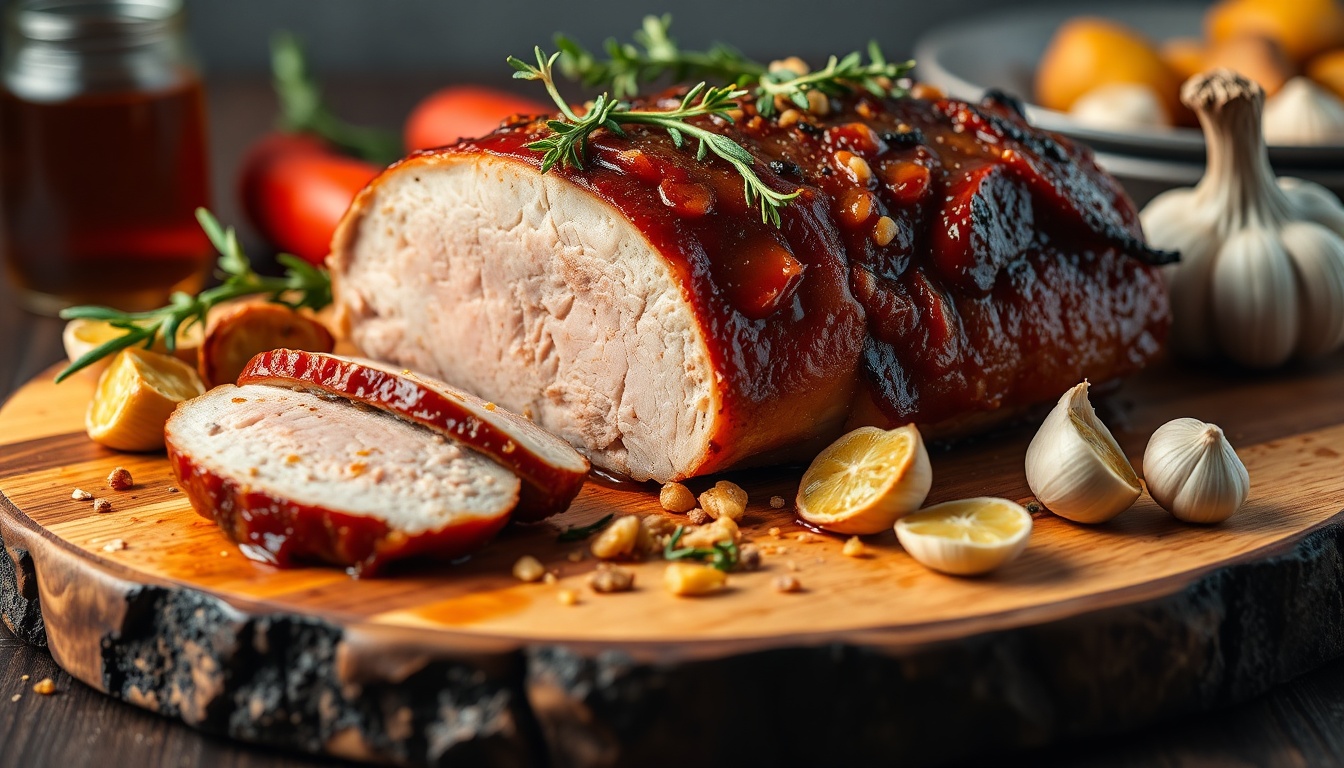
Pork tenderloin is one of the leanest, most tender cuts of pork, but its mild flavor makes it a blank canvas that thrives with a bold glaze. Honey is the ideal glaze base because its fructose caramelizes at just 230°F, well below the temperature you roast pork, creating a sticky, lacquered crust while the interior stays juicy.
The garlic-honey combination works on multiple levels. Raw garlic contributes sharp allicin compounds that mellow and sweeten during roasting, while the Maillard reaction between honey sugars and pork proteins generates hundreds of flavor compounds that neither ingredient produces alone.
Unlike pork chops or roasts, tenderloin cooks fast (20-25 minutes at high heat), making this a true weeknight dinner. A quick sear followed by oven roasting gives you a caramelized exterior and perfectly pink interior every time.
Choosing the Right Honey
The honey variety you choose shapes the final flavor of your glaze. Here are the best options for pork tenderloin:
- **Wildflower honey** — The all-around best choice. Complex floral notes complement pork without overpowering it, and the moderate flavor intensity balances well with garlic and soy sauce.
- **Clover honey** — Clean, mild sweetness that lets the garlic and pork shine. The most neutral option if you want the other flavors to dominate.
- **Orange blossom honey** — Adds a subtle citrus note that pairs beautifully with pork. Excellent if you enjoy fruity-savory combinations.
- **Buckwheat honey** — Bold, molasses-like depth for a more robust glaze. Creates the darkest caramelization and richest flavor, ideal for fall and winter meals.
- **Sourwood honey** — Caramel and anise undertones that give the glaze a sophisticated, slightly complex character. A premium choice worth trying.
Pro Tip
Use raw honey when possible. The enzymes and polyphenols in raw honey contribute to better browning and more complex flavor development during roasting.
Get the Honey Buyer's Cheat Sheet (free PDF)
16 varieties on one page — color, flavor, best use and what a fair price looks like — from the 304 honeys we track.
Honey Garlic Pork Tenderloin Recipe
This recipe uses a sear-then-roast method for the best crust and juiciest interior. The glaze goes on twice: once before roasting for base flavor, and once after for a sticky, caramelized finish.
Ingredients
- 1.5 lb pork tenderloin (silver skin removed)
- 3 tablespoons honey (wildflower or clover)
- 4 cloves garlic, minced
- 2 tablespoons soy sauce (or tamari for gluten-free)
- 1 tablespoon olive oil
- 1 tablespoon Dijon mustard
- 1 teaspoon smoked paprika
- 1/2 teaspoon black pepper
- 1/2 teaspoon onion powder
- Fresh rosemary or thyme sprigs (optional)
Instructions
**Step 1: Prepare the glaze.** Whisk together honey, minced garlic, soy sauce, Dijon mustard, smoked paprika, black pepper, and onion powder in a small bowl. Set aside.
**Step 2: Prep the tenderloin.** Pat pork tenderloin completely dry with paper towels. This is critical for a good sear. If the tenderloin has a thin tail end, tuck it under and tie with kitchen twine for even cooking.
**Step 3: Sear the pork.** Heat olive oil in an oven-safe skillet over medium-high heat until shimmering. Sear the tenderloin for 2-3 minutes per side (about 8 minutes total) until golden brown on all sides.
**Step 4: Glaze and roast.** Preheat oven to 400°F. Brush half the honey garlic glaze over the seared tenderloin. Transfer the skillet to the oven and roast for 15-18 minutes, or until a meat thermometer reads 140°F.
**Step 5: Final glaze and rest.** Remove from oven, brush remaining glaze over the pork, and tent loosely with foil. Rest for 8-10 minutes. The internal temperature will rise to 145°F (USDA safe temp for pork). Slice into 1/2-inch medallions and spoon any pan juices over the top.
Pro Tip
An instant-read thermometer is non-negotiable for pork tenderloin. Pull at 140°F and let carryover cooking bring it to 145°F. Even 5 degrees over will dry out this lean cut.
5 Honey Garlic Glaze Variations
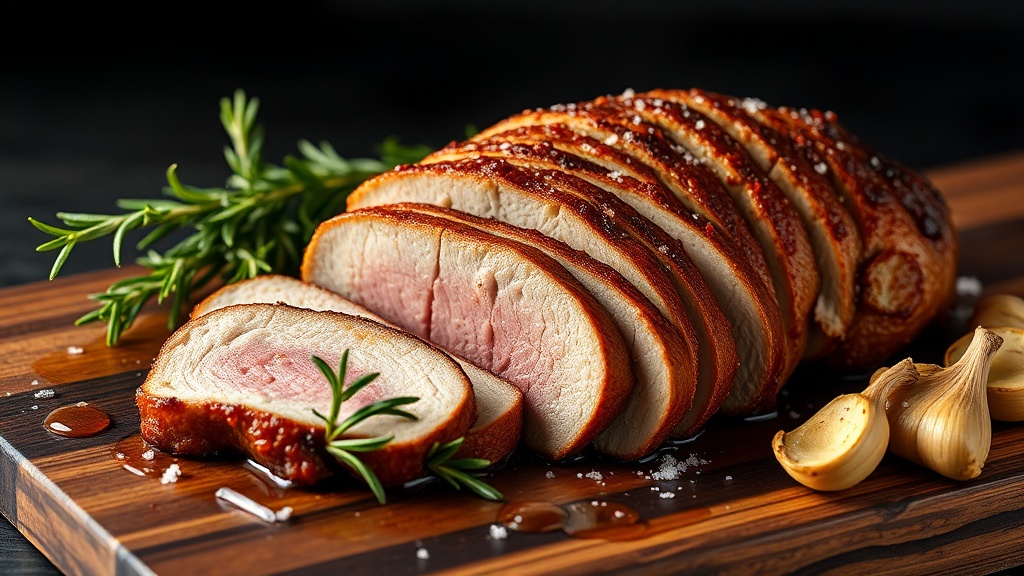
Once you master the base recipe, try these twists to keep honey garlic pork tenderloin in your regular rotation:
- **Honey garlic butter** — Add 2 tablespoons of melted butter to the glaze and baste during the last 5 minutes of roasting. The butter emulsifies with honey for an impossibly rich, glossy finish.
- **Asian-style honey garlic** — Replace Dijon with 1 tablespoon rice vinegar, add 1 teaspoon sesame oil and 1 teaspoon grated fresh ginger. Garnish with sesame seeds and sliced scallions.
- **Spicy honey garlic** — Add 1-2 teaspoons of hot honey or sriracha to the base glaze. The capsaicin heat contrasts with honey sweetness for an addictive sweet-spicy crust.
- **Honey mustard herb** — Double the Dijon to 2 tablespoons, add 1 tablespoon whole-grain mustard and 1 tablespoon fresh chopped rosemary. A French-inspired variation.
- **Honey balsamic garlic** — Add 2 tablespoons of balsamic vinegar to the glaze. The acidity cuts through the richness and creates a darker, more complex caramelization.
Best Side Dishes
Honey garlic pork tenderloin pairs well with sides that complement or contrast the sweet-savory glaze:
- Honey roasted carrots — The classic pairing. Roast them alongside the pork for a one-pan approach.
- Honey garlic green beans — Quick skillet side that matches the pork's flavor profile perfectly.
- Honey roasted sweet potatoes — Caramelized sweetness that echoes the glaze.
- Mashed potatoes — Creamy and neutral, letting the honey garlic glaze be the star.
- Simple green salad with honey vinaigrette — Bright acidity balances the richness.
- Rice or honey garlic noodles — Catches every drop of the pan sauce.
Tips for Perfect Pork Tenderloin
Pork tenderloin is forgiving if you follow a few key principles:
- **Remove the silver skin.** That thin, silvery membrane on one side will not render during cooking and turns tough and chewy. Slide a sharp knife under one end and pull it off in strips.
- **Dry the surface thoroughly.** Moisture is the enemy of browning. Pat with paper towels and let sit uncovered for 10 minutes before searing.
- **Don't skip the sear.** The Maillard reaction during searing creates flavor compounds that roasting alone cannot replicate.
- **Use a meat thermometer.** Tenderloin goes from perfect to dry in minutes. Pull at 140°F, not 145°F — carryover cooking finishes the job.
- **Rest before slicing.** The 8-10 minute rest lets muscle fibers relax and reabsorb juices. Skip this and the juices run out onto the cutting board instead of staying in the meat.
- **Tuck the thin end.** If one end tapers significantly, fold it under itself and tie with twine so the whole tenderloin cooks evenly.
Pro Tip
Leftover sliced pork tenderloin keeps well for 3-4 days in the fridge and makes excellent sandwiches, salads, or grain bowls. Reheat gently at 300°F to avoid drying out.
Meal Prep and Storage
Honey garlic pork tenderloin is excellent for meal prep. The honey glaze acts as a natural moisture barrier, keeping the pork juicier during refrigeration than unglazed lean pork.
- **Fridge:** Store sliced or whole in an airtight container for 3-4 days. Spoon pan juices over the meat before sealing.
- **Freezer:** Wrap tightly in plastic wrap, then foil. Freezes well for up to 3 months. Thaw overnight in the fridge.
- **Reheating:** Warm slices in a 300°F oven for 8-10 minutes, covered with foil, with a splash of broth or water to prevent drying.
- **Make-ahead glaze:** Mix the honey garlic glaze up to 3 days ahead and refrigerate. Bring to room temperature before using.
Why Honey Beats Sugar for Pork Glazes
Many pork glaze recipes call for brown sugar, but honey is the superior choice for several practical reasons. Honey's fructose caramelizes at a lower temperature (230°F vs 320°F for sucrose), meaning you get beautiful browning without burning. Its hygroscopic nature pulls moisture from the air, keeping the lean pork moist even during high-heat roasting. And honey's viscosity creates a thicker, stickier glaze that clings to the meat better than a dissolved sugar glaze.
From a nutritional perspective, honey brings trace minerals like potassium and magnesium that brown sugar lacks entirely. The flavor is also more complex, with 180+ aromatic compounds versus brown sugar's one-note molasses taste.