Why Honey Glazed Drumsticks Are the Perfect Weeknight Dinner
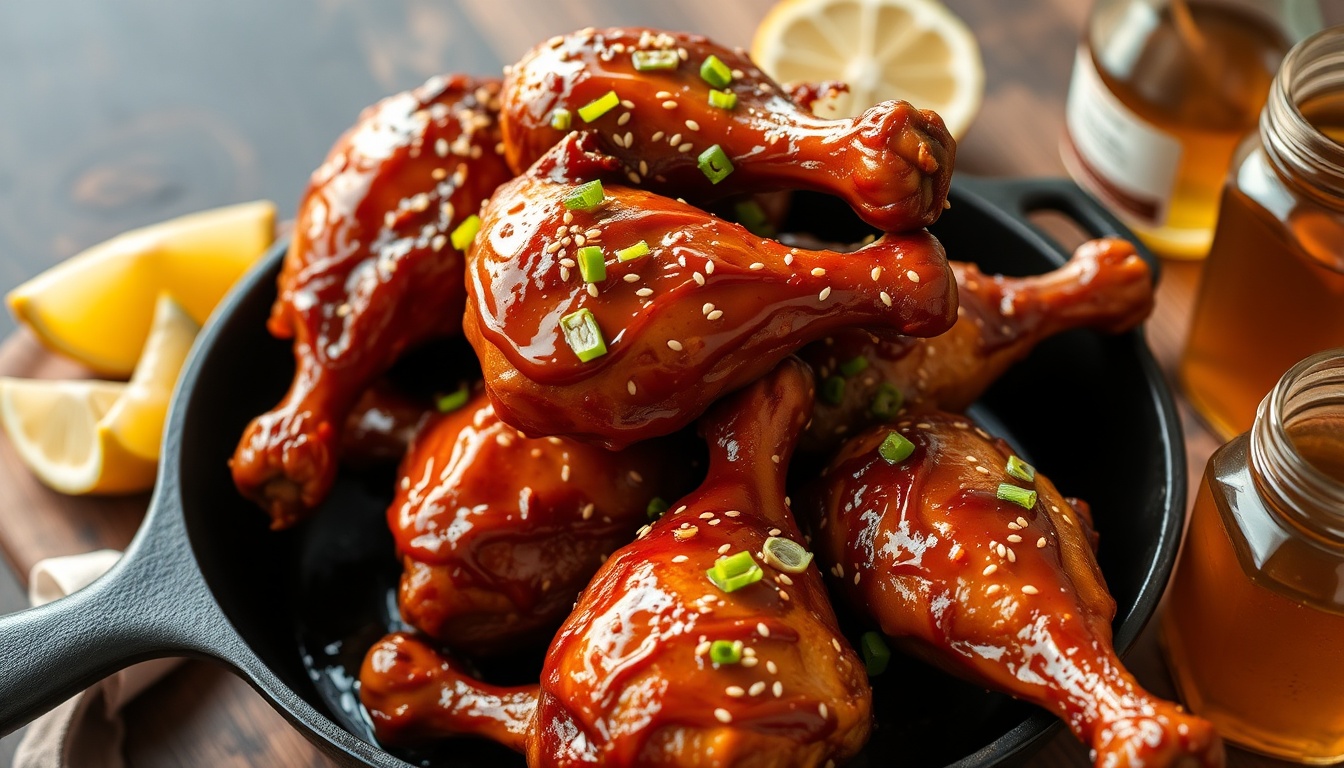
Chicken drumsticks are the most underrated cut at the grocery store. They cost a fraction of boneless breasts, stay juicy through longer cooking, and have more flavor thanks to the bone and dark meat. Coat them in a raw honey glaze and bake until the skin turns sticky and lacquered — you get a dinner that looks and tastes like it took far more effort than it did.
This recipe works because of how honey behaves in the oven. The natural sugars in honey begin caramelizing around 160°F (71°C), and by the time the drumsticks hit 400°F they develop a deep amber crust that clings to the skin. Basting halfway through builds layers of glaze — thin, glossy, and slightly charred at the edges.
Six ingredients, one sheet pan, 45 minutes. The hardest part is waiting for them to cool enough to eat.
Honey Glazed Chicken Drumsticks Recipe
This recipe serves 4 (8 drumsticks) and works in any standard oven. Use a rimmed baking sheet lined with foil for easy cleanup.
- **Ingredients:** 8 chicken drumsticks (about 3 lbs); 1/4 cup raw honey (wildflower or clover); 2 tablespoons soy sauce; 2 tablespoons olive oil; 4 cloves garlic, minced; 1 teaspoon smoked paprika; 1/2 teaspoon black pepper; salt to taste.
- **Step 1: Prep the drumsticks** — Pat drumsticks dry with paper towels. Score each one with 2-3 shallow cuts through the skin and into the meat. This lets the glaze penetrate deeper and helps them cook evenly.
- **Step 2: Make the glaze** — Whisk together honey, soy sauce, olive oil, garlic, smoked paprika, and pepper in a large bowl. Reserve 2 tablespoons of glaze in a separate small bowl for basting.
- **Step 3: Coat the chicken** — Add drumsticks to the large bowl and toss until every piece is evenly coated. Let marinate 15 minutes at room temperature while the oven preheats, or up to 4 hours in the fridge.
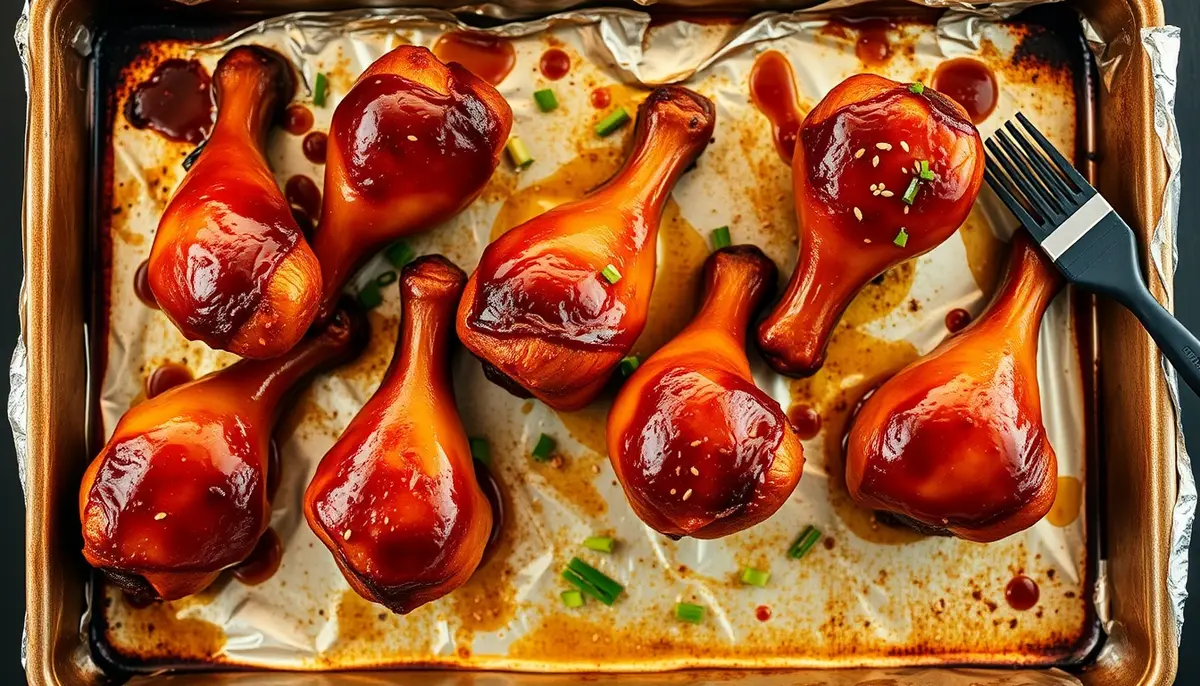
- **Step 4: Bake** — Arrange drumsticks on a foil-lined, lightly oiled rimmed baking sheet, spaced at least 1 inch apart. Bake at 400°F (200°C) for 25 minutes.
- **Step 5: Baste and finish** — Remove from oven, brush with reserved glaze, and flip each drumstick. Return to oven for 15-20 minutes until the internal temperature reaches 175°F (79°C) and the glaze is deeply caramelized.
- **Step 6: Rest and serve** — Let rest 5 minutes on the pan. The glaze will thicken and become tacky as it cools slightly. Garnish with sesame seeds or chopped parsley.
Pro Tip
Drumsticks are done at 165°F but taste best at 175°F — the extra 10 degrees renders more fat from the dark meat and makes them more tender without drying out. This is different from chicken breasts, which dry out above 165°F.
Get the Honey Buyer's Cheat Sheet (free PDF)
16 varieties on one page — color, flavor, best use and what a fair price looks like — from the 304 honeys we track.
Choosing the Best Honey for Glazed Drumsticks
The honey variety you use changes the flavor of the glaze. Since drumsticks have bold dark-meat flavor, they can handle stronger honeys that would overpower a mild chicken breast.
- **Wildflower honey** — The best all-purpose option. Complex floral notes complement the smoky paprika without competing. A good wildflower honey has enough character to stand up to the soy sauce.
- **Buckwheat honey** — Dark and malty, almost like molasses. Creates the richest, deepest glaze. Excellent if you like bold flavors.
- **Clover honey** — Light and clean, letting the garlic and paprika flavors lead. Best for families with pickier palates.
- **Orange blossom honey** — Adds a subtle citrus brightness that cuts through the richness of the dark meat. Great for summer.
- **Hot honey** — Use homemade hot honey for a sweet-spicy glaze without adding extra ingredients. The chili heat pairs perfectly with the smokiness of paprika.
5 Flavor Variations
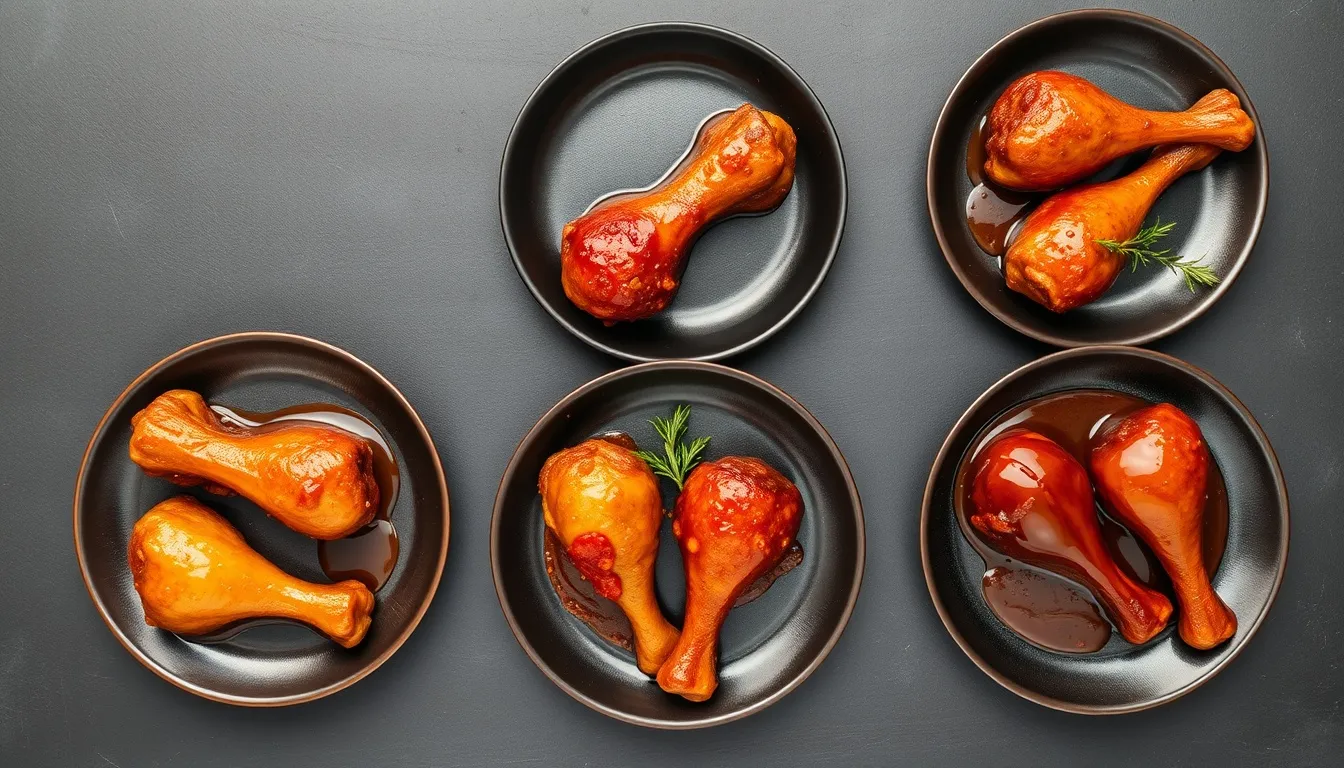
The base glaze is versatile. These swaps keep the technique identical while changing the flavor profile.
- **Honey mustard drumsticks** — Replace soy sauce with 2 tablespoons Dijon mustard. Add 1 teaspoon dried thyme. The tangy mustard balances the honey sweetness. See our honey mustard recipe for the classic ratio.
- **Honey BBQ drumsticks** — Add 2 tablespoons tomato paste and 1 teaspoon liquid smoke to the base glaze. Reduce soy sauce to 1 tablespoon. Smoky, tangy, and sweet. Pairs with our honey BBQ sauce.
- **Honey sriracha drumsticks** — Add 2 tablespoons sriracha to the glaze. The sweet-heat combination is addictive and the chili sauce adds a beautiful red tinge. For more heat ideas, see our honey sriracha sauce guide.
- **Honey garlic butter drumsticks** — Replace olive oil with 2 tablespoons melted butter. Double the garlic to 8 cloves. Brush with extra honey garlic butter in the final 5 minutes.
- **Honey teriyaki drumsticks** — Add 1 tablespoon rice vinegar and 1 teaspoon grated fresh ginger to the base glaze. Garnish with sliced scallions and sesame seeds.
Side Dishes That Work
The sticky, savory-sweet glaze pairs best with sides that can absorb extra sauce or provide textural contrast.
- **Steamed rice** — White or brown rice soaks up the drippings. Spoon pan juices over the rice.
- **Honey roasted carrots** — Roast alongside the drumsticks during the last 25 minutes for a one-pan meal.
- **Coleslaw** — The cool crunch and vinegar tang of slaw contrast perfectly with hot, sticky drumsticks.
- **Honey cornbread** — Warm cornbread and honey-glazed chicken is a Southern classic for good reason.
- **Roasted broccoli** — Toss broccoli florets with olive oil and salt, roast at 425°F for 15 minutes. The charred edges complement the sweet glaze.
- **Mashed potatoes** — Creamy potatoes are a natural vessel for the pan drippings and extra glaze.
Tips for the Best Results
A few small adjustments make the difference between good drumsticks and great ones.
- **Dry the skin thoroughly** — Moisture prevents crisping. Pat each drumstick with paper towels before scoring. For even crispier skin, air-dry uncovered on a rack in the fridge for 1-2 hours.
- **Score the meat** — Shallow cuts through the skin let the glaze penetrate and help the drumstick cook evenly all the way through.
- **Use a wire rack** — For the crispiest results, set drumsticks on a wire rack over the baking sheet. Air circulates under the chicken, crisping the bottom instead of letting it sit in rendered fat.
- **Don't crowd the pan** — Leave 1 inch between drumsticks. Overcrowding traps steam and prevents the skin from crisping and the glaze from caramelizing.
- **Watch the glaze carefully** — Honey caramelizes quickly above 350°F. If edges start looking too dark in the final 10 minutes, tent loosely with foil. Honey burns at different rates depending on the variety — darker honeys have more sugars that caramelize faster.
- **Use a meat thermometer** — Drumsticks should reach 175°F (79°C) in the thickest part, not touching bone. At this temperature the dark meat is tender and the collagen has broken down.
Meal Prep and Storage
Honey-glazed drumsticks reheat better than most chicken recipes because the dark meat stays moist and the glaze acts as a moisture barrier.
- **Refrigerator (4 days)** — Store in airtight containers. Reheat in a 375°F oven for 10-12 minutes to re-crisp the glaze. Microwaving works but softens the skin.
- **Freezer (3 months)** — Cool completely, wrap individually in plastic wrap, then store in a freezer bag. Thaw overnight in the fridge. Reheat in the oven.
- **Meal prep** — Cook a double batch on Sunday and portion with rice and roasted vegetables for 4-5 lunches. The glaze flavors improve after a day as the honey continues to permeate the meat.
- **Make the glaze ahead** — Mix the honey, soy, garlic, and spices up to 5 days ahead. Honey's natural antimicrobial properties help the glaze stay fresh.
Honey Glazed Drumsticks Nutrition
One serving (2 drumsticks with glaze) contains approximately 380 calories, 18g fat, 14g carbohydrates, and 40g protein. The carbohydrates come primarily from the honey and soy sauce.
Compared to commercial glazed chicken products that use corn syrup and artificial flavors, this recipe uses real honey with its floral aroma. The garlic adds savory depth, and smoked paprika is rich in vitamin A.
For a lower-sodium version, use reduced-sodium soy sauce or replace it with 1 tablespoon coconut aminos. For a lower-calorie version, remove the skin before baking — you lose the crispy texture but cut about 60 calories per serving.