Why Honey Garlic Butter Works So Well
Compound butter is one of the simplest ways to add restaurant-quality flavor to everyday cooking, and the honey-garlic combination is arguably the most versatile version you can make. The science is straightforward: butter carries fat-soluble flavors directly to your taste buds, honey adds sweetness that balances garlic's sharpness, and the fat in butter mellows raw garlic's bite while amplifying roasted garlic's caramel notes.
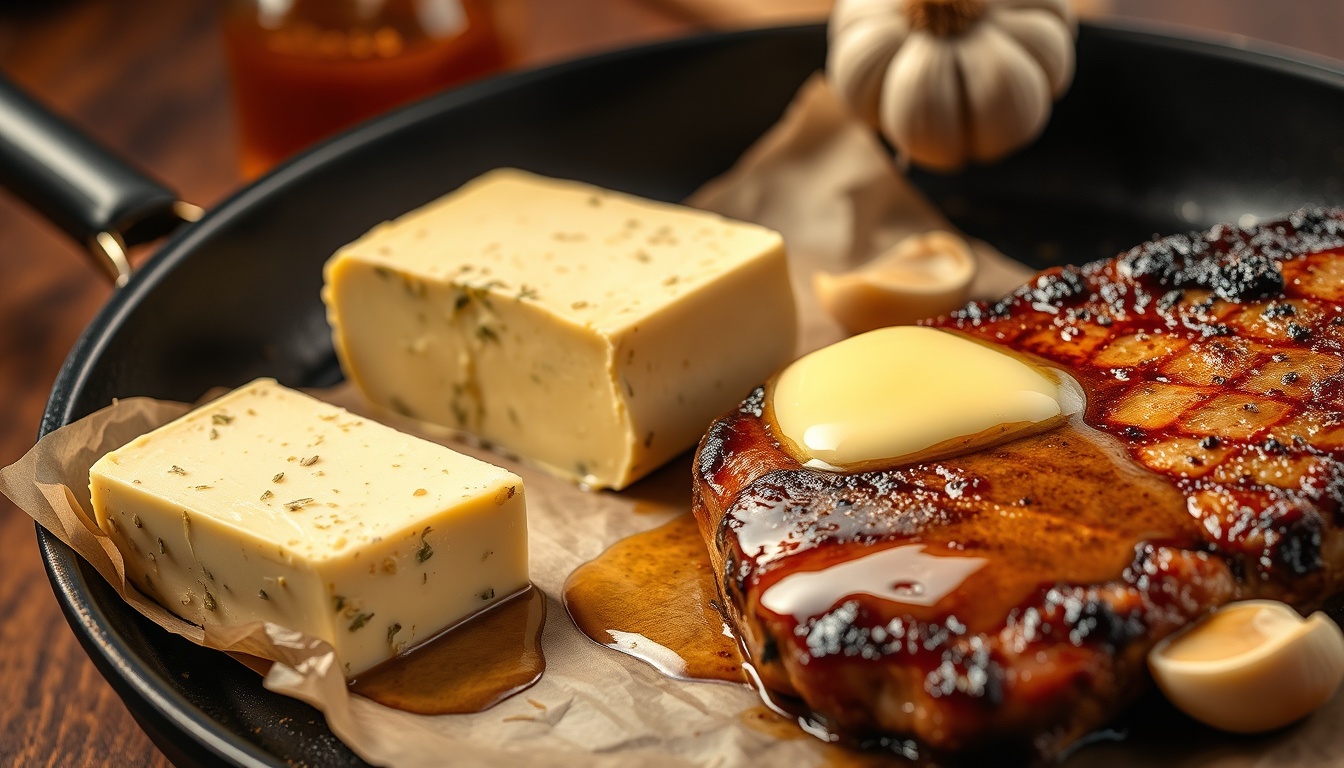
What makes this compound butter special is how honey's natural sugars interact with heat. When the butter melts on a hot steak or piece of bread, honey's fructose and glucose caramelize faster than table sugar, creating deeper browning and more complex flavor with less risk of burning.
Roasted garlic is the preferred choice here because the roasting process converts harsh allicin into sweet, nutty compounds that complement honey. Raw garlic works too — it creates a sharper, more pungent butter that's excellent for garlic bread or roasted vegetables.
Ingredients
This recipe makes about 1/2 cup (one log) of compound butter — enough for 8 generous servings.
- 1/2 cup (1 stick) unsalted butter, softened — must be room temperature for proper mixing. Cold butter won't incorporate the honey smoothly
- 2 tablespoons honey — wildflower for complexity or clover for clean sweetness. Avoid very strong honeys like buckwheat here; they compete with the garlic
- 4 cloves roasted garlic, mashed (or 2 cloves raw garlic, minced) — roasted is sweeter and milder; raw is sharper and more assertive
- 1 tablespoon fresh parsley, finely chopped — adds color and freshness. Chives or thyme work as substitutes
- 1/2 teaspoon flaky sea salt — Maldon or similar. Flaky salt adds texture; fine salt works but dissolve it into the honey first
- 1/4 teaspoon freshly ground black pepper
- Pinch of red pepper flakes (optional) — adds a subtle heat that pairs beautifully with the honey sweetness, like a mild hot honey effect
Pro Tip
To soften butter quickly, cut it into small cubes and leave at room temperature for 20 minutes. Do not microwave — partially melted butter creates a greasy, separated compound butter instead of a smooth, spreadable one.
Get the Honey Buyer's Cheat Sheet (free PDF)
16 varieties on one page — color, flavor, best use and what a fair price looks like — from the 304 honeys we track.
Step-by-Step Instructions
Total active time: 10 minutes. Roasting garlic (optional): 35-40 minutes. Chilling: 30 minutes.
- Prepare the garlic: For roasted garlic, slice the top off a whole head, drizzle with olive oil, wrap in foil, and roast at 400°F for 35-40 minutes until the cloves are golden and squeezable. Let cool, then squeeze out cloves and mash with a fork. For raw garlic, mince finely and let it sit for 10 minutes — this allows the enzyme alliinase to convert alliin into allicin, the beneficial compound.
- Cream the butter and honey: Place softened butter in a medium bowl. Add the honey and beat with a fork, spatula, or hand mixer until fully combined and slightly fluffy, about 1 minute. The mixture should be smooth with no streaks of honey visible.
- Add the aromatics: Fold in the mashed roasted garlic (or raw minced garlic), parsley, salt, pepper, and red pepper flakes if using. Mix until everything is evenly distributed throughout the butter.
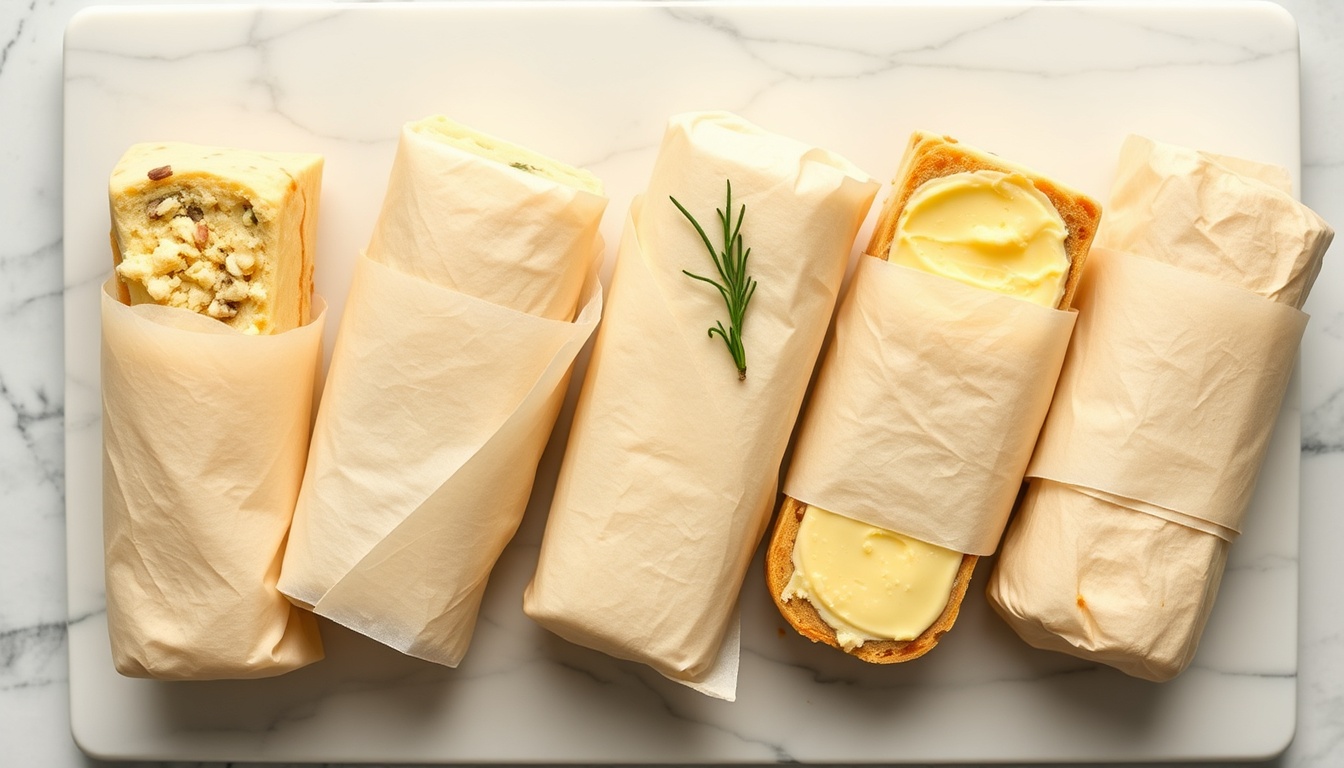
- Shape into a log: Spoon the butter onto a 12-inch sheet of plastic wrap or parchment paper. Use the wrap to roll the butter into a tight cylinder about 1.5 inches in diameter. Twist both ends like a candy wrapper to seal.
- Chill: Refrigerate for at least 30 minutes until the log is firm enough to slice into clean rounds. For faster results, place in the freezer for 15 minutes.
6 Ways to Use Honey Garlic Butter
This compound butter is remarkably versatile. Keep a log in the fridge (or freezer) and pull it out whenever a dish needs a finishing touch.
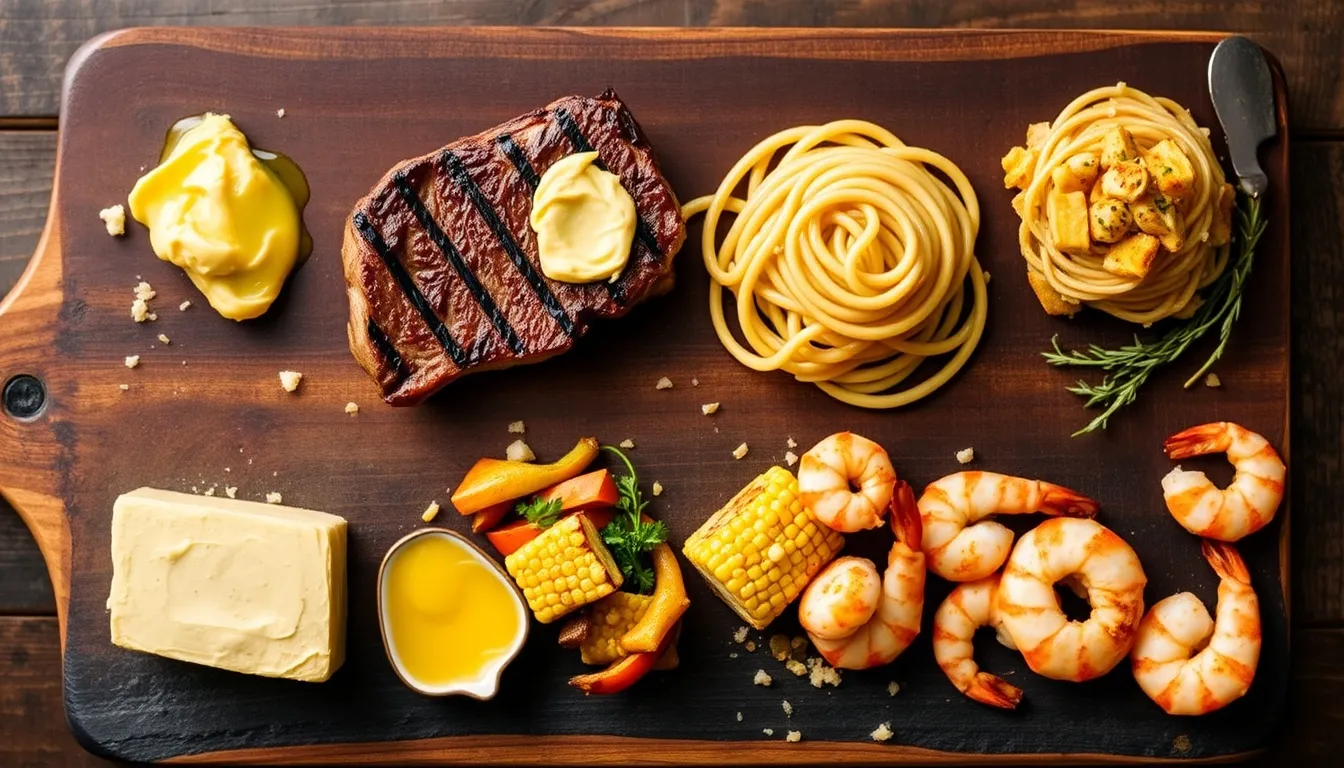
- On steak — Place a 1-tablespoon round on a resting steak. As it melts, it creates an instant pan sauce with honey-garlic richness that coats every bite
- On bread — Spread on warm crusty bread, dinner rolls, or honey biscuits. For garlic bread, spread on a halved baguette and broil for 2-3 minutes until bubbling and golden
- On corn — Rub a round directly onto hot grilled or boiled corn on the cob. The honey caramelizes slightly against the hot kernels
- On shrimp — Toss 1-2 tablespoons into a hot skillet with honey garlic shrimp during the last 30 seconds of cooking for a glossy, restaurant-quality glaze
- On roasted vegetables — Drop a tablespoon onto a sheet pan of roasted vegetables or roasted carrots 5 minutes before they finish cooking
- On pasta — Toss 2 tablespoons with hot cooked honey garlic noodles or linguine. The butter emulsifies with the pasta water to create a silky sauce
5 Flavor Variations
Once you have the basic technique, the variations are endless. Each of these builds on the honey-garlic base.
- Honey garlic herb butter — Add 1 tablespoon each of fresh thyme and rosemary. Outstanding on grilled chicken and roasted sweet potatoes
- Honey garlic Parmesan butter — Fold in 2 tablespoons finely grated Parmesan and a pinch of Italian seasoning. Perfect for garlic bread and pasta
- Honey garlic chili butter — Double the red pepper flakes or add 1 teaspoon gochugaru (Korean chili flakes). Creates a sweet-spicy butter for wings and grilled meats
- Honey garlic lemon butter — Add the zest of 1 lemon and 1 teaspoon fresh lemon juice. Exceptional on seafood, especially salmon and shrimp
- Honey garlic miso butter — Add 1 tablespoon white miso paste. The umami depth is extraordinary on steak, tofu, and roasted mushrooms
Best Honey Varieties for Compound Butter
The honey you choose matters because its flavor is front and center in compound butter — there's nothing to mask it.
- Wildflower honey — our top pick. Complex floral notes that add depth without competing with the garlic. Works with every application
- Clover honey — mild, clean sweetness that lets the garlic and herbs shine. Best if you want garlic to be the dominant flavor
- Orange blossom honey — subtle citrus undertones that pair especially well with the lemon variation and seafood applications
- Acacia honey — very mild, almost neutral sweetness with a thin consistency that mixes into butter easily. Good for those who want sweetness without strong honey flavor
- Avoid buckwheat or chestnut honey here — their strong, assertive flavors fight with garlic instead of complementing it
Storage and Make-Ahead Tips
Compound butter is one of the best make-ahead ingredients in any home kitchen.
- Refrigerator: Up to 2 weeks in a tightly wrapped log or airtight container. The honey and salt act as mild preservatives
- Freezer: Up to 3 months. Wrap the log tightly in plastic wrap, then foil. Slice into pre-portioned rounds before freezing so you can grab one at a time
- Pre-portioned discs: Slice the log into rounds, place on a parchment-lined plate, freeze until solid, then transfer to a zip-top bag. Each disc melts perfectly on a hot steak or vegetable
- Double batch: This recipe doubles perfectly. Make two logs — keep one in the fridge and one in the freezer
Pro Tip
Label your frozen compound butter with the date and flavor. After 3 months, the butter is still safe but may absorb freezer flavors.