What Are Canker Sores and Why Do They Hurt So Much?
Canker sores (aphthous ulcers) are small, shallow lesions that develop on the soft tissues inside your mouth — the inner cheeks, lips, tongue, soft palate, and base of gums. Unlike cold sores, canker sores are not caused by the herpes virus and are not contagious.
They affect roughly 20% of the general population, with higher rates among women, young adults, and people with certain nutritional deficiencies (iron, B12, folate, zinc). Most people experience minor aphthous ulcers (less than 1 cm) that heal within 7-14 days without scarring, though major ulcers can persist for 6 weeks or longer.
The intense pain comes from exposed nerve endings in the ulcer crater. The protective epithelium has broken down, leaving raw tissue directly exposed to saliva, food, and oral bacteria. This is also what makes them respond to honey — the ulcer's open surface allows honey's bioactive compounds direct contact with the tissue that needs healing.
Common triggers include mechanical trauma (biting your cheek, braces, dental work), stress, hormonal changes, food sensitivities (citrus, tomatoes, nuts, chocolate), sodium lauryl sulfate in toothpaste, and immune system dysfunction. Understanding your triggers helps prevent recurrence alongside treatment.
What the Research Says About Honey for Canker Sores
Unlike many natural remedies, honey for oral ulcers has genuine clinical trial evidence — not just in vitro studies or traditional use claims.
The strongest evidence comes from a 2014 randomized controlled trial published in Quintessence International. Ninety-four patients with minor aphthous ulcers were assigned to either natural honey application or an untreated control group. The honey group experienced a statistically significant reduction in ulcer size, pain intensity, and erythema (redness) compared to controls. Mean healing time was reduced by approximately 35%.
A 2019 study in the Journal of Clinical and Experimental Dentistry compared honey to two standard treatments: triamcinolone acetonide (a prescription corticosteroid paste) and Orabase (a protective oral paste). Across 60 patients, honey performed comparably to triamcinolone for pain reduction by day 3 and produced significantly faster healing than Orabase alone. This is notable because triamcinolone is the most commonly prescribed aphthous ulcer treatment.
A 2021 systematic review in the Journal of Oral Pathology & Medicine analyzed 7 clinical studies on natural honey for oral mucositis and aphthous ulcers. The review concluded that honey consistently reduced healing time and pain intensity across studies, though the authors noted that most trials were small (30-100 participants) and called for larger multicenter RCTs.
For radiation-induced oral mucositis (mouth sores from cancer treatment), the evidence is even stronger. A 2012 Cochrane review found that honey significantly reduced the severity of mucositis in cancer patients undergoing head and neck radiation. A 2015 meta-analysis in Supportive Care in Cancer analyzing 7 RCTs with 559 patients confirmed that honey reduced both the incidence and severity of radiation mucositis compared to standard care.
Get the Honey Buyer's Cheat Sheet (free PDF)
16 varieties on one page — color, flavor, best use and what a fair price looks like — from the 268 honeys we track.
How Honey Helps Canker Sores Heal
Honey's effectiveness against canker sores comes from multiple mechanisms working simultaneously — not a single compound.
- **Protective barrier formation.** Honey's viscous consistency creates a physical coating over the exposed ulcer, shielding raw nerve endings from saliva, food particles, and bacterial contact. This provides immediate pain relief and allows undisturbed healing underneath. The high sugar concentration also creates an osmotic environment that draws excess fluid from inflamed tissue, reducing swelling.
- **Antibacterial defense.** Canker sores are vulnerable to secondary bacterial infection, which delays healing and increases pain. Honey's antibacterial properties — hydrogen peroxide generation, low pH (3.2-4.5), and high osmolarity — suppress oral pathogens including Streptococcus mutans and Porphyromonas gingivalis without disrupting the broader oral microbiome.
- **Anti-inflammatory action.** Honey's polyphenols (chrysin, pinocembrin, caffeic acid) inhibit the NF-κB inflammatory pathway, reducing the production of pro-inflammatory cytokines (TNF-α, IL-1β, IL-6) that drive canker sore pain and tissue damage. This addresses the immune-mediated component of aphthous ulcer formation.
- **Tissue regeneration.** Honey stimulates fibroblast proliferation and angiogenesis (new blood vessel formation), both essential for epithelial regeneration. The 2015 Cochrane review on honey wound healing confirmed these mechanisms across 3,011 participants. Canker sores are essentially small wounds, and the same repair pathways apply.
- **Antioxidant protection.** The oxidative stress in and around ulcer tissue delays healing. Honey's 30+ polyphenolic compounds scavenge reactive oxygen species (ROS), protecting newly forming tissue from oxidative damage and creating a more favorable healing environment.
- **Low pH environment.** Honey's natural acidity (pH 3.2-4.5) helps maintain an acidic wound environment that promotes healing. Research shows acidic wound environments increase oxygen release from hemoglobin, enhance fibroblast activity, and inhibit bacterial protease enzymes that break down healing tissue.
Best Honey Types for Canker Sores
Not all honeys are equally effective for oral ulcers. The best choices combine strong antibacterial activity with anti-inflammatory properties.
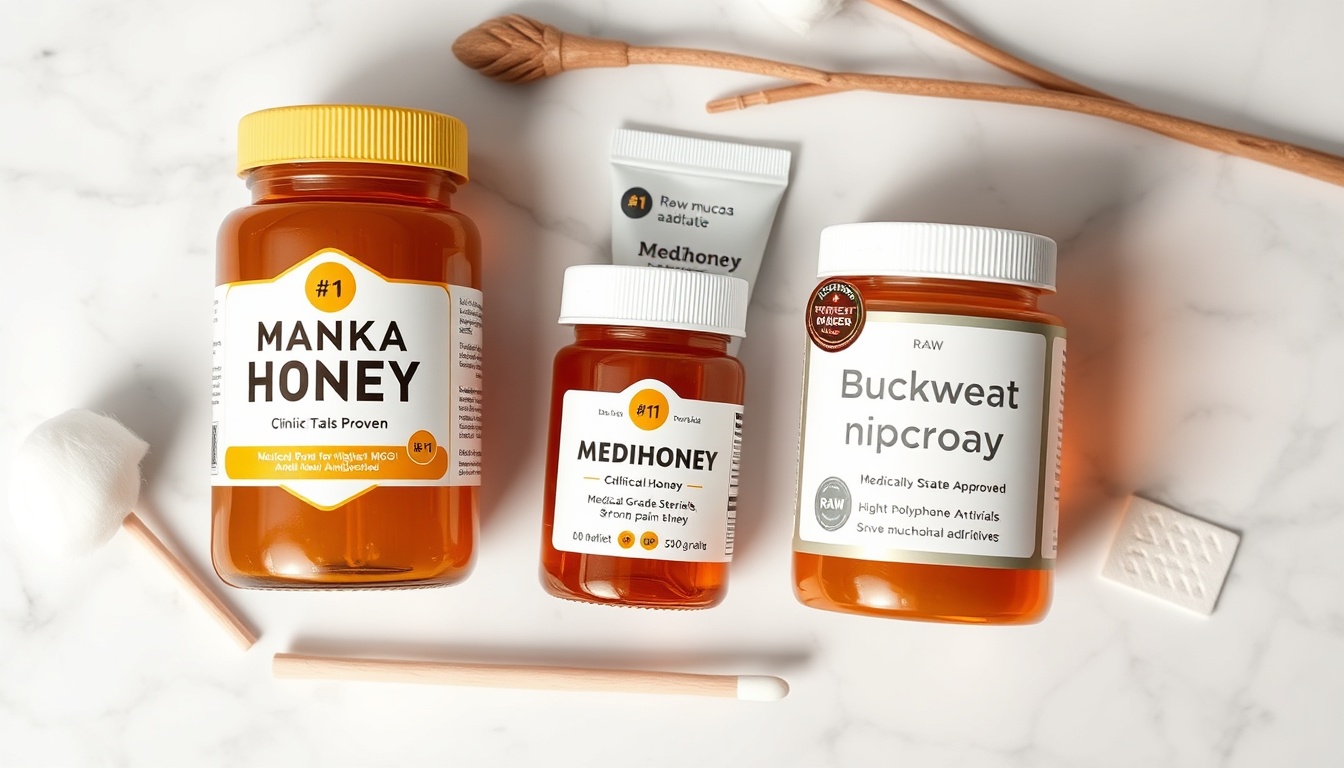
- **Manuka honey (UMF 10-15+):** The top choice for canker sores. Manuka's methylglyoxal (MGO) provides non-peroxide antibacterial activity that remains stable in the saliva-rich oral environment. The 2019 JCED study used manuka honey specifically. UMF 10+ (MGO 263+) is sufficient for canker sores — higher grades offer no proven advantage for oral ulcers and cost significantly more.
- **Thyme honey:** Thyme honey retains thymol and carvacrol from the floral source, both of which have demonstrated strong antimicrobial and anti-inflammatory activity in oral applications. A 2016 JAOS study found thymol effective against multiple oral pathogens.
- **Buckwheat honey:** Buckwheat honey's exceptionally high antioxidant content (3-9x more than lighter honeys) makes it a strong choice for reducing oxidative stress at the ulcer site. Its bold flavor is more noticeable in oral application, however.
- **Raw wildflower honey:** A practical everyday alternative. Wildflower honey provides broad-spectrum activity from multiple floral sources. It's widely available and affordable for regular use.
- **What to avoid:** Do not use pasteurized, processed, or "honey sauce" products. Processing destroys glucose oxidase (the enzyme that generates hydrogen peroxide) and reduces polyphenol content by 30-70%. The honey should be raw and unprocessed for therapeutic oral use.
How to Apply Honey to Canker Sores
Proper application technique significantly affects how well honey works for canker sores. The goal is maximum contact time between honey and the ulcer surface.
**Step 1: Clean the area.** Rinse your mouth with warm water or a gentle saltwater rinse (1/4 teaspoon salt in 8 oz warm water) to remove food debris and reduce bacterial load. Do not use commercial mouthwash with alcohol, as it will burn and may irritate the ulcer further.
**Step 2: Dry the surface.** Gently pat the area around the canker sore with a clean tissue or gauze. Honey adheres better to a relatively dry surface. You cannot fully dry the inside of your mouth, but removing excess saliva helps.
**Step 3: Apply honey directly.** Using a clean cotton swab or your clean finger, apply a small amount of raw honey directly onto the canker sore, covering the ulcer and extending slightly beyond the edges onto healthy tissue.
**Step 4: Maintain contact.** Try not to eat, drink, or talk for a few minutes after application. Honey will slowly dissolve in saliva, which is fine — the bioactive compounds absorb into the tissue even as the honey dissipates. You will inevitably swallow some honey, which is perfectly safe.
**Step 5: Reapply as needed.** Many people apply after meals and before bed, since reduced saliva flow during sleep allows longer contact time. If the sore does not improve within a few days, or you are unsure whether it is a canker sore, check with a dentist or doctor.
Pro Tip
For hard-to-reach canker sores on the back of the tongue or near the throat, mix 1 tablespoon of honey into 2 tablespoons of warm water and use as a focused mouth rinse. Swish the honey water over the affected area for 30-60 seconds before swallowing.
Honey Canker Sore Remedies
While plain honey application works well, these combinations may provide additional benefit for stubborn or painful ulcers.
- **Honey and coconut oil paste.** Mix 1 tablespoon raw honey with 1 teaspoon coconut oil. The coconut oil's lauric acid adds antimicrobial activity while its lipid base helps the mixture adhere longer to the wet oral surface.
- **Honey-turmeric oral paste.** Mix 1 teaspoon raw honey with 1/4 teaspoon turmeric powder. Curcumin adds anti-inflammatory and antioxidant effects. A 2014 Phytotherapy Research study found curcumin gel reduced aphthous ulcer pain by day 3 of use. Note: turmeric will temporarily stain the area yellow.
- **Honey saltwater rinse.** Dissolve 1 tablespoon raw honey and 1/4 teaspoon salt in 8 oz warm water. Salt provides osmotic antimicrobial action while honey soothes and promotes healing. This is the gentlest option for very painful ulcers where direct application is too uncomfortable.
- **Honey and aloe vera gel.** Mix 1 teaspoon raw honey with 1 teaspoon food-grade aloe vera gel. A 2012 study in the Journal of Clinical and Experimental Dentistry found that aloe vera reduced healing time for aphthous ulcers by 33%. The combination provides dual soothing and healing properties.
- **Honey-cinnamon paste.** Mix 1 teaspoon raw honey with a pinch of Ceylon cinnamon powder. Cinnamon's cinnamaldehyde adds antimicrobial activity. Use this only on ulcers that are starting to heal — cinnamon can sting on raw, open sores.
Honey vs Standard Canker Sore Treatments
Understanding how honey compares to conventional treatments helps you make informed decisions about when to use each approach.
**Triamcinolone acetonide (Kenalog in Orabase):** This prescription corticosteroid paste is the standard medical treatment. The 2019 JCED study found honey performed comparably for pain reduction. Triamcinolone works faster for severe inflammation but carries risks with prolonged use (oral candidiasis, mucosal thinning). Honey is a reasonable first-line option for mild to moderate canker sores, reserving triamcinolone for severe or persistent cases.
**Benzocaine gels (Orajel, Anbesol):** These provide immediate numbing but do not promote healing — they simply mask pain temporarily (20-30 minutes). Honey provides moderate pain relief through its barrier effect while actively promoting tissue repair. Many people use benzocaine for immediate relief and honey for ongoing healing.
**Chlorhexidine mouthwash:** Antimicrobial rinse that prevents secondary infection and may slightly reduce healing time. A 2010 study in the European Journal of General Dentistry found honey comparable to chlorhexidine for antimicrobial activity in the oral cavity. Chlorhexidine has side effects (taste alteration, teeth staining) that honey does not.
**Amlexanox (Aphthasol):** A prescription anti-inflammatory paste shown to speed healing in clinical trials. No head-to-head studies against honey exist. Amlexanox targets the inflammatory component specifically, while honey provides broader multimodal action.
**Silver nitrate cauterization:** Applied by dentists, this chemically destroys the nerve endings to eliminate pain immediately but is painful during application and can damage surrounding tissue. Honey is far gentler and promotes healing rather than destroying tissue.
Preventing Canker Sores
Alongside treatment, reducing canker sore frequency is equally important. Several evidence-based strategies help.
- **Switch to SLS-free toothpaste.** Sodium lauryl sulfate (SLS), a foaming agent in most toothpastes, irritates the oral mucosa and is linked to increased aphthous ulcer frequency. A 2012 study in Oral Diseases found that switching to SLS-free toothpaste reduced canker sore recurrence by 64%.
- **Address nutritional deficiencies.** Iron, vitamin B12, folate, and zinc deficiencies are associated with recurrent aphthous stomatitis. A simple blood panel can identify deficiencies. Daily honey consumption provides trace minerals but is unlikely to correct significant deficiencies on its own — supplementation may be needed.
- **Daily honey as maintenance.** Regular honey consumption provides ongoing anti-inflammatory and prebiotic benefits that may reduce the immune dysregulation underlying recurrent canker sores. This is anecdotal and traditional rather than clinically proven for prevention specifically.
- **Manage stress.** Psychological stress is a well-documented trigger for aphthous ulcers. The cortisol pathway suppresses mucosal immunity, leaving oral tissue more vulnerable. Stress management, adequate sleep (where honey before bed may help), and exercise all support oral mucosal health.
- **Keep a food diary.** Common dietary triggers include citrus fruits, tomatoes, chocolate, coffee, nuts, strawberries, and spicy foods. Track what you eat when canker sores appear to identify your personal triggers.
- **Protect the oral mucosa.** Use a soft-bristled toothbrush, eat carefully to avoid biting your cheek or tongue, and address sharp tooth edges or poorly fitting dental appliances promptly.
When to See a Doctor
While honey is a reasonable first-line treatment for typical canker sores, certain situations require professional evaluation.
- **Ulcers lasting more than 3 weeks** may indicate a different condition (oral lichen planus, pemphigoid, oral cancer) requiring biopsy.
- **Unusually large ulcers (over 1 cm)** classified as major aphthous ulcers may need prescription corticosteroid treatment.
- **Frequent recurrence (more than 3-4 episodes per year)** suggests an underlying condition — nutritional deficiency, celiac disease, Crohn's disease, Behçet's disease, or immune dysfunction.
- **High fever accompanying mouth sores** may indicate viral infection (hand-foot-mouth disease, herpangina) rather than aphthous ulcers.
- **Difficulty eating or drinking** due to pain severity warrants medical intervention for symptom management and nutritional support.
- **Sores that spread to the outer lips** are likely cold sores (herpes simplex), not canker sores, and require different treatment.
Pro Tip
If you're unsure whether you have canker sores or cold sores: canker sores are always inside the mouth on soft tissue and are NOT contagious. Cold sores typically appear on or near the lips, are caused by HSV-1, and are highly contagious.
Safety Considerations
Honey is generally very safe for oral use in adults and children over 12 months, but a few precautions apply.
Never apply honey to the mouths of infants under 12 months due to infant botulism risk. For children aged 1-6, use small amounts (1/4 teaspoon) and supervise application.
People with known bee or pollen allergies should approach with caution, though allergic reactions to ingested or topically applied honey are rare. If you experience swelling, breathing difficulty, or hives after applying honey to a canker sore, discontinue immediately and seek medical attention.
Honey contains natural sugars that oral bacteria can ferment. If using honey frequently for canker sore treatment, rinse your mouth with water 20-30 minutes after each application to protect dental health. Do not brush immediately after honey application — wait at least 30 minutes to avoid spreading acids across enamel.
Honey remains a fast-acting carbohydrate; that nutrition fact does not establish a canker-sore treatment protocol.
