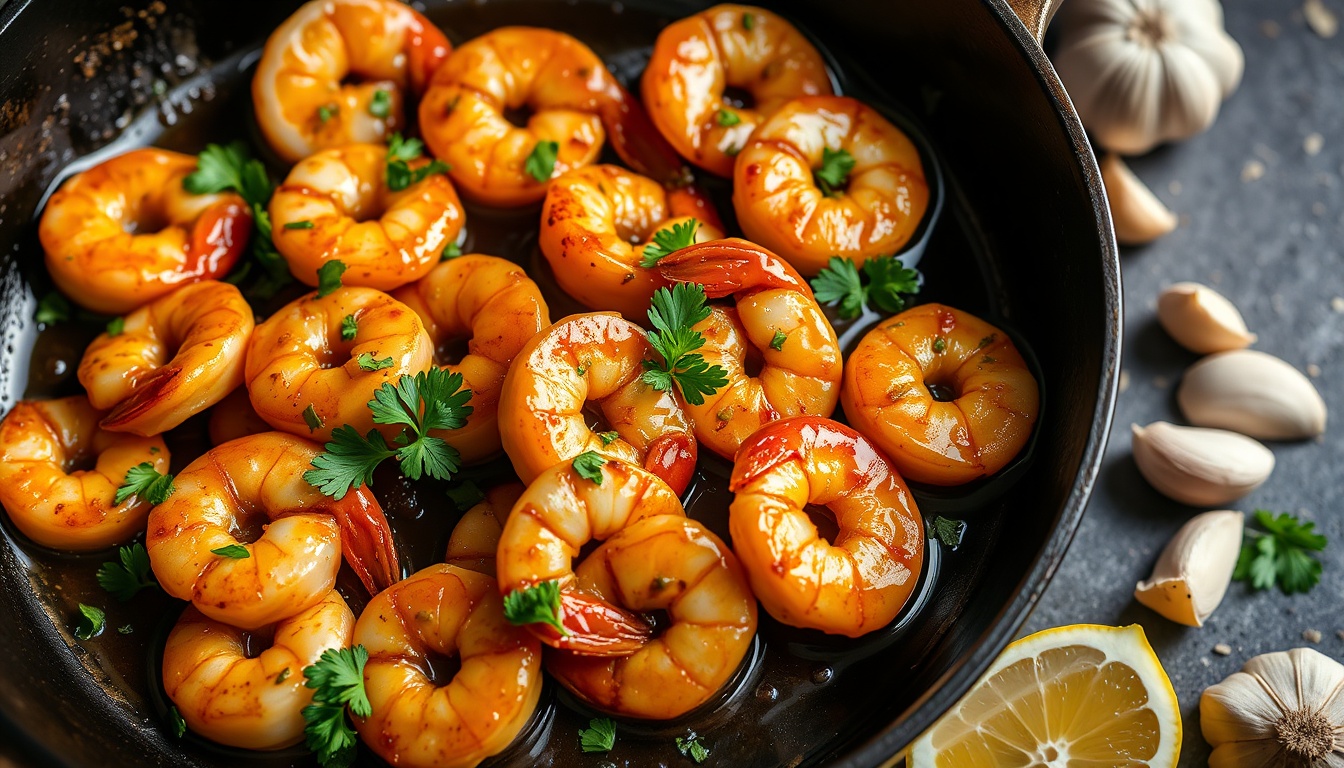
Why Honey Butter Shrimp Works So Well
Honey and butter make a glossy skillet sauce, while lemon and soy sauce keep it from tasting only sweet. Start with peeled, deveined shrimp weighed without shells or tails.
The 10-minute timing assumes the shrimp are already prepared. Larger shrimp, a small pan or cooking in batches can take longer. Divide the finished shrimp and all sauce into 3 portions.
Recipe
Honey Butter Shrimp
Peeled shrimp in a honey, garlic and butter skillet sauce, with four flavor variations. The measured base includes all of the pan sauce.
10Ingredients
Yield: 3 servings
- 453.6 g raw shrimp, peeled, deveined and tails removed
- 1 tablespoon olive oil
- 1/4 teaspoon table salt
- 1/4 teaspoon ground black pepper
- 3 tablespoons unsalted butter
- 2 tablespoons clover honey
- 3 cloves garlic, minced
- 1 tablespoon soy sauce
- 1 tablespoon lemon juice
- 4 g fresh parsley, chopped
Ingredient amounts scale; instructions show the original batch. Cooking times and pan sizes may need adjustment. Season to taste. Honey grams use US measures at 20°C and 17.5% moisture, a density estimate; weigh your honey for precision.
Instructions
- 1Prepare the shrimpPat the prepared shrimp dry and season with the measured salt and pepper.
- 2SearHeat olive oil in a wide skillet over medium-high heat. Add shrimp in one layer and cook about 90 seconds, then turn. Work in batches if the pan is crowded.
- 3Make the sauceReduce the heat to medium. Add butter and garlic, stirring briefly, then honey and soy sauce. Toss until the shrimp are opaque throughout; seafood should reach 145°F (63°C).
- 4FinishTake off the heat, add lemon juice and parsley and toss. Divide the shrimp and all pan sauce among 3 servings.
Estimated nutrition per serving
322.05 calories · 16.86 g fat · 13.36 g carbohydrate · 31.26 g protein · 670.29 mg sodium
Serving: 1 of 3 base servings
Calculated from ingredient weights and USDA FoodData Central: 175179, 171413, 173468, 170931, 173430, 169640, 169230, 174277, 167747, 170416. Estimates use ingredient input weights; actual portions, brands and cooking losses vary. Omitted nutrient values are unavailable, not zero.
Measured Base and Preparation Notes
Use the measured card for the stated base estimate. Other methods and additions below are separate variations.
- Buy peeled shrimp or allow extra preparation time. The source weight is edible raw shrimp, not the weight of a shell-on package.
- Use a wide pan and watch the shrimp rather than relying only on the minute count. The honey can darken quickly.
- Reserve rice, bread and extra garnishes as separate sides; they are not included in the base estimate.
Get the Honey Buyer's Cheat Sheet (free PDF)
16 varieties on one page — color, flavor, best use and what a fair price looks like — from the 304 honeys we track.
4 Flavor Variations
The honey butter base is a versatile platform for different flavor profiles. Each variation uses the same sear-then-sauce technique.
- Honey Garlic Butter Shrimp — Double the garlic to 6 cloves and add 1 teaspoon of garlic powder to the shrimp seasoning. Replace lemon juice with rice vinegar. This creates an intensely garlicky glaze similar to honey garlic shrimp but with a richer butter base.
- Honey Lemon Butter Shrimp — Double the lemon juice to 2 tablespoons and add 1 teaspoon of lemon zest. Replace soy sauce with a pinch of salt. Add 1 tablespoon of capers for a Mediterranean twist. The bright citrus cuts through the butter richness beautifully.
- Spicy Honey Butter Shrimp — Use hot honey instead of regular honey, or add 1 tablespoon of honey sriracha sauce. Increase red pepper flakes to 1/2 teaspoon. Finish with a squeeze of lime instead of lemon. Sweet, spicy, and buttery — a flavor combination that is hard to beat.
- Cajun Honey Butter Shrimp — Season the shrimp with 1 tablespoon Cajun seasoning (paprika, garlic powder, onion powder, cayenne, oregano, thyme) before searing. Add 1 tablespoon of Worcestershire sauce to the butter sauce. Serve over honey butter rice or grits. A Southern-inspired variation with depth and heat.
Honey Pairing Guide
Compare clover honey, wildflower honey and the best honey for cooking guide. The flavor-intensity scale is editorial, not a laboratory measurement.
1 = mild, 5 = bold. Editorial pairing guidance, not laboratory measurements; jars vary.
- Clover
- Mild base sweetness
- Wildflower
- Floral finish
- Orange blossom
- Citrus-floral variation
Matching a honey to another dish: the honey flavor map
Serving and Storage
Serve the finished dish promptly. Refrigerate perishable leftovers in covered containers and reheat until hot; crisp coatings soften during storage.
Sides, dips, extra garnishes and the optional variations are outside the measured base estimate.
Nutrition Estimate
USDA input edible weights divided by yield; no cooking-loss or discarded-food adjustment assumed. USDA provides no usable point estimate for sugarContent, fiberContent; these nutrients are unknown and omitted, not treated as zero.
The estimate uses the recorded USDA ingredient references and divides the input into the stated servings. It is not a laboratory analysis or a measured cooking-yield result. Unknown nutrients are omitted rather than replaced with zero.