Why Honey for Period Cramps? The Growing Interest
Menstrual cramps (dysmenorrhea) affect up to 90% of women of reproductive age, with 10-15% experiencing pain severe enough to interfere with daily activities. While NSAIDs like ibuprofen remain the first-line treatment, growing interest in natural alternatives has led many women to explore whether honey can help with period pain.
The connection isn't as far-fetched as it might seem. Menstrual cramps are fundamentally an inflammatory process driven by prostaglandins, and honey's well-documented anti-inflammatory properties target these exact pathways. Several traditional medicine systems — including Ayurveda, traditional Chinese medicine, and Middle Eastern folk medicine — have recommended honey for menstrual discomfort for centuries.
This guide examines what modern research says about honey for period cramps, explains the biological mechanisms, and provides practical remedies. For honey's broader effects on women's health, see our honey benefits for women guide.
What Causes Period Cramps: The Prostaglandin Connection
Understanding the biology of menstrual cramps reveals why anti-inflammatory compounds like those in honey could help. During menstruation, the uterine lining releases prostaglandins — lipid compounds that trigger uterine muscle contractions to shed the endometrium. Higher prostaglandin levels correlate directly with more severe cramps.
The key players are prostaglandin F2α (PGF2α), which causes uterine smooth muscle contractions, and prostaglandin E2 (PGE2), which sensitizes pain nerve endings. Women with severe dysmenorrhea have been shown to produce 2-7x more prostaglandins than women with mild or no cramps.
Prostaglandins are produced through the COX-2 enzyme pathway — the same pathway that NSAIDs like ibuprofen block. Any compound that can inhibit COX-2 or the upstream NF-κB inflammatory cascade has theoretical potential to reduce menstrual pain. This is exactly where honey's anti-inflammatory polyphenols enter the picture.
Get the Honey Buyer's Cheat Sheet (free PDF)
16 varieties on one page — color, flavor, best use and what a fair price looks like — from the 268 honeys we track.
How Honey May Help Period Cramps: 5 Mechanisms
Multiple evidence-based pathways support honey's potential for menstrual pain relief:
1. COX-2 and Prostaglandin Inhibition
Honey's polyphenols — particularly chrysin, pinocembrin, galangin, and quercetin — directly inhibit cyclooxygenase-2 (COX-2), the enzyme responsible for prostaglandin production. This is the same target as ibuprofen, though through a different and gentler mechanism.
A 2018 study in *Biomedicine & Pharmacotherapy* demonstrated that honey polyphenols suppressed COX-2 expression in inflammatory cell models. Chrysin, found in significant concentrations in many honey varieties, has been shown in multiple studies to inhibit COX-2 at the transcriptional level — preventing the enzyme from being produced rather than just blocking its activity.
While honey's COX-2 inhibition is milder than pharmaceutical NSAIDs, the multi-compound approach (dozens of polyphenols targeting multiple inflammatory pathways simultaneously) may provide broader anti-inflammatory coverage. Learn more about these mechanisms in our honey for inflammation guide.
2. NF-κB Inflammatory Cascade Suppression
Beyond COX-2, honey's polyphenols also inhibit the NF-κB signaling pathway — the master switch that controls production of inflammatory cytokines including TNF-α, IL-1β, and IL-6. A 2022 meta-analysis in *Nutrition Reviews* analyzing 18 randomized controlled trials confirmed honey's systemic anti-inflammatory effects, including significant reductions in C-reactive protein.
In the context of menstrual cramps, NF-κB inhibition could reduce not just prostaglandin production but the overall inflammatory environment in the uterus during menstruation. This may explain why traditional remedies like warm honey water have been reported to help with the generalized pelvic discomfort, bloating, and fatigue that accompany period cramps — not just the cramping itself.
3. Smooth Muscle Relaxation
Some honey compounds may directly affect uterine muscle tension. Quercetin — a flavonoid present in significant amounts in darker honeys — has demonstrated smooth muscle relaxant properties in several studies. A 2014 study in *Phytotherapy Research* found quercetin inhibited smooth muscle contractions in a dose-dependent manner.
Additionally, the magnesium content in honey (particularly dark varieties like buckwheat, which contain 3-5x more minerals than lighter honeys) may contribute to muscle relaxation. Magnesium plays a direct role in muscle contraction and relaxation, and a 2017 systematic review in *Magnesium Research* found evidence supporting magnesium supplementation for dysmenorrhea.
While the magnesium in a tablespoon of honey (1-2mg) is modest compared to supplement doses (200-400mg), regular consumption as part of a magnesium-rich diet adds up. For more on honey's mineral content, see our honey nutrition facts guide.
4. Blood Sugar Stabilization and Energy Support
Many women experience blood sugar fluctuations during menstruation that compound cramp discomfort. Hormonal shifts — particularly the drop in progesterone — can increase insulin sensitivity and cravings. Blood sugar crashes trigger cortisol release, which can amplify pain perception and inflammatory responses.
Honey's unique dual-speed sugar delivery (fast-acting glucose + sustained fructose) provides stable energy without the spike-and-crash pattern of refined sugar. This is particularly relevant during periods, when energy demands increase and appetite may fluctuate. Our guide on best time to eat honey covers optimal timing strategies.
5. Gut-Uterus Connection via Prebiotics
An emerging area of research connects gut health to menstrual pain through the "estrobolome" — the collection of gut bacteria that metabolize estrogen. Dysbiosis (gut microbial imbalance) can affect estrogen levels, which influence endometrial prostaglandin production.
Honey's prebiotic oligosaccharides (FOS and GOS) selectively feed beneficial bacteria including Bifidobacterium and Lactobacillus species. A healthier gut microbiome may support more balanced estrogen metabolism, potentially reducing the inflammatory cascade that drives severe cramps. Our honey and gut health guide covers the prebiotic evidence in detail.
A 2020 systematic review in *Nutrients* found that probiotic supplementation reduced dysmenorrhea severity in several trials, supporting the gut-menstrual pain connection. While this research used probiotics rather than prebiotics like honey, the mechanism — improving gut microbial balance — is related.
Clinical Evidence: What Studies Show
Direct clinical research on honey specifically for menstrual cramps is limited but growing:
- **2017 Iranian RCT** — A randomized controlled trial of 56 students published in *Archives of Gynecology and Obstetrics* compared honey consumption to placebo during menstruation. The honey group reported significantly lower pain intensity scores on the Visual Analog Scale (VAS) compared to placebo.
- **2019 Clinical Trial** — A study in the *International Journal of Gynecology & Obstetrics* found that a honey-based supplement reduced menstrual pain severity and duration compared to control.
- **Anti-inflammatory meta-analysis evidence** — The 2022 *Nutrition Reviews* meta-analysis of 18 RCTs confirmed honey's anti-inflammatory effects systemically. While not menstrual-specific, the reduced CRP and inflammatory cytokines support its potential for any inflammation-driven pain.
- **Traditional medicine documentation** — A 2021 review in *Journal of Ethnopharmacology* documented honey's historical use for gynecological complaints across multiple traditional medicine systems, noting the convergence with modern anti-inflammatory evidence.
Pro Tip
The evidence base is promising but not yet definitive. Larger, well-designed clinical trials specifically examining honey for dysmenorrhea are needed. However, honey's established safety profile means there's little risk in trying it as a complementary approach alongside conventional pain management.
Best Honey Types for Period Cramps
Choose honey varieties with the strongest anti-inflammatory profiles:
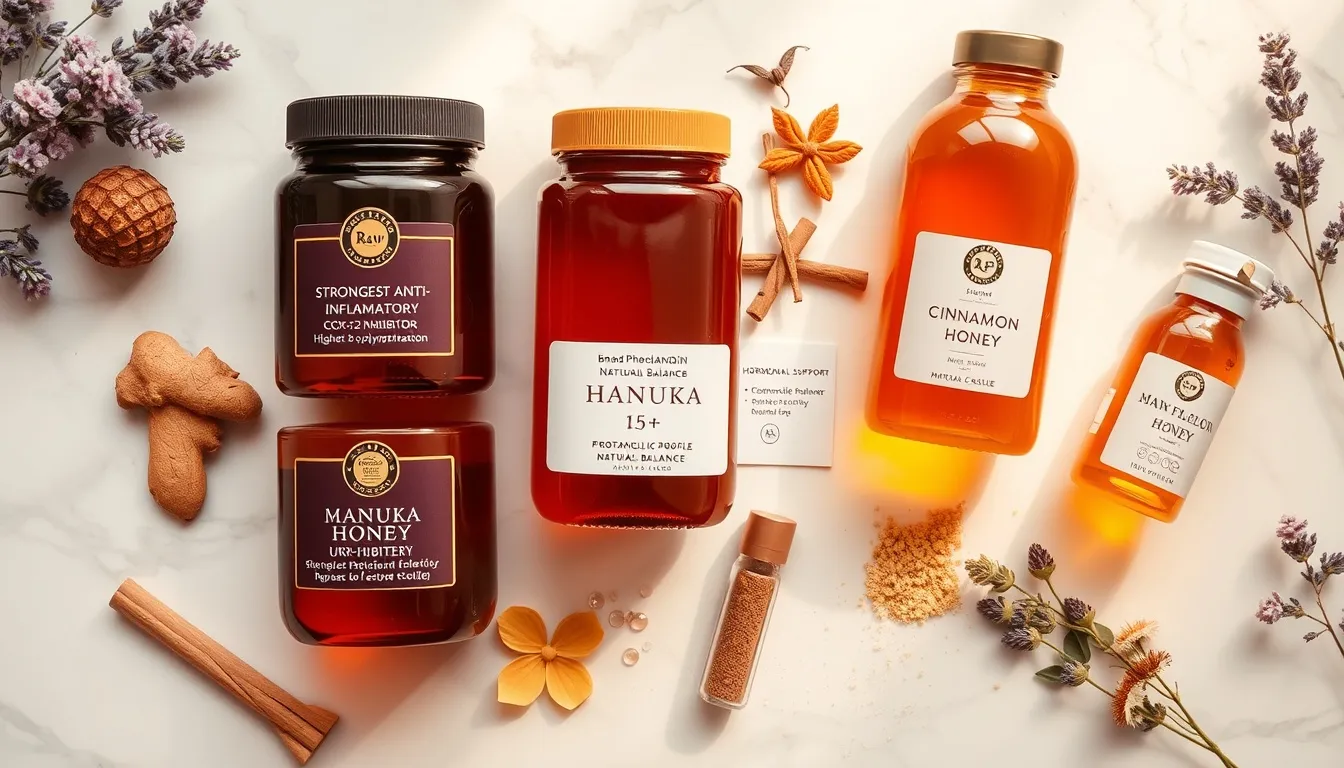
- **Buckwheat honey ($15–25, ORAC 16,000+)** — Top choice. Has 3-9x higher antioxidant and polyphenol content than lighter honeys (2004 *JAFC* study). Strongest COX-2 and NF-κB inhibition potential. Also highest mineral content including magnesium for muscle relaxation.
- **Manuka honey ($35–60+, UMF 10+)** — Unique methylglyoxal provides additional anti-inflammatory pathways beyond standard polyphenols. Well-studied for systemic inflammation.
- **Thyme honey** — Contains rosmarinic acid and carvacrol, both documented COX-2 inhibitors. Traditional Mediterranean remedy for women's health complaints. See our thyme honey benefits guide.
- **Chestnut honey ($20–35)** — Exceptionally high antioxidant content among European honeys. Rich in gallic acid and ellagic acid with anti-inflammatory properties.
- **Heather honey ($30–50)** — Top-tier polyphenol content with unique immune-modulating glycoproteins. Strong anti-inflammatory profile.
Pro Tip
As a general rule: the darker the honey, the higher the anti-inflammatory polyphenol content. If specialty honeys aren't available, raw wildflower honey ($10–18) or clover honey ($8–15) from any source is better than processed light honey.
5 Honey Remedies for Period Cramp Relief
These remedies combine honey with other evidence-based ingredients for maximum menstrual pain relief:
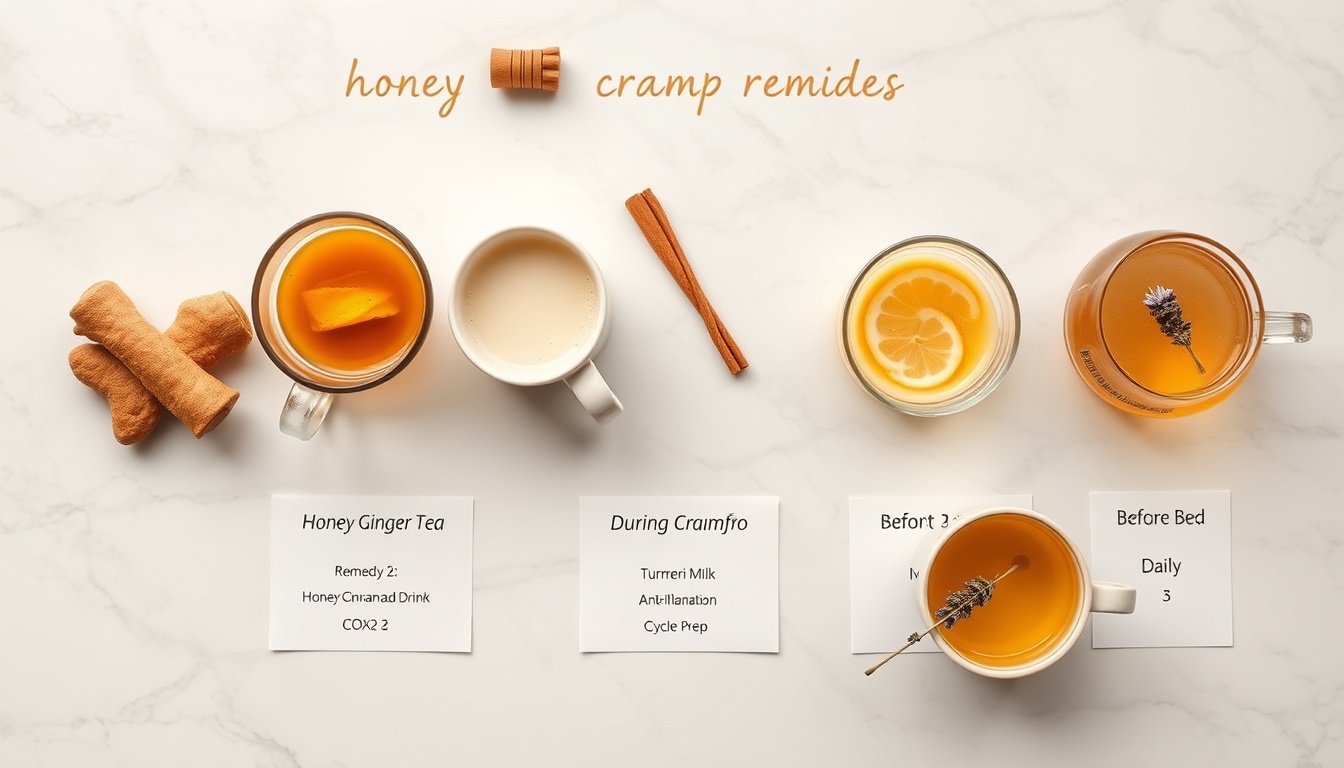
Remedy 1: Warm Honey-Ginger Tea
Ginger is one of the best-studied natural remedies for dysmenorrhea. A 2020 meta-analysis in the *Journal of the Academy of Nutrition and Dietetics* analyzing 12 RCTs found ginger significantly reduced menstrual pain. Combining it with honey creates a dual anti-inflammatory approach.
- Slice or grate fresh ginger root
- Steep in hot water (175°F/80°C) for 10 minutes
- Let cool slightly to warm (not hot), then stir in raw buckwheat or manuka honey
- Add a squeeze of lemon if desired
Pro Tip
Ginger inhibits prostaglandin synthesis through a different mechanism than honey's polyphenols, providing complementary coverage.
Remedy 2: Honey-Cinnamon Warm Drink
Cinnamon has its own anti-dysmenorrhea evidence. A 2015 study in the *Journal of Clinical and Diagnostic Research* found cinnamon significantly reduced menstrual pain severity, bleeding, and nausea compared to placebo.
- Heat milk or plant-based milk to warm
- Stir in raw honey and Ceylon cinnamon
- Add a pinch of black pepper for enhanced absorption
Pro Tip
The honey and cinnamon combination provides blood sugar regulation (reducing cortisol-driven pain amplification) plus anti-inflammatory effects. Always choose Ceylon cinnamon over Cassia for regular use.
Remedy 3: Anti-Inflammatory Golden Milk
Turmeric's curcumin is a potent COX-2 inhibitor. A 2014 RCT published in *Phytotherapy Research* found curcumin comparable to ibuprofen for pain relief in some contexts.
- Warm milk or coconut milk
- Add turmeric powder, raw honey, and cinnamon
- Add a pinch of black pepper (increases curcumin absorption by 2,000%)
- Whisk until smooth
Pro Tip
This triple combination (honey + turmeric + cinnamon) targets inflammation through at least four distinct pathways.
Remedy 4: Pre-Period Honey-ACV Tonic
Apple cider vinegar may help with period-related bloating and water retention, while honey's prebiotics support the gut-hormone connection.
- Mix raw honey with raw apple cider vinegar in warm water
- Add a pinch of ground ginger if desired
Pro Tip
The honey and apple cider vinegar combination provides digestive support that can help with the bloating and GI discomfort that often accompanies period cramps.
Remedy 5: Bedtime Honey for Period Sleep Disruption
Period pain disrupts sleep, and poor sleep amplifies pain perception — a vicious cycle. Honey before bed supports sleep through the tryptophan-melatonin pathway and maintains liver glycogen for brain fuel overnight.
- Some people take a spoonful of raw honey before bed
- Optionally combine with warm chamomile tea for additional relaxation
- Or mix into warm milk with cinnamon (Remedy 2) as a bedtime drink
Pro Tip
Breaking the pain-insomnia cycle can significantly improve daytime cramp management.
Honey vs Other Natural Period Pain Remedies
How does honey compare to other commonly used natural approaches?
- **Ginger** — Strongest evidence for dysmenorrhea specifically (multiple RCTs). Best used in combination with honey for synergistic effect.
- **Heat therapy** — Hot water bottle or heating pad remains one of the most effective non-drug treatments. Combine with drinking honey tea for internal + external relief.
- **Magnesium supplements** — 200-400mg daily reduces cramps in several studies. Honey contributes modest magnesium, but not enough alone. Consider supplementation alongside honey.
- **Evening primrose oil** — Contains GLA for prostaglandin balance. Limited evidence. Can be taken alongside honey without interaction.
- **Exercise** — Moderate aerobic exercise increases blood flow and releases endorphins. Honey before exercise provides the energy needed even when fatigue is high.
- **NSAIDs (ibuprofen)** — Most effective single intervention. Honey can complement NSAIDs for additional anti-inflammatory and gut-protective effects (honey's prebiotic properties may buffer NSAID-induced gut irritation).
- **Hormonal contraceptives** — Most effective for chronic severe dysmenorrhea. Honey is a complementary, not competing, approach.
Pro Tip
The most effective natural approach combines multiple evidence-based strategies: honey-ginger tea + heat therapy + moderate exercise + magnesium supplementation. If pain remains severe, NSAIDs or medical evaluation are appropriate next steps.
When to See a Doctor About Period Pain
While period cramps are common, certain patterns indicate conditions that require medical evaluation:
- **Progressively worsening pain** over months or years (may indicate endometriosis)
- **Pain that doesn't respond to NSAIDs** at appropriate doses
- **Heavy bleeding** (soaking a pad/tampon every hour for several consecutive hours)
- **Pain between periods** or during intercourse
- **Cramps that started after age 25** when they weren't present before (secondary dysmenorrhea)
- **Fever during menstruation** (may indicate infection)
- **Pain accompanied by unusual discharge** or odor
- **Family history of endometriosis** combined with severe symptoms
Pro Tip
Endometriosis affects approximately 10% of women and is characterized by endometrial tissue growing outside the uterus. It requires medical management — natural remedies like honey may help with symptom management but cannot treat the underlying condition.
Menstrual Pain: Evidence and Care
For period cramp management, here's a structured approach:
- Before symptoms — Evidence does not establish honey as preventive care for menstrual pain.
- Honey is not established as treatment during active cramps.
- Continuing honey after cramps has not been shown to improve recovery.
- This section does not establish a universal or medical honey dose for this purpose. Use the daily added-sugar guide to count honey with other added or free sugars.
Pro Tip
Honey is not established as preventive care for menstrual pain. Severe, new, or disabling cramps need clinical evaluation rather than a honey schedule.
The Bottom Line
Honey offers a scientifically plausible complementary approach to menstrual cramp management. Its polyphenols inhibit the COX-2 and NF-κB inflammatory pathways that drive prostaglandin production, darker varieties provide minerals including magnesium for muscle relaxation, and its prebiotic properties support the gut-hormone connection that influences menstrual health.
Clinical evidence specifically for honey and dysmenorrhea is still limited, though a small number of trials show promising results. The strongest case for honey is as part of a multi-ingredient approach — combined with ginger, turmeric, or cinnamon, all of which have their own anti-dysmenorrhea evidence.
Given honey's excellent safety profile (for those over 12 months without bee allergies), trying it alongside heat therapy and conventional pain management carries minimal risk and potential benefit.