Honey and the Brain: More Than Just Sugar
When you think of brain food, honey probably isn't the first thing that comes to mind. But a growing body of research suggests that raw honey — with its unique combination of polyphenols, antioxidants, and neuroactive compounds — may offer genuine cognitive benefits beyond simply providing glucose fuel.
Unlike refined sugar, which delivers empty calories, honey contains 30+ polyphenols that cross the blood-brain barrier and interact with neural pathways involved in memory, learning, and neuroprotection. Emerging research in animal and early human studies suggests these compounds may help protect against age-related cognitive decline.
This guide examines what the science actually shows about honey and brain health — the promising findings, the honest limitations, and what you can practically do with this information. For the complete nutritional picture, see our guide to honey nutrition facts.
5 Neuroprotective Mechanisms of Honey
Honey's potential brain benefits stem from multiple overlapping mechanisms:
- **Antioxidant neuroprotection** — The brain is extraordinarily vulnerable to oxidative stress: it consumes 20% of the body's oxygen despite being only 2% of body weight, and neuronal membranes are rich in easily oxidized polyunsaturated fatty acids. Honey's polyphenols — particularly quercetin, chrysin, pinocembrin, caffeic acid, and gallic acid — scavenge reactive oxygen species (ROS) and activate the Nrf2 antioxidant defense pathway in brain tissue. A 2011 study in *Molecules* confirmed that honey polyphenols cross the blood-brain barrier and accumulate in brain regions critical for memory (hippocampus) and executive function (prefrontal cortex).
- **Anti-inflammatory NF-κB suppression** — Chronic neuroinflammation is a hallmark of Alzheimer's disease, Parkinson's disease, and age-related cognitive decline. Activated microglia (the brain's immune cells) release pro-inflammatory cytokines (TNF-α, IL-1β, IL-6) that damage neurons. Honey's polyphenols inhibit the NF-κB inflammatory pathway, reducing microglial activation and cytokine production. The 2022 *Nutrition Reviews* meta-analysis of 18 RCTs confirmed honey's systemic anti-inflammatory effects. See our full guide on honey for inflammation.
- **BDNF and neurotrophin support** — Brain-derived neurotrophic factor (BDNF) is essential for neuroplasticity, memory consolidation, and the survival of existing neurons. Low BDNF levels are associated with depression, Alzheimer's, and cognitive impairment. A 2017 study in *Pharmacognosy Research* found that Tualang honey supplementation increased BDNF levels in the hippocampus of stressed rats, alongside improved spatial memory performance in the Morris water maze test.
- **Cholinergic system protection** — Acetylcholine is the primary neurotransmitter for memory and learning. Alzheimer's disease is characterized by cholinergic neuron loss. Honey polyphenols have been shown to inhibit acetylcholinesterase (AChE) — the enzyme that breaks down acetylcholine — in a mechanism similar to Alzheimer's drugs like donepezil, though at much lower potency. A 2014 study in *Oxidative Medicine and Cellular Longevity* documented this effect with Tualang honey.
- **Gut-brain axis support** — The gut microbiome profoundly influences brain function through the vagus nerve, immune signaling, and neurotransmitter production (90% of serotonin is produced in the gut). Honey's prebiotic oligosaccharides (FOS, GOS) selectively feed beneficial bacteria that produce SCFAs like butyrate, which reduce neuroinflammation and strengthen the blood-brain barrier. See honey and gut health for the full mechanism.
Get the Honey Buyer's Cheat Sheet (free PDF)
16 varieties on one page — color, flavor, best use and what a fair price looks like — from the 268 honeys we track.
Research on Honey and Cognitive Function
Several studies have specifically investigated honey's effects on brain function:
**Postmenopausal women study** — A 2011 randomized controlled trial published in *Menopause* examined 102 postmenopausal women given 20g of Tualang honey daily for 16 weeks. The honey group showed significant improvements in immediate memory (measured by the Rey Auditory Verbal Learning Test) compared to control. Postmenopausal women face accelerated cognitive decline due to estrogen withdrawal, making this a clinically relevant population.
**Chronic stress and memory** — A 2017 study in *Pharmacognosy Research* found that honey supplementation reversed stress-induced memory impairment in animal models. Stressed rats receiving Tualang honey showed improved spatial learning, higher hippocampal BDNF levels, reduced brain MDA (a marker of lipid peroxidation), and lower corticosterone levels compared to stressed controls.
**Developing brain protection** — A 2014 study in *Journal of Maternal-Fetal & Neonatal Medicine* found that prenatal exposure to honey protected against lead-induced neurotoxicity in developing rat brains, preserving memory function and hippocampal neuron density. While this is an animal model, it suggests honey's antioxidants may be neuroprotective during critical developmental periods.
**Neuroinflammation reduction** — A 2016 study in *Evidence-Based Complementary and Alternative Medicine* found that honey polyphenols reduced neuroinflammatory markers (TNF-α, IL-1β) and oxidative stress markers in brain tissue of noise-stressed rats, with corresponding improvements in memory performance.
**Honest evidence assessment** — The research is promising but has important limitations. Most studies are in animal models or small human populations. The 2011 postmenopausal RCT is the strongest human evidence, but it was a single study with a specific population. Large-scale clinical trials in diverse populations are still needed to confirm honey's cognitive benefits in humans.
Honey and Alzheimer's Disease
Alzheimer's disease involves amyloid-beta plaque accumulation, tau protein tangles, cholinergic neuron loss, chronic neuroinflammation, and oxidative damage. Honey's polyphenols theoretically address several of these pathways:
**Amyloid-beta inhibition** — In vitro studies have shown that quercetin and chrysin (both present in honey) can inhibit amyloid-beta aggregation and fibril formation. A 2012 study in *Neurochemistry International* found that chrysin reduced amyloid-beta-induced neurotoxicity in cell cultures. However, concentrations used in vitro may not be achievable through dietary honey intake alone.
**Tau phosphorylation** — Quercetin has been shown to reduce tau hyperphosphorylation in cellular models of Alzheimer's disease. A 2013 study in *Neurobiology of Aging* demonstrated that dietary quercetin improved learning, memory, and reduced amyloid plaques in a transgenic mouse model of Alzheimer's.
**Neuroinflammation targeting** — Chronic activation of microglia drives much of Alzheimer's pathology. Honey's NF-κB-inhibiting polyphenols target this pathway directly. Pinocembrin, a polyphenol abundant in honey, has shown specific neuroprotective effects: a 2012 study in *European Journal of Pharmacology* found it reduced neuroinflammation and neuronal apoptosis in ischemic brain injury models.
**Critical caveat** — No clinical trial has tested honey as an intervention for Alzheimer's disease in humans. The evidence is entirely preclinical (cell cultures and animal models). Individual honey polyphenols like quercetin and chrysin show promise in isolation, but the concentrations used in research often exceed what's achievable through normal honey consumption. Honey should not be promoted as an Alzheimer's treatment or prevention strategy — only as part of an overall brain-healthy diet.
Pro Tip
The Mediterranean diet — which includes honey as a sweetener — is the dietary pattern with the strongest evidence for Alzheimer's risk reduction (2015 Alzheimer's & Dementia, 2,258 participants, 54% reduced risk). Honey may contribute to this effect as one component of the overall dietary pattern.
Honey for Mental Focus and Energy
Beyond long-term neuroprotection, honey affects daily cognitive performance through energy supply:
**Glucose for brain fuel** — The brain consumes approximately 120g of glucose per day — about 60% of the body's glucose at rest. Unlike muscles, the brain cannot burn fat directly and depends almost entirely on blood glucose. Honey's dual-speed sugar delivery (rapid glucose + sustained fructose via hepatic conversion) provides a more stable energy supply than refined sugar's pure glucose spike-and-crash.
**Blood sugar stability and cognition** — Blood sugar fluctuations directly impair cognitive function. A 2004 study in the *European Journal of Clinical Nutrition* found that meals with lower glycemic responses were associated with better sustained attention and working memory. Honey's GI varies by variety — acacia honey ($12–20/lb) has a low GI of ~32, while common clover honey ($8–15/lb) averages ~69 (Ischayek & Kern 2006). Low-GI varieties like acacia may provide more stable cognitive fuel than table sugar (GI 65) or high-GI alternatives.
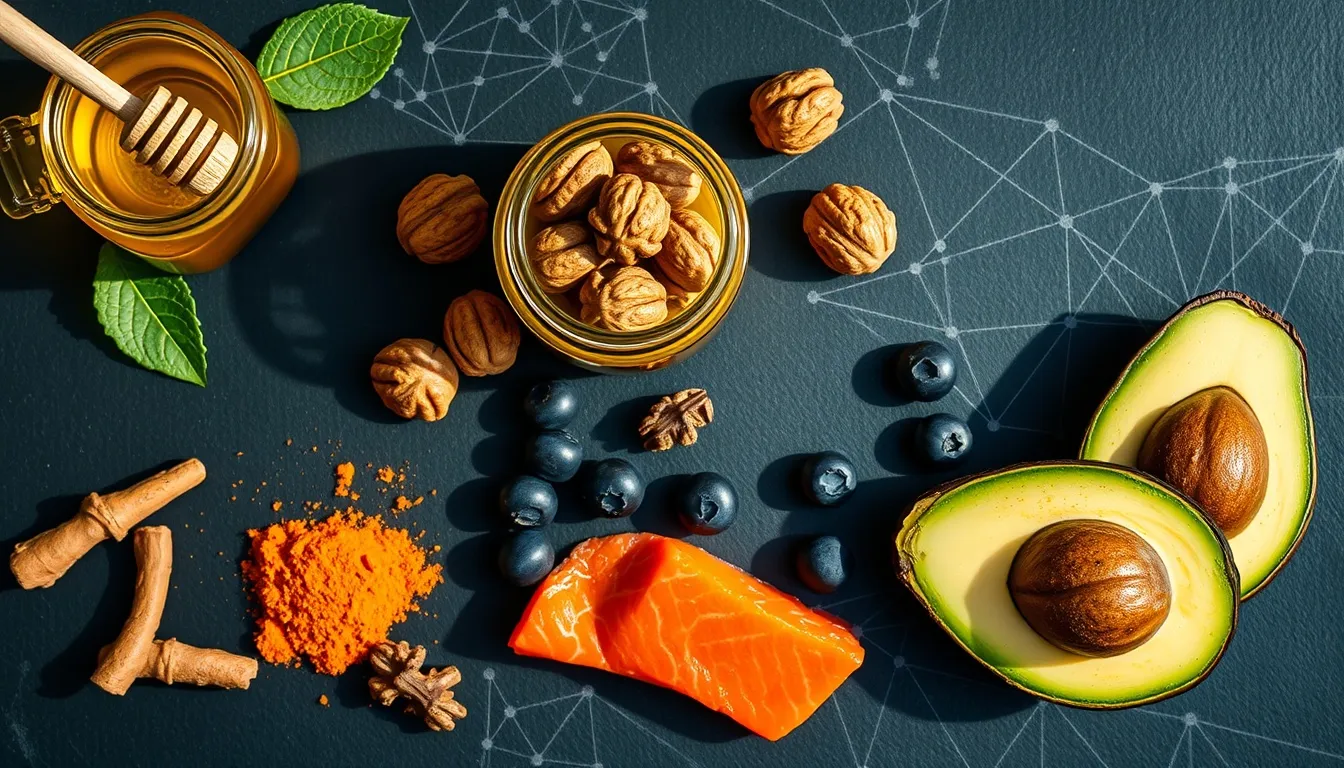
**Exam and study performance** — While no study has specifically tested honey for academic performance, the principle is straightforward: a tablespoon of honey provides immediate glucose for concentration without the sharp insulin spike and subsequent energy crash of refined sugar or energy drinks. Combining honey with protein/fat (e.g., honey and walnuts) further stabilizes the glycemic response.
**Sleep quality and next-day cognition** — Poor sleep devastates cognitive performance. Honey taken before bed supports the tryptophan-melatonin pathway and provides liver glycogen to prevent cortisol-awakening spikes. Better sleep quality translates directly to better next-day attention, memory consolidation, and executive function. See honey before bed for sleep.
For comprehensive timing guidance, see best time to eat honey. For athletic brain performance, see honey for athletes. For sustained energy throughout the day, see honey for energy.
Best Honey Types for Brain Health
Honey variety matters for cognitive benefits because polyphenol profiles vary dramatically:
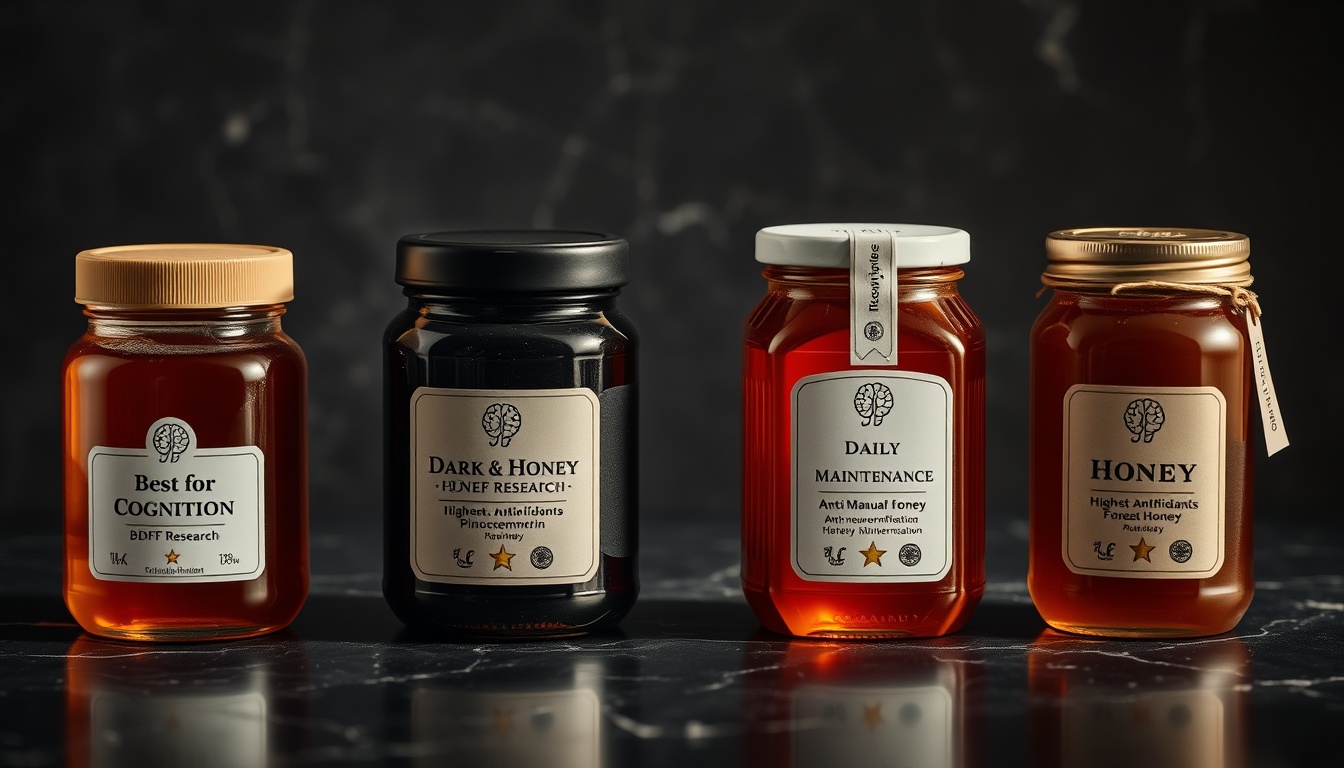
**Buckwheat honey ($15–25/lb)** — Highest overall antioxidant content among common honeys (ORAC 16,000+ µmol TE/100g — 3-9x more than lighter varieties per 2004 *JAFC* study). Rich in quercetin and rutin, both with documented neuroprotective effects. Dark color indicates high polyphenol density. Best choice for maximizing antioxidant neuroprotection at a budget-friendly price.
**Manuka honey ($35–60+/lb, UMF 10+)** — Contains unique MGO alongside standard polyphenols. A 2016 study found that manuka honey's anti-inflammatory effects extended to neuronal cell models. UMF 10+ provides meaningful polyphenol density. The premium option for those prioritizing research-backed anti-neuroinflammatory compounds.
**Tualang honey** — The most specifically studied honey for cognitive outcomes (the 2011 RCT in postmenopausal women, the BDNF studies, the stress-induced memory impairment studies). Contains a particularly diverse polyphenol profile. Available primarily from Southeast Asian sources.
**Heather honey ($30–50/lb)** — Exceptionally high antioxidant content (top tier among 14 European honeys per 2009 *JAFC* study), with phenolic acids and flavonoids relevant to neuroprotection. Premium pricing reflects limited availability from Scottish and European moorlands.
**Thyme honey ($15–25/lb)** — Contains thymol and carvacrol with documented anti-inflammatory effects, plus high polyphenol content. Greek thyme honey ranked among the highest antioxidant honeys in multiple European comparisons. Strong value relative to its antioxidant density.
**Wildflower honey ($10–18/lb)** — Polyfloral honeys contain broader polyphenol diversity from multiple nectar sources, potentially offering wider-spectrum neuroprotection. Best everyday value when specific dark varieties are unavailable.
Pro Tip
Always choose raw, unprocessed honey for brain health benefits. Pasteurization reduces polyphenol content by 20-30% and destroys active enzymes. The darker the honey, generally the higher the antioxidant content. See raw honey vs regular honey.
Honey and Brain Health: Evidence Boundaries
Based on the available evidence, here's a practical approach to incorporating honey for cognitive support:
Honey is not required for cognitive maintenance and has not been shown to prevent cognitive decline.
Morning honey is not established as a cognitive enhancer.
Honey has not been shown to improve focus for study or work.
Honey is not established as neuroprotection or a sleep-based memory intervention.
**Anti-inflammatory synergy** — Combine honey with turmeric (curcumin crosses the blood-brain barrier, shown to reduce amyloid plaques in animal models), cinnamon (cinnamaldehyde has neuroprotective properties), or ginger (gingerols modulate neuroinflammation).
This section does not establish a universal or medical honey dose for this purpose. Use the daily added-sugar guide to count honey with other added or free sugars.
Honey vs Other Brain-Health Supplements
Comparisons with cognitive supplements do not turn honey into a proven brain-health treatment.
**Omega-3 fatty acids (DHA/EPA)** — Stronger evidence for brain structure and development. DHA is a primary component of neuronal membranes. Multiple large RCTs support omega-3s for cognitive maintenance. Honey and omega-3s target different mechanisms and work complementarily.
**Blueberries/anthocyanins** — Similar polyphenol-based neuroprotection, with stronger clinical evidence (multiple RCTs showing improved memory in older adults). Anthocyanin mechanism overlaps with honey's polyphenols. A honey-blueberry combination would provide diverse antioxidant coverage.
**Curcumin (turmeric)** — Strong anti-inflammatory and anti-amyloid evidence in preclinical studies. Bioavailability is a challenge (black pepper piperine helps). Honey and turmeric is a complementary pairing that addresses bioavailability (honey provides a palatable delivery vehicle).
**Lion's mane mushroom** — Stimulates NGF (nerve growth factor) production. Two small RCTs in older adults showed cognitive improvements. Different mechanism from honey — the two could be complementary.
**Caffeine + L-theanine** — Strong acute evidence for attention, focus, and working memory. Works within minutes (vs honey's chronic mechanisms). Honey in green tea provides both L-theanine and honey polyphenols in one drink.
**Honey's unique advantage** — Honey is a whole food rather than an isolated supplement. It provides polyphenols, prebiotics, enzymes, minerals, and sustainable energy in a palatable form. While individual compounds may be less potent than concentrated supplements, the combination of mechanisms and daily-use practicality make honey a realistic long-term addition to a brain-healthy diet.
Limitations and Honest Assessment
Intellectual honesty requires acknowledging what we don't yet know:
- **Most evidence is preclinical** — The majority of studies showing honey's neuroprotective effects are in cell cultures or animal models. Only one RCT (the 2011 Tualang honey study in postmenopausal women) has directly tested honey for cognitive outcomes in humans.
- **Dosing is extrapolated** — We don't know the optimal dose of honey for brain health in humans. Animal studies use relatively high doses that may not translate directly.
- **Polyphenol bioavailability varies** — Not all polyphenols in honey are absorbed equally. Blood-brain barrier penetration has been demonstrated for some (quercetin, chrysin, pinocembrin) but not all honey compounds.
- **Confounding factors** — People who eat honey regularly may also follow overall healthier diets and lifestyles. It's difficult to isolate honey's specific contribution to cognitive health.
- **Not a treatment for cognitive disorders** — Honey should not be used as a substitute for medical treatment of Alzheimer's disease, dementia, ADHD, or other neurological conditions.
- **Individual honey polyphenols ≠ honey** — Many studies test isolated quercetin or chrysin at concentrations higher than what honey provides. These results support biological plausibility but don't prove equivalent effects from eating honey.
The Bottom Line
Honey offers a biologically plausible case for cognitive support through multiple mechanisms: antioxidant neuroprotection, anti-inflammatory NF-κB suppression, BDNF enhancement, cholinergic system protection, gut-brain axis support, and stable glucose energy supply. The limited human evidence is positive, particularly in postmenopausal women.
The practical case is even stronger. Honey is a sustainable daily habit that replaces refined sugar while delivering polyphenols and prebiotics. Even if its direct neuroprotective effects are modest, replacing sugar with honey in your diet eliminates an inflammatory driver while adding anti-inflammatory compounds — a net positive for brain health.
For the best brain-health approach, choose dark, raw honeys (buckwheat $15–25, heather $30–50, thyme $15–25), combine with proven brain foods (walnuts, green tea, turmeric), prioritize sleep quality with bedtime honey, and include honey as part of an overall brain-healthy diet pattern, counted toward your daily added-sugar intake.