Why This Two-Stage Method Works
The secret to truly crispy honey roasted potatoes is timing. If you add the honey glaze at the beginning, the sugars burn long before the potatoes cook through. The honey caramelizes at 230°F — well below the 425°F oven temperature — so it goes from golden to charred in minutes.
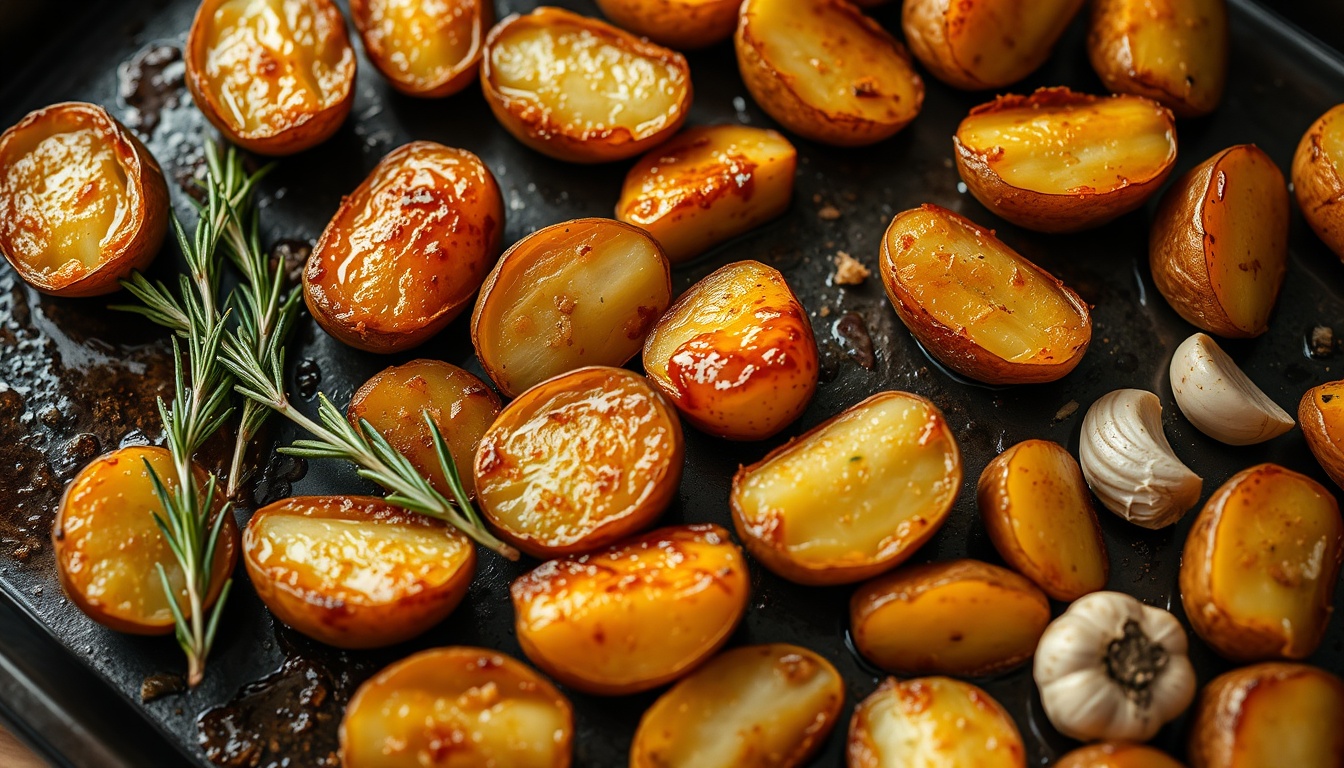
The two-stage method solves this completely. First, the potatoes roast dry on a preheated pan for 25 minutes, developing a deep golden crust through the Maillard reaction. The hot pan gives each cut side an immediate contact sear, creating the kind of crispiness you normally only get from deep frying.
Then the honey garlic butter goes on for the final 8-10 minutes. This is long enough for the fructose in honey to caramelize into a sticky, lacquered coating but short enough that it does not burn. The butter adds fat that helps the glaze cling to every surface.
The soy sauce is optional but transformative. A single tablespoon adds glutamate (umami) and salt that makes the honey taste more complex rather than just sweet. Your guests will taste something deeply savory with sweet edges — not a sugary potato.
5 Seasoning Variations
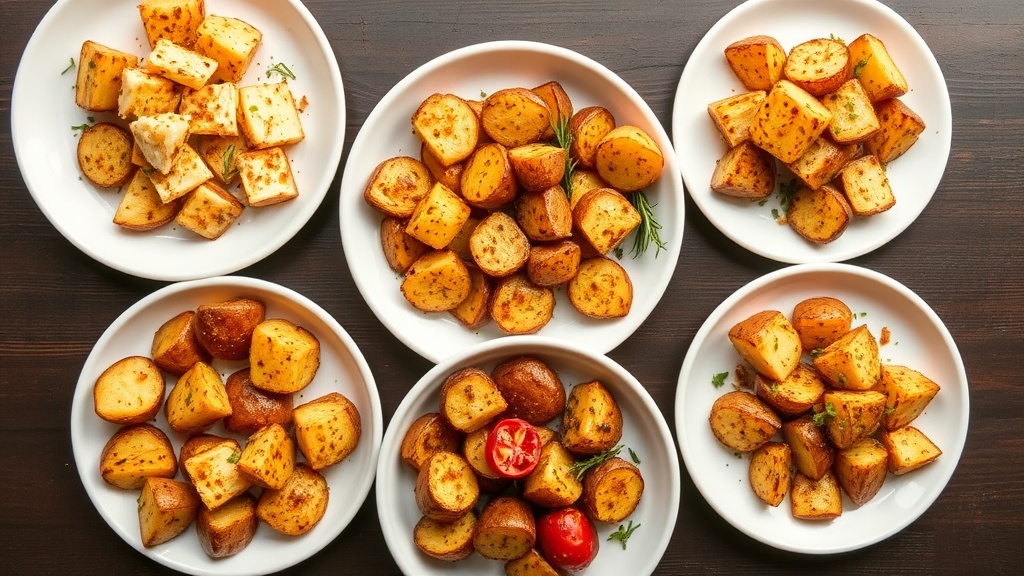
The base recipe is a canvas. Changing the spices or adding one ingredient shifts the entire flavor.
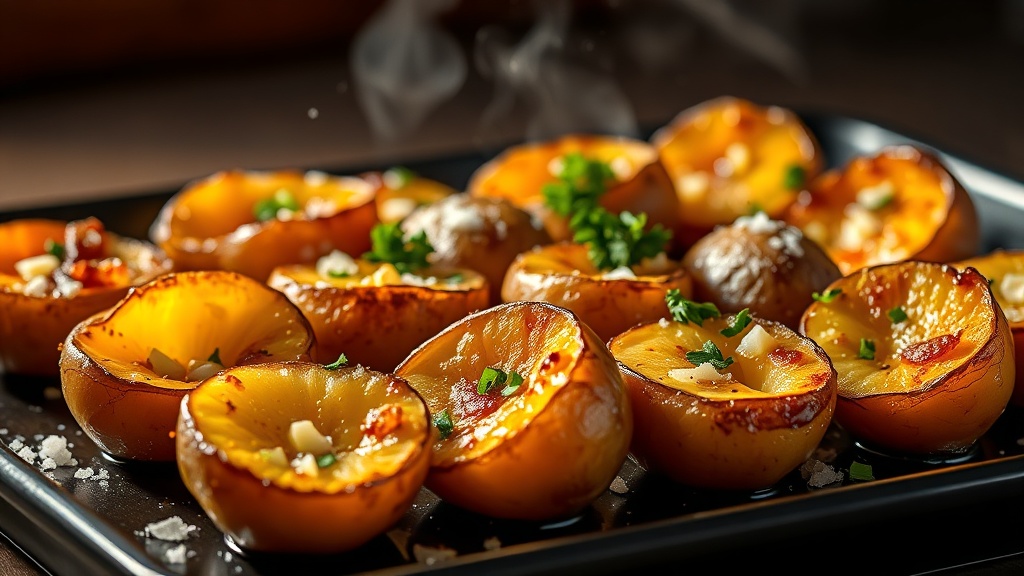
- Honey garlic Parmesan — after the final roast, toss the hot potatoes with 1/3 cup freshly grated Parmesan and 1 teaspoon Italian seasoning. The cheese melts on contact and forms a salty, crispy crust over the honey glaze. Finish with fresh cracked black pepper
- Honey garlic rosemary — add 2 tablespoons fresh rosemary leaves (stripped from stems) to the glaze. The rosemary's piney oils bloom in the butter and perfume the entire dish. This is the version for roast chicken dinners and holidays alongside honey roasted carrots
- Spicy honey garlic — add 1 teaspoon red pepper flakes and 1/2 teaspoon cayenne to the glaze, or use honey sriracha sauce in place of plain honey. The heat builds slowly against the sweet sticky coating
- Honey garlic ranch — toss the finished potatoes with 2 tablespoons dry ranch seasoning and a squeeze of lemon juice. The tangy, herby ranch powder against the sweet glaze creates an addictive contrast that disappears fast at any gathering
- Honey mustard garlic — replace the soy sauce with 2 tablespoons Dijon mustard and 1 tablespoon whole-grain mustard. The sharp mustard cuts through the richness and adds a French-bistro character. Serve alongside honey mustard chicken or honey dijon chicken
Get the Honey Buyer's Cheat Sheet (free PDF)
16 varieties on one page — color, flavor, best use and what a fair price looks like — from the 304 honeys we track.
Best Potato Types for Roasting
Not all potatoes roast equally. The starch content determines the texture.
- Yukon Gold — the best all-around choice. Medium starch creates a fluffy interior and golden, crispy exterior. The buttery flavor complements the honey garlic glaze naturally
- Red potatoes — waxy and firm. They hold their shape perfectly during roasting and the skin adds color. Slightly less fluffy inside than Yukon Gold but the texture contrast with the crispy exterior is excellent
- Baby potatoes (mixed) — any small potato works beautifully. Just halve them so every piece has one flat cut side for maximum contact with the hot pan. No peeling needed
- Fingerling potatoes — halved lengthwise, these create elegant, elongated pieces with lots of surface area for the glaze. Best for dinner parties and plated meals
- Russet potatoes — highest starch content means the fluffiest interior and crispiest exterior. Cut into 1-inch cubes. They absorb more of the honey garlic butter than waxy varieties. The trade-off is they can break apart if handled roughly
Best Honey Varieties for Roasted Potatoes
The honey concentrates during oven caramelization, so the variety you choose affects the final flavor.
- Wildflower honey — the best all-purpose choice. Mild floral complexity that enhances the garlic and butter without competing. Works with all five seasoning variations
- Clover honey — clean and neutral. Lets the garlic and butter be the stars while providing sweetness and caramelization structure
- Orange blossom honey — adds a subtle citrus note. Especially good with the rosemary and Parmesan variations
- Buckwheat honey — dark and malty with deep caramel notes. Creates a more intensely flavored glaze. Best with the spicy variation where its boldness matches the heat
- Sourwood honey — buttery and caramelized flavor that amplifies the butter in the glaze. A premium choice that makes the dish taste more complex than its simple ingredients suggest
Tips for the Crispiest Potatoes
Follow these tips and your potatoes will be crunchier than most restaurant versions.
- Preheat the baking sheet — this is the single most important step. The hot metal gives every potato piece an immediate contact sear. The difference between a preheated and cold pan is dramatic
- Cut sides down — every potato piece should sit flat on its cut side. Maximum surface contact with the hot pan means maximum crust formation. Round sides up means nothing crisps properly
- Do not crowd — leave at least half an inch between pieces. Potatoes release steam as they cook. If they are touching, the steam gets trapped and you get soft, steamed potatoes instead of crispy, roasted ones
- Do not flip during the first 25 minutes — let the crust form completely before moving anything. If a potato sticks to the pan, it is not ready yet. A properly formed crust releases naturally
- Pat dry if using washed potatoes — surface moisture is the enemy of crispiness. If you washed the potatoes, dry them thoroughly with paper towels before tossing with oil
Pro Tip
For extra-crispy edges: toss the raw potatoes with 1/2 teaspoon baking soda along with the oil. The alkaline environment speeds up Maillard browning dramatically. Rinse the cut potatoes first and dry them — this removes surface starch that can make the texture gummy.
Serving Suggestions
Honey garlic roasted potatoes work as a side dish for virtually any protein.
- Alongside honey garlic chicken or honey garlic chicken thighs for a complete honey garlic dinner
- With honey glazed salmon or honey teriyaki salmon for a sheet pan meal
- Next to honey garlic steak bites for a steakhouse-quality dinner at home
- With honey garlic pork chops or honey garlic pork tenderloin
- As part of a holiday spread with honey roasted carrots, honey garlic green beans, and honey glazed ham
Make-Ahead and Storage
A few tips for meal prep and leftovers.
- Refrigerator — store leftover potatoes in an airtight container for up to 4 days. The glaze thickens as it cools
- Reheating — spread on a baking sheet and reheat at 400°F for 10-12 minutes until crispy again. Microwave works but softens the crust. A cast iron skillet over medium-high heat also re-crisps well in 5 minutes
- Prep ahead — cut and season the potatoes (without the honey glaze) up to 24 hours in advance. Store in the refrigerator and bring to room temperature before roasting. Make the honey garlic glaze separately
- Freezer — not recommended. The potato texture degrades when frozen and reheated, becoming grainy instead of fluffy
Common Mistakes
Simple recipe, but these errors are the most common.
- Adding the honey glaze from the start — the honey burns long before the potatoes finish cooking. Always roast the potatoes first, then glaze for the final 8-10 minutes only
- Using a cold baking sheet — the initial sear from the preheated pan creates the crispy base layer. Starting on a cold pan means the potatoes sit in a puddle of oil until the pan heats up, producing soft, greasy results
- Cutting uneven pieces — small pieces burn while large pieces stay raw inside. Cut everything to roughly the same size (about 1 inch) so everything finishes at the same time
- Overcrowding the pan — this is the number one cause of soggy roasted potatoes. Use two baking sheets if needed. The potatoes need space to breathe and release steam
- Skipping the soy sauce — it adds umami depth that makes the dish taste savory and complex rather than just sweet. If avoiding soy, use a pinch of fish sauce or Worcestershire instead