Honey vs Agave: Two Very Different "Natural" Sweeteners
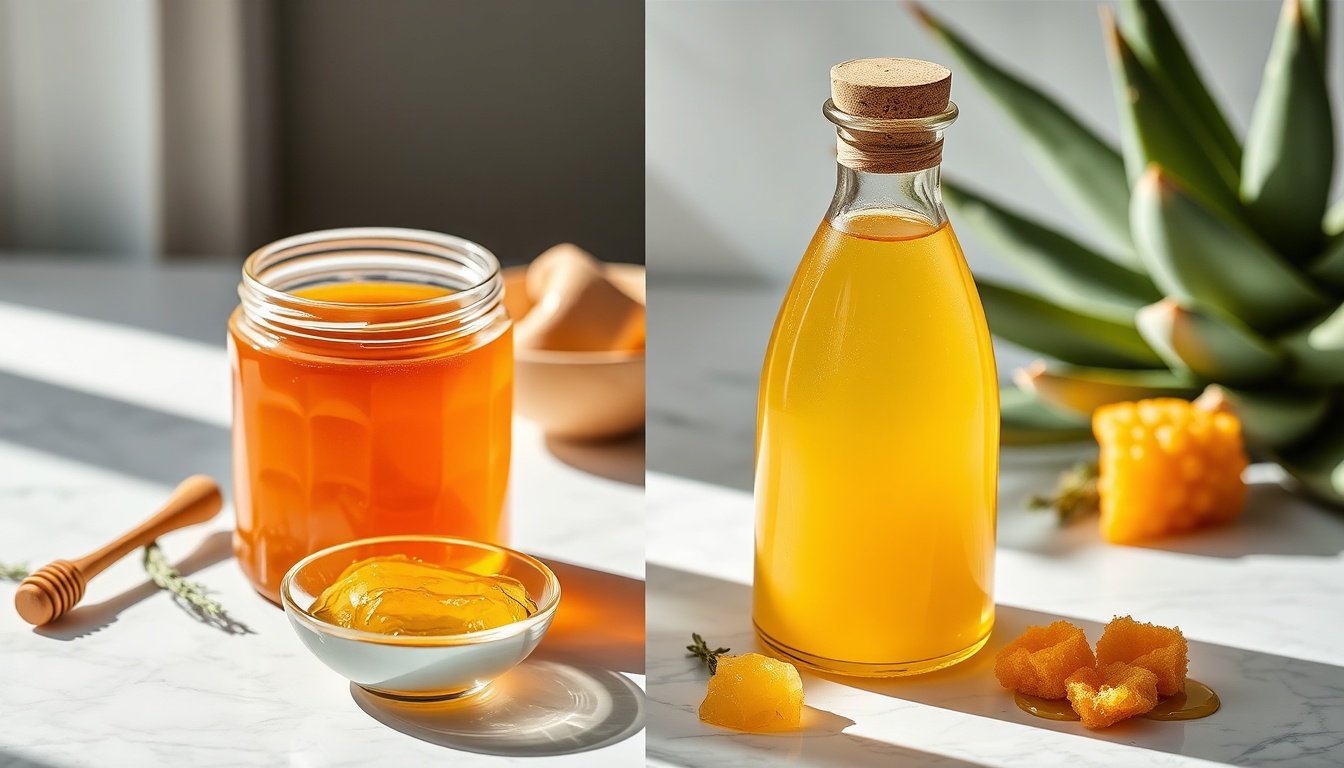
Honey and agave nectar are the two most popular natural sugar alternatives, but they couldn't be more different. Honey is a minimally processed animal product made by bees from flower nectar, containing enzymes, polyphenols, and prebiotics that have been studied in thousands of clinical trials. Agave nectar (often marketed as "agave syrup") is a highly processed plant extract from the blue agave plant — the same species used to make tequila.
The marketing around both products can be misleading. Honey is sometimes dismissed as "just sugar," while agave is promoted as a "low-glycemic health food." The reality is more nuanced. While raw honey contains genuine bioactive compounds with measurable health benefits, agave's low glycemic index comes at a cost: extremely high fructose content that raises different health concerns.
This guide compares them across every dimension that matters — nutrition, glycemic impact, health effects, cooking behavior, environmental impact, and price — so you can make an informed choice based on evidence rather than marketing.
Nutritional Comparison: What's Actually in Each?
**Honey (per tablespoon, ~21g):** 64 calories, 17.2g sugars (38% fructose, 31% glucose, plus maltose and sucrose), 0.1g protein, small amounts of B vitamins (B2, B3, B5, B6), vitamin C, and minerals (potassium, calcium, iron, zinc, magnesium, phosphorus, manganese). Contains 30+ polyphenol antioxidants (chrysin, pinocembrin, caffeic acid, quercetin), active enzymes (glucose oxidase, diastase, invertase), and prebiotic oligosaccharides (FOS, GOS). For detailed nutritional data, see our honey nutrition facts guide.
**Agave nectar (per tablespoon, ~21g):** 60 calories, 16g sugars (70-90% fructose, 5-10% glucose — one of the highest fructose concentrations of any sweetener), trace minerals (minimal iron and calcium), negligible vitamins, and minimal antioxidant activity. Despite coming from a plant traditionally rich in saponins and fructans, the industrial processing used to make agave nectar (enzymatic hydrolysis at high temperatures) destroys most of the original plant's beneficial compounds.
**Key difference:** Honey is a complex food with hundreds of bioactive compounds. Agave nectar is essentially concentrated fructose syrup with minimal nutritional value beyond calories. The polyphenols in honey — particularly in dark varieties like buckwheat honey ($15-25/lb, ORAC 16,000+) — provide anti-inflammatory, antimicrobial, and antioxidant effects that agave simply doesn't offer.
The mineral comparison is particularly striking for dark honeys: buckwheat honey provides 3-5x more iron and potassium per tablespoon than lighter varieties, while agave provides negligible amounts regardless of variety. Honey also contains unique compounds like methylglyoxal (in manuka honey, $35-60+ UMF 10+) and glucose oxidase (which generates hydrogen peroxide for antimicrobial activity) that have no equivalent in agave.
Get the Honey Buyer's Cheat Sheet (free PDF)
16 varieties on one page — color, flavor, best use and what a fair price looks like — from the 268 honeys we track.
Carbohydrate and Label Comparison
Honey and agave are both caloric sweeteners that contribute carbohydrate and added sugar. Their sugar composition and recipe behavior differ, but those differences do not make either one a diabetes treatment.
Compare the same recipe-serving amount using each product's Nutrition Facts panel. The honey carbohydrate and label guide explains serving-size total-carbohydrate counting and why neither sweetener is medically preferred for everyone.
For baking or drinks, choose based on flavor, viscosity and the required liquid adjustment, then count the amount actually used.
Health Effects: What Clinical Research Shows
**Honey's evidence base is extensive.** The 2022 Nutrition Reviews meta-analysis of 18 RCTs found that honey consumption reduced LDL cholesterol (−2.61 mg/dL), triglycerides (−8.35 mg/dL), fasting blood glucose (−3.26 mg/dL), and C-reactive protein (an inflammation marker). A 2020 BMJ Evidence-Based Medicine systematic review of 14 studies (1,761 participants) confirmed honey outperforms standard care for upper respiratory symptoms including cough. Honey has demonstrated wound healing efficacy in Cochrane reviews, antimicrobial activity against 60+ species including MRSA, and prebiotic effects that support gut health.
**Agave's evidence base is thin.** There are very few clinical trials specifically studying agave nectar's health effects. The limited research that exists generally focuses on agave's fructose content and its metabolic consequences. A 2013 study in the American Journal of Clinical Nutrition found that beverages sweetened with fructose (at concentrations similar to agave) increased visceral fat, reduced insulin sensitivity, and worsened lipid profiles over 10 weeks compared to glucose-sweetened beverages.
**Anti-inflammatory effects:** Honey's polyphenols inhibit the NF-κB inflammatory pathway, suppress COX-2 enzyme activity, and scavenge reactive oxygen species — mechanisms documented in dozens of studies (see our honey for inflammation guide). Agave nectar has no demonstrated anti-inflammatory properties; in fact, high fructose consumption is associated with increased inflammatory markers.
**Gut health:** Honey contains prebiotic oligosaccharides (FOS, GOS) that selectively feed beneficial Bifidobacterium and Lactobacillus bacteria, as our honey and gut health guide details. Interestingly, the raw agave plant contains fructans (agave inulin) which are excellent prebiotics — but the processing to make agave nectar breaks these fructans down into free fructose, destroying the prebiotic benefit.
**Antimicrobial activity:** Honey generates hydrogen peroxide through glucose oxidase, contains methylglyoxal (in manuka), and disrupts bacterial biofilms. Agave nectar has no demonstrated antimicrobial properties. This matters for practical uses like sore throat relief, wound care, and sinus health.
Processing: Raw Honey vs Industrial Agave
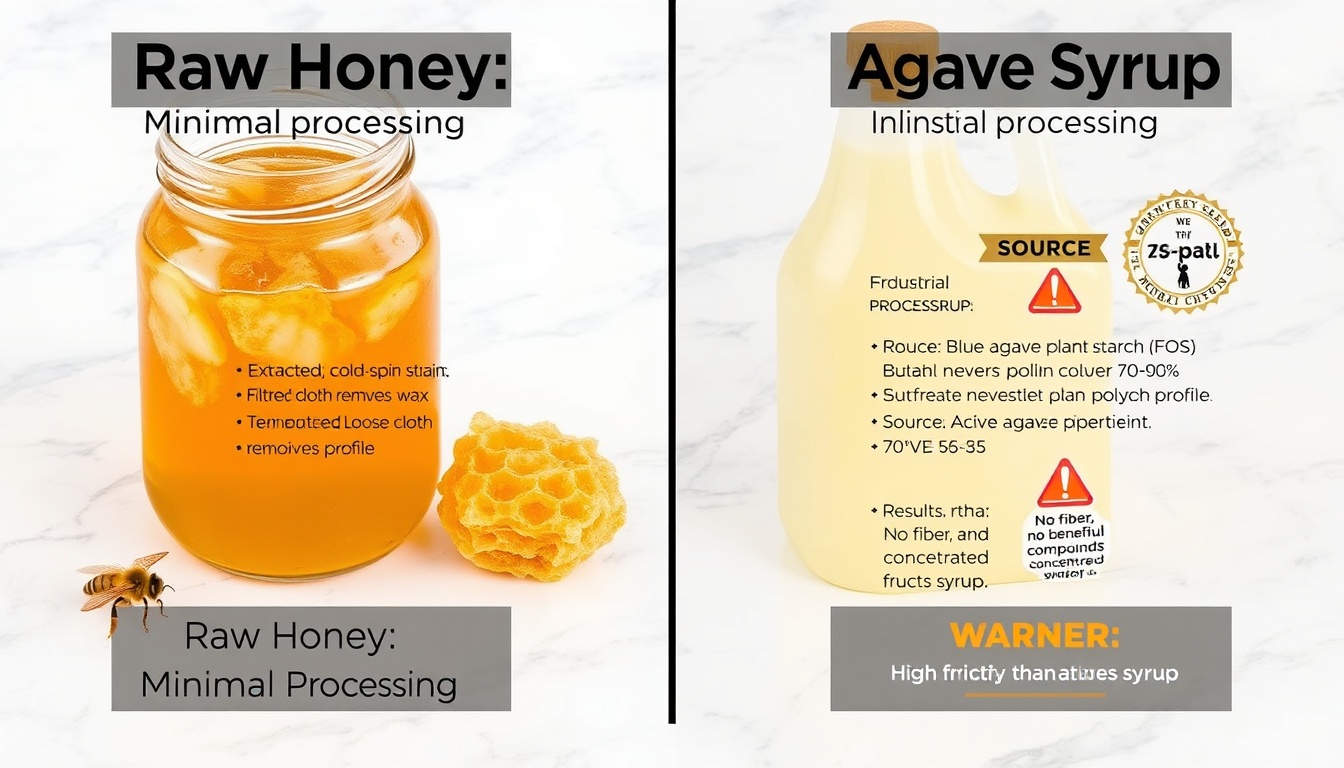
**Honey processing spectrum:** Raw honey is strained to remove wax and debris but otherwise unheated and unfiltered, preserving all enzymes, polyphenols, and pollen. Commercial honey may be pasteurized (heated to 70°C/158°F to prevent crystallization) and ultra-filtered. Even pasteurized honey retains most polyphenols and prebiotics. For the most benefits, choose raw — see our raw honey vs organic guide for label decoding.
**Agave processing reality:** Despite "natural" marketing, commercial agave nectar is heavily processed. The agave plant's starchy core (piña) is shredded, and enzymes (often genetically modified) are added to convert the complex carbohydrates (fructans/inulin) into simple fructose syrup. The mixture is heated, filtered, and concentrated. This process is chemically similar to how high-fructose corn syrup (HFCS) is made — in fact, some food scientists have called agave nectar "high-fructose agave syrup."
There's an important distinction between traditional agave products and modern agave nectar. Traditional Mexican aguamiel (agave sap) is consumed fresh and contains fructans, saponins, and antioxidants. But the bottled agave nectar sold in stores bears little resemblance to this traditional product — the industrial processing strips away the compounds that made agave nutritionally interesting in the first place.
This processing difference is critical: when you buy raw honey, you're getting a product close to what bees made. When you buy agave nectar, you're getting a highly refined product that shares little with the original plant beyond calories.
Cooking and Baking: Practical Differences
**Sweetness:** Agave is about 1.5x sweeter than sugar by volume, so you use less. Honey is about 1.2-1.5x sweeter than sugar. Both allow you to reduce total sweetener quantity compared to sugar.
**Flavor:** Honey contributes distinctive flavor that varies by type — from mild acacia and clover to bold buckwheat and manuka. Agave has a neutral, mildly sweet flavor (light agave) or a caramel note (dark/amber agave). If you want the sweetener to disappear into the dish, light agave or mild honey like acacia work similarly.
**Baking behavior:** Both are liquid sweeteners that add moisture to baked goods. Honey caramelizes and browns faster than agave due to its glucose content (glucose browns via Maillard reaction at lower temperatures than fructose). Honey requires the 4-part baking substitution formula: use 2/3 cup per cup sugar, reduce other liquids by 3 tbsp, add 1/4 tsp baking soda, lower oven temperature by 25°F. Agave requires similar adjustments but less temperature reduction since it browns less.
**Dissolving:** Agave dissolves more easily in cold liquids, making it convenient for iced drinks and cold cocktails. Honey dissolves readily in warm liquids but can be stubborn in cold beverages (a practical advantage for agave). For honey in tea and coffee, this isn't an issue since those are served warm.
**Shelf life:** Both have long shelf lives. Raw honey essentially never spoils (see our does honey expire guide) — it may crystallize but remains safe indefinitely. Agave nectar lasts 2-3 years unopened, 6-12 months after opening refrigerated.
Environmental and Ethical Considerations
**Honey's environmental impact:** Managed honey bee colonies provide essential pollination services for agriculture — approximately one-third of food crops depend on bee pollination. Supporting beekeepers who practice sustainable methods helps maintain pollinator populations. However, concerns exist about managed honey bees competing with native pollinators — see our is honey vegan guide for the full ethical discussion. Buying from local producers at farmers markets supports small-scale, environmentally conscious beekeeping.
**Agave's environmental impact:** Industrial agave farming for nectar production has significant environmental concerns. Agave plants take 7-10 years to mature and are harvested whole (killed) before they flower. This prevents agave from completing its reproductive cycle and producing flowers that feed the endangered Mexican long-nosed bat — a keystone pollinator species. Large-scale agave monoculture in Mexico has led to habitat destruction, soil depletion, and reduced biodiversity. Additionally, converting agave farmland from tequila production (which at least produces alcohol from full fermentation) to nectar production (which requires more chemical processing) may not represent an environmental improvement.
**Carbon footprint:** Local honey has a minimal carbon footprint when purchased from nearby producers. Agave nectar is almost exclusively produced in Mexico and shipped internationally, adding transportation emissions. The industrial processing of agave also requires significant energy input for heating, enzymatic conversion, and concentration.
**Vegan considerations:** Agave is plant-based and clearly vegan. Honey's vegan status is debated — The Vegan Society considers it non-vegan due to bee exploitation, while "beegans" argue that ethical beekeeping is symbiotic. This is the one category where agave has an unambiguous advantage for plant-based diets.
**Sustainability bottom line:** Buying honey from local producers supports pollinator habitat maintenance and local ecosystems. Each managed hive requires surrounding forage, incentivizing beekeepers to preserve wildflower meadows and native plant corridors. Agave monoculture, by contrast, displaces native vegetation and disrupts pollinator species. For environmentally motivated sweetener choices, locally sourced wildflower honey ($10-18/lb) from a nearby beekeeper has a meaningfully smaller ecological footprint than imported agave.
Price Comparison
Both honey and agave span a wide price range depending on quality and sourcing:
**Agave nectar:** $4-8 per pound for standard brands (light, amber, or dark). Organic agave runs $6-12 per pound. Raw/minimally processed agave products (rare) can cost $15-25 per pound. Most supermarket agave falls in the $5-7/lb range.
**Honey:** Clover honey runs $8-15/lb, wildflower $10-18/lb, buckwheat $15-25/lb, orange blossom $12-20/lb, sourwood $20-35/lb, tupelo $25-45/lb, and manuka UMF 10+ $35-60+. Local raw honey from farmers markets or your nearest source typically costs $12-20/lb.
On a per-teaspoon basis, agave is generally cheaper. But since agave is 1.5x sweeter, you use less, partially closing the price gap. When you factor in honey's nutritional benefits — the polyphenols, prebiotics, enzymes, and minerals that agave lacks — honey offers dramatically more value per dollar in terms of health benefit per calorie.
When Honey Wins, When Agave Wins, and When It's a Tie
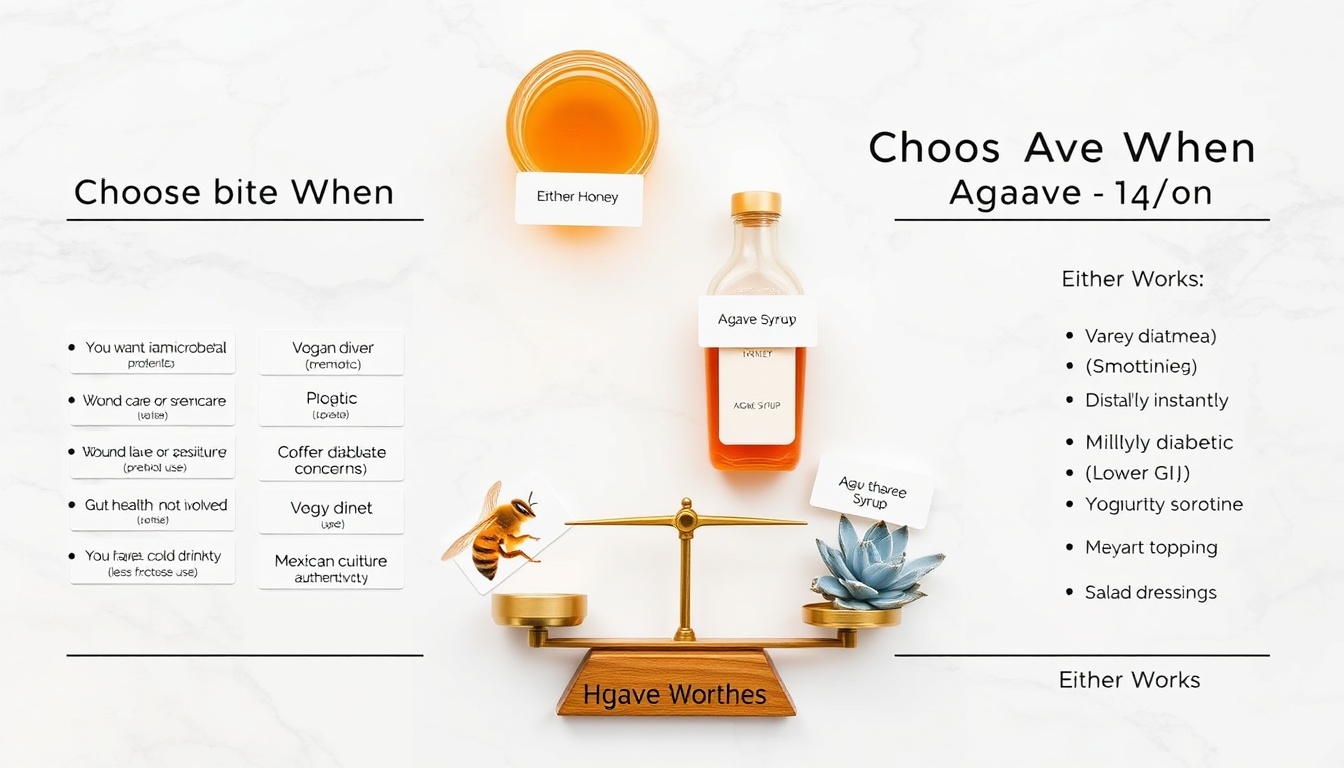
**Honey wins for:** Overall nutrition and bioactive compounds (not even close), anti-inflammatory effects, antimicrobial activity, cough and cold relief, wound healing, gut health (prebiotics), cardiovascular markers (clinical trial evidence), cooking flavor complexity, shelf life, and environmental sustainability when sourced locally.
**Agave wins for:** Vegan/plant-based diets (clearly), very low glycemic index (GI 10-19), neutral flavor when you don't want sweetener taste, dissolving in cold beverages, and lower price point for basic grocery budgets.
**It's a tie for:** Total calories per tablespoon (64 vs 60 — negligible difference), sweetening power (both stronger than sugar), liquid sweetener convenience, and general versatility in cooking.
For most people, honey is the better choice. The health benefit gap is substantial — honey is a functional food with thousands of supporting studies, while agave nectar is nutritionally comparable to high-fructose corn syrup with better marketing. The main exception is strict vegans, for whom agave is the clear choice, and people specifically managing immediate blood sugar spikes who need the lowest possible GI (though low-GI honeys like acacia at GI 32-35 largely close this gap).
Myth-Busting: Common Misconceptions
**Myth: Agave is a natural, minimally processed sweetener.** Commercial agave nectar undergoes extensive industrial processing including enzymatic hydrolysis and heat concentration — a process more similar to making HFCS than squeezing fruit juice. The "natural" label is marketing, not a processing descriptor.
**Myth: Honey is "just sugar."** Honey contains 30+ polyphenol antioxidants, active enzymes, prebiotic fiber, vitamins, minerals, and antimicrobial compounds. Reducing it to "sugar" ignores the bioactive matrix that produces measurable health effects in clinical trials. See is honey better than sugar for the full comparison.
**Myth: Low glycemic index means healthier.** GI only measures the blood glucose response. It says nothing about the metabolic effects of fructose in the liver, triglyceride production, or long-term insulin resistance. Agave's very low GI is achieved through very high fructose — which research links to fatty liver disease, elevated triglycerides, and metabolic syndrome when consumed in excess.
**Myth: Agave contains beneficial fructans (prebiotics).** The raw agave plant does contain fructans, which are excellent prebiotics. But the processing to make commercial agave nectar breaks fructans down into free fructose. You'd need to consume raw agave sap (aguamiel) — not bottled agave nectar — to get the prebiotic benefit.
**Myth: All honey is the same.** Honey varies enormously by floral source. Buckwheat honey ($15-25/lb) has 3-9x more antioxidants than lighter varieties. Manuka honey ($35-60+) contains unique methylglyoxal not found in other honeys. Acacia honey ($12-20/lb) has a GI of 32-35 — comparable to many "low-GI" products. Choosing the right honey type matters.
The Bottom Line
Honey and agave nectar occupy fundamentally different nutritional categories despite both being liquid sweeteners marketed as "natural." Honey is a complex functional food with hundreds of bioactive compounds, backed by meta-analyses showing benefits for cardiovascular health, respiratory symptoms, wound healing, and gut microbiome diversity. Agave nectar is a processed fructose syrup with minimal nutritional value beyond calories — its low glycemic index is a metabolic trade-off, not a free benefit.
If you're choosing between them for general health: choose honey, preferably raw. If you're managing immediate blood sugar response: choose a low-GI honey like acacia ($12-20/lb, GI ~32) or tupelo ($25-45/lb, GI ~44), which offer GI values well below table sugar along with genuine health benefits. If you're strictly vegan: agave is the appropriate choice, though date syrup and maple syrup are worth considering as alternatives with better nutritional profiles than agave.
This section does not establish a universal or medical honey dose for this purpose. Use the daily added-sugar guide to count honey with other added or free sugars.