Honey vs Brown Sugar: What the Science Says
Brown sugar is one of the most common sweeteners in kitchens worldwide, and many people wonder whether switching to honey would be a healthier choice. Both are often perceived as "natural" alternatives to white sugar — but they're not as similar as you might think.
The differences between honey and brown sugar go far beyond flavor. They're produced in fundamentally different ways, have distinct nutritional profiles, and affect your body through different mechanisms. This guide breaks down the evidence so you can choose wisely for your health goals and kitchen needs.
For context on how honey stacks up against other sweeteners, see our guides on honey vs sugar, honey vs maple syrup, honey vs molasses, and honey vs coconut sugar.
How They're Made: A Critical Distinction
Understanding how each sweetener is produced explains most of their nutritional differences:
**Honey** — Produced by honey bees from flower nectar through an enzymatic process at hive temperature (35°C). Bees add enzymes like glucose oxidase, invertase, and diastase, reduce water content through evaporation, and seal the finished product in beeswax cells. Raw honey retains all its enzymes, 30+ polyphenols, prebiotic oligosaccharides, and antimicrobial compounds. No industrial processing is required. Learn more in our guide on how bees make honey.
**Brown sugar** — Made by either adding molasses back to refined white sugar (most commercial brown sugar) or partially refining raw cane sugar to retain some molasses (less common). Light brown sugar contains about 3.5% molasses; dark brown sugar about 6.5%. The base is still sucrose that has been through industrial refining: crushing, clarifying with lime, filtering, crystallizing, and centrifuging. The molasses coating adds color, moisture, and a small amount of minerals.
**Key difference** — Honey is a biologically active food with living enzymes and hundreds of bioactive compounds created by a natural enzymatic process. Brown sugar is industrially refined sucrose with a thin coating of molasses — essentially white sugar with some minerals added back. The "natural" perception of brown sugar is largely a marketing artifact.
Get the Honey Buyer's Cheat Sheet (free PDF)
16 varieties on one page — color, flavor, best use and what a fair price looks like — from the 268 honeys we track.
Nutritional Comparison: Per Tablespoon
Here's how the two compare per tablespoon:
**Calories** — Honey: 64 calories | Brown sugar: 52 calories. Brown sugar has fewer calories per tablespoon because it's a dry granule (lighter by volume). However, honey is sweeter per gram, so you typically use less. By weight, they're closer: honey at 3.04 kcal/g vs brown sugar at 3.8 kcal/g — brown sugar is actually more calorie-dense gram for gram.
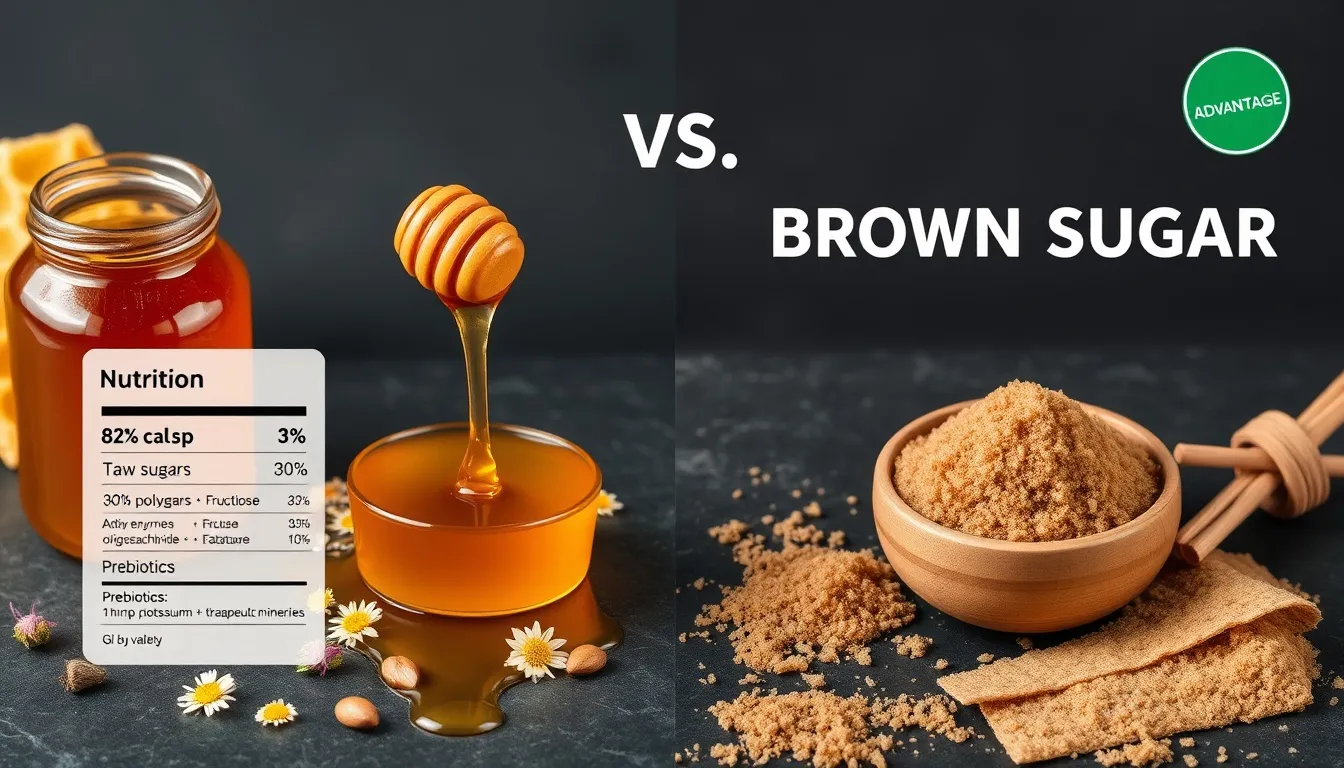
**Sugar composition** — Honey: ~82% sugars (38% fructose, 31% glucose, 7% maltose, 1.5% sucrose, plus 25+ other oligosaccharides). Brown sugar: ~97% sugars (almost entirely sucrose). This is a fundamental biochemical difference: honey provides pre-digested monosaccharides with diverse sugar types, while brown sugar is essentially a single compound that must be enzymatically split before absorption.
**Minerals** — Brown sugar's molasses coating provides small amounts of calcium (11 mg/tbsp, ~1% DV), potassium (47 mg, ~1% DV), iron (0.2 mg, ~1% DV), and magnesium (4 mg, ~1% DV). Dark brown sugar has roughly double these amounts. Honey provides potassium (11 mg), plus trace amounts of iron, zinc, copper, and manganese. Dark honeys like buckwheat contain 3-5x higher mineral levels than light varieties.
**Antioxidants and polyphenols** — Honey contains 30+ identified polyphenols including quercetin, chrysin, pinocembrin, caffeic acid, and gallic acid, with documented anti-inflammatory activity via NF-κB pathway inhibition (2022 *Nutrition Reviews* meta-analysis of 18 RCTs). Brown sugar contains polyphenols from its molasses component (particularly phenolic acids and flavonoids), but in substantially smaller quantities. USDA nutrient data shows brown sugar provides negligible total antioxidant activity compared to honey — particularly dark honeys like buckwheat, which deliver 3-9× higher ORAC values than lighter varieties (Gheldof & Engeseth, Journal of Agricultural and Food Chemistry, 2002).
**Enzymes** — Honey contains active enzymes (glucose oxidase, diastase, invertase, catalase) that drive its antibacterial properties and continue working in your body after consumption. Brown sugar contains zero active enzymes.
**Prebiotics** — Honey contains fructo-oligosaccharides (FOS) and galacto-oligosaccharides (GOS) that selectively feed beneficial gut bacteria like *Bifidobacterium* and *Lactobacillus*. Brown sugar contains no prebiotic compounds.
For a complete breakdown of honey's nutritional profile, see honey nutrition facts.
Pro Tip
Dark brown sugar has about twice the molasses content of light brown sugar, which means roughly double the minerals. But even dark brown sugar provides less than 2% of your daily value for any mineral per tablespoon — so the mineral advantage over honey is nutritionally marginal.
Carbohydrate and Label Comparison
Honey and brown sugar are both caloric sweeteners that contribute carbohydrate and added sugar. Color, floral source and the presence of molasses do not turn either one into a diabetes treatment.
Compare the labeled serving size, total carbohydrate and the amount the recipe actually uses. The honey carbohydrate and label guide explains this workflow and why neither sweetener is medically preferred for everyone.
For a recipe swap, also account for honey's liquid volume and stronger sweetness rather than treating equal volumes as nutritionally interchangeable.
This comparison does not establish a recommended daily honey serving. Use the daily added-sugar guide to count honey with other added or free sugars.
Health Benefits: Where They Diverge
This is where the comparison becomes most lopsided:
- **Antimicrobial activity** — Honey has broad-spectrum antibacterial activity against 60+ species including MRSA, driven by hydrogen peroxide generation, low pH, high osmolarity, and (in manuka) methylglyoxal. It's FDA-cleared for wound care. Brown sugar has no antimicrobial properties.
- **Anti-inflammatory effects** — Honey's polyphenols inhibit the NF-κB inflammatory pathway, suppress COX-2, and reduce TNF-α, IL-1β, and IL-6 levels (2022 *Nutrition Reviews* meta-analysis). Brown sugar's molasses polyphenols provide mild antioxidant activity but lack the clinical evidence base for anti-inflammatory effects.
- **Cough suppression** — A 2020 *BMJ Evidence-Based Medicine* systematic review of 14 studies (1,761 participants) found honey outperformed dextromethorphan (DM) for pediatric cough. Brown sugar has no cough-suppressing properties. See honey for sore throat and cough.
- **Gut health** — Honey's prebiotic FOS and GOS selectively promote beneficial bacteria, while its antimicrobials suppress pathogens like *H. pylori* and *C. difficile*. Brown sugar provides no prebiotic or selective antimicrobial benefit. See honey and gut health.
- **Cardiovascular health** — The 2022 meta-analysis found honey consumption associated with reduced total cholesterol, LDL, triglycerides, and fasting blood glucose compared to other sugars. Brown sugar has not been associated with any cardiovascular benefits in clinical research. See honey and cholesterol.
- **Wound healing** — Honey is backed by a 2015 Cochrane systematic review of 26 RCTs (3,011 participants) for wound healing, including burns and surgical wounds. Multiple FDA-cleared honey wound products exist (Medihoney, Activon). Brown sugar has been used as a folk wound treatment in some tropical regions, with a few small studies showing wound-drying effects, but it lacks the antimicrobial and tissue-regeneration mechanisms of honey. See honey for wound healing.
- **Sleep support** — Honey before bed promotes sleep via liver glycogen replenishment and the tryptophan-melatonin pathway. Brown sugar provides empty calories with no sleep-supporting mechanism. See honey before bed.
Where Brown Sugar Wins
Brown sugar does have practical advantages in certain situations:
- **Baking convenience** — Brown sugar is a 1:1 substitute for white sugar in recipes with no adjustments needed. Substituting honey requires reducing other liquids, adding baking soda, lowering oven temperature, and accepting different texture outcomes. See how to substitute honey for sugar in baking.
- **Texture in baked goods** — Brown sugar's molasses content creates chewier cookies, moister cakes, and better caramelization in certain applications. Honey produces denser, more moist baked goods with faster browning that requires oven temperature reduction.
- **Lower cost** — Brown sugar typically costs $2-4 per pound. Raw honey ranges from $8-20+ per pound depending on variety and source. On a per-serving basis, brown sugar is 3-5x cheaper.
- **Longer pantry stability** — Brown sugar keeps indefinitely when stored in an airtight container (it may harden but doesn't spoil). Honey also keeps indefinitely but may crystallize, requiring gentle warming. See how to store honey.
- **Vegan-friendly** — Brown sugar is suitable for vegans (though some refined sugars use bone char in processing). Honey is not vegan. See is honey vegan?.
Cooking and Baking: Practical Differences
The two sweeteners behave very differently in the kitchen:
**Sweetness** — Honey is approximately 25% sweeter than brown sugar by weight, primarily due to its higher fructose content (fructose is the sweetest natural sugar). This means you can use less honey to achieve the same sweetness level: roughly 2/3 cup honey replaces 1 cup brown sugar.
**Moisture** — Honey is about 17% water; brown sugar is about 2-3% water (from molasses). When substituting honey in baking, reduce other liquids by about 3 tablespoons per cup of honey used.
**Browning** — Honey promotes faster Maillard browning due to its free monosaccharides (glucose and fructose react more readily than sucrose). Lower oven temperature by 25°F when baking with honey to prevent over-browning.
**Flavor profile** — Brown sugar has a consistent caramel-toffee-molasses flavor. Honey's flavor varies enormously by floral source: acacia is mild and floral, buckwheat is bold and malty, orange blossom is citrusy, and chestnut is bittersweet.
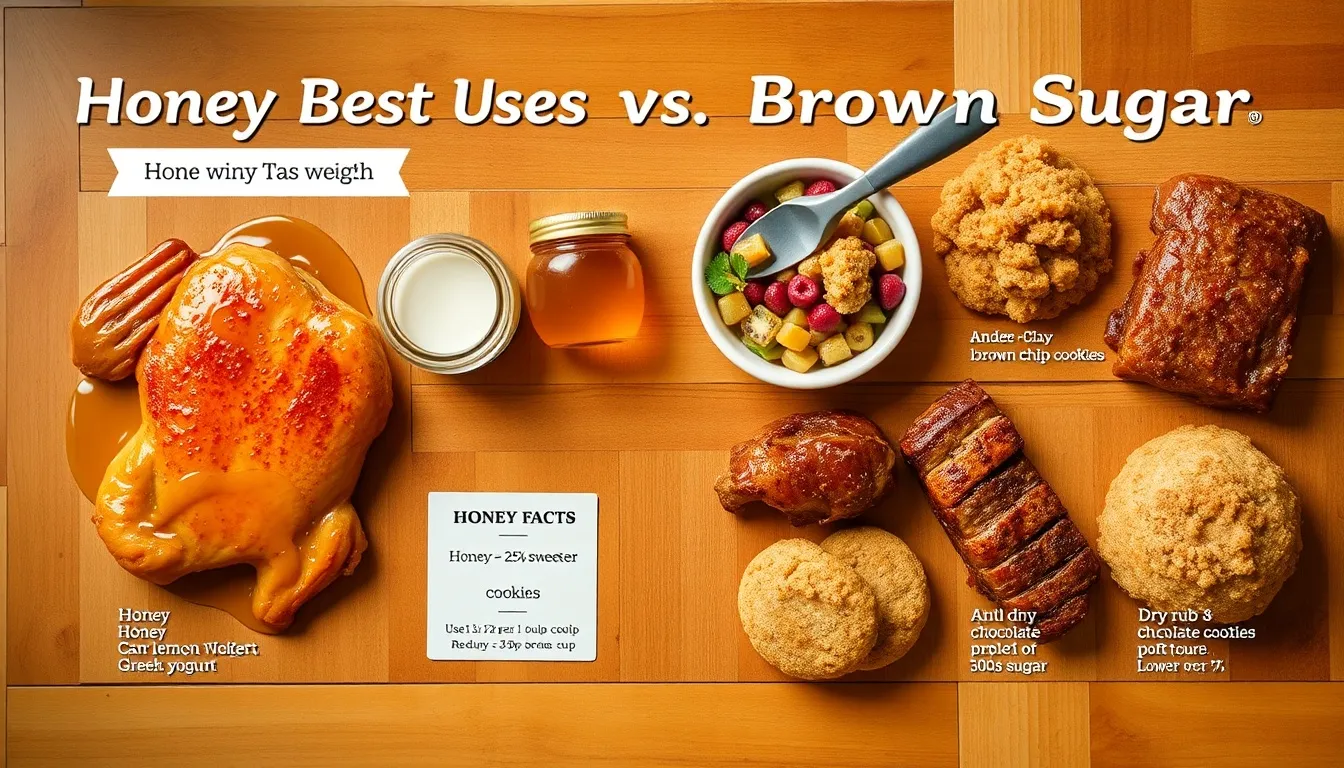
**Best uses for brown sugar** — Cookies (especially chewy varieties), crumble toppings, dry rubs for meat, caramel sauces, and recipes where consistent texture and creaming with butter are required.
**Best uses for honey** — Glazes, marinades, salad dressings, beverages, drizzling over yogurt or cheese, and recipes where you want both sweetness and additional health benefits. See honey in coffee and best honey for tea.
Environmental and Ethical Considerations
The environmental footprint of these sweeteners differs significantly:
**Honey** — Supports pollinator populations. Managed honey bee colonies provide pollination services worth an estimated $15-20 billion annually to US agriculture. Responsible beekeeping promotes biodiversity. However, there are ethical debates about managed bee welfare. See is honey vegan? and bee-friendly gardening.
**Brown sugar** — Produced from sugarcane or sugar beets. Sugarcane cultivation involves significant water usage (1,500-2,000 liters per kg of sugar), potential habitat destruction in tropical regions, and heavy pesticide and fertilizer application. The industrial refining process is energy-intensive. Some sugarcane regions have concerning labor practices.
Neither sweetener is without environmental impact, but honey production actively supports ecosystem health through pollination, while sugarcane cultivation tends to degrade it.
Common Myths About Brown Sugar
Several misconceptions persist about brown sugar:
**"Brown sugar is less processed than white sugar"** — Most commercial brown sugar is fully refined white sugar with molasses added back. It goes through the same industrial process, then has 3.5-6.5% molasses reintroduced. "Raw" or turbinado sugars are less processed, but standard brown sugar is not.
**"Brown sugar is healthier because it has minerals"** — While brown sugar does contain slightly more minerals than white sugar (from the molasses), the amounts are nutritionally insignificant. You'd need to eat over 100 tablespoons of brown sugar to meet your daily iron requirement — consuming over 5,000 calories of pure sugar in the process.
**"Brown sugar is lower in calories"** — Per gram, brown sugar (3.8 kcal/g) has almost identical calories to white sugar (3.87 kcal/g). The per-tablespoon difference (52 vs 49 calories) simply reflects that brown sugar is slightly less dense due to its moisture content.
**"Brown sugar is a natural sweetener"** — The "natural" label on brown sugar is misleading. It undergoes extensive industrial processing. Honey, maple syrup, and date syrup are more accurately described as minimally processed natural sweeteners.
The Verdict: When to Choose Each
The evidence clearly favors honey from a health perspective, but the best choice depends on your priorities:
**Choose honey when:** Health benefits matter (antimicrobial, anti-inflammatory, prebiotic, cardiovascular, cough relief), you want lower glycemic impact (choose acacia, tupelo, or sage varieties), you're using it as a standalone ingredient (beverages, drizzles, marinades, face masks), or when its bioactive compounds add value beyond sweetness.
**Choose brown sugar when:** Baking convenience is the priority (1:1 sugar substitute), you need specific texture outcomes (chewy cookies, crumble toppings), budget is a primary concern, the recipe relies on creaming butter and sugar for structure, or dietary restrictions exclude honey.
**Consider both:** Many recipes benefit from a combination — using brown sugar for structural purposes and adding honey for flavor and moisture. This hybrid approach captures some of honey's health benefits while maintaining baking reliability.
For more on making the switch in your kitchen, see our complete guide to substituting honey for sugar in baking. And for a broader perspective on honey's place in your diet, read is honey better than sugar?.
Pro Tip
If you're switching from brown sugar to honey for health reasons, start with recipes where honey is used raw (teas, dressings, drizzles) — that's where you get the most benefit from its enzymes and heat-sensitive polyphenols. Heating honey above 40°C degrades some bioactive compounds. See is heated honey toxic?.