Honey vs Stevia: Two Fundamentally Different Sweeteners
Honey and stevia represent opposite approaches to sweetening food. Honey is a caloric whole food made by bees, containing sugars alongside hundreds of bioactive compounds — enzymes, polyphenols, prebiotics, vitamins, and minerals. Stevia is a zero-calorie plant extract from the Stevia rebaudiana plant, containing steviol glycosides (primarily stevioside and rebaudioside A) that are 200-350 times sweeter than sugar but provide no calories or nutrients.
This isn't a simple "natural vs artificial" debate — both come from natural sources. The real question is whether you want a functional food with calories and measurable health benefits, or a zero-calorie sweetener that adds sweetness without nutrition. The right choice depends on your health goals, how you'll use it, and what trade-offs matter most to you.
This guide compares them across nutrition, glycemic impact, gut health, taste, cooking behavior, safety research, and practical use cases — so you can choose based on evidence rather than marketing claims.
Nutritional Comparison: Everything vs Nothing
**Honey (per tablespoon, ~21g):** 64 calories, 17.2g sugars (38% fructose, 31% glucose), small amounts of B vitamins (B2, B3, B5, B6), vitamin C, and minerals (potassium, calcium, iron, zinc, magnesium). Contains 30+ polyphenol antioxidants (chrysin, pinocembrin, caffeic acid, quercetin), active enzymes (glucose oxidase, diastase, invertase), and prebiotic oligosaccharides (FOS, GOS). For the full breakdown, see our honey nutrition facts guide.
**Stevia (per packet/serving, ~1g):** 0 calories, 0g sugars, 0 vitamins, 0 minerals, 0 antioxidants, 0 enzymes, 0 prebiotics. Contains steviol glycosides (rebaudioside A in most commercial products) plus whatever bulking agents the manufacturer adds — erythritol, maltodextrin, dextrose, or inulin. Some "stevia" products contain more bulking agent than actual stevia.
**Key difference:** Honey provides genuine nutrition per calorie — the polyphenols, prebiotics, and antimicrobial compounds produce measurable health effects in clinical trials. Stevia provides sweetness without calories, which is valuable for calorie reduction but offers no positive nutritional contribution. This is the fundamental trade-off: 64 calories with bioactive benefits vs 0 calories with no nutritional content.
Get the Honey Buyer's Cheat Sheet (free PDF)
16 varieties on one page — color, flavor, best use and what a fair price looks like — from the 268 honeys we track.
Glycemic Impact and Blood Sugar
Honey contributes total carbohydrate and added sugar; a stevia product may contribute little or none, but blends can contain carbohydrate-bearing fillers. Compare the exact serving size and total carbohydrate on each label rather than relying on the front-of-package sweetener name.
Neither product is medically preferred for every person with diabetes. The honey carbohydrate and label guide explains label-based carbohydrate counting and why personal targets belong in an individualized care plan.
If a recipe substitution is the goal, account for honey's liquid volume and the formulation of the stevia product. A sweetness-equivalent swap is not automatically carbohydrate-equivalent.
Pro Tip
Use the Nutrition Facts panel for the actual product and serving. Do not infer an individual glucose response from a honey floral source or a zero-calorie claim on a stevia blend.
Gut Health: Where Honey Clearly Wins
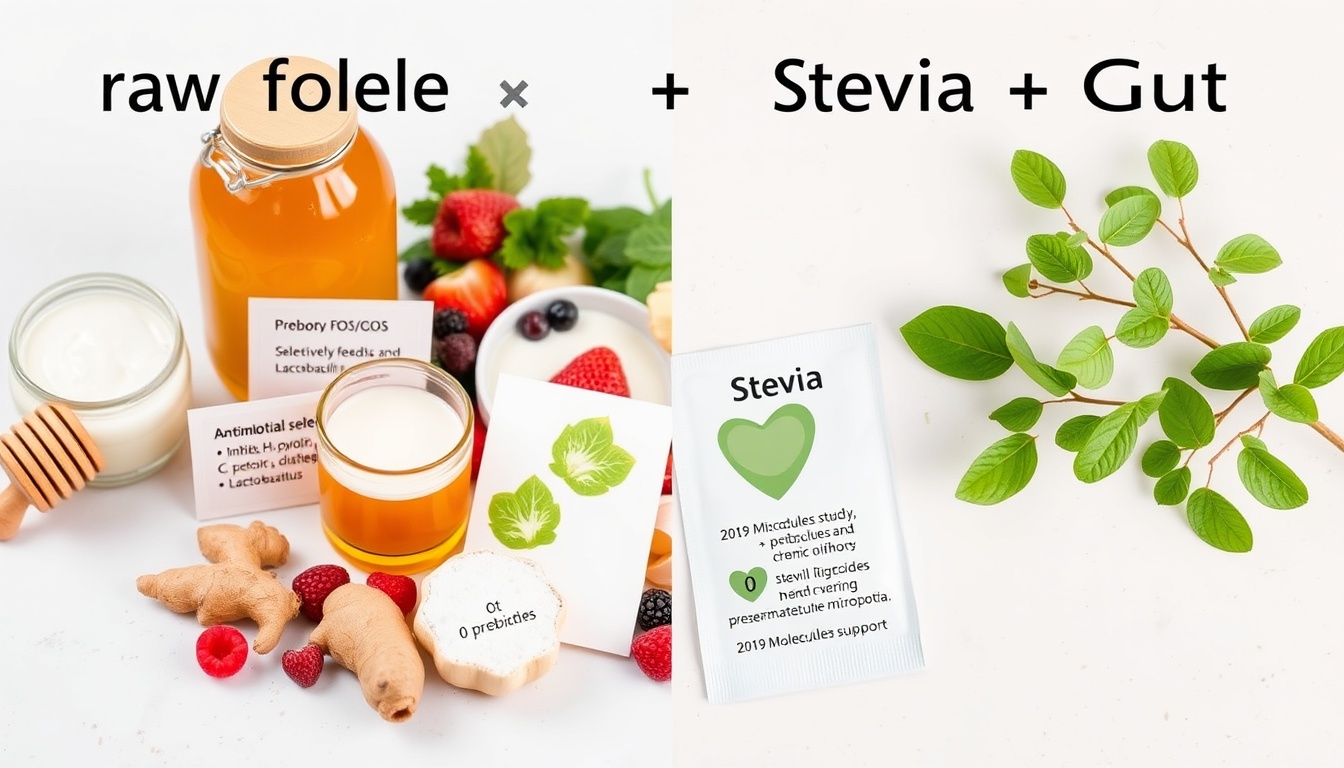
Gut health is the area where the honey-stevia comparison is most lopsided. Honey contains prebiotic oligosaccharides (fructo-oligosaccharides and galacto-oligosaccharides) that selectively feed beneficial Bifidobacterium and Lactobacillus bacteria in the gut. Honey also has selective antimicrobial activity — it inhibits harmful bacteria like H. pylori, C. difficile, and E. coli while preserving beneficial species. Our honey and gut health guide covers this in detail.
Stevia's effect on gut health is more concerning. A 2019 study in the journal Molecules found that stevia extracts can inhibit the growth of certain beneficial gut bacteria, including Lactobacillus reuteri, at concentrations achievable from normal dietary intake. A 2020 study in Nutrients found that steviol glycosides altered the gut microbiome composition in mice, reducing Firmicutes-to-Bacteroidetes ratios — a pattern associated with metabolic disruption in some studies.
However, the gut health research on stevia is still evolving, and results have been mixed. A 2022 review in the Journal of Agricultural and Food Chemistry noted that while some studies show microbiome disruption, others show neutral or mildly beneficial effects. The dose, form of stevia (whole leaf vs pure rebaudioside A), and individual microbiome composition all influence outcomes.
The key distinction is that honey has consistently demonstrated prebiotic benefits across multiple human and animal studies, while stevia's gut effects remain uncertain and potentially concerning. If gut health is a priority — and it increasingly appears connected to immune function, mental health, skin health, and sleep quality — this is a significant advantage for honey.
Anti-Inflammatory and Antioxidant Effects
Honey's 30+ polyphenol antioxidants produce measurable anti-inflammatory effects through multiple mechanisms: inhibiting the NF-κB inflammatory pathway, suppressing COX-2 enzyme activity (similar to how ibuprofen works, though weaker), and scavenging reactive oxygen species. The 2022 Nutrition Reviews meta-analysis confirmed that honey consumption reduces C-reactive protein, a systemic inflammation marker. Antioxidant levels vary dramatically by variety: buckwheat honey provides 800+ ORAC units with exceptional polyphenol density, chestnut honey and heather honey offer similarly high antioxidant content, wildflower honey provides moderate diverse antioxidants (~200-400 ORAC), while clover honey and acacia honey contain lower but still meaningful antioxidant levels (100-200 ORAC).
Stevia has shown some anti-inflammatory potential in laboratory studies. Stevioside has been found to inhibit NF-κB and reduce TNF-α production in cell culture experiments. However, these effects have not been consistently replicated in human clinical trials at normal dietary doses. The concentrations used in cell studies are often far higher than what reaches tissues from eating stevia-sweetened foods.
The practical difference is significant: honey's anti-inflammatory and antioxidant effects have been confirmed in human meta-analyses (the highest level of evidence), while stevia's potential anti-inflammatory effects remain largely theoretical, demonstrated only in laboratory settings. If you're using sweeteners specifically to support cardiovascular health or manage chronic inflammation, honey has a much stronger evidence base.
Taste and Cooking: Practical Differences
**Flavor:** This is where many people make their decision regardless of nutrition. Honey offers incredible flavor diversity depending on floral source: delicate and clean acacia honey, mild and versatile clover honey, bright citrus notes in orange blossom honey, floral complexity from wildflower honey, sophisticated lavender honey, bold molasses-like buckwheat honey, robust chestnut honey, and elegant sourwood honey with spice undertones. Stevia has a distinctive aftertaste that many people describe as bitter, metallic, or licorice-like. Rebaudioside A (Reb A) products have less aftertaste than stevioside, but even high-quality stevia extracts don't taste like sugar.
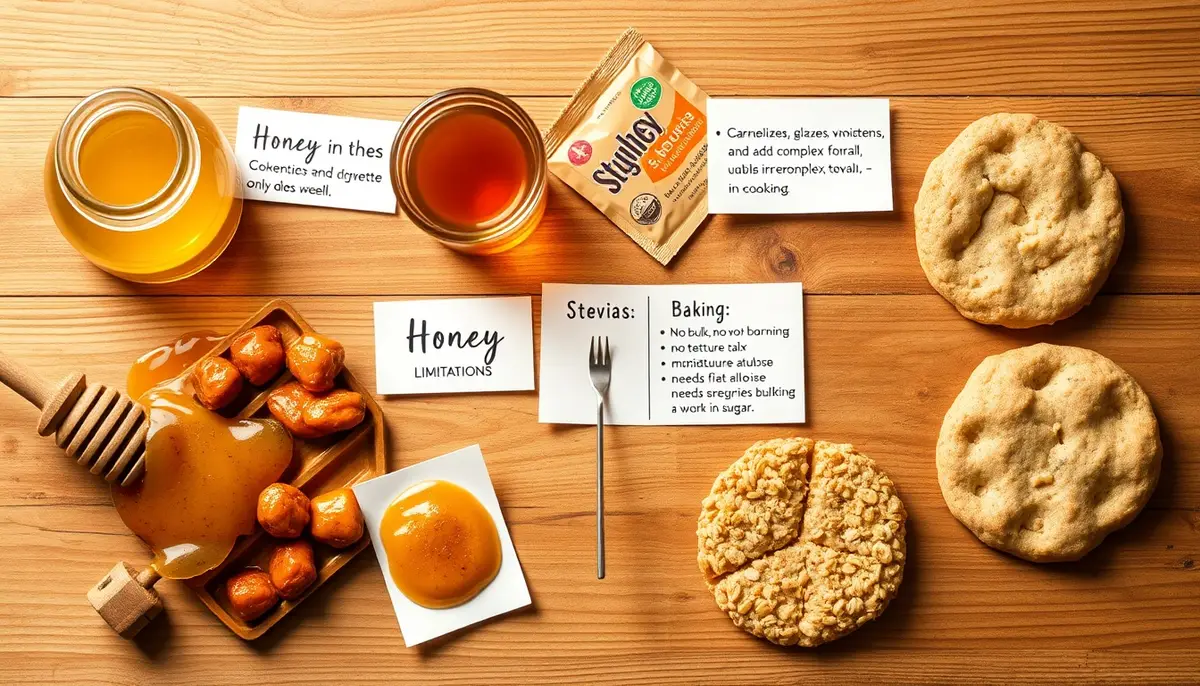
**Baking:** Honey works well in baking with the 4-part substitution formula (2/3 cup per cup sugar, reduce liquids, add baking soda, lower temperature). It provides moisture, browning (via Maillard reaction), and flavor complexity. Stevia cannot replicate any of these functions — it adds no bulk, moisture, browning, or texture. In baking, stevia needs to be combined with a bulking agent (erythritol, allulose, or actual sugar) to work, making "stevia-sweetened" baked goods a misnomer in most cases.
**Beverages:** Stevia dissolves easily in both hot and cold liquids, making it convenient for tea, coffee, and cold drinks. Honey dissolves readily in warm beverages but can be stubborn in cold drinks. For daily hot tea or coffee, both work well — it comes down to whether you want honey's flavor contribution or stevia's zero calories.
**Cooking:** Honey caramelizes, glazes, and adds body to sauces, dressings, and marinades. Stevia adds only sweetness with no functional properties in cooking. For recipes like honey garlic sauce, hot honey, or honey ginger drinks, stevia simply cannot substitute.
**Shelf life:** Honey essentially never expires — it may crystallize but remains safe indefinitely. Stevia products last 2-3 years in packet form. Both have excellent shelf stability.
Safety and Long-Term Research
Amounts reported in the studies discussed here describe study protocols, not daily recommendations. Use the daily added-sugar guide to count honey with other added or free sugars.
**Stevia's safety profile** is based on assessments of specified high-purity steviol glycosides; follow the product label and applicable regulator guidance rather than translating it into a honey amount.
Most safety concerns about stevia have not been confirmed in rigorous studies. Early animal studies suggesting reproductive toxicity used crude stevia extracts at extremely high doses and have not been replicated with purified steviol glycosides at normal intake levels. A 2017 systematic review in Food and Chemical Toxicology concluded that high-purity steviol glycosides are safe at the established ADI.
However, some researchers have raised questions about long-term metabolic effects. A 2014 study in Nature found that artificial sweeteners (including stevia) may alter glucose tolerance through gut microbiome changes — though this was primarily demonstrated with saccharin, and the stevia findings were less clear. The interaction between zero-calorie sweeteners and appetite regulation is also debated: some studies suggest they may increase hunger by providing sweetness without calories, while others find no effect.
Whole-leaf stevia and crude stevia extracts have NOT been granted GRAS status by the FDA — only high-purity (≥95%) steviol glycosides. This distinction matters if you're buying "natural" stevia products that may contain less-studied compounds.
When Honey Wins, When Stevia Wins, and When It's a Tie
**Honey wins for:** Overall nutrition and bioactive compounds, gut health and prebiotic support, anti-inflammatory and antioxidant effects, antimicrobial activity, cough and cold relief, wound healing, baking and cooking versatility, flavor complexity, and established long-term safety profile. Honey is clearly superior when you want a sweetener that provides health benefits beyond sweetness.
**Stevia wins for:** Zero-calorie sweetening (critical for calorie-restricted diets), zero glycemic impact (important for poorly controlled diabetes or ketogenic diets), dental safety (no fermentable sugars for cavity-causing bacteria), and convenience in cold beverages. Stevia is clearly superior when your primary goal is reducing caloric intake or strictly managing blood sugar.
**It's a tie for:** General sweetening of hot beverages (both work well), safety for healthy adults (both are safe at normal intake levels), and availability (both are widely sold).
The choice often comes down to priorities. If you're managing weight or strict blood sugar control, stevia's zero calories and zero glycemic impact are hard to beat. If you view sweeteners as an opportunity to add nutritional value rather than just taste, honey delivers measurable health benefits that stevia cannot match. Many people benefit from using both — honey when the calories are worth the nutrition, stevia when pure calorie reduction is the goal.
Myth-Busting: Common Misconceptions
**Myth: Stevia is completely natural.** While stevia comes from a plant, commercial stevia extracts undergo significant processing — extraction with water or alcohol, purification, decolorization, and spray-drying. The end product (rebaudioside A) is a purified chemical compound, much like how white sugar is "natural" (it comes from sugarcane). "Natural" is a marketing term, not a processing descriptor. That said, stevia's processing is less concerning than agave nectar's — see our honey vs agave comparison.
Diabetes note — Neither honey nor the compared sweetener is medically preferred. Compare exact serving-size total carbohydrate and added sugars with the honey carbohydrate and label guide, then follow an individualized care plan.
**Myth: Stevia causes cancer.** This claim originated from early animal studies using crude stevia extracts at massive doses. Multiple systematic reviews, including evaluations by EFSA, FDA, and JECFA (Joint FAO/WHO Expert Committee on Food Additives), have concluded that high-purity steviol glycosides are not carcinogenic, genotoxic, or mutagenic at the established ADI.
**Myth: Zero-calorie sweeteners help with weight loss.** The evidence is surprisingly mixed. While stevia eliminates sweetener calories, some research suggests that zero-calorie sweeteners may disrupt appetite signaling — the body expects calories when it tastes sweetness, and the mismatch may increase hunger for other foods. A 2017 meta-analysis in the Canadian Medical Association Journal found that non-nutritive sweeteners were associated with modest increases in BMI and cardiometabolic risk in observational studies, though randomized trials showed more neutral results.
**Myth: You should avoid both honey and stevia.** Both are safe options when used appropriately. Honey provides real nutritional benefits at moderate intake. Stevia offers effective calorie reduction without established health risks. Either is a better choice than excessive refined sugar consumption.
The Bottom Line
Honey and stevia serve fundamentally different purposes, and comparing them is a bit like comparing olive oil to cooking spray — one is a nutritious ingredient, the other is a functional substitute.
If your goal is to add sweetness while gaining nutritional benefit — antioxidants, prebiotics, antimicrobial compounds, vitamins, and minerals — honey is the clear winner. The 64 calories per tablespoon buys you a functional food with evidence-based health effects confirmed in meta-analyses of randomized controlled trials.
If your goal is purely to reduce caloric intake or eliminate glycemic impact, stevia delivers zero-calorie sweetness with an acceptable safety profile. Just be aware that you're getting sweetness alone — none of the bioactive benefits that make honey a health food rather than just a sweetener.
This section does not establish a universal or medical honey dose for this purpose. Use the daily added-sugar guide to count honey with other added or free sugars.